
Scott Turow
Author of Presumed Innocent
About the Author
Scott Turow is a writer and lawyer. He was born in Chicago, Illinois, on April 12, 1949. He received a B.A. from Amherst College in 1970 and an M.A. from Stanford University in 1974. He graduated from Harvard Law School in 1978. He was an Assistant United States Attorney in Chicago and served as a show more prosecutor in several corruption cases. Turow continues to work as an attorney. He has written numerous novels including Presumed Innocent, The Burden of Proof, Pleading Guilty, The Laws of Our Fathers, Personal Injuries, Ordinary Heroes, Limitations, Innocent, and Identical. His non-fiction works include One L about his experience as a law student and Ultimate Punishment about the death penalty. He has won numerous awards including the Heartland Prize in 2003 for Reversible Errors, the Robert F. Kennedy Book Award in 2004 for Ultimate Punishment, and Time Magazine's Best Work of Fiction, 1999 for Personal Injuries. He will give a keynote speech at the National writer's Congress 2015. (Bowker Author Biography) show less
Series
Works by Scott Turow
One L: The Turbulent True Story of a First Year at Harvard Law School (1977) 1,365 copies, 29 reviews
Ultimate Punishment: A Lawyer's Reflections on Dealing with the Death Penalty (2003) 293 copies, 4 reviews
Presunto colpevole (Italian Edition) 4 copies
Scott Turow Omnibus: Includes One L, the Laws of Our Fathers, Pleading Guilty, the Burden of Proof, Presumed Innocent (1999) 3 copies
Presunto inocente 2 copies
Turow Scott 1 copy
#ordinary Heroes 1 copy
Conspiracy 1 copy
Inside Out 1 copy
立証責任〈下〉 (文春文庫) 1 copy
Presunto innoncente 1 copy
Scott Turow, 3 book set, paperback softcover, The burden of proof, Innocent, presumed innocent (1965) 1 copy
Dominance 1 copy
O Medo dos Bravos 1 copy
Erros Reversíveis 1 copy
The Black Sun 1 copy
Associated Works
Writers on Writing: Collected Essays from the New York Times (2001) — Contributor — 481 copies, 5 reviews
Fight of the Century: Writers Reflect on 100 Years of Landmark ACLU Cases (2020) — Contributor — 261 copies, 5 reviews
This Is My Best: Great Writers Share Their Favorite Work (2004) — Contributor — 175 copies, 3 reviews
The Mystery Writers of America Cookbook: Wickedly Good Meals and Desserts to Die For (2015) — Contributor — 142 copies, 20 reviews
Who's Writing This? Notations on the Authorial I, with Self-Portraits {not Antæus} (1995) — Contributor — 76 copies
Anatomy of Innocence: Testimonies of the Wrongfully Convicted (2017) — Introduction — 59 copies, 1 review
New Beginnings: New Writing from Bestselling Authors Sold in Aid of the Indian Ocean Tsunami Earthquake Charities (2005) — Contributor — 48 copies
The Best of the Best American Mystery Stories: The First Ten Years (2014) — Contributor — 39 copies, 1 review
Tagged
Common Knowledge
- Legal name
- Turow, Scott Frederick
- Birthdate
- 1949-04-12
- Gender
- male
- Education
- Amherst College (BA|1970)
Stanford University (MA|1974)
Harvard University (JD|1978) - Occupations
- lecturer
Assistant U.S. Attorney, Chicago, Illinois
lawyer - Organizations
- Rock Bottom Remainders (band)
Authors Guild
Illinois State Police Merit Board
U.S Senate Nominations Commission for the Northern District of Illinois
Dentons - Awards and honors
- Heartland Prize (2003)
Robert F. Kennedy Book Award (2004)
Time Magazine's Best Work of Fiction (1999)
Order of Lincoln (2000)
Laureate, Lincoln Academy of Illinois (2000)
Carl Sandburg Literary Award (2016) - Agent
- Gail Hochman (Brandt & Hochman)
- Nationality
- USA
- Birthplace
- Chicago, Illinois, USA
- Places of residence
- Chicago, Illinois, USA (birth)
- Associated Place (for map)
- Chicago, Illinois, USA
Members
Reviews

This "story within a story" involves the search by Stewart Dubinsky , a journalist, for information about his father, David Dubin, who has just died. He discovers that his father had received a court martial towards the end of World War II and sentenced to five years in Leavenworth - something that didn't quite fit in with his father's war medals.
Stewart's search takes him on a long trek, trying to access military records that are now still highly classified. He does manage to gain access, show more but only to redacted documents - until he contacts the man who had been his father's attorney. The attorney has a lengthy document he had asked David to write before his trial, as a way of getting some sense of what David had been through - because David, a lawyer and Assistant Judge Advocate, refuses to explain why he wants to plead guilty to the charges brought against him (releasing a prisoner accused of disobeying orders, and possibly treason).
Stewart reads the "journal" left by his father, which recounts David's attempts to arrest Richard Martin, a man who is something of a rogue and who claims to be an OSS officer on assignment. David is assigned by Martin's commanding officer - General Teedle - to find Martin, stop him, and bring him in for trial. In the course of this, David encounters the horrors of war at the very front lines of the final Allied advance that would ultimately defeat the Nazis.
I am not one for war stories, but Turow produces a book that is absolutely astonishing. The pace of the book is excellent, the narrative effectively descriptive, the ultimate story being told compelling. Surprises about, as Stewart finds that his mother refuses to talk about David's experiences in the War, even though David had rescued her from a concentration camp (Dubin and Stewart's mother are Jewish). Stewart's sister refuses to support his efforts to uncover their father's past.
A tightly-woven story that will satisfy readers completely - rich characters, profound insights, compelling plot. A must-read. show less
Stewart's search takes him on a long trek, trying to access military records that are now still highly classified. He does manage to gain access, show more but only to redacted documents - until he contacts the man who had been his father's attorney. The attorney has a lengthy document he had asked David to write before his trial, as a way of getting some sense of what David had been through - because David, a lawyer and Assistant Judge Advocate, refuses to explain why he wants to plead guilty to the charges brought against him (releasing a prisoner accused of disobeying orders, and possibly treason).
Stewart reads the "journal" left by his father, which recounts David's attempts to arrest Richard Martin, a man who is something of a rogue and who claims to be an OSS officer on assignment. David is assigned by Martin's commanding officer - General Teedle - to find Martin, stop him, and bring him in for trial. In the course of this, David encounters the horrors of war at the very front lines of the final Allied advance that would ultimately defeat the Nazis.
I am not one for war stories, but Turow produces a book that is absolutely astonishing. The pace of the book is excellent, the narrative effectively descriptive, the ultimate story being told compelling. Surprises about, as Stewart finds that his mother refuses to talk about David's experiences in the War, even though David had rescued her from a concentration camp (Dubin and Stewart's mother are Jewish). Stewart's sister refuses to support his efforts to uncover their father's past.
A tightly-woven story that will satisfy readers completely - rich characters, profound insights, compelling plot. A must-read. show less
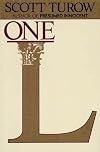
Scott Turow’s engrossing account of his first year at Harvard Law School. It is told in chronological order from first class to finals. There is a lot of drama in the competitiveness of the students - both the desire to support each other but also deal with pressure of grades, and the potential ramifications (Law Review, hiring decisions, etc.) Turow went to Harvard in the mid-1970s, so there have likely been changes since then, but he definitely has opinions on areas for improvement and show more the lack of effectiveness of the Socratic method. I am impressed by the author’s ability to work his magic on what could have been dry material. It is far from it. I flew through this book. I wish Turow would write more non-fiction. He has a knack for it. I enjoyed this even more than his fiction. show less
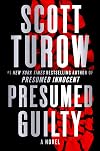
Scott Turow is at his best in this, his third novel involving Judge Rusty Sabich! At the age of 76, Rusty had hoped to lead a quiet life in an undisclosed northern state and marry his love interest, Bea, a local school administrator. That was the plan. Then the unthinkable happens involving Bea’s son. Torn between finding the best defense lawyer possible, and loyalty to his fiancée, Rusty reluctantly comes out of retirement and back into the courtroom. Turow’s turn of phrase is second show more to none, he likens the work of a prosecutor as giving “you a proctologist’s view of humanity”, his eye for detail leads the reader to searching Google for the location of Mirror Lake. An observation at trial’s beginning, “families sit, each on their ‘sides’ of the courtroom, a ghoulish echo of the wedding that Aaron and Mae momentarily contemplated” and testing the courtroom’s acoustics, give a behind the scenes look at the work of trial attorneys. The trial process itself is like a watching a black & white Perry Mason with its twists, explanations, and nettling of the opposition. I liken Turow’s storytelling to that of a skilled woodworker. He patiently gathers the pieces/details of the story together, smooths out the edges and carefully nails all the storyline/pieces together to form a completed work. 5 Stars! show less
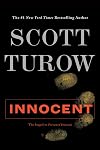
This was a great book to read for this particular day and time. It was a sunny weekend and I had time to sit on my deck and read – and this story sucked me in.
I loved the book “Presumed Innocent” and enjoyed the movie as well. This sequel drew me in just as that one did – and I didn’t really want to put it down.
As with most courtroom thrillers, I spent much of the book trying to figure out what the truth was and where the next twits might come. Some things I guessed but there were show more certainly a few surprises.
The main character, Rusty Sabich was fascinating to me, but I think the most interesting and well drawn of the characters was his son Nat, a young child in the first book. We learn much about how this boy was affected by the events that took place twenty years ago and through him, learn about another side of his father.
“In the meantime, every so often another police officer will arrive and ask my father about what happened. He tells the story again and again, always the same way. What was there to think about all that time? one cop will say. My dad can have a hard way with his blue eyes, something he probably learned from his own father, a man he despised.”
Nat’s mother Barbara, is at the core of the book, although we only view her through the eyes of others, given the circumstances.
“From the time I was a little kid, I sort of felt responsible for her. Maybe all children feel like that. I wouldn’t know, since I’ve only been me. But I realized that I was more than important to her. I was her lifeline. I knew that the only time my mom felt completely right was with me, tending to me, talking to me, thinking about me.”
Though I suppose this is a book that is primarily about “Who?” – who did what…I ended it feeling like the more important question was “Why?” Why do people do the things they do, make the choices they do? Especially those choices that even in the moment they know are wrong…that will come back to haunt them. And when people realize the consequences of their actions…why so rarely do they learn from them and make different choices next time?
This book is full of flawed individuals, few who are genuinely “bad”, but even fewer who are completely “Innocent”. show less
I loved the book “Presumed Innocent” and enjoyed the movie as well. This sequel drew me in just as that one did – and I didn’t really want to put it down.
As with most courtroom thrillers, I spent much of the book trying to figure out what the truth was and where the next twits might come. Some things I guessed but there were show more certainly a few surprises.
The main character, Rusty Sabich was fascinating to me, but I think the most interesting and well drawn of the characters was his son Nat, a young child in the first book. We learn much about how this boy was affected by the events that took place twenty years ago and through him, learn about another side of his father.
“In the meantime, every so often another police officer will arrive and ask my father about what happened. He tells the story again and again, always the same way. What was there to think about all that time? one cop will say. My dad can have a hard way with his blue eyes, something he probably learned from his own father, a man he despised.”
Nat’s mother Barbara, is at the core of the book, although we only view her through the eyes of others, given the circumstances.
“From the time I was a little kid, I sort of felt responsible for her. Maybe all children feel like that. I wouldn’t know, since I’ve only been me. But I realized that I was more than important to her. I was her lifeline. I knew that the only time my mom felt completely right was with me, tending to me, talking to me, thinking about me.”
Though I suppose this is a book that is primarily about “Who?” – who did what…I ended it feeling like the more important question was “Why?” Why do people do the things they do, make the choices they do? Especially those choices that even in the moment they know are wrong…that will come back to haunt them. And when people realize the consequences of their actions…why so rarely do they learn from them and make different choices next time?
This book is full of flawed individuals, few who are genuinely “bad”, but even fewer who are completely “Innocent”. show less
 This review was written for LibraryThing Early Reviewers.
Lists
First Novels (1)
100 New Classics (1)
Page Turners (1)
Legal Stories (4)
Movies/Shows (1)
Murder Mysteries (1)
Awards


You May Also Like


Associated Authors
Statistics
- Works
- 58
- Also by
- 18
- Members
- 23,708
- Popularity
- #884
- Rating
- 3.6
- Reviews
- 492
- ISBNs
- 775
- Languages
- 24
- Favorited
- 26


