
Andy Remic (1971–2022)
Author of Kell's Legend
About the Author
Image credit: Linda Remic photo
Series
Works by Andy Remic
Junked 2 copies
The Clockwork Hunter 2 copies
Snot 1 copy
Soul Stealers 1 copy
Psi.Copath (short story) 1 copy
Ultimate Adventure Anthology 1 copy
Associated Works
Tagged
Common Knowledge
- Birthdate
- 1971-07-26
- Date of death
- 2022-02-26
- Gender
- male
- Occupations
- English teacher
computer game creator
filmmaker
fiction writer - Agent
- John Jarrold
- Relationships
- Linda Remic (wife)
- Cause of death
- cancer
- Nationality
- England
UK - Birthplace
- Manchester, England, UK
- Places of residence
- Manchester, England, UK
- Associated Place (for map)
- Manchester, England, UK
Members
Reviews
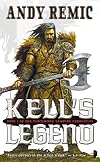
Violent is really not the right word for this spare-no-detail fantasy monstrosity. Insane? Maybe. Really, the only way to describe Remic’s Kell’s Legend is with a phrase: a bloody, violent, fantastic journey through carnage, terror, and a downright epic tale that makes Underworld and every zombie movie look bad. That sounds about right.
Kell’s Legend is the first is Remic’s Clockwork Vampire Chronicles. It follows Kell, a legendary warrior who has grown old, and a number of other show more characters, from his granddaughter Nienna to Anukis, a clockwork vampire-turned-exile in her own homeland. When strange, twisted albino soldiers descend upon the city of Jalder, Kell must take up his axe once again to defend his family. But with that action comes a flood of memories hinting at his dark past, at the Kell nobody remembers or everyone chooses to forget…
Remic certainly managed a tour de force with Kell’s Legend. I’ve never read anything quite so unapologetic about its violence, but also brilliant in its brute force. Kell’s Legend is rough, for sure; at the same time, however, it’s entertaining and powerful, taking all that is wonderful about truly epic, adventurous fantasy and twisting it like Quentin Tarantino twists the movies. Remic is the Tarantino of fantasy (and science fiction, I presume), and if that isn’t a compliment, then I don’t know what is.
Kell’s Legend isn’t just about action and brilliantly detailed fights. It’s packed full of amazing dialogue (and some clever witty banter to boot), and the characters are three-dimensional, something I think many fantasy writers of the more action-packed vein (including myself) have issue with. Remic has managed to put together a tale that pushes the boundaries while maintaining the necessary elements of a good fantasy novel (interesting characters, gripping conflicts, etc.).
There were only two problems I had with Kell’s Legend:
1) Sometimes the action can be a bit much. For the most part it’s entertaining and propels the plot, but sometimes it feels overbearing; there aren’t a lot of breaks.
2) The language is outside of my comfort zone in one scene (and only one, as far as I can recall). If his language had kept in that vein for more than one chapter, then I would have tossed the book at the wall, but, thankfully, that is not what happened. However, if you cannot stand foul language in any form, this is not the book for you.
Both of these problems are personal preferences and not indicative of any significant fault of the novel or Remic. If you aren’t bothered by these things, then this is definitely a book for you. If you’re already a Remic fan, then you’ll love Kell’s Legend.
I look forward to the second book in the series. I’d love to know what happens with the Clockwork Vampires, Kell, his granddaughter, and some of the other characters. show less
Kell’s Legend is the first is Remic’s Clockwork Vampire Chronicles. It follows Kell, a legendary warrior who has grown old, and a number of other show more characters, from his granddaughter Nienna to Anukis, a clockwork vampire-turned-exile in her own homeland. When strange, twisted albino soldiers descend upon the city of Jalder, Kell must take up his axe once again to defend his family. But with that action comes a flood of memories hinting at his dark past, at the Kell nobody remembers or everyone chooses to forget…
Remic certainly managed a tour de force with Kell’s Legend. I’ve never read anything quite so unapologetic about its violence, but also brilliant in its brute force. Kell’s Legend is rough, for sure; at the same time, however, it’s entertaining and powerful, taking all that is wonderful about truly epic, adventurous fantasy and twisting it like Quentin Tarantino twists the movies. Remic is the Tarantino of fantasy (and science fiction, I presume), and if that isn’t a compliment, then I don’t know what is.
Kell’s Legend isn’t just about action and brilliantly detailed fights. It’s packed full of amazing dialogue (and some clever witty banter to boot), and the characters are three-dimensional, something I think many fantasy writers of the more action-packed vein (including myself) have issue with. Remic has managed to put together a tale that pushes the boundaries while maintaining the necessary elements of a good fantasy novel (interesting characters, gripping conflicts, etc.).
There were only two problems I had with Kell’s Legend:
1) Sometimes the action can be a bit much. For the most part it’s entertaining and propels the plot, but sometimes it feels overbearing; there aren’t a lot of breaks.
2) The language is outside of my comfort zone in one scene (and only one, as far as I can recall). If his language had kept in that vein for more than one chapter, then I would have tossed the book at the wall, but, thankfully, that is not what happened. However, if you cannot stand foul language in any form, this is not the book for you.
Both of these problems are personal preferences and not indicative of any significant fault of the novel or Remic. If you aren’t bothered by these things, then this is definitely a book for you. If you’re already a Remic fan, then you’ll love Kell’s Legend.
I look forward to the second book in the series. I’d love to know what happens with the Clockwork Vampires, Kell, his granddaughter, and some of the other characters. show less
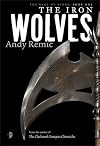
I confess that I was a comic book nerd as a lad. (Comic books weren't as mainstream then as they've since become; hence "nerd.") Once, two friends of mine who didn't read comics flipped through an issue of Jim Lee's WildC.A.T.S that I had stowed in my locker. Laughing, they pointed out to me that, of 28 total pages, there were only three pages on which there was no fighting whatsoever. I remember that I was embarrassed, not only because I had been caught reading something with so little show more story, but also because I hadn't noticed that the book had no story to speak of. Jim Lee's artwork blinded me to the comic's vacuity.
All of which is extravagant context for my review of Andy Remic's recent book, The Iron Wolves (The Rage of Kings, Book 1). I must reluctantly report to potential readers that The Iron Wolves reads as if Remic strung together a series of grotesque fight scenes with a bare-bones plot.
The Iron Wolves' premise is simple: Orlana the Changer (aka the Horse Lady), sorceress and (apparently) embodiment of supernatural evil, raises an army to attack our heroes' homeland, Vagandrak. General Dalgoran, apparently the only official of sound mind in the kingdom, reunites the Iron Wolves, heroes of a previous war, in an effort to stop Orlana. The five Iron Wolves (Kiki, Dek, Narnok, Trista, and Zastarte) are morally deficient delinquents for whom the coming war presents an opportunity to reverse their fortunes and save their souls through redemptive, patriotic violence. Think Joe Abercrombie writing a reboot of The Dirty Dozen.
There is gore aplenty here for those who seek it. You might consider using decapitations as the foundation for a drinking game; in Remic's universe, heads exist to be split from the bodies to which they're mistakenly attached. Faces are sloughed off of heads on several occasions, the victims' brains spilling forth. None of which bothers me, per se. I'm desensitized to random violence (thanks, television!). The perversity of some of the war crimes exacted here, though, disgusted me.
Consider a scene in which Orlana impales several women on spears so that the blades project from their mouths. It's torture: she begins while they're still alive. For good measure, she uses the spears as spits and roasts them, feeding the flesh to their husband. Worse, one of the "heroes" kidnaps and tortures young noblemen and -women, possibly because they "deserve" it for their abuse of the lower classes. Or because it's just fun to torture people. I don't expect my heroes to be perfect, but this is fantasy. Please permit me the luxury of not having to root for a sociopath just because he's not (literally) a demon.
The Iron Wolves has two major problems. The characters are simplistic. They're all mercenaries, and readers will find it difficult to sympathize or identify with any of them, even Kiki, their leader, who, at least, has motivations beyond self-interest.
Remic's world, and as a consequence, the book, is disjointed. Remic spends the first third of the book establishing the story, which seems reasonable, but some of the Iron Wolves are introduced to readers even later. The initial chapters jump from one character to the next without segue or elaboration. The intent was, I think, to dump readers directly into the action. The effect is jarring, as the reader wonders what's important and what isn't, if he's following everything properly, why this is happening now, and so on.
Furthermore, Remic engages only in minimal worldbuilding. Not every author should imitate Tolkien, of course, but Vagandrak is painted in strokes so broad as to be nearly invisible. There is a stony country (Vagandrak), bordered by a poison sea, steppes to the south, and in which there is a forest full of suicides. And everything is really big. You now know everything there is to know about the setting of the book.
I spend a lot of time here going over the book's weaknesses because it's all so unfortunate. Remic shows talent as a writer. His prose is muscular and he shows evidence that he does know how to tell a story. Remic uses the last quarter of The Iron Wolves to elaborate on his heroes' history and provide some background the rules that govern magic in his world. The Iron Wolves are bound together in a special way that I found intriguing, and one character has an important destiny that demonstrates that Remic has, in fact, developed his world. He just doesn't share it with the reader.
What you need to know: Not for the squeamish, The Iron Wolves is a fantasy big on action and short on character development and worldbuilding. Possibly ideal for readers who think Joe Abercrombie is a pansy.
(Special thanks to Angry Robot and NetGalley for providing me access to The Iron Wolves in exchange for an honest review.) show less
All of which is extravagant context for my review of Andy Remic's recent book, The Iron Wolves (The Rage of Kings, Book 1). I must reluctantly report to potential readers that The Iron Wolves reads as if Remic strung together a series of grotesque fight scenes with a bare-bones plot.
The Iron Wolves' premise is simple: Orlana the Changer (aka the Horse Lady), sorceress and (apparently) embodiment of supernatural evil, raises an army to attack our heroes' homeland, Vagandrak. General Dalgoran, apparently the only official of sound mind in the kingdom, reunites the Iron Wolves, heroes of a previous war, in an effort to stop Orlana. The five Iron Wolves (Kiki, Dek, Narnok, Trista, and Zastarte) are morally deficient delinquents for whom the coming war presents an opportunity to reverse their fortunes and save their souls through redemptive, patriotic violence. Think Joe Abercrombie writing a reboot of The Dirty Dozen.
There is gore aplenty here for those who seek it. You might consider using decapitations as the foundation for a drinking game; in Remic's universe, heads exist to be split from the bodies to which they're mistakenly attached. Faces are sloughed off of heads on several occasions, the victims' brains spilling forth. None of which bothers me, per se. I'm desensitized to random violence (thanks, television!). The perversity of some of the war crimes exacted here, though, disgusted me.
Consider a scene in which Orlana impales several women on spears so that the blades project from their mouths. It's torture: she begins while they're still alive. For good measure, she uses the spears as spits and roasts them, feeding the flesh to their husband. Worse, one of the "heroes" kidnaps and tortures young noblemen and -women, possibly because they "deserve" it for their abuse of the lower classes. Or because it's just fun to torture people. I don't expect my heroes to be perfect, but this is fantasy. Please permit me the luxury of not having to root for a sociopath just because he's not (literally) a demon.
The Iron Wolves has two major problems. The characters are simplistic. They're all mercenaries, and readers will find it difficult to sympathize or identify with any of them, even Kiki, their leader, who, at least, has motivations beyond self-interest.
Remic's world, and as a consequence, the book, is disjointed. Remic spends the first third of the book establishing the story, which seems reasonable, but some of the Iron Wolves are introduced to readers even later. The initial chapters jump from one character to the next without segue or elaboration. The intent was, I think, to dump readers directly into the action. The effect is jarring, as the reader wonders what's important and what isn't, if he's following everything properly, why this is happening now, and so on.
Furthermore, Remic engages only in minimal worldbuilding. Not every author should imitate Tolkien, of course, but Vagandrak is painted in strokes so broad as to be nearly invisible. There is a stony country (Vagandrak), bordered by a poison sea, steppes to the south, and in which there is a forest full of suicides. And everything is really big. You now know everything there is to know about the setting of the book.
I spend a lot of time here going over the book's weaknesses because it's all so unfortunate. Remic shows talent as a writer. His prose is muscular and he shows evidence that he does know how to tell a story. Remic uses the last quarter of The Iron Wolves to elaborate on his heroes' history and provide some background the rules that govern magic in his world. The Iron Wolves are bound together in a special way that I found intriguing, and one character has an important destiny that demonstrates that Remic has, in fact, developed his world. He just doesn't share it with the reader.
What you need to know: Not for the squeamish, The Iron Wolves is a fantasy big on action and short on character development and worldbuilding. Possibly ideal for readers who think Joe Abercrombie is a pansy.
(Special thanks to Angry Robot and NetGalley for providing me access to The Iron Wolves in exchange for an honest review.) show less

Published by Anarchy Books and edited by Andy Remic and Wayne Simmons, this e-book only collection buries you alive with 22 tales of weird, deviant and twisted horror fiction. Although the anthology has the occasional dud, the quality of the writing, the oddness of the situations and the gurgling horror in the majority of tales is of the very highest quality. This is exemplified by opener "Plastipak™ Limited" by Neal Asher, a fast-moving slice of sci-fi horror, set in a strange nightmarish show more factory. When an unwitting gardener enters the factory in search of the manager in order to pass on his invoice for some landscaping works, he finds himself caught in a gruesome mystery. "You Always Remember Your First" by Lee Harris tells the taboo-heavy story of a man whose bad luck with women changes when he gets a new job in a funeral home. James Lovegrove's character-driven story "Bible Basher" tells the tale of a bible-quoting misogynist who meets a very literal fate at the hands of his long-suffering wife. "Kitty Wants a Hitty" by Wayne Simmons is a grim and gritty tale of drug addiction and prostitution that is full of vengeful violence and black, black humour. "Pipework" by Adrian Tchaikovsky is a weird ghost story (of a sort) based around gross-out plumbing conundrums and full of stinking gross-out laughs. Three stories in the collection really stood out for me. First of these is perhaps the most out-of-context piece in the collection, "Wind Project NX104" by Jordan Reyne, which is nothing less than an AI "love" story. Reyne's tale about Windmachine H443, a wind turbine that develops the ability to vocalise and subsequently develops a strange relationship with his technician is strange, other-worldly, ambitious, creative and immensely touching. Splatter hack-meister, the great Guy N. Smith's contribution to the anthology is "Zombie Gunfighter", which tells about the vicious Circle D Boys, Sheriff Black and tribal witch doctor Black Snake who conjures up a nasty and grisly fate for the Circle D gunfighters. This is a hugely appealing blend of pulp horror, pulp western and old west vengeance. Finally "Tales from the Zombible" by Ian Watson tells the story of the Wandering Zombie who was once bitten by the blessed Jeshua himself and now spreads His infectious blessing. This is a clever (though slightly erratic) retelling of the Bible as a zombie religious text – inventive, witty surreal, perplexing and hugely enjoyable. Overall "Vivisepulture: Weird Tales of Twisted Imagination" is an excellent anthology with some really great, high-quality tales that is well worth hunting down. show less

Callaghan is a scallywag, divvying up his time between bedding married women, exploiting the vulnerable and dead to make a living at a tabloid magazine, and consuming enough alcohol and hardcore drugs to send him to an early grave. And things are going well for him on this destructive path.
But Callaghan has an admirer, someone who has taken a keen interest in his lifestyle and transgressions. Soon Callaghan discovers that his admirer may have a hand in a string of murders in the area, and show more that he is somehow connected to them. Worst of all, this new killer has an idea to make Callaghan a part of the games. When the walls start to crumble around him and people start to die, Callaghan has to make a decision: continue with his careless lifestyle or finally take responsibility for his actions. But doing so might mean making allies with disreputable characters
who have their own twisted sense of morality...
Serial Killers Inc. is a disturbingly violent book which demonstrates once more why Remic is both a terrifying human being and a literary dynamo. When I reviewed Kell's Legend, I said he was "the Tarantino of fantasy," but having read Serial Killers Inc. I think it's fair to say that he's in a league all on his own, touched not by Tarantino's cult sensibilities, but by the wicked recesses of the human mind. Serial Killers Inc. is a book that questions the morality of immoral people, challenging their limitations in what could be called an exaggerated allegory of "normal" human existence. It's precisely Remic's treatment of morality in Serial Killers Inc that makes the book more than a romp into vulgarity. Dragging Callaghan into a game of serial killers and monstrous people means finding a challenge fit for the character, but it also offers challenges to the reader, who might consider how the moral games played in the book reflect upon our world of grays.
Remic's work, however, is not for the faint of heart. It's violent, crude, and sometimes even vulgar, pushing buttons even I find difficult to stomach. But such things don't exist in Remic's work without reason. Serial Killers Inc. is about characters who live in a world where vulgarity and perversion are regularities, and Remic has to find clever ways to make us care about these characters. After all, we would not normally identify with someone who is sleeping with a woman married to a murderer, nor someone who thinks of women as sex objects. And, in fact, it's because Callaghan is these things that we begin to understand why Remic has chosen to torture him in this novel. Callaghan must be saved, not just from the evils of the world, but also from the evil in himself. This doesn't mean that Callaghan will come out of the novel's events a saint; rather, it means he has to acknowledge that his life of disconnection from consequence is unsustainable. Serial Killers Inc. may be a difficult book for some readers to swallow because of its language and themes, but if one can move past these to the heart of the tale (which seems to masquerade as a gory cult horror story, but is, in fact, much more), there's a compelling story to be had.
Serial Killers Inc. does have one major flaw. Most of the plot is straightforward and develops effectively, but where Remic falters is in the introduction of subplots. One of the major subplots is actually a whodunnit mystery narrative with a near-mystical resolution. I thought the way the story turned out was fantastic, but it came too suddenly and with too little foreshadowing to have the impact it needed. Remic does insert clues, but they are often too vague or too short, sometimes even difficult to disentangle from the insanity of the characters who present them (perhaps this is his intention). The novel might have benefited from a linear development of Callaghan's investigations into the mysteries surrounding the murders of which he has unwittingly become a part. Remic's novel clearly deals with detective tropes alongside its deconstructions of contemporary morality and cult horror elements. I simply would have liked to see the detective bits expanded as well as the others.
As a novel in a new genre for Remic (he traditionally writes science fiction and fantasy), Serial Killers Inc. is a brilliant addition to the man's oeuvre, encapsulating the rushed, heavy-voiced writing style and cult horror tropes we've come to expect of him. This is a novel to entice genre fans with its horror sensibilities, but also one to challenge readers beyond the genre with its no-holds-barred hyperrealism. Though heavy handed, Serial Killers Inc. is a title well worth reading if you can handle Remic's unrelenting and unrepentant exploitation of the worst aspects of the human condition. Call it a man fantasy or violence porn or whatever you like; if Remic keeps doing what he's doing, I'll keep coming back for more. show less
But Callaghan has an admirer, someone who has taken a keen interest in his lifestyle and transgressions. Soon Callaghan discovers that his admirer may have a hand in a string of murders in the area, and show more that he is somehow connected to them. Worst of all, this new killer has an idea to make Callaghan a part of the games. When the walls start to crumble around him and people start to die, Callaghan has to make a decision: continue with his careless lifestyle or finally take responsibility for his actions. But doing so might mean making allies with disreputable characters
who have their own twisted sense of morality...
Serial Killers Inc. is a disturbingly violent book which demonstrates once more why Remic is both a terrifying human being and a literary dynamo. When I reviewed Kell's Legend, I said he was "the Tarantino of fantasy," but having read Serial Killers Inc. I think it's fair to say that he's in a league all on his own, touched not by Tarantino's cult sensibilities, but by the wicked recesses of the human mind. Serial Killers Inc. is a book that questions the morality of immoral people, challenging their limitations in what could be called an exaggerated allegory of "normal" human existence. It's precisely Remic's treatment of morality in Serial Killers Inc that makes the book more than a romp into vulgarity. Dragging Callaghan into a game of serial killers and monstrous people means finding a challenge fit for the character, but it also offers challenges to the reader, who might consider how the moral games played in the book reflect upon our world of grays.
Remic's work, however, is not for the faint of heart. It's violent, crude, and sometimes even vulgar, pushing buttons even I find difficult to stomach. But such things don't exist in Remic's work without reason. Serial Killers Inc. is about characters who live in a world where vulgarity and perversion are regularities, and Remic has to find clever ways to make us care about these characters. After all, we would not normally identify with someone who is sleeping with a woman married to a murderer, nor someone who thinks of women as sex objects. And, in fact, it's because Callaghan is these things that we begin to understand why Remic has chosen to torture him in this novel. Callaghan must be saved, not just from the evils of the world, but also from the evil in himself. This doesn't mean that Callaghan will come out of the novel's events a saint; rather, it means he has to acknowledge that his life of disconnection from consequence is unsustainable. Serial Killers Inc. may be a difficult book for some readers to swallow because of its language and themes, but if one can move past these to the heart of the tale (which seems to masquerade as a gory cult horror story, but is, in fact, much more), there's a compelling story to be had.
Serial Killers Inc. does have one major flaw. Most of the plot is straightforward and develops effectively, but where Remic falters is in the introduction of subplots. One of the major subplots is actually a whodunnit mystery narrative with a near-mystical resolution. I thought the way the story turned out was fantastic, but it came too suddenly and with too little foreshadowing to have the impact it needed. Remic does insert clues, but they are often too vague or too short, sometimes even difficult to disentangle from the insanity of the characters who present them (perhaps this is his intention). The novel might have benefited from a linear development of Callaghan's investigations into the mysteries surrounding the murders of which he has unwittingly become a part. Remic's novel clearly deals with detective tropes alongside its deconstructions of contemporary morality and cult horror elements. I simply would have liked to see the detective bits expanded as well as the others.
As a novel in a new genre for Remic (he traditionally writes science fiction and fantasy), Serial Killers Inc. is a brilliant addition to the man's oeuvre, encapsulating the rushed, heavy-voiced writing style and cult horror tropes we've come to expect of him. This is a novel to entice genre fans with its horror sensibilities, but also one to challenge readers beyond the genre with its no-holds-barred hyperrealism. Though heavy handed, Serial Killers Inc. is a title well worth reading if you can handle Remic's unrelenting and unrepentant exploitation of the worst aspects of the human condition. Call it a man fantasy or violence porn or whatever you like; if Remic keeps doing what he's doing, I'll keep coming back for more. show less
Lists
mom (1)
You May Also Like


Associated Authors
Statistics
- Works
- 37
- Also by
- 8
- Members
- 1,102
- Popularity
- #23,318
- Rating
- 3.3
- Reviews
- 29
- ISBNs
- 82
- Languages
- 4
