
Kevin O'Neill (1) (1953–2022)
Author of The League of Extraordinary Gentlemen, Volume 1
For other authors named Kevin O'Neill, see the disambiguation page.
Series
Works by Kevin O'Neill
The League of Extraordinary Gentlemen: The Black Dossier (2007) — Illustrator — 1,509 copies, 40 reviews
The League of Extraordinary Gentlemen, Volume 3 Part 1: Century: 1910 (2009) — Illustrator — 1,034 copies, 29 reviews
The League of Extraordinary Gentlemen, Volume 3 Part 2: Century: 1969 (2011) — Illustrator — 608 copies, 14 reviews
The League of Extraordinary Gentlemen, Volume 3 Part 3: Century: 2009 (2012) — Illustrator — 478 copies, 17 reviews
The League of Extraordinary Gentlemen, Volume 3: Century (2014) — Illustrator — 268 copies, 4 reviews
The League of Extraordinary Gentlemen, Volume 4: The Tempest (2019) — Illustrator — 192 copies, 4 reviews
The League of Extraordinary Gentlemen, Absolute Edition - Volume 1 (2000) — Illustrator — 135 copies, 2 reviews
The League of Extraordinary Gentlemen, Vol. 1 #1 — Illustrator — 25 copies
The League of Extraordinary Gentlemen, Vol. 1 #3 — Illustrator — 11 copies
The League Of Extraordinary Gentlemen Volume One: Kevin O’Neill Gallery Edition (2016) — Illustrator — 6 copies
Marshall Law The Hateful Dead — Illustrator — 2 copies
Sharktopus Vs. Whalewolf 1 copy
Cosmic comics #1 1 copy
Dinoshark 1 copy
Associated Works
Halo Jones No. 5 — Author — 1 copy
Tagged
Common Knowledge
- Birthdate
- 1953-08-22
- Date of death
- 2022-11-03
- Gender
- male
- Occupations
- comics artist
comics writer - Nationality
- England
UK - Birthplace
- Eltham, London, England, UK
- Associated Place (for map)
- England, UK
Members
Reviews
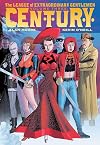
One of my projects this year is catching up on series I let fall by the wayside over the years. I read the first two parts of this collection when they were originally released, but I never got around to the conclusion of the story arc until now.
The through story has the League of Extraordinary Gentleman -- reduced to a core group of Mina Murray, Orlando, and Allan Quartermain -- facing off against a pastiche of Aleister Crowley in his century-long attempt to create the Antichrist and bring show more about the apocalypse. Each of the three chapters is built around a parody of a particular work. In 1910, the events of Bertolt Brecht's The Threepenny Opera play out, complete with musical numbers. In 1969, things get a little recursive as Moore turns the 1970 film Performance, which starred Mick Jagger as a rock star, into a fractured history of the Rolling Stones and the death of Brian Jones. Finally, in 2009, the Harry Potter franchise becomes ground zero for the end of time.
Of course, in a shared universe for all literature ever written, one can also find Easter eggs galore from the works of Ian Fleming, Jules Verne, W. Somerset Maugham, Shakespeare, Michael Moorcock, P. L. Travers, Arthur Conan Doyle, and many, many more. Film and television characters are also included, often just wandering through the background, but a version of Emma Peel from TV's The Avengers plays an increasingly important role in the main story. While the League started with public domain characters, Moore usually tiptoes around more modern trademarked material by clearly being satirical or staying in the vague realm of allusion. Moore's friend Iain Sinclair actually let him straight-up borrow the Andrew Norton character from his Slow Chocolate Autopsy. There are various websites that try to document the many obvious and obscure references crammed into this book, and I recommend browsing around to get a full appreciation for the sheer volume of them.
In the end, this the sort of book where the core story may not be totally satisfying, but it's ultimately secondary to all the research and analysis it inspires. Sort of like a lot of the Marvel Cinematic Universe movies.
FOR REFERENCE:
Contents: 1. What Keeps Mankind Alive [Century: 1910] -- 2. Paint It Black [Century: 1969] -- 3. Let It Come Down [Century: 2009] -- Minions of the Moon, Chapter One: Into the Limbus -- Minions of the Moon, Chapter Two: The Distance from Tranquility -- Minions of the Moon, Chapter Three: Saviours -- Cover Gallery show less
The through story has the League of Extraordinary Gentleman -- reduced to a core group of Mina Murray, Orlando, and Allan Quartermain -- facing off against a pastiche of Aleister Crowley in his century-long attempt to create the Antichrist and bring show more about the apocalypse. Each of the three chapters is built around a parody of a particular work. In 1910, the events of Bertolt Brecht's The Threepenny Opera play out, complete with musical numbers. In 1969, things get a little recursive as Moore turns the 1970 film Performance, which starred Mick Jagger as a rock star, into a fractured history of the Rolling Stones and the death of Brian Jones. Finally, in 2009, the Harry Potter franchise becomes ground zero for the end of time.
Of course, in a shared universe for all literature ever written, one can also find Easter eggs galore from the works of Ian Fleming, Jules Verne, W. Somerset Maugham, Shakespeare, Michael Moorcock, P. L. Travers, Arthur Conan Doyle, and many, many more. Film and television characters are also included, often just wandering through the background, but a version of Emma Peel from TV's The Avengers plays an increasingly important role in the main story. While the League started with public domain characters, Moore usually tiptoes around more modern trademarked material by clearly being satirical or staying in the vague realm of allusion. Moore's friend Iain Sinclair actually let him straight-up borrow the Andrew Norton character from his Slow Chocolate Autopsy. There are various websites that try to document the many obvious and obscure references crammed into this book, and I recommend browsing around to get a full appreciation for the sheer volume of them.
In the end, this the sort of book where the core story may not be totally satisfying, but it's ultimately secondary to all the research and analysis it inspires. Sort of like a lot of the Marvel Cinematic Universe movies.
FOR REFERENCE:
Contents: 1. What Keeps Mankind Alive [Century: 1910] -- 2. Paint It Black [Century: 1969] -- 3. Let It Come Down [Century: 2009] -- Minions of the Moon, Chapter One: Into the Limbus -- Minions of the Moon, Chapter Two: The Distance from Tranquility -- Minions of the Moon, Chapter Three: Saviours -- Cover Gallery show less
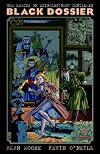
This has the best concept of all the latter-day LOEGs: in a post-postwar, post-Big-Brother-government (think if instead of the Attlee government a bunch of public schoolboys unleashed 1984), Mina Murray and Allan Quatermain (now immortal as a result of having bathed in the pool from Rider Haggard's She) do some cloak-and-dagger shit to get the dossier and find out the amazing history of the group of which they are a part (going back to Prospero, Gulliver, etc.), while on the run from Harry show more Lime and an evil James Bond and Miss Knight from The Avengers. It gets the grey period atmosphere just right and adds that soupçon of post-totalitarian trauma (I like the idea too of its not being a real evil world-system but just a pack of lies fed to the British for a decade or so; gives you sort of a new glimpse at the psychological reality of say the Hitler or Kim periods, which remade the world nearly as much for their subjects, nearly as fast). And the passages in Newspeak, giving us new valuable corpus data on that malignant language, are great, especially the warning "THIS WARN YOU" at the start of the dossier. The stories from the dossier themselves are a mixed bag and slow down the momentum; too often it's a pedantic crawl as you decide whether to give a shit about the various obscurities Moore is dragging in and head to the LOEG wikis to look 'em up or just press on, or a Fanny Hill sexy chapbook because modern sex is trashy and oldtimey sex is classy, right Alan Moore? Urgh. show less

When Alan Moore went out to create the Grand Unified Theory of Literature, he really started something big. So big, in fact, that another author has written at least three books explaining every single reference of Moore's League of Extraordinary Gentlemen.
If you've only seen the film, immediately forget that you saw it. If you read the atrocious novelization of said film, forget you've ever read it. If you want to experience true League, you must be willing to earn it. How do you earn it? show more Well, by reading a comic book, and occasionally reading blocks of text that, while seemingly unimportant, are chock full of little tidbits and references to great literary works, and even more subtly known works.
The premise of the first book is this: a world in which all literary characters coexist. Mina Harker (of Dracula) recruits several individuals of the Victorian era of literature: Allan Quatermain, Henry Jekyll, Captain Nemo, and Hawley Griffin (the Invisible Man). They are tasked with preventing a mad doctor, who is a weakly disguised Fu Manchu, from making use of the lighter-than-air element: Cavorite!
Just because these characters are protagonists doesn't mean they're "heroes." Allan has chemical dependencies, Griffin looks out for himself, Nemo is prejudiced, and Jekyll spends a little too much time as Hyde.
No matter, I was hooked, and I'm sure you'll be hooked too, if you're a fan of the literature of that era. show less
If you've only seen the film, immediately forget that you saw it. If you read the atrocious novelization of said film, forget you've ever read it. If you want to experience true League, you must be willing to earn it. How do you earn it? show more Well, by reading a comic book, and occasionally reading blocks of text that, while seemingly unimportant, are chock full of little tidbits and references to great literary works, and even more subtly known works.
The premise of the first book is this: a world in which all literary characters coexist. Mina Harker (of Dracula) recruits several individuals of the Victorian era of literature: Allan Quatermain, Henry Jekyll, Captain Nemo, and Hawley Griffin (the Invisible Man). They are tasked with preventing a mad doctor, who is a weakly disguised Fu Manchu, from making use of the lighter-than-air element: Cavorite!
Just because these characters are protagonists doesn't mean they're "heroes." Allan has chemical dependencies, Griffin looks out for himself, Nemo is prejudiced, and Jekyll spends a little too much time as Hyde.
No matter, I was hooked, and I'm sure you'll be hooked too, if you're a fan of the literature of that era. show less

Whenever I mention the League of Extraordinary Gentleman I receive a blank look, and then I explain there was a movie adaptation with Sean Connery and there’s some glimmer of recognition. But, really, the film is awful and shouldn’t be considered in the same breath as the graphic novels from which it was adapted. By my count, there’ve been six previous volumes, and three spin-off volumes (the Nemo books). The last three books were actually one split into three, Century: 1910, Century: show more 1969 and Century: 2009, which is why The Tempest, the seventh graphic novel, is number four. For those who have never encountered this particular League of Extraordinary Gentlemen, they’re a group of fictional characters with, well, extraordinary abilities from Victorian/Edwardian literature. The original members were Mina Harker (from Dracula), Captain Nemo, Dr Jekyll, the Invisible Man and Allan Quatermain (from H Rider Haggard’s novels), but also featured Professor Cavor, Fu Manchu, Sherlock Holmes, Moriarty and HG Wells’s Martians. Subsequent volumes continued to mine and mashup proto-genre stories in many and clever ways. The Tempest, despite the ten-year gap, follows on directly from Century. As the title suggests, it centres around Prospero, and other fantastical Shakespearean characters, although it’s not unashamed to incorporate characters and institutions from other science fiction properties, such as TV21 – both Spectrum and World Aquanaut Security Patrol make an appearance. There are other dimensions to the pastiche – MI5, for example, operates a group of “J-series” secret agents, each of whom are modelled on the actors who played James Bond in the 007 movies, including Woody Allen. Some of the art is also clearly an homage to Jack Kirby’s. And it’s not all art – the book is split into six “issues” (was it published as a mini-series? I don’t know), each of which have cover art that spoofs well-known comics, and include an introduction and a letters page (written and collated by “Al and Kev”). The introductions are mini-essays on renowned British comic artists, such as Leo Baxendale and Frank Bellamy, and the letters pages are Viz-like spoofs in which it’s made clear the letter-writers are as fictional as the comic’s characters (or are they?). The story itself is told through a series of strips, echoing British comics’ anthology nature, some of which are colour, some black and white, and some 3D (glasses are included). This is a graphic novel that not only celebrates the works from which its characters were taken but also the British comics industry and its output. It is not just a graphic novel about the Blazing World – named for Margaret Cavendish’s 1666 proto-sf novel, and a sort of sanctuary for the series’s many characters – and the threat to its existence, but also a celebration of British comic history, told in a voice familiar likely only to those who have read British comics. I loved it. It wasn’t just the “spot the mashup”, or the somewhat convoluted story and its cast, but the fact it echoed my own experience of comics, British comics, although not entirely as, since I’m more than a decade younger than Alan Moore, it doesn’t quite map onto my comic-reading, which was Beano/Dandy to war comics such as Warlord, Victor and the Commando Library, to 2000 AD and Star Lord and Tornado… to books without pictures. Ah well. The Tempest is a great piece of work, The League of Extraordinary Gentlemen is an excellent series from start to finish. I find Alan Moore’s work stretches from the sublime to the indulgent, but this series is definitely the former. Recommended. But start from the beginning. show less
Lists
Awards


You May Also Like
Associated Authors
Statistics
- Works
- 73
- Also by
- 40
- Members
- 14,201
- Popularity
- #1,621
- Rating
- 3.8
- Reviews
- 285
- ISBNs
- 218
- Languages
- 10
- Favorited
- 2
