

James Trefil
Author of The Dictionary of Cultural Literacy
About the Author
James Trefil was born in Chicago and educated at the University of Illinois, Oxford University, and Stanford University, where he earned a Ph.D. in physics. Currently Clarence H. Robinson Professor of physics at George Mason University, he is among the well-respected scientists who have the skill show more to translate physics for the general reader into prose worthy of an English major. For example, his "meditation trilogy," described below, recounts interesting examples, clear explanations, and the wonder of science in Trefil's beautiful and lively language. (Bowker Author Biography) show less
Works by James Trefil
Cosmic Queries: StarTalk's Guide to Who We Are, How We Got Here, and Where We're Going (2021) 325 copies, 8 reviews
The Edge of the Unknown: 101 Things You Don't Know About Science And No One Else Does Either (1996) 221 copies, 4 reviews
The Moment of Creation: Big Bang Physics from Before the First Millisecond to the Present Universe (1983) 134 copies
The Nature of Science: An A-Z Guide to the Laws and Principles Governing Our Universe (2003) 76 copies, 2 reviews
Imagined Life: A Speculative Scientific Journey among the Exoplanets in Search of Intelligent Aliens, Ice Creatures, and Supergravity Animals (2019) 59 copies, 3 reviews
The Story of Innovation: How Yesterday's Discoveries Lead to Tomorrow's Breakthroughs (2017) 9 copies
Good Seeing: A Century of Science at the Carnegie Institution of Washington, 1902-2002 (2001) 5 copies
The Routledge Guidebook to Einstein's Relativity (The Routledge Guides to the Great Books) (2015) 5 copies
Associated Works
Cultural Literacy: What Every American Needs to Know (1987) — Contributor — 1,894 copies, 13 reviews
Tagged
Common Knowledge
- Canonical name
- Trefil, James
- Legal name
- Trefil, James Stanley
- Birthdate
- 1938-09-10
- Gender
- male
- Education
- Stanford University
- Occupations
- professor
- Organizations
- University of Virginia
George Mason University - Awards and honors
- Andrew Gemant Award (2000)
Science Writing Award (2007) - Nationality
- USA
- Birthplace
- Chicago, Illinois, USA
- Associated Place (for map)
- Illinois, USA
Members
Reviews
Imagined Life: A Speculative Scientific Journey among the Exoplanets in Search of Intelligent Aliens, Ice Creatures, and Supergravity Animals by James Trefil
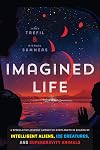
Is there life elsewhere in the universe? Is it made of the same stuff as us, on an Earthlike world, or does it have different chemistry on a different kind of planet? These are fascinating questions for any space fan, but they are also frustrating, because we have so little data. At best, we can imagine what might be out there, either thought experiments firmly based in known physics or speculative fiction or some combination of the two. At the outset, Trefil and Summers’ book is an show more excellent introduction to the basic ideas of the study of astrobiology, explaining what experiments have shown us so far, what scientists are searching for, and the underlying physics and chemistry. The language is very accessible, always emphasizing the questions scientists are asking, how we’ve discovered answers, and how much we still don’t know. When the authors run out of facts and data—and that doesn’t take long, this is astrobiology we’re talking about—it turns speculative, considering several different kinds of exoplanetary environments where life might arise, and the reasons why (or why not) intelligent life could result. I would especially recommend this book to any kid (or adult) who enjoys writing hard science fiction, as inspiration for imagining alien life. show less
Imagined Life: A Speculative Scientific Journey among the Exoplanets in Search of Intelligent Aliens, Ice Creatures, and Supergravity Animals by James Trefil
This is a little wacky, but entertaining and thought-provoking.
I have a poster in my house from a science fiction magazine in the 1940s, depicting an imaginary scene on Pluto. The text reads, “This world of cold and eternal twilight would most likely be inhabited by winged bat-people with heavy protecting fur.”
Of course, the science in this book is updated, and Trefil and Summers talk like scientists, not poster-writers, but some passages in the book sound just a little bit like that show more poster. The tone of course is intentionally speculative, even a little light-hearted, but I wouldn’t want a naive reader to get the impression that the universe must be overflowing with intelligent, technological species on one exoplanet after another, whether they are ice worlds, super-Earths, rogue planets, or any of the other types of planets that the authors discuss.
The plan of the book is pretty straightforward. The first few chapters concern the ground rules of speculation — the laws of nature and biology, primarily. Then the authors take us through the relevant categories of exoplanets: solidly frozen planets (christened Iceheim), planets with frozen surfaces over liquid oceans (Nova Europa), water planets (Neptunia), Earth-like planets (Goldilocks), planets in tidally locked orbits around their stars (Halo), rogue planets that orbit no central star (Lonesome), and super-Earths (Big Boy).
For each, the authors describe the planet's likely environmental conditions, how life might get started, what life might be like there, and what sort of technology development might take place. Each chapter in the book ends with a short, imaginary dialogue between “Mike and Jim,” inhabitants of the type of planet being discussed (and analogs to the authors), which kind of nicely demonstrates the Earth-chauvinism of some skeptics about extraterrestrial life and intelligence — “Mike and Jim” typically conclude that their own type of planet is the only one on which intelligent life could develop.
The discussions are quick and make fantastic leaps, e.g., that where microbial, single-celled life emerges, it will develop into multi-cellular, more complex life, or that the kinds of reasoning and motivations that drive technological development on Earth will also be at work to drive analogous technological development where intelligence emerges elsewhere. And that’s fine, so long as we keep in mind that the discussion is propelled by leaps of imagination and unbounded optimism about the evolution of intelligent, technological life. It’s a bit fanciful.
If you want more sober (and scientifically tight) but still speculative discussions of some of the same topics, have a look at The Astrobiological Landscape (Milan Cirkovic) or Aliens: The World’s Leading Scientists on the Search for Extraterrestrial Life (Jim Al-Khalili (ed.)).
After this kind of tour through categories of exoplanets, the authors zero in for specific, although brief, looks at some particular exoplanets — those in the TRAPPIST-1 system and some others chosen as instantiations of the types discussed previously. Some of these exoplanets have been discussed often in news and speculative discussions elsewhere, so it is nice to be able to relate them back into the authors’ own context.
Finally they go on to a couple of even more speculative discussions. First is “life not like us” — e.g., life based on silicon in place of carbon or another liquid medium in place of water. And then “life that is really not like us” — e.g., life based on electric currents and magnetic fields, or artificial life (robotic life, in some sense of “robot”).
These discussions are also very brief and sketchy, but they do serve to emphasize the importance of letting our imaginations roam freely. The authors, if they make no other point in the book, take great pains to make this one point — that we cannot limit our thinking by the one example we have of life and intelligent life, ourselves. What we find out there may be truly alien — something even beyond the bounds of the kind of liberated imagination they practice here.
All in all, I’ll have to admit that the fanciful tone of the book didn’t really hit my sweet spot. I’m not objecting to speculation — in fact, the books I mentioned above are highly speculative, just a bit more chastened by some of the problems and open questions that plague the topic.
This book is fun, it’s even a breezy read. Just don’t take it for anything other that what it is -- kind of like a stretching routine for people who want to think about the possibilities of extraterrestrial life. show less
I have a poster in my house from a science fiction magazine in the 1940s, depicting an imaginary scene on Pluto. The text reads, “This world of cold and eternal twilight would most likely be inhabited by winged bat-people with heavy protecting fur.”
Of course, the science in this book is updated, and Trefil and Summers talk like scientists, not poster-writers, but some passages in the book sound just a little bit like that show more poster. The tone of course is intentionally speculative, even a little light-hearted, but I wouldn’t want a naive reader to get the impression that the universe must be overflowing with intelligent, technological species on one exoplanet after another, whether they are ice worlds, super-Earths, rogue planets, or any of the other types of planets that the authors discuss.
The plan of the book is pretty straightforward. The first few chapters concern the ground rules of speculation — the laws of nature and biology, primarily. Then the authors take us through the relevant categories of exoplanets: solidly frozen planets (christened Iceheim), planets with frozen surfaces over liquid oceans (Nova Europa), water planets (Neptunia), Earth-like planets (Goldilocks), planets in tidally locked orbits around their stars (Halo), rogue planets that orbit no central star (Lonesome), and super-Earths (Big Boy).
For each, the authors describe the planet's likely environmental conditions, how life might get started, what life might be like there, and what sort of technology development might take place. Each chapter in the book ends with a short, imaginary dialogue between “Mike and Jim,” inhabitants of the type of planet being discussed (and analogs to the authors), which kind of nicely demonstrates the Earth-chauvinism of some skeptics about extraterrestrial life and intelligence — “Mike and Jim” typically conclude that their own type of planet is the only one on which intelligent life could develop.
The discussions are quick and make fantastic leaps, e.g., that where microbial, single-celled life emerges, it will develop into multi-cellular, more complex life, or that the kinds of reasoning and motivations that drive technological development on Earth will also be at work to drive analogous technological development where intelligence emerges elsewhere. And that’s fine, so long as we keep in mind that the discussion is propelled by leaps of imagination and unbounded optimism about the evolution of intelligent, technological life. It’s a bit fanciful.
If you want more sober (and scientifically tight) but still speculative discussions of some of the same topics, have a look at The Astrobiological Landscape (Milan Cirkovic) or Aliens: The World’s Leading Scientists on the Search for Extraterrestrial Life (Jim Al-Khalili (ed.)).
After this kind of tour through categories of exoplanets, the authors zero in for specific, although brief, looks at some particular exoplanets — those in the TRAPPIST-1 system and some others chosen as instantiations of the types discussed previously. Some of these exoplanets have been discussed often in news and speculative discussions elsewhere, so it is nice to be able to relate them back into the authors’ own context.
Finally they go on to a couple of even more speculative discussions. First is “life not like us” — e.g., life based on silicon in place of carbon or another liquid medium in place of water. And then “life that is really not like us” — e.g., life based on electric currents and magnetic fields, or artificial life (robotic life, in some sense of “robot”).
These discussions are also very brief and sketchy, but they do serve to emphasize the importance of letting our imaginations roam freely. The authors, if they make no other point in the book, take great pains to make this one point — that we cannot limit our thinking by the one example we have of life and intelligent life, ourselves. What we find out there may be truly alien — something even beyond the bounds of the kind of liberated imagination they practice here.
All in all, I’ll have to admit that the fanciful tone of the book didn’t really hit my sweet spot. I’m not objecting to speculation — in fact, the books I mentioned above are highly speculative, just a bit more chastened by some of the problems and open questions that plague the topic.
This book is fun, it’s even a breezy read. Just don’t take it for anything other that what it is -- kind of like a stretching routine for people who want to think about the possibilities of extraterrestrial life. show less
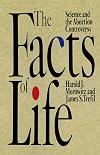
Harold J. Morowitz, professor of biology, and James Trefil, who teaches physics, both at George Mason University, have produced what I consider to be one of the seminal books on abortion that I have read. They examine the concepts of "life" and humanness. They point out that at the molecular level we are indistinguishable from plants and bacteria -- on a chemical level our cells function the same as brewer's yeast, a single cell organism; and we share a 98.5% genetic (DNA coding) with show more chimpanzees -- which are also "alive." Therefore, the important question one must ask is at what point the fetus or zygote acquires those characteristics that make us human, for no one would deny that we are indeed profoundly different from other forms of life. The point at which humanness is acquired (not personhood, which is a legal concept) becomes important to help distinguish between the rights of the mother and those of the fetus.
An enormous amount of change occurs from conception to birth, and the authors have examined the biological and scientific evidence to determine at what point this humanness is acquired. From a biologist's point of view, at conception, "two previously existing living things come together to form another living thing." Traditionally the anti-abortion advocates have argued that because the DNA genetic code exists at conception, that is when "life" begins. Morowitz and Trefil suggest that is like saying a building is complete when the blueprints are done. The combining creates the DNA blueprint, but dead tissue excised in a hospital has the same DNA blueprint, and cancerous tumors contain genetic uniqueness, yet no one would call them "life" worthy of preservation. Not to mention the fact that only about 1/3 of all conceptions lead to a successful birth -- nature performs abortions at a much higher rate than humans. (Research being done on parthenogenesis -- birth without conception -- indicates that unfertilized eggs can be stimulated to divide and begin the development of a complete adult: a Gloria Steinem fantasy come true.)
To make a long, but fascinating, story short, the authors propose that humanness begins at the moment when the cerebral cortex is formed and the synapses begin functioning. This is not a unique nor new position. The Jesuit scholar Teilhard de Chardin and the Catholic theologian Bernard Haring have both written that the cerebral cortex is the "center of all personal manifestations and activities." It is here that speech, conscious movement, visual information and sensory stimuli are all processed. The enlarged cerebral cortex is unique to humans, and it becomes a functioning entity sometime between 25 and 30 weeks of development. Coincidentally, that is also when electroencephalographic readings take place. (The absence of EEG readings is now widely used as a determination of death.) Teilhard de Chardin, who was a paleontologist, as well as a theologian, regarded the "development of an enlarged cerebral cortex as almost a second creation -- as a sign from God that humanity is, indeed, special, regardless of the fact that we share a common ancestry with all other life." Hence the authors recommend that in the conflict of rights, until the fetus achieves synapses in the cerebral cortex, at about 7 months, the woman shall choose and her rights must predominate. After 7 months, a loss of certainty occurs and one can no longer deny with certainty the humanity of the fetus, and its rights must be considered and protected.
This book will probably not solve the abortion dilemma, but it goes a long way toward providing a rational and scientific basis for evidence of what constitutes humanness and at what point we achieve that distinction. It should be required reading. show less
An enormous amount of change occurs from conception to birth, and the authors have examined the biological and scientific evidence to determine at what point this humanness is acquired. From a biologist's point of view, at conception, "two previously existing living things come together to form another living thing." Traditionally the anti-abortion advocates have argued that because the DNA genetic code exists at conception, that is when "life" begins. Morowitz and Trefil suggest that is like saying a building is complete when the blueprints are done. The combining creates the DNA blueprint, but dead tissue excised in a hospital has the same DNA blueprint, and cancerous tumors contain genetic uniqueness, yet no one would call them "life" worthy of preservation. Not to mention the fact that only about 1/3 of all conceptions lead to a successful birth -- nature performs abortions at a much higher rate than humans. (Research being done on parthenogenesis -- birth without conception -- indicates that unfertilized eggs can be stimulated to divide and begin the development of a complete adult: a Gloria Steinem fantasy come true.)
To make a long, but fascinating, story short, the authors propose that humanness begins at the moment when the cerebral cortex is formed and the synapses begin functioning. This is not a unique nor new position. The Jesuit scholar Teilhard de Chardin and the Catholic theologian Bernard Haring have both written that the cerebral cortex is the "center of all personal manifestations and activities." It is here that speech, conscious movement, visual information and sensory stimuli are all processed. The enlarged cerebral cortex is unique to humans, and it becomes a functioning entity sometime between 25 and 30 weeks of development. Coincidentally, that is also when electroencephalographic readings take place. (The absence of EEG readings is now widely used as a determination of death.) Teilhard de Chardin, who was a paleontologist, as well as a theologian, regarded the "development of an enlarged cerebral cortex as almost a second creation -- as a sign from God that humanity is, indeed, special, regardless of the fact that we share a common ancestry with all other life." Hence the authors recommend that in the conflict of rights, until the fetus achieves synapses in the cerebral cortex, at about 7 months, the woman shall choose and her rights must predominate. After 7 months, a loss of certainty occurs and one can no longer deny with certainty the humanity of the fetus, and its rights must be considered and protected.
This book will probably not solve the abortion dilemma, but it goes a long way toward providing a rational and scientific basis for evidence of what constitutes humanness and at what point we achieve that distinction. It should be required reading. show less
Cosmic Queries: StarTalk's Guide to Who We Are, How We Got Here, and Where We're Going by Neil deGrasse Tyson

Cosmic Queries expands on Neil deGrasse Tyson's StarTalk and aims to answer the big questions about the universe. Tyson has a way of making these very big and difficult concepts easy to understand, bringing the universe down to earth. Beginning from how we know what we know in space, measurements and some of the scientists who have led to these discoveries we are then led to ask questions of how the universe got to be how it is, what the universe is made out of, what life is, if we are show more alone, how this all began and eventually, how it will end.
Whenever I read a book about space I am always amazed about how much I do not know. I revel in being able to learn and understand more about our world and what is beyond. Cosmic Queries not only gives me a good foundation to begin to understand the questions posed in the book, but reminds me of how much we don't know about what we don't know as well as the fact that "the most interesting questions are the ones we don't yet know to ask." As I read through each chapter, the knowledge from previous chapters was slowly built upon, helping to expand my thinking and ask further questions. In addition, I learned about some of the pioneers of astronomy and the risks they took in order to get their knowledge out into the world. Overall, Cosmic Queries is an excellent read for any curious mind.
This book was received for free in return for an honest review. show less
Whenever I read a book about space I am always amazed about how much I do not know. I revel in being able to learn and understand more about our world and what is beyond. Cosmic Queries not only gives me a good foundation to begin to understand the questions posed in the book, but reminds me of how much we don't know about what we don't know as well as the fact that "the most interesting questions are the ones we don't yet know to ask." As I read through each chapter, the knowledge from previous chapters was slowly built upon, helping to expand my thinking and ask further questions. In addition, I learned about some of the pioneers of astronomy and the risks they took in order to get their knowledge out into the world. Overall, Cosmic Queries is an excellent read for any curious mind.
This book was received for free in return for an honest review. show less
Lists
Awards


You May Also Like


Associated Authors
Statistics
- Works
- 59
- Also by
- 4
- Members
- 5,210
- Popularity
- #4,781
- Rating
- 3.7
- Reviews
- 49
- ISBNs
- 189
- Languages
- 15
- Favorited
- 1