
Jim Eldridge
Author of Trenches (My Story)
About the Author
Series
Works by Jim Eldridge
Black Ops (3 Book Series) 1 copy
Standing Alone 1 copy
Associated Works
Richard the Lionheart: The Life of a King and Crusader (2005) — Illustrator, some editions — 38 copies, 2 reviews
Tagged
Common Knowledge
- Birthdate
- 1944-11-25
- Gender
- male
- Occupations
- author
scriptwriter (former)
teacher (former) - Agent
- Hilary Delamere (The Agency|children and young adult books)
Jane Conway-Gordon (adult fiction) - Nationality
- UK
- Birthplace
- King's Cross, London, England, UK
- Places of residence
- Luton, Bedfordshire, England, UK
Kent, England, UK - Associated Place (for map)
- England, UK
Members
Reviews

I think this is a very good book for many reasons, but it’s quite obvious it was written from a British point of view (Professor Ian Beckett of Rutherford College, University of Kent, is listed as Consultant), especially because of its glaring omissions.
But let’s start with the positives. The book is loaded with reader-friendly infographics, excellent and colorful maps, photos, fact boxes, and pretty good, if brief, coverage of most aspects of the war. I don’t think anyone is going to show more be bored by the history lessons in this book.
The only criticism I have of [that part of] the book is the inclusion of too many exclamation marks. The whole war was unimaginable; there is no reason to keep throwing in exclamations!
Let’s proceed to the first hint you get that this book was produced in Britain, which would be the story of the Gallipoli Campaign. The area of the battle was extremely important; the Dardanelles is a narrow strait leading to the Sea of Marmara, the Bosporus and the Black Sea.
It was controlled by the Ottoman Empire, blocking off both a supply route to the Russians and preventing the Allies from conquering the Ottomans. The Battle of Gallipoli turned out to be a huge disaster for the Allies, giving true meaning to the term “turkey shoot” since the Turks had an open field of fire from the heights on the Allies trying to advance. But most tellingly: whose idea was it, and who was responsible for its poor planning and execution? None other than Winston Churchill, at that time First Lord of the Admiralty, never mentioned anywhere in the book.
Churchill fails to appear at least two additional times when he definitely should have. The next occasion came with the sinking of the Lusitania, which was a major factor in bringing the U.S. into the war. Churchill has long been suspected of knowing the Lusitania would be in danger, but of welcoming the opportunity to get the U.S. involved. As Hampton Sides wrote in a recent review of Erik Larson’s new book about the Lusitania:
"Shortly before the disaster, Churchill had written in a confidential letter that it was ‘most important to attract neutral shipping to our shores, in the hopes especially of embroiling the United States with Germany.’ Afterward, he all but celebrated the sinking as a great Allied victory, saying, ‘The poor babies who perished in the ocean struck a blow at German power more deadly than could have been achieved by the sacrifice of a hundred thousand fighting men.’”
But the most important omission of the many roles of Churchill comes with the very sketchy discussion of the part the British played in the disposition of the Middle East - including Saudi Arabia and Palestine, the awful effects of which we are still experiencing today. The secret agreement dividing the Ottoman Empire’s vast land mass into British and French spheres of influence was known as The Sykes-Picot Agreement. The ways in which the Allies decided to split up the region were rather mind-numbingly complex, but were designed to ensure, inter alia, that Britain would have access to the oil in the area. As a "New Yorker" article on the history of the agreement points out, "the original Sykes-Picot map . . . is still viewed as the root cause of much that has happened ever since."
[And in fact, some of the most powerful ideologies taking hold in the Middle East, such as Nasserism in Egypt, and Baathism in Iraq and Syria, have been in response to the agreement. A leader of the Islamic State or ISIS, Abu Bakr al-Baghdadi, specifically referenced his intention to erase the shame of the secret French-British pact of 1916, the Sykes-Picot Agreement, as one of the goals of his movement.] Certainly there were a number of other important players who divided up the Middle East like pieces on a chess board, but Churchill was a major actor.
There are a couple of other flagrant omissions, besides that of Churchill. The text makes it seem as if the Russian Revolution was mainly a reaction to the wealth gap, war failures, and food shortages experienced during the reign of the Russian leader at the time, Nicholas II. Certainly these played a role, but Russia had a long history of these problems. The spread of new intellectual movements, in particular Marxism, both in Russia specifically and roiling the waters throughout Europe generally, made a huge contribution as well. The book only records that Lenin, who was a “revolutionary,” and his group of “Bolsheviks” (undefined), set up a “communist” state (likewise unexplained).
Finally, towards the end of the book, the casualties are toted up, along with mention of “shell shock” (today called PTSD) and the single phrase about civilians that “many more died from disease or famine brought about the war.” In fact, the influenza pandemic of 1918-1919, spread with the help of troop movements around the world, killed more people than the war itself, estimated by the U.S. Department of Health at somewhere between 30 and 50 million people. It has been cited as the most devastating epidemic in recorded world history. A fifth of the world's population was infected including 28% of all Americans. An estimated 675,000 Americans died of influenza during the pandemic, ten times as many as in the world war. That seems like it would be worth a mention.
But, the fact is, there are numerous histories of World War I, and depending on the historian, country of origin, archives accessed, and year published, you will see many different versions of what happened. This book does a great job at introducing the subject to students. All the eye-popping pictures and facts will no doubt inspire further inquiries, at which time the omitted portions of the history will become clear.
Evaluation: Great maps and infographics with plenty of photos will make the time fly as you learn the basics about the Great War. The publisher recommends the book for ages 7 and up. show less
But let’s start with the positives. The book is loaded with reader-friendly infographics, excellent and colorful maps, photos, fact boxes, and pretty good, if brief, coverage of most aspects of the war. I don’t think anyone is going to show more be bored by the history lessons in this book.
The only criticism I have of [that part of] the book is the inclusion of too many exclamation marks. The whole war was unimaginable; there is no reason to keep throwing in exclamations!
Let’s proceed to the first hint you get that this book was produced in Britain, which would be the story of the Gallipoli Campaign. The area of the battle was extremely important; the Dardanelles is a narrow strait leading to the Sea of Marmara, the Bosporus and the Black Sea.
It was controlled by the Ottoman Empire, blocking off both a supply route to the Russians and preventing the Allies from conquering the Ottomans. The Battle of Gallipoli turned out to be a huge disaster for the Allies, giving true meaning to the term “turkey shoot” since the Turks had an open field of fire from the heights on the Allies trying to advance. But most tellingly: whose idea was it, and who was responsible for its poor planning and execution? None other than Winston Churchill, at that time First Lord of the Admiralty, never mentioned anywhere in the book.
Churchill fails to appear at least two additional times when he definitely should have. The next occasion came with the sinking of the Lusitania, which was a major factor in bringing the U.S. into the war. Churchill has long been suspected of knowing the Lusitania would be in danger, but of welcoming the opportunity to get the U.S. involved. As Hampton Sides wrote in a recent review of Erik Larson’s new book about the Lusitania:
"Shortly before the disaster, Churchill had written in a confidential letter that it was ‘most important to attract neutral shipping to our shores, in the hopes especially of embroiling the United States with Germany.’ Afterward, he all but celebrated the sinking as a great Allied victory, saying, ‘The poor babies who perished in the ocean struck a blow at German power more deadly than could have been achieved by the sacrifice of a hundred thousand fighting men.’”
But the most important omission of the many roles of Churchill comes with the very sketchy discussion of the part the British played in the disposition of the Middle East - including Saudi Arabia and Palestine, the awful effects of which we are still experiencing today. The secret agreement dividing the Ottoman Empire’s vast land mass into British and French spheres of influence was known as The Sykes-Picot Agreement. The ways in which the Allies decided to split up the region were rather mind-numbingly complex, but were designed to ensure, inter alia, that Britain would have access to the oil in the area. As a "New Yorker" article on the history of the agreement points out, "the original Sykes-Picot map . . . is still viewed as the root cause of much that has happened ever since."
[And in fact, some of the most powerful ideologies taking hold in the Middle East, such as Nasserism in Egypt, and Baathism in Iraq and Syria, have been in response to the agreement. A leader of the Islamic State or ISIS, Abu Bakr al-Baghdadi, specifically referenced his intention to erase the shame of the secret French-British pact of 1916, the Sykes-Picot Agreement, as one of the goals of his movement.] Certainly there were a number of other important players who divided up the Middle East like pieces on a chess board, but Churchill was a major actor.
There are a couple of other flagrant omissions, besides that of Churchill. The text makes it seem as if the Russian Revolution was mainly a reaction to the wealth gap, war failures, and food shortages experienced during the reign of the Russian leader at the time, Nicholas II. Certainly these played a role, but Russia had a long history of these problems. The spread of new intellectual movements, in particular Marxism, both in Russia specifically and roiling the waters throughout Europe generally, made a huge contribution as well. The book only records that Lenin, who was a “revolutionary,” and his group of “Bolsheviks” (undefined), set up a “communist” state (likewise unexplained).
Finally, towards the end of the book, the casualties are toted up, along with mention of “shell shock” (today called PTSD) and the single phrase about civilians that “many more died from disease or famine brought about the war.” In fact, the influenza pandemic of 1918-1919, spread with the help of troop movements around the world, killed more people than the war itself, estimated by the U.S. Department of Health at somewhere between 30 and 50 million people. It has been cited as the most devastating epidemic in recorded world history. A fifth of the world's population was infected including 28% of all Americans. An estimated 675,000 Americans died of influenza during the pandemic, ten times as many as in the world war. That seems like it would be worth a mention.
But, the fact is, there are numerous histories of World War I, and depending on the historian, country of origin, archives accessed, and year published, you will see many different versions of what happened. This book does a great job at introducing the subject to students. All the eye-popping pictures and facts will no doubt inspire further inquiries, at which time the omitted portions of the history will become clear.
Evaluation: Great maps and infographics with plenty of photos will make the time fly as you learn the basics about the Great War. The publisher recommends the book for ages 7 and up. show less
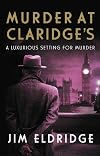
I'm a big fan of Jim Eldridge's museum mystery series, which features a male retired police detective and female archaeologist investigating murders at—you guessed it: British museums!— in the late 1800s. I somehow had missed the fact that he also writes a hotel mysteries series set in WWII London where the murders happen at—you guessed it: British hotels! This new-to-me series is every bit as engaging as the one I've been following. The different setting and cast of characters gives show more reader access to a world very different from the one in the museum series.
In this volume, a kitchen worker has been murdered outside Claridge's. This poses certain problems as a great many leaders and royals from mainland Europe have taken up residence in Claridge's after fleeing their home countries. DCI Coburg, the younger brother of a member of the aristocracy, is called in to take over the investigation because higher-ups trust him not to ruffle feathers while investigating. Coburg find that the kitchen worker is essentially a man without an identity, whose presence in Britain may or may not be a threat. Coburg also finds himself investigating a prostitution ring serving Claridge's residents (more need for not ruffling feather).
The pacing here is lively. The secondary characters are well-developed, and the depictions of life in London during the Blitz are both stark and moving. If you enjoy detective or WWII fiction, you have a real treat ahead of you. Read Murder at Claridge's—and check out Eldrige's museum mysteries as well. You have many happy hours of reading ahead of you.
I received a free electronic review copy of this title from the publisher via NetGalley; the opinions are my own. show less
In this volume, a kitchen worker has been murdered outside Claridge's. This poses certain problems as a great many leaders and royals from mainland Europe have taken up residence in Claridge's after fleeing their home countries. DCI Coburg, the younger brother of a member of the aristocracy, is called in to take over the investigation because higher-ups trust him not to ruffle feathers while investigating. Coburg find that the kitchen worker is essentially a man without an identity, whose presence in Britain may or may not be a threat. Coburg also finds himself investigating a prostitution ring serving Claridge's residents (more need for not ruffling feather).
The pacing here is lively. The secondary characters are well-developed, and the depictions of life in London during the Blitz are both stark and moving. If you enjoy detective or WWII fiction, you have a real treat ahead of you. Read Murder at Claridge's—and check out Eldrige's museum mysteries as well. You have many happy hours of reading ahead of you.
I received a free electronic review copy of this title from the publisher via NetGalley; the opinions are my own. show less
Murder at Madame Tussauds: The gripping historical whodunnit (Museum Mysteries Book 6) by Jim Eldridge
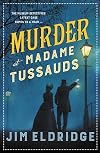
I love historical mysteries. They're my favorite kind of relaxation reading. I admit the genre has its limitations. Too often such novels have one interesting element—the inclusion of a particular historical figure or event—but are much less engaging in other areas. Murder at Madame Tussauds is NOT one of those titles. The characters are interesting, their relationships with one another are rich, and the plot is reasonably complex.
The detectives in this series, set in 1896, are a current show more Scotland Yard Inspector; a former Scotland Yard detective turned private investigator; and a female Egyptologist. (I don't know the backstory for these characters, as this is the first book in the series I've read, and there are five previous volumes.) Arthur Conan Doyle makes an appearance, and there are numerous references to the Nightingale Fund, which supported training for nurses globally. As the title suggests, there's also Madame Tussauds, where the mystery originates: one of the two nighttime guards at the museum is decapitated and left in the French revolution scene; the other has disappeared.
I have a few caveats here. The plotting owes something to Conan Doyle's The Red-Headed League. We're told our female detective holds a first-class Classics degree from Cambridge, but Cambridge didn't begin granting degrees to women until 1948, long after the novel's 1896 setting. But this is fiction, so old ideas can be revisited and historical fact can be altered for the sake of the narrative.
If you enjoy historical mysteries and are willing to allow for a little artistic license on the part of the author, you'll enjoy this book. It's one of those series that leave one feeling compelled to go back and read every previous volume.
I received a free electronic review copy of this title from the publisher via NetGalley; the opinions are my own. show less
The detectives in this series, set in 1896, are a current show more Scotland Yard Inspector; a former Scotland Yard detective turned private investigator; and a female Egyptologist. (I don't know the backstory for these characters, as this is the first book in the series I've read, and there are five previous volumes.) Arthur Conan Doyle makes an appearance, and there are numerous references to the Nightingale Fund, which supported training for nurses globally. As the title suggests, there's also Madame Tussauds, where the mystery originates: one of the two nighttime guards at the museum is decapitated and left in the French revolution scene; the other has disappeared.
I have a few caveats here. The plotting owes something to Conan Doyle's The Red-Headed League. We're told our female detective holds a first-class Classics degree from Cambridge, but Cambridge didn't begin granting degrees to women until 1948, long after the novel's 1896 setting. But this is fiction, so old ideas can be revisited and historical fact can be altered for the sake of the narrative.
If you enjoy historical mysteries and are willing to allow for a little artistic license on the part of the author, you'll enjoy this book. It's one of those series that leave one feeling compelled to go back and read every previous volume.
I received a free electronic review copy of this title from the publisher via NetGalley; the opinions are my own. show less
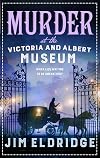
Museum Mysteries, a series by Jim Eldridge, is one of my go-to reads. Each new title that comes out feels like a bit of a vacation to me. The books read quickly, the characters are engaging, and the mystery solutions take some real thinking. The mysteries are set in London during the reign of Queen Victoria, a period I'm particularly fond of when it comes to historical mysteries.
This volume is interesting in that the narrative includes two murders, which may or may not be connected, making show more Daniel and Abigail (the central characters) unsure of the number of culprits they're seeking. Several characters have engaged in unscrupulous activities of one sort of another, so no one can be quickly removed from the list of suspects. Add in tensions between our detective pair, Scotland Yard, and government departments. There are no dull moments in this title.
If you need a mystery-based "vacation," and like historical mysteries, this title should do the trick!
I received a free electronic review copy of this title from the publisher via NetGalley; the opinions are my own. show less
This volume is interesting in that the narrative includes two murders, which may or may not be connected, making show more Daniel and Abigail (the central characters) unsure of the number of culprits they're seeking. Several characters have engaged in unscrupulous activities of one sort of another, so no one can be quickly removed from the list of suspects. Add in tensions between our detective pair, Scotland Yard, and government departments. There are no dull moments in this title.
If you need a mystery-based "vacation," and like historical mysteries, this title should do the trick!
I received a free electronic review copy of this title from the publisher via NetGalley; the opinions are my own. show less
Lists
Awards


You May Also Like


Associated Authors
Statistics
- Works
- 125
- Also by
- 2
- Members
- 2,359
- Popularity
- #10,878
- Rating
- 3.5
- Reviews
- 46
- ISBNs
- 323
- Languages
- 2
- Favorited
- 2