

Chris Weston (1) (1969–)
Author of Lucifer Vol. 01: Devil in the Gateway
For other authors named Chris Weston, see the disambiguation page.
Works by Chris Weston
The Invisibles Vol. 1 #10 — Illustrator — 5 copies
The Invisibles Vol. 2 #19 — Illustrator — 4 copies
The Invisibles Vol. 2 #20 — Illustrator — 4 copies
The Invisibles Vol. 2 #09 — Illustrator — 4 copies
The Invisibles Vol. 3 #03 — Illustrator — 4 copies
The Invisibles Vol. 2 #22 — Illustrator — 4 copies
The Invisibles Vol. 2 #21 — Illustrator — 4 copies
The Invisibles Vol. 2 #15 — Illustrator — 3 copies
The Invisibles Vol. 2 #16 — Illustrator — 3 copies
Vertigo Presenta # 7 Magic Press Febbraio 2001 — Illustrator — 1 copy
Associated Works
Tagged
Common Knowledge
- Canonical name
- Weston, Chris
- Birthdate
- 1969-01
- Occupations
- illustrator
- Nationality
- Duitsland (geboren)
Groot-Brittannië
Members
Reviews
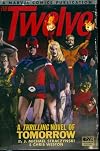
Twelve superheroes and/or masked vigilantes are cryogenically frozen by Nazis at the height of World War II. Before the Nazi scientists can unleash their nefarious plans for the dozen, the war comes to an end and the sleeping heroes are forgotten by history. That is, until construction work in 2008 unearths the underground lair where they've been sleeping away the decades. Newly awakened to all kinds of newfangled contraptions, a culture they don't understand, and family members aged or show more gone, the heroes are offered and choose to accept an offer from the United States government -- live together expense free in a designated house and consider the option of fighting for good (or at least the government) when needed.
I can't recall anymore how I first heard about this comic, but I thought the concept was interesting. Let's see what happens when a group of people awaken to their future and it's not what they expected. To make things more fun, these aren't new creations but golden-age Marvel heroes who haven't had new reboots recently. So again, let's see what happens when something older makes it way into the modern world.
But the actual book itself was disappointing. For starters, there are 12 heroes and literally ONE of them is female. And, of course, she's barely clad, is built like she'd topple forwards if she were a real person, and every male in the comic is salivating over her even though she's deadly. There's even a creepy scene where the main lead of the comic peers into her door and stares at her naked body while she's sleeping. And to add insult to injury, her powers aren't of her own making like everyone else in the book; instead, she acquired them by making a deal with the devil, quite literally, and as a result is arguably not a "good guy" in this universe. There are also other parts of the book when it's made clear that "hero" and "he" are synonymous. The comic book industry has long had difficulty understanding the very basic concept that women read comics, too. We're not going away and we want content that isn't sexist, plain and simple.
Beyond this initial problem, I found the book was way too choppy. Having 12 characters who your average reader doesn't know well means it's difficult to keep track of them all. Giving them all masked names and real names and backstories is very interesting, but it's a lot to juggle. It doesn't help that Straczynski tells his story in all kinds of chronological order. There's attempts to make this a sort of Watchmen-esque endeavor by making the heroes dark, complex, and sometimes not even acting like a hero at all, but it seems to fall flat somehow. To put it simply, the characters are just not that interesting. The best and most touching story in the book is a brief one about the Rockman's past but it's just a short snippet in a larger, mainly mundane work.
Although this book leaves many, many plotlines up in the air, I did not find the writing stunning enough, the characters interesting enough, or the overall story compelling enough to want to continue on with volume 2. Nor would I recommend this volume except to diehard Marvel fans who can't get enough of that universe. show less
I can't recall anymore how I first heard about this comic, but I thought the concept was interesting. Let's see what happens when a group of people awaken to their future and it's not what they expected. To make things more fun, these aren't new creations but golden-age Marvel heroes who haven't had new reboots recently. So again, let's see what happens when something older makes it way into the modern world.
But the actual book itself was disappointing. For starters, there are 12 heroes and literally ONE of them is female. And, of course, she's barely clad, is built like she'd topple forwards if she were a real person, and every male in the comic is salivating over her even though she's deadly. There's even a creepy scene where the main lead of the comic peers into her door and stares at her naked body while she's sleeping. And to add insult to injury, her powers aren't of her own making like everyone else in the book; instead, she acquired them by making a deal with the devil, quite literally, and as a result is arguably not a "good guy" in this universe. There are also other parts of the book when it's made clear that "hero" and "he" are synonymous. The comic book industry has long had difficulty understanding the very basic concept that women read comics, too. We're not going away and we want content that isn't sexist, plain and simple.
Beyond this initial problem, I found the book was way too choppy. Having 12 characters who your average reader doesn't know well means it's difficult to keep track of them all. Giving them all masked names and real names and backstories is very interesting, but it's a lot to juggle. It doesn't help that Straczynski tells his story in all kinds of chronological order. There's attempts to make this a sort of Watchmen-esque endeavor by making the heroes dark, complex, and sometimes not even acting like a hero at all, but it seems to fall flat somehow. To put it simply, the characters are just not that interesting. The best and most touching story in the book is a brief one about the Rockman's past but it's just a short snippet in a larger, mainly mundane work.
Although this book leaves many, many plotlines up in the air, I did not find the writing stunning enough, the characters interesting enough, or the overall story compelling enough to want to continue on with volume 2. Nor would I recommend this volume except to diehard Marvel fans who can't get enough of that universe. show less
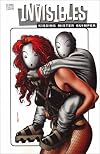
By this point in The Invisibles, the cast have all been well-established so the focus can fall on the plot and existential weirdness. This penultimate volume features a plot climax about three-quarters of the way in, when the team once again break into a secret military base in Dulce. I think it's the same one as before? After several volumes of Quimper demonstrating creepy mind-control powers, Lord Fanny and Ragged Robin trap then neutralise him. Robin uses her psychic powers to draw him in show more with a fake memory of childhood sexual abuse, then Fanny disguises herself as Robin and feeds Quimper (to?) that magic mirror substance (chaos?). This scene is brilliantly dramatic and it's good to see problem-solving that doesn't involve King Mob shooting someone.
During this re-read I picked up on the reference to The Sting, which I didn't notice last time as I hadn't seen it. Meanwhile Jim Crow tells the fable of the scorpion and frog magnificently and Dane chats with the enigmatic John O' Dreams. The latter quarter or so of the book circles back to explain how the grift was set up and do some character development. Robin says her farewells before getting back in the time machine to 2012, Boy leaves the team entirely, and King Mob throws away his gun and starts wearing a suit. Mason remains shifty; you can't trust anyone that rich and I appreciated King Mob blowing up his mansion.
Another fascinating weapon is introduced and deployed both by and against the Invisibles: the Scorpio Resonator. This makes you see and experience your fears, inducing psychosis and panic attacks. I find these world-building details very effective at driving home the existential questions that underpin the series: what is reality? Who decides what it is and controls our experience of it? Is reality narrative, fractal, linear, chaotic, ordered, good, evil, stable, evolving, decaying, or all of them at once? More specifically, who is writing the story of the Invisibles? Could it be Robin, Mason, or John? ‘Be careful what you write. It might come true.’ I love the disorientating ambiguity of this series, evoked by a fantastic combination of writing and art. show less
During this re-read I picked up on the reference to The Sting, which I didn't notice last time as I hadn't seen it. Meanwhile Jim Crow tells the fable of the scorpion and frog magnificently and Dane chats with the enigmatic John O' Dreams. The latter quarter or so of the book circles back to explain how the grift was set up and do some character development. Robin says her farewells before getting back in the time machine to 2012, Boy leaves the team entirely, and King Mob throws away his gun and starts wearing a suit. Mason remains shifty; you can't trust anyone that rich and I appreciated King Mob blowing up his mansion.
Another fascinating weapon is introduced and deployed both by and against the Invisibles: the Scorpio Resonator. This makes you see and experience your fears, inducing psychosis and panic attacks. I find these world-building details very effective at driving home the existential questions that underpin the series: what is reality? Who decides what it is and controls our experience of it? Is reality narrative, fractal, linear, chaotic, ordered, good, evil, stable, evolving, decaying, or all of them at once? More specifically, who is writing the story of the Invisibles? Could it be Robin, Mason, or John? ‘Be careful what you write. It might come true.’ I love the disorientating ambiguity of this series, evoked by a fantastic combination of writing and art. show less
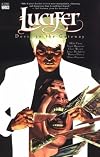
I recently reread Sandman, and while I do love it for its own sake, I must confess that my real reason for trekking through Gaiman's epic was to get to Carey's equally majestic, albeit much-less praised, story. Frankly, I'm not sure why that is, as in many ways, I think Lucifer surpasses its origin story. Both boast rich, and mostly independent cosmologies, but whereas for a significant part of its run, Sandman exists as a framework for Gaiman to write any kind of story he wants, Lucifer is show more surprisingly single-minded in telling the tale of the title character's most recent war against his creator. And frankly, I'd rather read about cunning, crafy, cold, cruel Lucifer than mopey Morpheus.
Volume one does little more than establish the setup for the rest of the series. Lucifer gets his Macguffin, and we meet the Basanos and Elaine. Sadly, Mazikeen gets short-shrift, but it's hard to do much with a character who can only barely be understood. But mostly, this book exists so that we can see what a brilliant bastard Lucifer can be. show less
Volume one does little more than establish the setup for the rest of the series. Lucifer gets his Macguffin, and we meet the Basanos and Elaine. Sadly, Mazikeen gets short-shrift, but it's hard to do much with a character who can only barely be understood. But mostly, this book exists so that we can see what a brilliant bastard Lucifer can be. show less

I read The Filth as a complete bound collection, rather than the thirteen individual comics issues. In that format, it amounts to probably my favorite graphic novel. It includes science fiction, satire, superheroism, sex, drugs, and violence. It's something like The Matrix reconstituted on the basis of a scatological rant from Antonin Artaud. It has a completely freestanding mythos, not dependent on any prior superhero or comics franchise, highly coherent when it's not completely show more mind-blowing. Despite its evident balls-out insanity, The Filth tackles serious issues and ultimately offers a sense of profound redemption.
I'm not an unequivocal fan of Grant Morrison's work: sometimes I find him indulgent and meandering. But when he hits his mark, he's awesome; and I've never read anything where he has hit it as hard as The Filth. Weston and Erskine's art is both surreal and gritty while strangely conventional, just the mix of H.R Giger, William Blake, and Joe Kubert that the story requires.
Edited to add: Morrison is on the record as having written The Filth as a companion piece to his earlier and longer series The Invisibles, even though there is no narrative continuity between them. There is certainly a lot of conceptual and thematic overlap. They can be seen as perfectly complementary, though, if viewed through the cops-and-criminals dichotomy that each eventually collapses. The Filth works initially from the cop's end of the spectrum, while The Invisibles does from the criminal's. show less
I'm not an unequivocal fan of Grant Morrison's work: sometimes I find him indulgent and meandering. But when he hits his mark, he's awesome; and I've never read anything where he has hit it as hard as The Filth. Weston and Erskine's art is both surreal and gritty while strangely conventional, just the mix of H.R Giger, William Blake, and Joe Kubert that the story requires.
Edited to add: Morrison is on the record as having written The Filth as a companion piece to his earlier and longer series The Invisibles, even though there is no narrative continuity between them. There is certainly a lot of conceptual and thematic overlap. They can be seen as perfectly complementary, though, if viewed through the cops-and-criminals dichotomy that each eventually collapses. The Filth works initially from the cop's end of the spectrum, while The Invisibles does from the criminal's. show less
Lists
Awards


You May Also Like
Associated Authors
Statistics
- Works
- 26
- Also by
- 18
- Members
- 3,144
- Popularity
- #8,117
- Rating
- 3.9
- Reviews
- 63
- ISBNs
- 130
- Languages
- 12