
William Rosencrans
Author of The Epiphanist
About the Author
Works by William Rosencrans
Freaksome Tales: Ten Hitherto Uncollected Stories of V. V. Swigferd Gloume (2013) 8 copies, 3 reviews
Tagged
Common Knowledge
- Birthdate
- 1968-03-22
- Gender
- male
- Short biography
- William Rosencrans was a church-going child and ne'er-do-well teen. He has worked as a bartender, an apple picker, a stonemason, a wood carver, a copy editor, and a host of other things. And he has always been a writer.
Members
Reviews
Any prolific reviewer on this site will have had bucketfuls of requests to review self-published novels. To take any of them up is to be chastened by the tedious corollary they represent to the genius of the networked revolution. For every gem, there's a mountain of dross.
Almost without exception, self-published books are written with great enthusiasm but little discipline: intensifiers and modifiers are sprayed about as if with a fire hose and meagre storylines are sloughed with needless show more detail. Even where attentively edited, self-published works tend to be remarkable mainly for their lack of imagination. One is often put in mind of the countless hours wasted threading humdrum characters on a string of commonplace clichés for the sake of a workaday story, the mystery being this: what possessed the poor fellow to start writing in the first place? And what cruel delusion kept him going?
Writing dreary stories can't be any more fun than reading them.
All this is by way of long-winded entrée to an exception that proves the rule. This is one of the few pearls amongst many swine.
About a year ago, I got an email from William Rosencrans. He had written a science fiction novel called The Epiphanist. It is a long, rich and complex novel: too long and too complex for me, and while I felt Rosecrans had become a little enmired in his world description, I thought his writing was tight and lively. I thought with a more insistent editing The Epiphanist could be wrought into a fine novel. We corresponded a bit about it, but nothing came of it.
A fortnight ago Rosencrans emailed me again to say he has written a new book: a collection of short horror stories of a satirical stripe. My attention span being what it is, this appealed to me. I happened to be reading P. G. Wodehouse's Something Fresh, so felt attuned to the metre. I have also just completed Neil Gaiman's Neverwhere, also a macabre tale set in London with bleakly comic undertones. (I mention these not to show off, but to prove some useful yardsticks to measure forthcoming hyperbole).
Freaksome Tales is a collection of ten stories supposedly written under the hand of the Edwardian writer V V Swigferd Gloume. They are interleaved with editorial introductions written by Rosencrans and supposedly represent a newly uncovered part of Gloume's canon, rescued from the oblivion of various defunct publications and, in one case, the waste plumbing in a basement in Limehouse. I hope this means Rosencrans is intending to write more of this material, because it is very good. I enjoyed it as much as the Wodehouse and quite a lot more than the Gaiman. Rosencrans' writing is far more accomplished than it seemed to be a year ago.
Rosencrans writes elegantly, artfully and absolutely nails the idiom. Without ever really being told his story we get a good sense of Mr Gloume, his petty resentments and prejudices (but for the most part minor, but organised around a monstrous hatred of the French). The stories themselves are deliciously macabre; a match in imaginative force for H. P. Lovecraft or M. R. James, but expounded in a neat pastiche of Wodehouse.
That said, the degree to which Rosencrans plants tongue in cheek varies more than it should. The earlier selections have a whimsical outward absurdity lacking from the later stories: The Veil Betwixt has a punchline so good I burst out laughing (to the dismay of a whole underground carriage) and A Haunting at the House of Quaddock is an uproarious tale of skulduggery in the barber's chair. On the other hand Metempsychosis is a variation on premature burial that Poe would have admired and Flesh of My Flesh is a discomfiting gothic horror which doesn't seem intended to be funny at all.
My favourite, though, has to be The Hundred Doors of Kanhaksha the Mazdakite. Here Gloume's nutty majesty is given full run as boys' own hero Knoal Heftmonks and his one-eyed mute manservant Tamerlane first encounter the dastardly Baron Houldebecq (he of the "cultivated voice with a French accent, dripping with insincerity and generally giving the impression of an eel wrapped in silk"). This is verily worthy of inclusion in Beeton's Christmas Annual of 1887, and I hope Rosecrans makes good on his implied promise to publish more Heftmonks/Houldebecq adventures: they promise a rivalry to match Holmes' and Moriarty's.
Rosencrans has even confected some authentic looking photographs of Gloume - in one, complete with exoframe - and has been thorough in his research, sparing no effort in charting the environs of Edwardian London, the rituals of Zoroastrian antiquity and everything in between. There are the occasional anachronisms, but you have to be looking hard to find them.
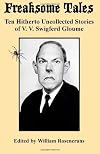
If there are false steps they are to do with the cover, and the collection's title, which is a sentence more laborious than any in the book itself. Nor does "freaksome" sound much like Edwardian parlance to me. Despite its handsome portrait of the author (a photoshopped contortion of Lovecraft), the cover has a homemade feel about it and features some corny faux blurb on the back which isn't half as funny as anything inside. Were there to be a second imprint, I'd be inclined to fix these small points.
There's more likely to be one of those if people buy the first one, though, and my fulsome recommendation would be to do just that. show less
Almost without exception, self-published books are written with great enthusiasm but little discipline: intensifiers and modifiers are sprayed about as if with a fire hose and meagre storylines are sloughed with needless show more detail. Even where attentively edited, self-published works tend to be remarkable mainly for their lack of imagination. One is often put in mind of the countless hours wasted threading humdrum characters on a string of commonplace clichés for the sake of a workaday story, the mystery being this: what possessed the poor fellow to start writing in the first place? And what cruel delusion kept him going?
Writing dreary stories can't be any more fun than reading them.
All this is by way of long-winded entrée to an exception that proves the rule. This is one of the few pearls amongst many swine.
About a year ago, I got an email from William Rosencrans. He had written a science fiction novel called The Epiphanist. It is a long, rich and complex novel: too long and too complex for me, and while I felt Rosecrans had become a little enmired in his world description, I thought his writing was tight and lively. I thought with a more insistent editing The Epiphanist could be wrought into a fine novel. We corresponded a bit about it, but nothing came of it.
A fortnight ago Rosencrans emailed me again to say he has written a new book: a collection of short horror stories of a satirical stripe. My attention span being what it is, this appealed to me. I happened to be reading P. G. Wodehouse's Something Fresh, so felt attuned to the metre. I have also just completed Neil Gaiman's Neverwhere, also a macabre tale set in London with bleakly comic undertones. (I mention these not to show off, but to prove some useful yardsticks to measure forthcoming hyperbole).
Freaksome Tales is a collection of ten stories supposedly written under the hand of the Edwardian writer V V Swigferd Gloume. They are interleaved with editorial introductions written by Rosencrans and supposedly represent a newly uncovered part of Gloume's canon, rescued from the oblivion of various defunct publications and, in one case, the waste plumbing in a basement in Limehouse. I hope this means Rosencrans is intending to write more of this material, because it is very good. I enjoyed it as much as the Wodehouse and quite a lot more than the Gaiman. Rosencrans' writing is far more accomplished than it seemed to be a year ago.
Rosencrans writes elegantly, artfully and absolutely nails the idiom. Without ever really being told his story we get a good sense of Mr Gloume, his petty resentments and prejudices (but for the most part minor, but organised around a monstrous hatred of the French). The stories themselves are deliciously macabre; a match in imaginative force for H. P. Lovecraft or M. R. James, but expounded in a neat pastiche of Wodehouse.
That said, the degree to which Rosencrans plants tongue in cheek varies more than it should. The earlier selections have a whimsical outward absurdity lacking from the later stories: The Veil Betwixt has a punchline so good I burst out laughing (to the dismay of a whole underground carriage) and A Haunting at the House of Quaddock is an uproarious tale of skulduggery in the barber's chair. On the other hand Metempsychosis is a variation on premature burial that Poe would have admired and Flesh of My Flesh is a discomfiting gothic horror which doesn't seem intended to be funny at all.
My favourite, though, has to be The Hundred Doors of Kanhaksha the Mazdakite. Here Gloume's nutty majesty is given full run as boys' own hero Knoal Heftmonks and his one-eyed mute manservant Tamerlane first encounter the dastardly Baron Houldebecq (he of the "cultivated voice with a French accent, dripping with insincerity and generally giving the impression of an eel wrapped in silk"). This is verily worthy of inclusion in Beeton's Christmas Annual of 1887, and I hope Rosecrans makes good on his implied promise to publish more Heftmonks/Houldebecq adventures: they promise a rivalry to match Holmes' and Moriarty's.
Rosencrans has even confected some authentic looking photographs of Gloume - in one, complete with exoframe - and has been thorough in his research, sparing no effort in charting the environs of Edwardian London, the rituals of Zoroastrian antiquity and everything in between. There are the occasional anachronisms, but you have to be looking hard to find them.
If there are false steps they are to do with the cover, and the collection's title, which is a sentence more laborious than any in the book itself. Nor does "freaksome" sound much like Edwardian parlance to me. Despite its handsome portrait of the author (a photoshopped contortion of Lovecraft), the cover has a homemade feel about it and features some corny faux blurb on the back which isn't half as funny as anything inside. Were there to be a second imprint, I'd be inclined to fix these small points.
There's more likely to be one of those if people buy the first one, though, and my fulsome recommendation would be to do just that. show less
By agreeing to read and review this collection of stories, I accidentally stumbled into an eccentric, amusing, and obscure corner of the literary world: parodies of the life and work of H. P. Lovecraft. As is true with any parody, it is ideal if you are familiar with what is being parodied. So if you’ve read and enjoyed the “weird fiction” genre of H. P. Lovecraft, you’ll probably thoroughly enjoy this marvelous new collection of madcap macabre stories. However, if you’ve never show more read Lovecraft, there’s a very good chance that you, too, have experienced and appreciated this type of fiction. Anyone who has gone through Disneyland’s haunted house and heard the low slow baritone voice of the narrator coming over the speakers hidden in the rooms describing the frightening experience you’re about to witness…well, that genre of writing mimics the style of H. P. Lovecraft. So, if you enjoyed that experience and like that type of writing, there’s a good chance you’ll find this work delightful, too. The stories are creepy, spooky, and eerie, yet in this author’s hands always just a step offbeat, with a strong counterpoint of comedy.
These stories are written by William Rosencrans yet in this particular work he calls himself an editor because he attributes his stories to his fictional character V. V. Swigferd Gloume, a character who channels Lovecraft in almost every detail. In fact, the cover of the book purports to show a portrait of Gloume, yet anyone who knows Lovecraft will recognize that the portrait is the standard one of Lovecraft (circa 1934) twisted and distorted by some Photoshop-like software for comical effect…and to exaggerate the parody, there is a black widow spider about to crawl across it.
I thoroughly enjoyed the collection. It is a well done, loving parody. Although Rosencrans pokes fun at Lovecraft, he also demonstrates his keen appreciation of the master’s creative genius. Rosencrans is an able “weird fiction” stylist who adds a refrain of outlandish humor to the genre; in his hands, there’s a synergy about the two elements that work splendidly. show less
These stories are written by William Rosencrans yet in this particular work he calls himself an editor because he attributes his stories to his fictional character V. V. Swigferd Gloume, a character who channels Lovecraft in almost every detail. In fact, the cover of the book purports to show a portrait of Gloume, yet anyone who knows Lovecraft will recognize that the portrait is the standard one of Lovecraft (circa 1934) twisted and distorted by some Photoshop-like software for comical effect…and to exaggerate the parody, there is a black widow spider about to crawl across it.
I thoroughly enjoyed the collection. It is a well done, loving parody. Although Rosencrans pokes fun at Lovecraft, he also demonstrates his keen appreciation of the master’s creative genius. Rosencrans is an able “weird fiction” stylist who adds a refrain of outlandish humor to the genre; in his hands, there’s a synergy about the two elements that work splendidly. show less
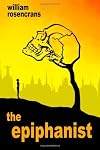
The Epiphanist
William Rosecrans
Trade Paperback
Publisher: Derby Books
Publication Date: May 11, 2012
ISBN-13: 978-0615649962
360 pages
Advance Reader’s Copy
The Epiphanist, the debut novel by William Rosencrans, centers around Vladimir, a teenage boy brought up on a prison plantation on Haven Island which is anything but a sanctuary. Because of the statistical likelihood he’ll commit an act of violence before coming of age Vladimir is sentence to a life of labor at Assuncao's Manor. In show more a world where everyone is genetically engineered the rejects are sentenced to Haven to spend their lives in physical servitude. The island is populated by an unsavory collection of genetic experiments gone wrong – aberrations, cripples, mutants, and lunatics. But Vladimir’s record is spotless and he has been nominated for parole by the authorities. A quick exam and a life of quiet comfort in the Holy City awaits him. When war breaks out and destroys his home his plans for independence are crushed and he must now fight his way to freedom through a nightmare world of feudal cruelty and nanotech marvels. With the help of his visions and a strange band of nanite allies; a fly, a satyr, and a female known as Viryx he must navigate the dangers of the jungle and a maze of political scheming to regain his rights.
File with: China Mieville, Jack Chalker, fantasy, Margaret Atwood’s Oryx and Crake, and genetic engineering.
3 ½ stars out of 5
The Alternative
Southeast Wisconsin show less
William Rosecrans
Trade Paperback
Publisher: Derby Books
Publication Date: May 11, 2012
ISBN-13: 978-0615649962
360 pages
Advance Reader’s Copy
The Epiphanist, the debut novel by William Rosencrans, centers around Vladimir, a teenage boy brought up on a prison plantation on Haven Island which is anything but a sanctuary. Because of the statistical likelihood he’ll commit an act of violence before coming of age Vladimir is sentence to a life of labor at Assuncao's Manor. In show more a world where everyone is genetically engineered the rejects are sentenced to Haven to spend their lives in physical servitude. The island is populated by an unsavory collection of genetic experiments gone wrong – aberrations, cripples, mutants, and lunatics. But Vladimir’s record is spotless and he has been nominated for parole by the authorities. A quick exam and a life of quiet comfort in the Holy City awaits him. When war breaks out and destroys his home his plans for independence are crushed and he must now fight his way to freedom through a nightmare world of feudal cruelty and nanotech marvels. With the help of his visions and a strange band of nanite allies; a fly, a satyr, and a female known as Viryx he must navigate the dangers of the jungle and a maze of political scheming to regain his rights.
File with: China Mieville, Jack Chalker, fantasy, Margaret Atwood’s Oryx and Crake, and genetic engineering.
3 ½ stars out of 5
The Alternative
Southeast Wisconsin show less
Statistics
- Works
- 3
- Members
- 23
- Popularity
- #537,597
- Rating
- 4.3
- Reviews
- 5
- ISBNs
- 2
