
Fleur Beale
Author of I Am Not Esther
About the Author
Fleur Beale was born in 1945 in New Zealand. She is a teenage fiction writer. She attended Victoria University and Christchurch Teacher's Training College. She taught at Melville High School from the mid 80s to late 90s in Hamilton, Waikato and in Wellington. Beale's first stories were written for show more the children's radio programme Grandpa's Place. Her first book was a small reader and picture book for young children and she started to write for teenagers in 1993. Her stories often involve troubled adolescents engaged in outdoor activities. Beale was a finalist in the AIM Children's Book Awards and her 1998 novel I Am Not Esther was shortlisted for the senior fiction section of the 1999 New Zealand Post Children's Book Awards. In 1999 she was awarded the Children's Writing Fellowship at Dunedin College of Education and quit teaching to write full-time. Her 2001 novel Ambushed was a finalist for the Junior Fiction section of the 2002 New Zealand Post Children's Book Awards. Her 2004 account of how an indigenous girl discovers how her education can save her tribal lands (My Story A New Song in the Land. The Writings of Atapo, Pahia, received a Notable Book award in 2005 as did Walking Lightly. In 2012, Beale became the last recipient of the Margaret Mahy Award during Margaret Mahy's lifetime In 2015 she won the LIANZA Librarians' Choice Award 2015 with her title I Am Rebecca. Her book's I Am Not Esther and Being Magdalene made the New Zealand Best Seller List in 2015. (Bowker Author Biography) show less
Series
Works by Fleur Beale
Tagged
Common Knowledge
- Birthdate
- 1945-02-22
- Gender
- female
- Education
- Inglewood High School, Inglewood, New Zealand
Christchurch Teachers' College
Victoria University of Wellington, New Zealand - Occupations
- teacher
children's book author - Awards and honors
- Margaret Mahy Medal (2012)
Children's Writing Fellowship, Dunedin College of Education (1999) - Nationality
- New Zealand
- Birthplace
- Inglewood, Taranaki, New Zealand
- Places of residence
- Wellington, New Zealand
Hamilton, Waikato, New Zealand - Associated Place (for map)
- New Zealand
Members
Reviews

I Am Not Esther by New Zealand author Fleur Beale is an engrossing story about a modern girl, Kirby, whose mother leaves her in the care of her strict and pious brother, Caleb, who along with his wife and children are members of a Religious Sect called Children of the Faith. This faith is rigidly traditional. Kirby is immediately renamed Esther and forced to wear her hair tied back in a braid. Her clothes are replaced by long skirts, she is forbidden to use slang or take lord’s name in show more vain. Failure to follow the rules means immediate punishment, which included long hours on her knees and the whole family praying over her. Women were considered to be the property of the men and early marriages were arranged.
Although terribly confused and angry at her mother for leaving her with these people, she does grow very fond of her cousins, and eventually helps the eldest boy, Daniel, make a break with the community. Although her mother was to have gone to Africa to work as a nurse, it is discovered that she never left New Zealand. Kirby needs to find her mother and discover her reasons for leaving and for abandoning her daughter in this way. Kirby also realizes that she needs to get away as she is in danger of losing her own identity.
Well written and mostly believable, I Am Not Esther was an enjoyable YA read. The story flowed easily and although the Children of the Faith are fictional, the ideas and life style they supported seemed real and gave the reader a good idea of how restrictive a cult like this can be. show less
Although terribly confused and angry at her mother for leaving her with these people, she does grow very fond of her cousins, and eventually helps the eldest boy, Daniel, make a break with the community. Although her mother was to have gone to Africa to work as a nurse, it is discovered that she never left New Zealand. Kirby needs to find her mother and discover her reasons for leaving and for abandoning her daughter in this way. Kirby also realizes that she needs to get away as she is in danger of losing her own identity.
Well written and mostly believable, I Am Not Esther was an enjoyable YA read. The story flowed easily and although the Children of the Faith are fictional, the ideas and life style they supported seemed real and gave the reader a good idea of how restrictive a cult like this can be. show less
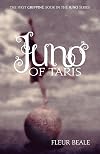
Opening Sentence: ‘…On Taris, we shave our heads …’
Juno is a young girl who is living in an isolated island society of 500 people that fled the chaos of the 21st century. A group of pioneer scientists volunteered to start the new civilisation on an island “somewhere in the southern ocean,” there they developed an enclosed dome where the atmosphere; water; rain and temperatures are all regulated by computers and it is designed to survive even if the rest of humanity perished. Not show more long after the colony is set up they lose contact with “the Outside”.
JUNO OF TARIS commences when Juno is 12, and she has already started to openly question the rules of Taris. Questions such as why must they all shave their heads every week? Why must they all wear the same clothes and why are her grandparents teaching her to read and not allow her to tell anyone – even her parents? To publicly question the established way brings about the punishment of withdrawing, where everyone has to turn their back on you as you walk by – a very isolating and distressing experience!!! Gradually Juno learns that she is not alone in wanting questions answered, and as it becomes obvious that someone is willing to kill Juno to stop her perceived rebellion she finds she has a loyal band of friends who stand with her and seek the hidden truths as the dome’s technology starts to fail.
The plot the story is built on is powerful and looks at societies, those who control societies, and how they are able to do so. Author Fleur Beale wrote this book with tremendous detail, yet the scientific component was written simply. As a whole JUNO OF TARIS was a pleasure to read and a great story.
All of the characters, both good and bad, were very realistic. The plot was easy to follow and I really liked how each of the chapters ended with three or four snippets from conversations regarding island gossip. It helped expand on information already gained, and set up what was going to happen next; giving the reader an insight into the networking and information sharing of the community.
JUNO OF TARIS won the Esther Glen Award in New Zealand in 2009 – the award is presented to the author whose work is considered a distinguished contribution to fiction for children. Well deserved in my opinion. show less
Juno is a young girl who is living in an isolated island society of 500 people that fled the chaos of the 21st century. A group of pioneer scientists volunteered to start the new civilisation on an island “somewhere in the southern ocean,” there they developed an enclosed dome where the atmosphere; water; rain and temperatures are all regulated by computers and it is designed to survive even if the rest of humanity perished. Not show more long after the colony is set up they lose contact with “the Outside”.
JUNO OF TARIS commences when Juno is 12, and she has already started to openly question the rules of Taris. Questions such as why must they all shave their heads every week? Why must they all wear the same clothes and why are her grandparents teaching her to read and not allow her to tell anyone – even her parents? To publicly question the established way brings about the punishment of withdrawing, where everyone has to turn their back on you as you walk by – a very isolating and distressing experience!!! Gradually Juno learns that she is not alone in wanting questions answered, and as it becomes obvious that someone is willing to kill Juno to stop her perceived rebellion she finds she has a loyal band of friends who stand with her and seek the hidden truths as the dome’s technology starts to fail.
The plot the story is built on is powerful and looks at societies, those who control societies, and how they are able to do so. Author Fleur Beale wrote this book with tremendous detail, yet the scientific component was written simply. As a whole JUNO OF TARIS was a pleasure to read and a great story.
All of the characters, both good and bad, were very realistic. The plot was easy to follow and I really liked how each of the chapters ended with three or four snippets from conversations regarding island gossip. It helped expand on information already gained, and set up what was going to happen next; giving the reader an insight into the networking and information sharing of the community.
JUNO OF TARIS won the Esther Glen Award in New Zealand in 2009 – the award is presented to the author whose work is considered a distinguished contribution to fiction for children. Well deserved in my opinion. show less
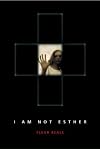
My step-sister told me that it was one of her comfort re-reads growing up and I can see why. The main character is very real and it is easy to identify with her. It’s a story about being an outsider, and one who doesn’t understand the society she is thrust into – something that many teenagers identify with whole-heartedly. It’s also a novel that has an unusual society within recognisable NZ and one that is absorbing and magnetic because of its difference and the rumours and mistrust show more that abound about that style of cult.The handling of language in I am not Esther is one of the things I really liked about it. I thought it was a beautiful way to delineate between communities. The religious sect do not use contractions, speak in a manner of rigid grammatical correctness, and talk in an old fashioned way that uses biblical quote and words not in common parlance today. Their language is very prosaic and concrete – there are few similes or metaphors. Kirby on the other hand uses words and phrases that conjure up flights of the imagination and place her firmly in the ordinary NZ teenager bracket (although one from ten years ago!). Her language is far more relaxed and casual.The conflict of their communication styles is an echo of their intellectual and emotional conflict.I am not Esther is an entertaining, easy read, but possibly a little too pat and spelling-out-of-the-ending-ish. Took me about 45 minutes and I feel like I gulped it down. show less
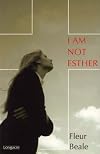
When Ellen, Kirby’s mother, suddenly reveals she’s been accepted to work for a refugee programme, Kirby is stunned. But her world falls apart when she’s told she’ll be going to live with her uncle and his family, who she never even knew existed.
But Ellen has been keeping another secret. She grew up as a member of a Christian sect called the Fellowship of The Children of the Faith. Kirby’s Uncle Caleb is an Elder of the group, and it to his family that Kirby is sent to live.
Almost show more as soon as Kirby arrives, Caleb and Aunt Naomi calmly begin their attempt to indoctrinate Kirby to their way of life. Her name is changed to Esther (because all members of the group have biblical names), there are no mirrors and very limited technology. The clothes are modest and old fashioned; she must speak ‘properly’ without using slang or contracted words. There is no TV, newspaper or books other than the Bible, so that the family’s thoughts may always be directed toward God. Discipline is either being shut up in the under stairs closet to learn Psalms or having the whole family forced to kneel, perhaps for an hour or more, to pray for you.
Under the weight of her mother’s abandonment and the strict life within The Fellowship, Kirby struggles to maintain some sense of herself and her identity. She takes comfort in caring for her young cousin Maggie (Magdalene) who is traumatised from the sudden ‘death’ of her older sister Miriam, and in her frank conversations with her cousin Daniel, who also struggles with the groups dictates.
I found I Am Not Esther very realistic. The use of language was an effective and believable way to distinguish those who are a part of The Fellowship, and those who aren’t. Kirby is a strong, compelling character, as is Daniel, in his own quiet way.
This is a psychological book and explores the effects of abandonment, the importance of an environment that allows questions, and the importance of having your own identity - even when it's something as simple as being called by your own name. It is also about having the inner strength to be who you are, even when the consequences may be far reaching, and potentially lifelong, not just for Kirby but also for her mother and their relatives.
Beale clearly portrays the potential harm to young people living in such circumstances. But in questioning the lifestyle, she doesn’t condemn the people. She portrays the friendships and bonds that develop, even though there are fundamental differences in opinions and beliefs.
This is a wonderful book. It is powerful, heartbreaking, but also has moments of simple joy. I easily read I Am Not Esther in one sitting, and was completely captivated from the first page until the last.
From the back cover: Fleur Beale is a former teacher who was inspired to write I Am Not Esther when one of her students was beaten and expelled from his family for going against their religious beliefs. show less
But Ellen has been keeping another secret. She grew up as a member of a Christian sect called the Fellowship of The Children of the Faith. Kirby’s Uncle Caleb is an Elder of the group, and it to his family that Kirby is sent to live.
Almost show more as soon as Kirby arrives, Caleb and Aunt Naomi calmly begin their attempt to indoctrinate Kirby to their way of life. Her name is changed to Esther (because all members of the group have biblical names), there are no mirrors and very limited technology. The clothes are modest and old fashioned; she must speak ‘properly’ without using slang or contracted words. There is no TV, newspaper or books other than the Bible, so that the family’s thoughts may always be directed toward God. Discipline is either being shut up in the under stairs closet to learn Psalms or having the whole family forced to kneel, perhaps for an hour or more, to pray for you.
Under the weight of her mother’s abandonment and the strict life within The Fellowship, Kirby struggles to maintain some sense of herself and her identity. She takes comfort in caring for her young cousin Maggie (Magdalene) who is traumatised from the sudden ‘death’ of her older sister Miriam, and in her frank conversations with her cousin Daniel, who also struggles with the groups dictates.
I found I Am Not Esther very realistic. The use of language was an effective and believable way to distinguish those who are a part of The Fellowship, and those who aren’t. Kirby is a strong, compelling character, as is Daniel, in his own quiet way.
This is a psychological book and explores the effects of abandonment, the importance of an environment that allows questions, and the importance of having your own identity - even when it's something as simple as being called by your own name. It is also about having the inner strength to be who you are, even when the consequences may be far reaching, and potentially lifelong, not just for Kirby but also for her mother and their relatives.
Beale clearly portrays the potential harm to young people living in such circumstances. But in questioning the lifestyle, she doesn’t condemn the people. She portrays the friendships and bonds that develop, even though there are fundamental differences in opinions and beliefs.
This is a wonderful book. It is powerful, heartbreaking, but also has moments of simple joy. I easily read I Am Not Esther in one sitting, and was completely captivated from the first page until the last.
From the back cover: Fleur Beale is a former teacher who was inspired to write I Am Not Esther when one of her students was beaten and expelled from his family for going against their religious beliefs. show less
Lists
Books with Twins (1)
Cults (1)
Awards


You May Also Like


Associated Authors
Statistics
- Works
- 49
- Members
- 1,206
- Popularity
- #21,293
- Rating
- 3.9
- Reviews
- 52
- ISBNs
- 111
- Languages
- 3
- Favorited
- 5