
Francis Knight
Author of Fade to Black
About the Author
Image credit: Francis Knight (Photo credit: Kevin Fitzpatrick)
Series
Works by Francis Knight
Associated Works
Tagged
Common Knowledge
- Gender
- female
Members
Reviews
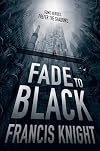
Rojan Dizon is a bounty hunter in the city-state of Mahala living a quiet life in the shadows and trying to stay out of trouble as much as possible. He’s also a pain mage, and his magic has been outlawed by the Ministry that controls the city. His life is going great when his long-lost brother asks him to find his missing daughter, and he can’t bring himself to refuse, despite knowing that he’s messing with the Ministry. And of course, he ends up finding much more than a missing girl.
I show more enjoyed FADE TO BLACK a lot. Rojan Dizon is pretty much your standard Mat Cauthon (from Wheel of Time) template – roguish, out for himself, ultimately moral. He does become more heroic over the course of the book, but it’s believable – it’s because he cares for specific people (his niece, the people that help him find her) and because he’s a fairly nice guy, which is established early on. Also, his blatant womanizing was pretty funny, and just like Mat, when he actually likes someone, he’s clueless.
The relationships (I don’t mean romance) in this book are complex and made the characters seem realistic. Rojan and his brother Perak are estranged, but they still respect and love each other. Rojan worries about his business partner Dendal’s use of magic, and it’s clear that they have a solid friendship. And I enjoyed the complicated relationship that he develops with his contacts in the Pit, Jake and Pasha – there’s a little bit of a love triangle, but it’s mostly just messy.
I’ve mentioned elsewhere that I really enjoy city-states in fantasy; I’m not really sure why – maybe because books set in city-states tend to make them more atmospheric, and also focus on the economy and structure of how everything works. Anyway, Mahala was a great setting, nestled in a mountain pass, with no choice but to build up to expand, and with only precarious walkways to navigate. I’m not sure about how that would work in practice, but I assume that since this world has magic, that would help somehow. It certainly makes for a very picturesque image. I also enjoyed the somewhat industrial setting, although electricity is just being discovered and magic powers the factories. I’d like to read more about how that works; luckily there are two more books. The magic system is neat, too – the author takes the general rule of “magic has to have a cost” almost literally, since magic is fuelled by pain.
I was a little bit confused by the writing style of the book – it’s first person, and I think it’s supposed to indicate that Rojan is writing this long after the events have happened, but that took a while to get used to, and in the beginning, I thought there were just a bunch of inconsistencies. One example is when Rojan reunites with Perak (not really spoilers, it happens in the first couple of chapters), before meeting him that it was no surprise that of course he’d end up in Alchemical Research (which is part of his overall narration), but then when Perak explains his job, he’s truly shocked (but that was his reaction in that moment). There are more things like that, but once I figured the style out, everything made sense.
My other complaint is that things wrapped up a little too neatly at the end. I was hoping that the case that Rojan is working on at the beginning of the book was just a look at his everyday life before he got sucked into something crazy – just establishing his character – but it turned out to be plot-relevant. I also did not like the identity of the main antagonist, he ended up conveniently wrapping up not one but two other major threads in the story, although given Rojan’s character of avoiding responsibility, there would’ve been no other way to set him up for the next two books without those threads being resolved.
There’s more stuff I haven’t talked about, like the way FADE TO BLACK approaches religion (both organized religion and belief), but words are deserting me today. I’ll just say – I’m pretty excited to read the next two books and see what happens to Mahala. Maybe we’ll even see Outside! show less
I show more enjoyed FADE TO BLACK a lot. Rojan Dizon is pretty much your standard Mat Cauthon (from Wheel of Time) template – roguish, out for himself, ultimately moral. He does become more heroic over the course of the book, but it’s believable – it’s because he cares for specific people (his niece, the people that help him find her) and because he’s a fairly nice guy, which is established early on. Also, his blatant womanizing was pretty funny, and just like Mat, when he actually likes someone, he’s clueless.
The relationships (I don’t mean romance) in this book are complex and made the characters seem realistic. Rojan and his brother Perak are estranged, but they still respect and love each other. Rojan worries about his business partner Dendal’s use of magic, and it’s clear that they have a solid friendship. And I enjoyed the complicated relationship that he develops with his contacts in the Pit, Jake and Pasha – there’s a little bit of a love triangle, but it’s mostly just messy.
I’ve mentioned elsewhere that I really enjoy city-states in fantasy; I’m not really sure why – maybe because books set in city-states tend to make them more atmospheric, and also focus on the economy and structure of how everything works. Anyway, Mahala was a great setting, nestled in a mountain pass, with no choice but to build up to expand, and with only precarious walkways to navigate. I’m not sure about how that would work in practice, but I assume that since this world has magic, that would help somehow. It certainly makes for a very picturesque image. I also enjoyed the somewhat industrial setting, although electricity is just being discovered and magic powers the factories. I’d like to read more about how that works; luckily there are two more books. The magic system is neat, too – the author takes the general rule of “magic has to have a cost” almost literally, since magic is fuelled by pain.
I was a little bit confused by the writing style of the book – it’s first person, and I think it’s supposed to indicate that Rojan is writing this long after the events have happened, but that took a while to get used to, and in the beginning, I thought there were just a bunch of inconsistencies. One example is when Rojan reunites with Perak (not really spoilers, it happens in the first couple of chapters), before meeting him that it was no surprise that of course he’d end up in Alchemical Research (which is part of his overall narration), but then when Perak explains his job, he’s truly shocked (but that was his reaction in that moment). There are more things like that, but once I figured the style out, everything made sense.
My other complaint is that things wrapped up a little too neatly at the end. I was hoping that the case that Rojan is working on at the beginning of the book was just a look at his everyday life before he got sucked into something crazy – just establishing his character – but it turned out to be plot-relevant. I also did not like the identity of the main antagonist, he ended up conveniently wrapping up not one but two other major threads in the story, although given Rojan’s character of avoiding responsibility, there would’ve been no other way to set him up for the next two books without those threads being resolved.
There’s more stuff I haven’t talked about, like the way FADE TO BLACK approaches religion (both organized religion and belief), but words are deserting me today. I’ll just say – I’m pretty excited to read the next two books and see what happens to Mahala. Maybe we’ll even see Outside! show less
Alright, I have a lot of fairly unpleasant things to say about Fade to Black, so I want to stress first and foremost that I don't think this is a bad book. For some people, it's probably even an incredibly delightful book, but I am not one of those people. Francis Knight's Fade to Black is very much a "dude" book. Much as I don't like to subscribe to gendered reading, this book will have more appeal with men, largely due to the portrayal of women.
Let's start off with what I did like, because show more there was one thing. The world Knight created is dark, eerie, and fascinating. It's a dystopian world, which, while obviously not a utopia in the beginning, has even blacker secrets underneath. The idea of this world thrusting high up into the sky, where people commute by shaking bridges, creates a strong mental image. It's like nothing I've read before, though I've seen a couple of similar ones none were quite like Knight's.
Knight also had an interesting concept with the pain mages. I both did and didn't like this. The idea that they can convert the pain of themselves or others into magic is admittedly cool. I also thought the fact that the magic would corrupt the user was neat too, especially given the dark nature of the magic. Rojan's struggles against using his magic are compelling, and pretty much the one sign that he might not be an asshat of a man.
On the other hand, though, the pain mages thing also allowed Knight to get pretty gruesome. I'm not usually easily grossed out by fiction because I'm not a visual reader. Where horror or gore on a television screen freaks me out instantly, I can read gory horror novels without a problem. Knight revels in the painful stuff, perhaps she even had to, but it doesn't mean I have to like it. I could not handle the descriptions of Rojan breaking his hand and then continuing to abuse it all through the book. I feel sympathetic twinges in my own hands now even as I type this. Whiles Knight obviously has writing talent to make me feel this way, I still found the whole ordeal highly unpleasant.
As mentioned previously, my biggest issue with Fade to Black is Rojan Dizon and his sexism. I would say Fade to Black reads a bit like an old school noir, where women are solely seen as sexual objects. Rojan has a firm belief that any woman will sleep with him and regularly has a number of women at any one time, all of whom seem to have been unaware that that was the case, based on their reaction at the beginning of the book. If he wants to sleep around, fine, but don't lie to women about what you want from them. That's so not cool. His attitude and the way he thinks about every single woman he meets made me want to kick him in his manparts with steel-toed boots.
There is one powerful woman, the fighter Jake, the only female who seems strong enough to have any sway in the world. She's been dominating the underground fighting circuit. That sounds good, right? Well, not so much. Turns out she's the only woman who's not interested in him, so obviously it must be love. Insert eyeroll here. Then, later, we find out that the reason that Jake has no interest in Rojan or any of the other men is because she was sexually abused when she was younger, so the touch of a man turns her into a weak-willed, fearful creature just like every other woman. Fan-freaking-tastic. The strongest female character was actually a whore, who escaped from sexual abuse to open a whorehouse, which pretty much sums up what Knight thinks about women.
Fade to Black might be for you if you do not mind reading about men who are rampant sexists and enjoy gory descriptions, perhaps those who enjoy the exploits of James Bond. Sadly (or happily), that is not me. show less
Let's start off with what I did like, because show more there was one thing. The world Knight created is dark, eerie, and fascinating. It's a dystopian world, which, while obviously not a utopia in the beginning, has even blacker secrets underneath. The idea of this world thrusting high up into the sky, where people commute by shaking bridges, creates a strong mental image. It's like nothing I've read before, though I've seen a couple of similar ones none were quite like Knight's.
Knight also had an interesting concept with the pain mages. I both did and didn't like this. The idea that they can convert the pain of themselves or others into magic is admittedly cool. I also thought the fact that the magic would corrupt the user was neat too, especially given the dark nature of the magic. Rojan's struggles against using his magic are compelling, and pretty much the one sign that he might not be an asshat of a man.
On the other hand, though, the pain mages thing also allowed Knight to get pretty gruesome. I'm not usually easily grossed out by fiction because I'm not a visual reader. Where horror or gore on a television screen freaks me out instantly, I can read gory horror novels without a problem. Knight revels in the painful stuff, perhaps she even had to, but it doesn't mean I have to like it. I could not handle the descriptions of Rojan breaking his hand and then continuing to abuse it all through the book. I feel sympathetic twinges in my own hands now even as I type this. Whiles Knight obviously has writing talent to make me feel this way, I still found the whole ordeal highly unpleasant.
As mentioned previously, my biggest issue with Fade to Black is Rojan Dizon and his sexism. I would say Fade to Black reads a bit like an old school noir, where women are solely seen as sexual objects. Rojan has a firm belief that any woman will sleep with him and regularly has a number of women at any one time, all of whom seem to have been unaware that that was the case, based on their reaction at the beginning of the book. If he wants to sleep around, fine, but don't lie to women about what you want from them. That's so not cool. His attitude and the way he thinks about every single woman he meets made me want to kick him in his manparts with steel-toed boots.
There is one powerful woman, the fighter Jake, the only female who seems strong enough to have any sway in the world. She's been dominating the underground fighting circuit. That sounds good, right? Well, not so much. Turns out she's the only woman who's not interested in him, so obviously it must be love. Insert eyeroll here. Then, later, we find out that the reason that Jake has no interest in Rojan or any of the other men is because she was sexually abused when she was younger, so the touch of a man turns her into a weak-willed, fearful creature just like every other woman. Fan-freaking-tastic. The strongest female character was actually a whore, who escaped from sexual abuse to open a whorehouse, which pretty much sums up what Knight thinks about women.
Fade to Black might be for you if you do not mind reading about men who are rampant sexists and enjoy gory descriptions, perhaps those who enjoy the exploits of James Bond. Sadly (or happily), that is not me. show less
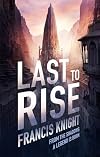
"I'm no leader, never have been, never wanted to be, because leadership equals responsibility and we all know how I feel about that."
A fitting end to an underread trilogy. Knight delivered good characters — some growth from the mc — with just enough description in this quick-paced, magically pain-laced fantasy.
"and listening to him had brought back a bit of resolve. A bit of light and hope when all had been black and hopeless."
I was tempted to rate this one 4 stars due to a few minor show more typos, being a bit repetitive, and slower to draw me in, but I won't let those issues bring it down. A series I won't soon forget.
"For the first time in maybe ever I felt a part of something, part of other people, part of the city rather than apart and alone, despised." show less
A fitting end to an underread trilogy. Knight delivered good characters — some growth from the mc — with just enough description in this quick-paced, magically pain-laced fantasy.
"and listening to him had brought back a bit of resolve. A bit of light and hope when all had been black and hopeless."
I was tempted to rate this one 4 stars due to a few minor show more typos, being a bit repetitive, and slower to draw me in, but I won't let those issues bring it down. A series I won't soon forget.
"For the first time in maybe ever I felt a part of something, part of other people, part of the city rather than apart and alone, despised." show less
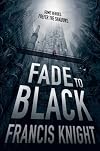
Fade to Black was a good but not great novel. It paints a good picture of a bleak, dystopian world. In a city where electricity and power comes in the form of magic provided by pain mages, who draw their power from physical hurt, either their own or that of others, the lowest of the low class live under ground. The higher up people are in wealth and class, they literally live higher up in buildings that are built massively huge, piled on top of each other. There is a deep, dark conspiracy show more afoot, one in which Rojan Dizon finds himself right in the middle of. Rojan is a pain mage and bounty hunter, who keeps his magic a secret, although it’s not a very well kept secret. Rojan is forced to go to the pit, where the lowest of the low live in search of his kidnapped niece.
There were things I liked about the novel and things that didn’t work for me. On the plus side, I think the author successfully builds a nice bleak atmosphere to the novel. The writing fits the mood and works well. There are some good plot turns, and decent conspiracies. On the negative side, Rojan is a pretty bad character. It’s hard to have much respect for him when there were so many obvious things happening that should have been obvious to him and he was completely clueless about. It’s hard to get into a novel with a weak protagonist who I found to be generally unlikeable. The novel ends with a bang. I also liked the whole simulated fighting that they had in the pits that reminded me of pro wrestling with weapons. I would give this novel a thumbs up, but not an enthusiastic one.
Carl Alves – author of Reconquest: Mother Earth show less
There were things I liked about the novel and things that didn’t work for me. On the plus side, I think the author successfully builds a nice bleak atmosphere to the novel. The writing fits the mood and works well. There are some good plot turns, and decent conspiracies. On the negative side, Rojan is a pretty bad character. It’s hard to have much respect for him when there were so many obvious things happening that should have been obvious to him and he was completely clueless about. It’s hard to get into a novel with a weak protagonist who I found to be generally unlikeable. The novel ends with a bang. I also liked the whole simulated fighting that they had in the pits that reminded me of pro wrestling with weapons. I would give this novel a thumbs up, but not an enthusiastic one.
Carl Alves – author of Reconquest: Mother Earth show less
Lists
You May Also Like


Associated Authors
Statistics
- Works
- 4
- Also by
- 2
- Members
- 292
- Popularity
- #80,151
- Rating
- 3.5
- Reviews
- 17
- ISBNs
- 22
- Favorited
- 1