
Paul S. Kemp
Author of The Old Republic: Deceived
About the Author
Paul S. Kemp is a fantasy author most known for his Forgotten Realms novels. He also has authored a popular Star Wars series. (Bowker Author Biography)
Series
Works by Paul S. Kemp
R. A. Salvatore's War of the Spider Queen, Vol. 2: Extinction / Annihilation / Resurrection (2012) 61 copies
Age of Legend 6 copies
A Small Victory 3 copies
"Star Wars - A Fair Trade" 2 copies
Confession 2 copies
The Third Lesson 1 copy
Sparks 1 copy
Rozdroża czasu (Star Wars) 1 copy
One Thousand And One Words 1 copy
Marlboro Man 1 copy
Sparks {short story} 1 copy
The Signal 1 copy
The Sixth Floor 1 copy
Stillborn 1 copy
The Spinner 1 copy
Sith Nagyurak 1 copy
Associated Works
From a Certain Point of View: 40 Stories Celebrating 40 Years of Star Wars (2017) — Contributor — 1,064 copies, 41 reviews
Blackguards: Tales of Assassins, Mercenaries, and Rogues (2015) — Contributor — 87 copies, 4 reviews
A Children's Illustrated History of Presidential Assassination (2014) — Foreword — 17 copies, 2 reviews
Tagged
Common Knowledge
- Legal name
- Kemp, Paul Svante
- Other names
- Kemp, Paul
- Birthdate
- 1969
- Gender
- male
- Nationality
- USA
- Birthplace
- Michigan, USA
- Associated Place (for map)
- Michigan, USA
Members
Reviews
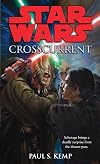
I quite like ‘Star Wars’ but have only a nodding acquaintance with the films and am not a ‘Warsie’, if there is such a being. I mention this in order to elicit forgiveness in advance for any errors I make from those hardcore fans who know Han Solo’s shoe size and Darth Vader’s favourite colour. Black, presumably. As I have enjoyed several novels related to that other big space opera franchise, I thought the ‘Star Wars’ books would be worth a look. If nothing else, the show more copyright controllers of these vast enterprises do ensure a minimum standard of competence in any product issued.
At the front of the novel, there is a helpful chronology which shows how the many books fit into the timeline along with those big films. ‘Crosscurrent’ is set near the end, forty years after the film ‘Star Wars: A New Hope’.
‘Crosscurrent’ uses several viewpoint characters and also starts off in two different eras, so the reader needs to focus. First up, 5,000 years before the Battle of Yavin, Sith Lord Saes Rrogon – a Kaleesh male – rips the crust off a moon to mine a huge supply of Lignan. This is an ore which hugely enhances the power of dark side users. In hot pursuit of Saes is Relin Druur, his former Jedi Master and Drev Hassin, Relin’s current Padawan. Drev is an Askajian male while Relin is human, which in a galaxy far, far away doesn’t mean an Earthman, of course. The Jedi need to stop the Sith forces getting hold of the Lignan as a major battle is coming up.
Meanwhile, 5,000 years in their future, Jaden Korr, human male and Jedi Knight, has a Force-inspired vision telling him he must go to the black hole of Fhost. Undeterred by the fact that Fhost doesn’t have a black hole, he sets off. Also headed there is Kell Douro, an Arzat assassin who eats peoples’ brains, who has been sent by the Sith. Fhost has no native species and only one real settlement. At the edge of known space, it is a haven for an assortment of bad types. Clearly, the scene is set for action!
I was hooked by page 40, which is soon enough. These kinds of books are written in a very tight style with much plot and nary a wasted word. Words that add a bit of depth to the characters and setting are not wasted and this was done with some skill. ‘Loose wires hung from everywhere, the entrails of science’ is a nifty way of describing a wrecked control room. A lift door stuck half open is an eye frozen in the act of closing.’ The descriptions of the action, sometimes quite gory, are also well done. The characters are changed by the events as in any good fiction and there is even some Jedi wisdom applicable to writers: just because you can’t do everything doesn’t mean you shouldn’t do anything.
Of course, there are loads of sizzling lightsabers, blistering blasters and speeding spaceships, which is what you want in a good space opera. This novel was crafted by Paul S. Kemp, a corporate lawyer, alas. But a man who likes ales, cigars and single malt scotch can’t be all bad. I enjoyed his book.
Eamonn Murphy
This review first appeared at https://www.sfcrowsnest.info/ show less
At the front of the novel, there is a helpful chronology which shows how the many books fit into the timeline along with those big films. ‘Crosscurrent’ is set near the end, forty years after the film ‘Star Wars: A New Hope’.
‘Crosscurrent’ uses several viewpoint characters and also starts off in two different eras, so the reader needs to focus. First up, 5,000 years before the Battle of Yavin, Sith Lord Saes Rrogon – a Kaleesh male – rips the crust off a moon to mine a huge supply of Lignan. This is an ore which hugely enhances the power of dark side users. In hot pursuit of Saes is Relin Druur, his former Jedi Master and Drev Hassin, Relin’s current Padawan. Drev is an Askajian male while Relin is human, which in a galaxy far, far away doesn’t mean an Earthman, of course. The Jedi need to stop the Sith forces getting hold of the Lignan as a major battle is coming up.
Meanwhile, 5,000 years in their future, Jaden Korr, human male and Jedi Knight, has a Force-inspired vision telling him he must go to the black hole of Fhost. Undeterred by the fact that Fhost doesn’t have a black hole, he sets off. Also headed there is Kell Douro, an Arzat assassin who eats peoples’ brains, who has been sent by the Sith. Fhost has no native species and only one real settlement. At the edge of known space, it is a haven for an assortment of bad types. Clearly, the scene is set for action!
I was hooked by page 40, which is soon enough. These kinds of books are written in a very tight style with much plot and nary a wasted word. Words that add a bit of depth to the characters and setting are not wasted and this was done with some skill. ‘Loose wires hung from everywhere, the entrails of science’ is a nifty way of describing a wrecked control room. A lift door stuck half open is an eye frozen in the act of closing.’ The descriptions of the action, sometimes quite gory, are also well done. The characters are changed by the events as in any good fiction and there is even some Jedi wisdom applicable to writers: just because you can’t do everything doesn’t mean you shouldn’t do anything.
Of course, there are loads of sizzling lightsabers, blistering blasters and speeding spaceships, which is what you want in a good space opera. This novel was crafted by Paul S. Kemp, a corporate lawyer, alas. But a man who likes ales, cigars and single malt scotch can’t be all bad. I enjoyed his book.
Eamonn Murphy
This review first appeared at https://www.sfcrowsnest.info/ show less

I admit I didn't go into Twilight Falling with high expectations. I have a (perhaps unfair) bias that the majority of D&D books are hack jobs. I only picked up Twilight Falling to silence a persistent friend.
I'll have to thank him for being so persistent. Twilight Falling surprised me by being different and deeper than most fantasy novels I had read in the past.
It all starts with a man named Erevis Cale working as a butler for the powerful Uskevrin family. The Patriarch has died just prior show more to the book's opening and Cale is preparing to move on when he foils a burglary.
There's more to this burglary than meets the eye. Turns out some very powerful people are attempting to steal a pretty, but worthless sphere. After some well written sword play and magic antics we wind up with a couple dead, a kidnapped guard and the sphere split in half.
The first thing that surprised me here was the big deal made over the kidnapped guard. Usually in these books death comes quickly and is glossed over, most especially for an unknown guardsman. Seeing characters care about the well being of one of the house guards was a pleasant surprise, making the characters actually seem human.
Indeed, all of the main characters and some of the villains were very well written. Don't get me wrong, this ain't fine literature, but I have to give Paul Kemp credit for turning out three dimensional characters in a genre where we are lucky if the characters get two dimensions.
Another nice aspect is that (in this first book at least) there isn't the fantasy cliché of a small band of characters challenging an Earth-shaking evil. The fact is that Cale and his crowd are mainly after the group of villains for revenge, pure and simple. That they discover that the main villain is actually up to something dangerous is somewhat secondary to our heroes.
One thing that I didn't like is that it felt like this was the second or third book in a series. Most especially in the beginning, Cale's past is alluded to in such a way that it is assumed we have read his past adventures. Mr. Kemp doesn't even tell us what Cale looks like. Somewhere around page 80 or so there's a mention that he is bald. After finishing the entire novel I still didn't know if he was tall, short, thin, muscular, tattooed, scarred?
Since this was the first book in a series centering on this character, Mr. Kemp really should have provided a prologue or worked some stuff into the story so that newcomers to Cale didn't feel like they were treading water. Only after feeling lost at the beginning did I find out about his previous appearances in The Halls of Stormweather and Shadow's Witness.
Another criticism is that names of various groups are thrown out with the assumption that we are all D&D players. It took me a while to figure out what Zhents were. The way these things were thrown out in the beginning almost made me stop reading.
I know that the D&D fans will say this isn't a fair criticism, but these would have been easy fixes. Take Dan Abnett's Gaunt's Ghosts series to see what I'm talking about.
Still, I did get past what bugged me. I will read the rest of this trilogy and will check out the next one assuming that the next two books are of this quality. Paul Kemp is easily the best D&D author I have read. He is a fine writer regardless of what field he writes in. show less
I'll have to thank him for being so persistent. Twilight Falling surprised me by being different and deeper than most fantasy novels I had read in the past.
It all starts with a man named Erevis Cale working as a butler for the powerful Uskevrin family. The Patriarch has died just prior show more to the book's opening and Cale is preparing to move on when he foils a burglary.
There's more to this burglary than meets the eye. Turns out some very powerful people are attempting to steal a pretty, but worthless sphere. After some well written sword play and magic antics we wind up with a couple dead, a kidnapped guard and the sphere split in half.
The first thing that surprised me here was the big deal made over the kidnapped guard. Usually in these books death comes quickly and is glossed over, most especially for an unknown guardsman. Seeing characters care about the well being of one of the house guards was a pleasant surprise, making the characters actually seem human.
Indeed, all of the main characters and some of the villains were very well written. Don't get me wrong, this ain't fine literature, but I have to give Paul Kemp credit for turning out three dimensional characters in a genre where we are lucky if the characters get two dimensions.
Another nice aspect is that (in this first book at least) there isn't the fantasy cliché of a small band of characters challenging an Earth-shaking evil. The fact is that Cale and his crowd are mainly after the group of villains for revenge, pure and simple. That they discover that the main villain is actually up to something dangerous is somewhat secondary to our heroes.
One thing that I didn't like is that it felt like this was the second or third book in a series. Most especially in the beginning, Cale's past is alluded to in such a way that it is assumed we have read his past adventures. Mr. Kemp doesn't even tell us what Cale looks like. Somewhere around page 80 or so there's a mention that he is bald. After finishing the entire novel I still didn't know if he was tall, short, thin, muscular, tattooed, scarred?
Since this was the first book in a series centering on this character, Mr. Kemp really should have provided a prologue or worked some stuff into the story so that newcomers to Cale didn't feel like they were treading water. Only after feeling lost at the beginning did I find out about his previous appearances in The Halls of Stormweather and Shadow's Witness.
Another criticism is that names of various groups are thrown out with the assumption that we are all D&D players. It took me a while to figure out what Zhents were. The way these things were thrown out in the beginning almost made me stop reading.
I know that the D&D fans will say this isn't a fair criticism, but these would have been easy fixes. Take Dan Abnett's Gaunt's Ghosts series to see what I'm talking about.
Still, I did get past what bugged me. I will read the rest of this trilogy and will check out the next one assuming that the next two books are of this quality. Paul Kemp is easily the best D&D author I have read. He is a fine writer regardless of what field he writes in. show less
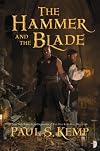
Sometimes you can go back again. As in old school Sword & Sorcery. Egil and Nix are a pair of adventurers who specialize in tomb raiding. After a run in with a particularly tough demon they decide to become respectible and buy a tavern/whorehouse. Of course nothing ever works out the way they plan and they quickly find themselves forced on yet another adventure, this time in the service of a sorceror.
You can't read this without thinking of Fritz Leiber's Fafhrd and the Gray Mouser books show more which I absolutely loved! The comparison bothered me at first, but the witty dialog and constant action quickly drew me in and I found myself just going along for the ride. And what a ride it is. I hope the author writes more stories featuring these two characters! show less
You can't read this without thinking of Fritz Leiber's Fafhrd and the Gray Mouser books show more which I absolutely loved! The comparison bothered me at first, but the witty dialog and constant action quickly drew me in and I found myself just going along for the ride. And what a ride it is. I hope the author writes more stories featuring these two characters! show less
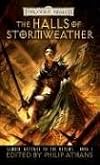
Before I begin this review, I'd like to state that I have had a very hit or miss pattern with Forgotten Realms. I've read a couple of [a:Ed Greenwood|20513|Ed Greenwood|http://d202m5krfqbpi5.cloudfront.net/authors/1248120586p2/20513.jpg]'s Elminster books and found them extremely boring. Then I read the War of the Spider Queen series and absolutely loved it. Then, on recommendation from my brother, I started the Drizz't series. That was just awful! Then I found the sequel to the War of the show more Spider Queen, The Lady Penitent trilogy and once again, loved it! Then I tried the Abolethic Sovereignty trilogy and couldn't finish it.
So I'm always leery when trying a Forgotten Realms book/series, as I just don't know what I'll end up with.
I'd heard of Erevis Cale somewhere or other and wanted to see if he was an interesting character, so I dug around and found this to be the first book with him in it. And then I found it was a bunch of short stories centering around the Uskevren family, of whom Erevis was the butler.
I enjoyed the stories, as they introduced me to the city Selgaunt and the area of Sembia [do you know how long it took me to figure out that Selgaunt and Sembia were actually two different places and not just different names for the same place?!?]. I also found that the short story format worked well with each character, as we get a snaphsot of them without the author of said short story showing all their weaknesses by trying to write a full blown novel about that character.
So I just sped through this book, loving it and looking forward to the next. Which I've finished and will be reviewing tomorrow. Man, when Forgotten Realms is good, it is GOOD! show less
So I'm always leery when trying a Forgotten Realms book/series, as I just don't know what I'll end up with.
I'd heard of Erevis Cale somewhere or other and wanted to see if he was an interesting character, so I dug around and found this to be the first book with him in it. And then I found it was a bunch of short stories centering around the Uskevren family, of whom Erevis was the butler.
I enjoyed the stories, as they introduced me to the city Selgaunt and the area of Sembia [do you know how long it took me to figure out that Selgaunt and Sembia were actually two different places and not just different names for the same place?!?]. I also found that the short story format worked well with each character, as we get a snaphsot of them without the author of said short story showing all their weaknesses by trying to write a full blown novel about that character.
So I just sped through this book, loving it and looking forward to the next. Which I've finished and will be reviewing tomorrow. Man, when Forgotten Realms is good, it is GOOD! show less
Lists
Awards

You May Also Like


Associated Authors
Statistics
- Works
- 44
- Also by
- 8
- Members
- 5,868
- Popularity
- #4,206
- Rating
- 3.7
- Reviews
- 123
- ISBNs
- 131
- Languages
- 10
- Favorited
- 9