
J. Michael Reaves (1950–2023)
Author of InterWorld
About the Author
Series
Works by J. Michael Reaves
Werewind [short fiction] 2 copies
Bad Seeds: Evil Progeny 1 copy
Et Leebo fut le troisième 1 copy
Fusion 10 1 copy
Code 666 {short story} 1 copy
Passion Play 1 copy
Zerschmetterte Welt 1 copy
Undeadsville 1 copy
Make-believe 1 copy
Associated Works
The Best Horror Stories from The Magazine of Fantasy & Science Fiction (1988) — Contributor — 52 copies, 1 review
The Best Horror Stories from the Magazine of Fantasy & Science Fiction, Vol. I (1989) — Contributor — 27 copies
The Magazine of Fantasy and Science Fiction March/April 2013, Vol. 124, Nos. 3 & 4 (2013) — Contributor — 20 copies, 3 reviews
Tagged
Common Knowledge
- Legal name
- Reaves, James Michael
- Other names
- Reaves, Michael
- Birthdate
- 1950-09-14
- Date of death
- 2023-03-18
- Gender
- male
- Occupations
- science fiction writer
screenwriter - Awards and honors
- Emmy Award (Outstanding Writing in an Animated Program, 1993)
- Relationships
- Reaves, Mallory (offspring)
- Cause of death
- Parkinson's disease
- Nationality
- USA
- Birthplace
- San Francisco, California, USA
- Place of death
- Los Angeles, California, USA
- Associated Place (for map)
- California, USA
Members
Discussions
recent SF: boy meets different versions of himself in sort of alternate universes? in Name that Book (March 2013)
Reviews
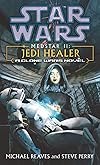
It is substantially better than its predecessor, in that major characters have arcs and the stakes are raised quite a bit. A decent novel taking place in a small corner of the Star Wars universe. There is a twist involving one very minor character, and I think a better novelist would have done more with it (perhaps not making it a twist but revealing it upfront and then drawing out the character's motivations).
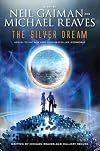
The Silver Dream, story by Neil Gaiman & Michael Reaves, written by Michael & Mallory Reaves (Book #2 of the InterWorld series) is both better and not as good as its predecessor.
The story in this one is better. My main complaint about the first book in the series is that it read more like the outline of a TV show concept (which is what it is) than a fully fleshed out novel. The Silver Dream works as a cohesive, contained novel. As such, it's more compelling.
Joey Harker has been with show more InterWorld for two years now. His team has gained experience in the field. When new and powerful Walkers are discovered in both the HEX and Binary sections of the Altiverse, InterWorld agents (including Joey) retrieve them and bring them back to Base Town. Along the way, Joey meets Acacia ("Don't call me Casey") Jones, a mysterious young woman who turns out to be far more important than she lets on. That's when things start to go wrong ... and FrostNight begins.
The Silver Dream introduces a new and wonderful character, in addition to fleshing out the existing characters a bit more. It expands the Altiverse in exciting new directions. The plotting in this book is really quite impressive—the authors weave some complicated knots and tie elements together in surprising ways. This story raises the stakes of the essential conflict and it ends on a cliffhanger.
It makes me want to read the third book ASAP.
The only real flaw with The Silver Dream is simply that the quality of the writing isn't as good as in the first novel. This isn't to say the writing is bad—far from it, the writing on display here is skillful. It's fully up to the task of telling this story and telling it well.
You can tell Mr. Gaiman didn't actually write this one (he helped plot the story, along with Mr. Reaves, but most of the actual writing was done by Michael's daughter, Mallory [according to Wikipedia]). The style is a bit less elegant, the tone a bit more on-the-nose. Again—not bad. Just a bit less.
Tonally, the biggest issue is Joey's sense of humor. He has a clever, self-deprecating way of narrating the story. In InterWorld, the first novel in the series, this sense of humor is what characterizes the narrative most deeply. The Silver Dream tries to replicate this humorous tone at the beginning but doesn't quite manage it. And given how the story develops, this sense of humor doesn't fit the narrative of this second novel. It comes across as somewhat tone deaf.
Thankfully, the writers are smart enough to realize that and stop trying to be funny after a certain point.
It's probably a turn off for some people to know that this outing in the series is notably less funny than the first one. I'm grateful, though, that the authors recognized that humor isn't what this story needs and didn't try too hard to force it.
This is a story about Joey growing up. It's a story about the worst-case scenario becoming worse than he ever imagined. It's a story about a young man stepping up to face challenges bigger than he may be able to handle.
This kind of story can't be all fun and jokes. It needs to get dark before it can find its way back to the light. Things need to go wrong for the main character to try to set it right, and learn that he can.
This kind of story may not be funny—but it's essential. This is the best path the series could have taken. show less
The story in this one is better. My main complaint about the first book in the series is that it read more like the outline of a TV show concept (which is what it is) than a fully fleshed out novel. The Silver Dream works as a cohesive, contained novel. As such, it's more compelling.
Joey Harker has been with show more InterWorld for two years now. His team has gained experience in the field. When new and powerful Walkers are discovered in both the HEX and Binary sections of the Altiverse, InterWorld agents (including Joey) retrieve them and bring them back to Base Town. Along the way, Joey meets Acacia ("Don't call me Casey") Jones, a mysterious young woman who turns out to be far more important than she lets on. That's when things start to go wrong ... and FrostNight begins.
The Silver Dream introduces a new and wonderful character, in addition to fleshing out the existing characters a bit more. It expands the Altiverse in exciting new directions. The plotting in this book is really quite impressive—the authors weave some complicated knots and tie elements together in surprising ways. This story raises the stakes of the essential conflict and it ends on a cliffhanger.
It makes me want to read the third book ASAP.
The only real flaw with The Silver Dream is simply that the quality of the writing isn't as good as in the first novel. This isn't to say the writing is bad—far from it, the writing on display here is skillful. It's fully up to the task of telling this story and telling it well.
You can tell Mr. Gaiman didn't actually write this one (he helped plot the story, along with Mr. Reaves, but most of the actual writing was done by Michael's daughter, Mallory [according to Wikipedia]). The style is a bit less elegant, the tone a bit more on-the-nose. Again—not bad. Just a bit less.
Tonally, the biggest issue is Joey's sense of humor. He has a clever, self-deprecating way of narrating the story. In InterWorld, the first novel in the series, this sense of humor is what characterizes the narrative most deeply. The Silver Dream tries to replicate this humorous tone at the beginning but doesn't quite manage it. And given how the story develops, this sense of humor doesn't fit the narrative of this second novel. It comes across as somewhat tone deaf.
Thankfully, the writers are smart enough to realize that and stop trying to be funny after a certain point.
It's probably a turn off for some people to know that this outing in the series is notably less funny than the first one. I'm grateful, though, that the authors recognized that humor isn't what this story needs and didn't try too hard to force it.
This is a story about Joey growing up. It's a story about the worst-case scenario becoming worse than he ever imagined. It's a story about a young man stepping up to face challenges bigger than he may be able to handle.
This kind of story can't be all fun and jokes. It needs to get dark before it can find its way back to the light. Things need to go wrong for the main character to try to set it right, and learn that he can.
This kind of story may not be funny—but it's essential. This is the best path the series could have taken. show less
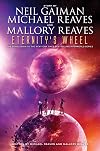
Eternity's Wheel provides an appropriate and satisfying conclusion to the InterWorld saga. This arguably the most powerful book in the series.
When the story opens, Joey Harker is back home on his Earth, injured and cut off from his InterWorld teammates. He doesn't know if he managed to stop FrostNight, Acacia Jones is MIA, and Base Town is trapped and fleeing HEX. Joey goes to Mr. Dimas (his old social studies teacher) for help and advice, and then he embarks on a quest to seek out and show more recruit more Walkers to train a new army to fight Binary and HEX.
This is an excellent premise for the final volume of the series. At heart, these books are about Joey growing up and accepting his full adult responsibilities. Left on his own like this, he buckles down and does what he thinks is needed. He makes himself a leader.
The story doesn't go quite as one might expect, though, given the initial circumstances. This turns out not be a quest story. The obstacles Joey encounters are surprising and unexpected. An old nemesis makes a new appearance and we meet a new Time Agent. A new Walker comes and goes from the story with shocking swiftness, but with powerful effects. Joey witnesses the end of worlds. It all leads inevitably to a final confrontation in which Joey must choose between saving himself or saving reality. In the end, this is a powerful story of redemption.
We learn more about the Old Man and more about TimeWatch. We see a bit more, as well, about how different time streams may (or may not) be inter-related within the larger scale of the Multiverse.
The story explores responsibility, sacrifice, redemption, family, friends—all the important issues we face as we make our way through our lives.
What I like best about Eternity's Wheel is that the authors let the end be messy. Joey doesn't save everyone and everything. People die and worlds are ended. Much of the damage done by Binary and HEX is irreparable. This isn't neat or tidy, it's not a pat happy ending.
But it's the correct ending for this type of story. For a story about growing up, facing challenges and accepting your responsibilities, there must be consequences for the characters to cope with. There's always an aftermath to deal with. Bad things happen but life goes on. Ultimately, accepting that fact is the final—and most important—step in growing up.
Eternity's Wheel may not end with everything put right. This may not be an unreservedly happy ending. But it's hopeful and it's empowering. This is an ending that leads to more and better things in Joey Harker's life—more challenges and rewards, more mistakes and consequences, more responsibility.
That's life. That's the reality of growing up. Such an ending is entirely satisfactory. show less
When the story opens, Joey Harker is back home on his Earth, injured and cut off from his InterWorld teammates. He doesn't know if he managed to stop FrostNight, Acacia Jones is MIA, and Base Town is trapped and fleeing HEX. Joey goes to Mr. Dimas (his old social studies teacher) for help and advice, and then he embarks on a quest to seek out and show more recruit more Walkers to train a new army to fight Binary and HEX.
This is an excellent premise for the final volume of the series. At heart, these books are about Joey growing up and accepting his full adult responsibilities. Left on his own like this, he buckles down and does what he thinks is needed. He makes himself a leader.
The story doesn't go quite as one might expect, though, given the initial circumstances. This turns out not be a quest story. The obstacles Joey encounters are surprising and unexpected. An old nemesis makes a new appearance and we meet a new Time Agent. A new Walker comes and goes from the story with shocking swiftness, but with powerful effects. Joey witnesses the end of worlds. It all leads inevitably to a final confrontation in which Joey must choose between saving himself or saving reality. In the end, this is a powerful story of redemption.
We learn more about the Old Man and more about TimeWatch. We see a bit more, as well, about how different time streams may (or may not) be inter-related within the larger scale of the Multiverse.
The story explores responsibility, sacrifice, redemption, family, friends—all the important issues we face as we make our way through our lives.
What I like best about Eternity's Wheel is that the authors let the end be messy. Joey doesn't save everyone and everything. People die and worlds are ended. Much of the damage done by Binary and HEX is irreparable. This isn't neat or tidy, it's not a pat happy ending.
But it's the correct ending for this type of story. For a story about growing up, facing challenges and accepting your responsibilities, there must be consequences for the characters to cope with. There's always an aftermath to deal with. Bad things happen but life goes on. Ultimately, accepting that fact is the final—and most important—step in growing up.
Eternity's Wheel may not end with everything put right. This may not be an unreservedly happy ending. But it's hopeful and it's empowering. This is an ending that leads to more and better things in Joey Harker's life—more challenges and rewards, more mistakes and consequences, more responsibility.
That's life. That's the reality of growing up. Such an ending is entirely satisfactory. show less
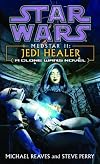
Jedi Healer, by Michael Reaves and Steve Perry is the second and last of the Medstar duology. Good riddance. This book felt like a long and convoluted second half of a single volume. In the first book, titled Battle Surgeons, readers were introduced to a few, unknown characters who were part of a medical unit helping clone soldiers on a remote planet called Drongar.
The first novel primarily set up the characters, including Jedi Padawan Barriss Offee, who had been sent to Drongar to help heal show more people, and as a final test to her becoming a Jedi Knight. The other character prominent character introduced is Jos Vandar, a surgeon who fans will come to either love or hate throughout the series.
Though Battle Surgeons was fairly successful in revealing an interesting story, Jedi Healer fails on almost every level to deliver a satisfying conclusion. The only thing it has in its favor is a bit of humor, and the fact that it manages to tell a story not seen in the Clone Wars so far: a battle of spirit on an out-of-the-way planet, and does so without any major characters.
The Medstar duology truly should have been one book, and in fact, shouldn’t have been published to begin with; there are simply too many problems in this series. For instance, early in the novel, we are told that Jos Vandar is Corellian. Strange, since the first book does a pretty good job of telling readers how his culture looks down very harshly on being involved with people not from his planet. Therefore, readers begin to assume his love interest, Tolk, is either not human at all, or that Jos is from a strange, secluded planet. Not so if he’s from Corellia. But if that culture frowns on the prospect of people marrying from other cultures, why didn’t Han Solo have a problem with getting involved with Leia in the Original Trilogy, or in the subsequent books? Why was it never mentioned? To the authors’ credit, later in the book, there’s talk of how attitudes on Corellia are changing but it comes far too late to keep the reader from being helplessly confused.
This book was also horribly proof-read--much like this review--and spelling mistakes, grammar errors, and many other problems mar this book throughout. As if the problem with Corellians being ostracized marrying "eksters" isn’t bad enough, it’s even worse when they refer to the same thing as "eskers" several times. Make up your mind please. (Note to LucasBooks and Del Rey Editors: Microsoft Word has an excellent feature called ‘Find & Replace’ I would also turn off the proofreading markup features and try reading these manuscripts. You’d catch more errors that way.) Star Wars books have been getting progressively worse about these types of errors lately, and it’s embarrassing to see how poorly some of these books read.
As if proofreading mistakes weren’t enough to drive the reader crazy, many of our modern-day sayings and phrases are translated and inserted into Jedi Healer. In fact, the language rating of this novel would have to be at least PG-13. After all, "no mopek" isn’t going to fool anybody. A few ‘curse’ words won’t bother some people, but it just sounds dumb to see "getting his drive tubes scoured," when we know what they mean. It’s okay every now and then, but not as often as this book parades these phrases around.
Among the other problems in this book, and quite possibly the most frustrating: it has a see-through plot. Near the end of Battle Surgeons, the authors set up the fact that there’s a spy in the midst of the characters introduced. Readers will probably begin to suspect a particular character as the spy, and will most likely be correct. Throughout most of Jedi Healer, Reaves and Perry try to keep a lot of drama going on this fact, hoping that it will pay off at the ‘reveal’ near the end. However, they do very little to draw guilt away from the character most readers should be suspicious of. Granted, the authors try to distract the reader, in poor fashion and with more embarrassing, overlooked mistakes, but the story is so cliché that it fails to excite. Readers may doubt their assumptions once or twice, but when the Reveal finally happens, it’s entirely too short, and extremely un-gratifying. It’s not surprising at all; downright disappointing is more like it.
Though the book suffers through many hurdles, it does have its high points. Unfortunately, those high points are still depressingly low. A couple of fairly noteworthy events are the appearance of a Republic Star Destroyer, and a mention of the Modal Nodes--the band playing in the cantina in A New Hope. Another fascinating--if not confusing--point talks about Republic weapon tests of what we can only assume is the Death Star.
Overall, the book tries to deliver a story, but instead reveals itself for what it truly is: a commercial attempt to extort the Star Wars franchise in order to elicit fans to buy the latest offering. Del Rey knows that fans will buy it if it says Star Wars. It’s sad that they would use that to promote this Medstar duology. Rather than write books around a good story, they tried to wrap an ill-conceived story around two books, to make money not just once, but twice. What easily could have been a single volume was instead split into two. Twice the page count, twice the profit, right? Or was it simply because there were two authors? Either way, these books could have never seen the light of a word processor, and it probably would have been for the better.
Unless you’re a die-hard fan, who doesn’t need the extra $14 USD, skip ‘em. show less
The first novel primarily set up the characters, including Jedi Padawan Barriss Offee, who had been sent to Drongar to help heal show more people, and as a final test to her becoming a Jedi Knight. The other character prominent character introduced is Jos Vandar, a surgeon who fans will come to either love or hate throughout the series.
Though Battle Surgeons was fairly successful in revealing an interesting story, Jedi Healer fails on almost every level to deliver a satisfying conclusion. The only thing it has in its favor is a bit of humor, and the fact that it manages to tell a story not seen in the Clone Wars so far: a battle of spirit on an out-of-the-way planet, and does so without any major characters.
The Medstar duology truly should have been one book, and in fact, shouldn’t have been published to begin with; there are simply too many problems in this series. For instance, early in the novel, we are told that Jos Vandar is Corellian. Strange, since the first book does a pretty good job of telling readers how his culture looks down very harshly on being involved with people not from his planet. Therefore, readers begin to assume his love interest, Tolk, is either not human at all, or that Jos is from a strange, secluded planet. Not so if he’s from Corellia. But if that culture frowns on the prospect of people marrying from other cultures, why didn’t Han Solo have a problem with getting involved with Leia in the Original Trilogy, or in the subsequent books? Why was it never mentioned? To the authors’ credit, later in the book, there’s talk of how attitudes on Corellia are changing but it comes far too late to keep the reader from being helplessly confused.
This book was also horribly proof-read--much like this review--and spelling mistakes, grammar errors, and many other problems mar this book throughout. As if the problem with Corellians being ostracized marrying "eksters" isn’t bad enough, it’s even worse when they refer to the same thing as "eskers" several times. Make up your mind please. (Note to LucasBooks and Del Rey Editors: Microsoft Word has an excellent feature called ‘Find & Replace’ I would also turn off the proofreading markup features and try reading these manuscripts. You’d catch more errors that way.) Star Wars books have been getting progressively worse about these types of errors lately, and it’s embarrassing to see how poorly some of these books read.
As if proofreading mistakes weren’t enough to drive the reader crazy, many of our modern-day sayings and phrases are translated and inserted into Jedi Healer. In fact, the language rating of this novel would have to be at least PG-13. After all, "no mopek" isn’t going to fool anybody. A few ‘curse’ words won’t bother some people, but it just sounds dumb to see "getting his drive tubes scoured," when we know what they mean. It’s okay every now and then, but not as often as this book parades these phrases around.
Among the other problems in this book, and quite possibly the most frustrating: it has a see-through plot. Near the end of Battle Surgeons, the authors set up the fact that there’s a spy in the midst of the characters introduced. Readers will probably begin to suspect a particular character as the spy, and will most likely be correct. Throughout most of Jedi Healer, Reaves and Perry try to keep a lot of drama going on this fact, hoping that it will pay off at the ‘reveal’ near the end. However, they do very little to draw guilt away from the character most readers should be suspicious of. Granted, the authors try to distract the reader, in poor fashion and with more embarrassing, overlooked mistakes, but the story is so cliché that it fails to excite. Readers may doubt their assumptions once or twice, but when the Reveal finally happens, it’s entirely too short, and extremely un-gratifying. It’s not surprising at all; downright disappointing is more like it.
Though the book suffers through many hurdles, it does have its high points. Unfortunately, those high points are still depressingly low. A couple of fairly noteworthy events are the appearance of a Republic Star Destroyer, and a mention of the Modal Nodes--the band playing in the cantina in A New Hope. Another fascinating--if not confusing--point talks about Republic weapon tests of what we can only assume is the Death Star.
Overall, the book tries to deliver a story, but instead reveals itself for what it truly is: a commercial attempt to extort the Star Wars franchise in order to elicit fans to buy the latest offering. Del Rey knows that fans will buy it if it says Star Wars. It’s sad that they would use that to promote this Medstar duology. Rather than write books around a good story, they tried to wrap an ill-conceived story around two books, to make money not just once, but twice. What easily could have been a single volume was instead split into two. Twice the page count, twice the profit, right? Or was it simply because there were two authors? Either way, these books could have never seen the light of a word processor, and it probably would have been for the better.
Unless you’re a die-hard fan, who doesn’t need the extra $14 USD, skip ‘em. show less
Lists
Awards


You May Also Like


Associated Authors
Statistics
- Works
- 56
- Also by
- 18
- Members
- 11,948
- Popularity
- #1,963
- Rating
- 3.5
- Reviews
- 264
- ISBNs
- 249
- Languages
- 15