
About the Author
Toure is a contributing editor at Rolling Stone. His fiction has appeared in The Source, Callaloo, and Zoetrope: All Story, where he won the Sam Adams Short Story Contest. His essays have been in The New Yorker, The New York Times, The New York Times Magazine, Tennis Magazine, Essence, George, and show more Playboy. He has been anthologized in the Best American Essays of 1999 and the Best American Sports Writing 2001. He attended Columbia's MFA program and lives in Brooklyn. show less
Image credit: Eye on Books
Works by Touré
Associated Works
The Bastard on the Couch: 27 Men Try Really Hard to Explain Their Feelings About Love, Loss, Fatherhood, and Freedom (2004) — Contributor — 186 copies, 7 reviews
And It Don't Stop: The Best American Hip-Hop Journalism of the Last 25 Years (2004) — Contributor — 55 copies
When Race Becomes Real: Black and White Writers Confront Their Personal Histories (2002) — Contributor — 49 copies
Tagged
Common Knowledge
- Canonical name
- Touré
- Other names
- Neblett, Touré
- Birthdate
- 1971-03-20
- Gender
- male
- Occupations
- contributing editor
- Organizations
- Rolling Stone
- Nationality
- USA
- Places of residence
- Fort Greene, Brooklyn, New York, USA
- Associated Place (for map)
- New York, USA
Members
Reviews
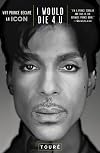
With Prince's unfortunate recent passing, my library had this on their recommended shelf, so of course I jumped on it for my next entry in my Read Your Library project.
Not a biography, Toure instead takes a look at Prince the unforgettable icon and how he came to be. Toure looks at the generation Prince resonated with the most, Generation X, and explored exactly why we (I'm on the young-end of the Gen X spectrum) were so enraptured by the man.
The book is in three parts. First Toure explores show more Prince's early days and connects them with things that many Gen Xers could relate to. Next he takes a look at the hypersexualization of the 80s and Prince's brilliant manipulation of that to create his image. Finally, we get to read about Prince's very strong religious side and how he incorporated his faith into his music.
Overall, this is a fascinating read. It really makes you think, and explains a great deal about both Generation X and Prince that many may not have thought of before now. show less
Not a biography, Toure instead takes a look at Prince the unforgettable icon and how he came to be. Toure looks at the generation Prince resonated with the most, Generation X, and explored exactly why we (I'm on the young-end of the Gen X spectrum) were so enraptured by the man.
The book is in three parts. First Toure explores show more Prince's early days and connects them with things that many Gen Xers could relate to. Next he takes a look at the hypersexualization of the 80s and Prince's brilliant manipulation of that to create his image. Finally, we get to read about Prince's very strong religious side and how he incorporated his faith into his music.
Overall, this is a fascinating read. It really makes you think, and explains a great deal about both Generation X and Prince that many may not have thought of before now. show less
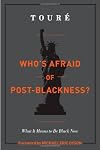
The book is equals parts social commentary and autobiographical musings from a cadre of Black stars in the sky of American Africana. Post-Blackness as a definable thing is constantly changing and based on a generational set-point—for example, being born in the 80’s, I am not familiar at all with critical ‘white gaze’ or could never imagine being afraid to eat friend chicken or watermelon in front of a White person—these thoughts have never crossed my mind. My parents never told me show more I had to be better, do better, than any White person or other any person; just to do my best and to be myself. Blackness was never considered a stumbling block, nor has other people’s ignorance based on my melanin ever become my own personal issue. Is this post-Black thinking? Racism is shocking in the sense of “Damn, people still on that dumb shit?” not that it affects me constantly; classism and homophobia constitute the microagressions in my life. Would this also be a post-Black problem?
I wish he went into more details of his own personal experiences before adding in his interviews. His life sketches were interesting enough on their own. However, Touré completely lost some cool points—and needs a whole punched in his Black card—for allowing the “How to Build More Baracks” or rather as it should have been titled “How to Be Sellout Magic Negro to Gain Power and Influence People”. That chapter was a painful read. Basically to gain this nebulous power—not sure it is political, economic, or social; maybe a combination of all three—in America as a post-Black person you need not to strike fear in the hearts of White(supremacist) folks, have any human failings, possess a baby face (seriously!?), and be the best Uncle Thomas you can be! Sorry, but if anyone of any race holds White supremacist ideals then they should be exposed and feel guilty for holding such ignorance—at the very minimum. If my melanin, words, and actions arouse guilt in a White supremacist then I am doing my job. Other than that one chapter of pure treacherous (traitorous ) fuckery, the book ends on good note—the idea that American Black people now have the emotional and personal space to define themselves as themselves for their own benefits or detriments like any truly free group of a people. show less
I wish he went into more details of his own personal experiences before adding in his interviews. His life sketches were interesting enough on their own. However, Touré completely lost some cool points—and needs a whole punched in his Black card—for allowing the “How to Build More Baracks” or rather as it should have been titled “How to Be Sellout Magic Negro to Gain Power and Influence People”. That chapter was a painful read. Basically to gain this nebulous power—not sure it is political, economic, or social; maybe a combination of all three—in America as a post-Black person you need not to strike fear in the hearts of White(supremacist) folks, have any human failings, possess a baby face (seriously!?), and be the best Uncle Thomas you can be! Sorry, but if anyone of any race holds White supremacist ideals then they should be exposed and feel guilty for holding such ignorance—at the very minimum. If my melanin, words, and actions arouse guilt in a White supremacist then I am doing my job. Other than that one chapter of pure treacherous (traitorous ) fuckery, the book ends on good note—the idea that American Black people now have the emotional and personal space to define themselves as themselves for their own benefits or detriments like any truly free group of a people. show less
Anyone look for a tell-all biography will be disappointed by this book. Anyone who is interested in an analysis of Prince's contributions to pop culture will enjoy this book. As an avid admirer of Prince - he is my favorite musical artist of all time - I was pleased with Toure's approach. I applaud Toure's examination because it goes beyond the traditional focus on the sexuality of Prince's music and focuses more on the spiritual aspects. The only issue I have is that the book is fairly show more short.(I actually read it twice just to fully absorb everything.)When you consider the vast catalogue of music which Prince has...well, there could be VOLUMES written about it. I appreciate that Toure expanded the information from his series of Harvard lectures to provide a deeply thoughtful and well-researched reflection on the artist known as Prince. It really is a must-read for those of us who understand the musical genius of Prince and I think it would be equally entertaining for any person interested in pop culture. show less
By: Toure
Published by: Afria Books
Age Recommended: Adult
Reviewed By: Arlena Dean
Rating: 5
Book Blog For: GMTA
Review:
"I Would Die 4 U" by Toure was not a biography of Prince's life but rather "the description of I Would Die 4 u that this is an investigation and based on research from people that were/are in Prince's life and some that were in his innermost circle." I will say that Prince has been one of my favorites forever and finding out that Toure's new book 'analyzes Prince's lyrics in show more ways "that most have never actually considered which causes you to go back and play all of your old Prince stuff and listen for the subtle messages you never knew he was delivering." This book really does explain why we find Prince such a great icon for my generation. I found this novel was very well written as we can see Prince as a 'sex symbol, troubled man or whether he is a Christian or not, there is a message in it all. To truly understand this artist know as 'Prince' this would be a good read to you to understand the musical genius that this man is in the entertaining world of pop culture. show less
Published by: Afria Books
Age Recommended: Adult
Reviewed By: Arlena Dean
Rating: 5
Book Blog For: GMTA
Review:
"I Would Die 4 U" by Toure was not a biography of Prince's life but rather "the description of I Would Die 4 u that this is an investigation and based on research from people that were/are in Prince's life and some that were in his innermost circle." I will say that Prince has been one of my favorites forever and finding out that Toure's new book 'analyzes Prince's lyrics in show more ways "that most have never actually considered which causes you to go back and play all of your old Prince stuff and listen for the subtle messages you never knew he was delivering." This book really does explain why we find Prince such a great icon for my generation. I found this novel was very well written as we can see Prince as a 'sex symbol, troubled man or whether he is a Christian or not, there is a message in it all. To truly understand this artist know as 'Prince' this would be a good read to you to understand the musical genius that this man is in the entertaining world of pop culture. show less
Lists
Prince (1)
Awards


You May Also Like


Associated Authors
Statistics
- Works
- 9
- Also by
- 9
- Members
- 521
- Popularity
- #47,686
- Rating
- 3.4
- Reviews
- 8
- ISBNs
- 29
- Favorited
- 1