
Randall Kennedy
Author of Nigger: The Strange Career of a Troublesome Word
About the Author
Randall Kennedy is a professor at Harvard Law School.
Works by Randall Kennedy
The Persistence of the Color Line: Racial Politics and the Obama Presidency (2011) 79 copies, 1 review
Associated Works
William and Mary Law Review, Vol. 29 No. 1, Fall 1987: 1787: The Constitution in Perspective — Contributor — 1 copy
Tagged
Common Knowledge
- Birthdate
- 1954-09-10
- Gender
- male
- Education
- Princeton University
Yale University (JD, 1982) - Occupations
- professor
- Organizations
- Harvard University
- Nationality
- USA
- Associated Place (for map)
- USA
Members
Reviews
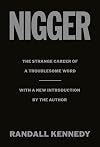
Nigger: The Strange Career of a Troublesome Word - with a New Introduction by the Author by Randall Kennedy
I cannot resist a book with a provocative title, and there can't be many that top this.
I was slightly disappointed to see that this was actually a 20th anniversary edition of a book originally released in 2002, fearing it would be out of date, but aside from multiple references to Bill Cosby as a respected authority and thanks to a new introduction, it holds up pretty well, racism having a horrible timelessness to it. It's still too bad though, because it would be interesting to see how show more recent developments with Joe Rogan and Morgan Wallen might effect the author's viewpoint.
I was surprised that the author was a first amendment absolutist who has a negative opinion about cancel culture, political correctness, hate speech laws, and eradication of the N-word. As an academic he wants to be sure to examine and assess the context, nuance, and relativism associated with specific uses of the word instead of coming up with arbitrary rules. I did not always agree with him, but could usually follow the logic of his stance. I'm a firm believer in free speech -- after all, it's the quickest and easiest way to find out who the assholes in any group are, and that's always useful information to have -- but too many people confuse free speech with consequence-free speech, and I worry that this book might be seen by certain idiots as a hall pass.
I do find it contradictory that the author criticized N-word eradicationists for not having hard and specific statistics to prove a rise in the use of the N-word while at the same time seeming to advocate that Black Americans harden their skin against its use toward them and not report it or make a big deal of it, ensuring we won't have meaningful and accurate statistics.
Author opinions aside, I do appreciate the history provided, tracing the word's appearance through law, court cases, culture, and entertainment. Lots of fascinating tidbits are unearthed and revisited. show less
I was slightly disappointed to see that this was actually a 20th anniversary edition of a book originally released in 2002, fearing it would be out of date, but aside from multiple references to Bill Cosby as a respected authority and thanks to a new introduction, it holds up pretty well, racism having a horrible timelessness to it. It's still too bad though, because it would be interesting to see how show more recent developments with Joe Rogan and Morgan Wallen might effect the author's viewpoint.
I was surprised that the author was a first amendment absolutist who has a negative opinion about cancel culture, political correctness, hate speech laws, and eradication of the N-word. As an academic he wants to be sure to examine and assess the context, nuance, and relativism associated with specific uses of the word instead of coming up with arbitrary rules. I did not always agree with him, but could usually follow the logic of his stance. I'm a firm believer in free speech -- after all, it's the quickest and easiest way to find out who the assholes in any group are, and that's always useful information to have -- but too many people confuse free speech with consequence-free speech, and I worry that this book might be seen by certain idiots as a hall pass.
I do find it contradictory that the author criticized N-word eradicationists for not having hard and specific statistics to prove a rise in the use of the N-word while at the same time seeming to advocate that Black Americans harden their skin against its use toward them and not report it or make a big deal of it, ensuring we won't have meaningful and accurate statistics.
Author opinions aside, I do appreciate the history provided, tracing the word's appearance through law, court cases, culture, and entertainment. Lots of fascinating tidbits are unearthed and revisited. show less
Though I don't read much non-fiction nowadays, I put this book on my TBR a few years ago after reading several positive reviews. And, I am glad I did.
The author, Randall Kennedy, explores the use of the N-word in American culture through personal experience, anecdotes, court cases, and many other sources. The book is well written and thoroughly researched (25 pages for the 93 endnotes!) making it an interesting, thought-provoking read. I highly recommend it.
Rating: 4
The author, Randall Kennedy, explores the use of the N-word in American culture through personal experience, anecdotes, court cases, and many other sources. The book is well written and thoroughly researched (25 pages for the 93 endnotes!) making it an interesting, thought-provoking read. I highly recommend it.
Rating: 4
I approached this book as I would an unexploded landmine, acknowledging the effect the title word has had over the United States, and throughout the world.
The book turned out to be more academic than I initially expected (I was looking for something akin to the popular history genre of the history of an inanimate object, fish, a particular year et al) but I found Kennedy's writing style to be far less dry than many academic tomes I've been forced to read over the years. The book is also show more short enough to finish in a few sittings.
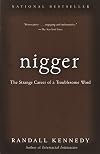
Being a white man I had to be very careful as to how I physically read this in public. When people asked me what I was reading, I was very careful to say something like "This is a book by an Afro-American scholar on language and how it can subverted." Then I showed them the cover. show less
The book turned out to be more academic than I initially expected (I was looking for something akin to the popular history genre of the history of an inanimate object, fish, a particular year et al) but I found Kennedy's writing style to be far less dry than many academic tomes I've been forced to read over the years. The book is also show more short enough to finish in a few sittings.
Being a white man I had to be very careful as to how I physically read this in public. When people asked me what I was reading, I was very careful to say something like "This is a book by an Afro-American scholar on language and how it can subverted." Then I showed them the cover. show less
A strange career indeed. This slim volume is written in what I tend to think of as "the college structure". Namely it is packed to the gills with historical and contemporary examples arranged categorically. In terms of volume most of these relate to pejorative racist usage, but, true to his byline, Kennedy is just as committed ironic, satirical and affectionate uses of the word.
As someone that abhors taboos of any sort and loves words, slurs have long occupied a difficult status for me. I show more don't think they should be afforded special status, off limits to all but those who would use them to attack, but I can't ignore their baggage or people's sensitivity to them. Randall seems to have a similar feeling on the matter. He certainly doesn't excuse vile usage of the titular word, but he knows that attempts to regulate it's usage, or excise it from the English language entirely are not only naive, they would undercut freedom of speech and turn victims of verbal attacks into agents of censure. As ugly as words can be it it's important to remember that freedom of speech doesn't mean much if we can pick and choose what speech it applies to.
But back to the book. Kennedy briefly looks at the origin of the word and when it picked up it's nasty connotations before diving into historical and contemporary examples or it's uses and abuses. There are some pretty nasty stories, but thankfully as you read on the breadth of the "N-word" becomes more apparent. Kennedy celebrates ironic, sarcastic and affectionate uses of the word within the black community citing people like Richard Pryor and Chris Rock as examples of people that wouldn't let the fact that white people might hear them and not understand their usage dictate how they spoke. Positive uses of "nigger" from literature, music, and comedy are reprinted and discussed.
The last segment is dedicated to controversial usage of the word and this section is done especially well. Kennedy presents the facts of the situation at hand before weighing in on the subject. This allows the reader time to think over what they think of the usage in question before Kennedy makes his case.
All and all I found this quick and edifying. It gave me fuller perspective on the use of the word and it gives me great pleasure that members of the black community are bending the word to there own purposes. Despite Kennedy's defense of non-blacks using the word in positive manners I think I'll leave wrecking this particular taboo to those better suited to it. As it is I'm perfectly happy taking the teeth out of "cunt" anyways.
The one thing I wish was included but wasn't was commentary on the recent censoring of Huckleberry Finn. Kennedy defends the book and Twain's usage of nigger in it, but this book was published years before the regualtionists excised all usage of the word from an edition of Huck Finn.
To close out, it's not the words you use, it's what you say with them. show less
As someone that abhors taboos of any sort and loves words, slurs have long occupied a difficult status for me. I show more don't think they should be afforded special status, off limits to all but those who would use them to attack, but I can't ignore their baggage or people's sensitivity to them. Randall seems to have a similar feeling on the matter. He certainly doesn't excuse vile usage of the titular word, but he knows that attempts to regulate it's usage, or excise it from the English language entirely are not only naive, they would undercut freedom of speech and turn victims of verbal attacks into agents of censure. As ugly as words can be it it's important to remember that freedom of speech doesn't mean much if we can pick and choose what speech it applies to.
But back to the book. Kennedy briefly looks at the origin of the word and when it picked up it's nasty connotations before diving into historical and contemporary examples or it's uses and abuses. There are some pretty nasty stories, but thankfully as you read on the breadth of the "N-word" becomes more apparent. Kennedy celebrates ironic, sarcastic and affectionate uses of the word within the black community citing people like Richard Pryor and Chris Rock as examples of people that wouldn't let the fact that white people might hear them and not understand their usage dictate how they spoke. Positive uses of "nigger" from literature, music, and comedy are reprinted and discussed.
The last segment is dedicated to controversial usage of the word and this section is done especially well. Kennedy presents the facts of the situation at hand before weighing in on the subject. This allows the reader time to think over what they think of the usage in question before Kennedy makes his case.
All and all I found this quick and edifying. It gave me fuller perspective on the use of the word and it gives me great pleasure that members of the black community are bending the word to there own purposes. Despite Kennedy's defense of non-blacks using the word in positive manners I think I'll leave wrecking this particular taboo to those better suited to it. As it is I'm perfectly happy taking the teeth out of "cunt" anyways.
The one thing I wish was included but wasn't was commentary on the recent censoring of Huckleberry Finn. Kennedy defends the book and Twain's usage of nigger in it, but this book was published years before the regualtionists excised all usage of the word from an edition of Huck Finn.
To close out, it's not the words you use, it's what you say with them. show less
Lists
Awards


You May Also Like


Associated Authors
Statistics
- Works
- 10
- Also by
- 3
- Members
- 1,114
- Popularity
- #23,058
- Rating
- 3.7
- Reviews
- 17
- ISBNs
- 37
- Favorited
- 2