
Catherine M. Andronik
Author of Hatshepsut, His Majesty, Herself
About the Author
Catherine M. Andronik is a school library media specialist in Connecticut who has worked at every grade level. Besides writing, she enjoys reading, singing in a chorus, and traveling (especially to England).
Series
Works by Catherine M. Andronik
Wildly Romantic: The English Romantic Poets: The Mad, the Bad, and the Dangerous (2007) 88 copies, 9 reviews
Kindred Spirit: A Biography of L. M. Montgomery, Creator of Anne of Green Gables (1993) 70 copies, 1 review
Information literacy skills 1 copy
Tagged
Common Knowledge
- Canonical name
- Andronik, Catherine M.
- Birthdate
- 20th Century
- Gender
- female
- Occupations
- media specialist (high school library)
- Nationality
- USA
- Places of residence
- Connecticut, USA
- Associated Place (for map)
- Connecticut, USA
Members
Reviews
Wildly Romantic: The English Romantic Poets: The Mad, the Bad, and the Dangerous by Catherine M. Andronik
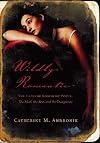
Andronik, Catherine. (2007). Wildly Romantic: The English Romantic Poets: The Mad, the Bad, and the Dangerous. New York: Henry Holt. 272 pp. ISBN 0-8050-7783-9 (Hardcover); $16.95
This is one of the delightful surprises of BBYA. I dreaded reading a biography of poets that most teens do not know and have not read. After reading lines like: "Harriet might also have had quite an opinion to offer if she'd known that her young husband, just turned twenty-one, had another hands-on test of one of show more his radical ideas up his sleeve. He was partial to the freethinking, far-ahead-of-its-time philosophy of an English writer named William Godwin. Or perhaps he was just partial to Godwin's teenage daughter, Mary." (105) "Like some sort of nature god frolicking with his nymphs, Shelley splashed naked in the streams they passed while the girls sat by and admired. Somewhere along the road, he thought to write another letter to Harriet [his wife], inviting her to join them, since they were all having such a good time." (118) While these poets lived at the beginning of the 19th century (early 1800s), many of their ideas seem very relevant and modern. Teens may be interested to learn how these poets dealt with drugs and sex and society and how similar these poets' lives are to their own. Shelley's room is filled with books and clothes strewn everywhere. Byron is abused as a boy and some of that same abusive attitude infects his dealing with women. Coleridge becomes addicted to prescription medicine and can't shake this monkey no matter what schemes he invents. Byron is bulimic and overweight and tries all sorts of fad diets and still manages to make the ladies (and young boys) swoon for him. Andronik pays detailed attention to the women that surround this group of men, which adds depth, character, and interest to the book. The chapter lengths are just the right length and often end with a cliffhanger ending that compels the reader forward. The only complaint that I have is that I wish the poem selections had started out with shorter pieces or selections (instead of the Preludes and “Frost at Midnight”). However, the poems add significantly to the text and I think students, as they get more involved with the story, will begin to look for associations between the biography and the poet's own words. The format, with the poems dividing chapters, encourages this exploration in a way that placing poems at the end of the book would not have done. show less
This is one of the delightful surprises of BBYA. I dreaded reading a biography of poets that most teens do not know and have not read. After reading lines like: "Harriet might also have had quite an opinion to offer if she'd known that her young husband, just turned twenty-one, had another hands-on test of one of show more his radical ideas up his sleeve. He was partial to the freethinking, far-ahead-of-its-time philosophy of an English writer named William Godwin. Or perhaps he was just partial to Godwin's teenage daughter, Mary." (105) "Like some sort of nature god frolicking with his nymphs, Shelley splashed naked in the streams they passed while the girls sat by and admired. Somewhere along the road, he thought to write another letter to Harriet [his wife], inviting her to join them, since they were all having such a good time." (118) While these poets lived at the beginning of the 19th century (early 1800s), many of their ideas seem very relevant and modern. Teens may be interested to learn how these poets dealt with drugs and sex and society and how similar these poets' lives are to their own. Shelley's room is filled with books and clothes strewn everywhere. Byron is abused as a boy and some of that same abusive attitude infects his dealing with women. Coleridge becomes addicted to prescription medicine and can't shake this monkey no matter what schemes he invents. Byron is bulimic and overweight and tries all sorts of fad diets and still manages to make the ladies (and young boys) swoon for him. Andronik pays detailed attention to the women that surround this group of men, which adds depth, character, and interest to the book. The chapter lengths are just the right length and often end with a cliffhanger ending that compels the reader forward. The only complaint that I have is that I wish the poem selections had started out with shorter pieces or selections (instead of the Preludes and “Frost at Midnight”). However, the poems add significantly to the text and I think students, as they get more involved with the story, will begin to look for associations between the biography and the poet's own words. The format, with the poems dividing chapters, encourages this exploration in a way that placing poems at the end of the book would not have done. show less
Wildly Romantic: The English Romantic Poets: The Mad, the Bad, and the Dangerous by Catherine M. Andronik
Kind of a silly book, not exactly scrupulous about facts (for example, the story, apocryphal anyway, of Caroline Lamb presenting herself naked on a serving tray to her husband is transmuted--because, why not--into yet another Byron rumor; "English Bards and Scotch Reviewers" is referred to as an essay, implies that "She Walks in Beauty" was written about his wife, etc.). Breezy and entertaining, if you don't care if what you're reading is true or not.
Amusing line: "Byron being Byron, love show more didn't come in a triangle. It came in something closer to a pentagram." show less
Amusing line: "Byron being Byron, love show more didn't come in a triangle. It came in something closer to a pentagram." show less
Wildly Romantic: The English Romantic Poets: The Mad, the Bad, and the Dangerous by Catherine M. Andronik

This is the perfect book to get middle- and high-schoolers interested in 18th- and 19th-century poetry. (And let's face it, they're not going to get hooked on it of their own accord.) The scandalous details will reel 'em in and make the poets much more memorable than otherwise.
It's long been my opinion that people, especially students, are better off knowing the follies of the heroes of history (like the fact that Ben Franklin was a raging sex fiend, for example) -- not to demonize the show more aforementioned heroes or demean their accomplishments, but simply to make them more human. show less
It's long been my opinion that people, especially students, are better off knowing the follies of the heroes of history (like the fact that Ben Franklin was a raging sex fiend, for example) -- not to demonize the show more aforementioned heroes or demean their accomplishments, but simply to make them more human. show less
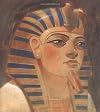
A beautifully illustrated biography of Hatshepsut, aimed for upper elementary students. The content is interesting and the writing style is okay, however the book's potential for this age group is somewhat dimmed by its storyboarding. It reads more like a collection of vignettes than a cohesive narrative, and has some design elements that might be problematic.
The book starts out with a potentially confusing vertical timeline oriented with 1000 BC at the top and 3100 BC at the bottom, which show more reads "backwards" at first glace, and has no note to clarify that the more recent events are listed first. The next spread uses Hatshepsut's mortuary temple to introduce the reader to her, mentions some brief highlights of her life, and notes that the temple has since been defaced by vandals. The following pages go on to describe her childhood and the fact that she was being prepared for life as a queen. The spread afterwards includes a description of her ancestral dynasty with several names and places listed, but is several pages away from the timeline and map before the introduction. Then the narrative jumps back to her childhood and goes more or less chronologically from there. Each 2-page spread is headed with a related, but unidentified, quote, sometimes directly from Hatshepsut, sometimes about her, and one by Senenmut referring to himself.
Overall, this a good book on an interesting topic, written fairly well. With some slight adjustments, it would be even better. As it is, the book has a nice clean layout and great illustrations, which makes it quite appealing to browse through. show less
The book starts out with a potentially confusing vertical timeline oriented with 1000 BC at the top and 3100 BC at the bottom, which show more reads "backwards" at first glace, and has no note to clarify that the more recent events are listed first. The next spread uses Hatshepsut's mortuary temple to introduce the reader to her, mentions some brief highlights of her life, and notes that the temple has since been defaced by vandals. The following pages go on to describe her childhood and the fact that she was being prepared for life as a queen. The spread afterwards includes a description of her ancestral dynasty with several names and places listed, but is several pages away from the timeline and map before the introduction. Then the narrative jumps back to her childhood and goes more or less chronologically from there. Each 2-page spread is headed with a related, but unidentified, quote, sometimes directly from Hatshepsut, sometimes about her, and one by Senenmut referring to himself.
Overall, this a good book on an interesting topic, written fairly well. With some slight adjustments, it would be even better. As it is, the book has a nice clean layout and great illustrations, which makes it quite appealing to browse through. show less
Lists
Awards


You May Also Like


Associated Authors
Statistics
- Works
- 15
- Members
- 412
- Popularity
- #59,115
- Rating
- 3.4
- Reviews
- 17
- ISBNs
- 25