
Jes Battis
Author of Night Child
About the Author
Jes Battis is a doctoral student in the Department of English at Simon Fraser University in Burnaby, Canada
Disambiguation Notice:
Battis uses they/them pronouns.
Series
Works by Jes Battis
Farscape: Investigating Farscape: Uncharted Territories of Sex and Science Fiction (2007) 33 copies, 3 reviews
Mastering the Game of Thrones: Essays on George R.R. Martin's A Song of Ice and Fire (2015) 26 copies
Tagged
Common Knowledge
- Birthdate
- 1979
- Gender
- male
- Education
- Simon Fraser University
- Organizations
- Science Fiction and Fantasy Writers Association
- Nationality
- Canada
- Birthplace
- Vancouver, British Columbia, Canada
- Places of residence
- Vancouver, British Columbia, Canada
Montréal, Québec, Canada - Disambiguation notice
- Battis uses they/them pronouns.
- Associated Place (for map)
- Canada
Members
Reviews
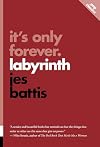
In It’s Only Forever: Labyrinth, Jes Battis takes a very Queer and very personal look at the 1986 Jim Henson directed cult classic.
Battis does an excellent job of interpreting the movie through a Queer lens, and gives much food for thought. Still, it is a testament to the multifaceted genius of Labyrinth that their extensive analysis still does not come close to unpacking everything that is hidden in the Labyrinth.
My one complaint is that Battis is sometimes too personal, and I sometimes show more felt like I was getting more insight into the author than I was the movie.
Received via NetGalley. show less
Battis does an excellent job of interpreting the movie through a Queer lens, and gives much food for thought. Still, it is a testament to the multifaceted genius of Labyrinth that their extensive analysis still does not come close to unpacking everything that is hidden in the Labyrinth.
My one complaint is that Battis is sometimes too personal, and I sometimes show more felt like I was getting more insight into the author than I was the movie.
Received via NetGalley. show less
Investigating Farscape: Uncharted Territories of Sex and Science Fiction (Investigating Cult TV) by Jes Battis
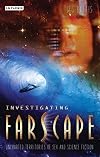
For a critical work to succeed for me, it must do at least one of three things: make me understand the text and/or the theory used to explore the text in new ways, excite in me a desire to return to the text to explore it more fully, or affirm my own readings of the text. When I'm come over all academical, I'm most interested in the first of these; when I'm fannish, I'm probably most invested in the last. (And, honestly, if a critical work can't do at least the second, why are we even show more bothering?) Investigating Farscape did all three of these things at some point, and it never failed to get me intrigued to watch the whole series again. (To be completely fair, even having just finished it for the first time about two weeks ago, I was already super-psyched to go through the whole thing again. But still.) Battis clearly loves the show, which is refreshing (nothing worse than a critic who obviously hates the text in question, and I'm incredibly tired of scholars who feel like they can't be rigorous if they also appear to have *gasp* enjoyed something wholeheartedly), but he is not uncritical either, which is necessary for a work like this to be other than just a gush-fest. In addition to making some really interesting and insightful points about a range of topics (including masculinity, bodies, language, and colonialism), he writes really well (not a foregone conclusion for litcrit/cultural studies) and explains complicated theory succinctly and usefully. I think he sometimes overreaches (chapter four, in particular, makes some claims in service to his analysis that I'm not sure are held up by the text), but for the most part this is a fascinating and satisfying read. The discussion of masculinity was, for me, the high point (it hit number three in my requirements above hard and was full of "I see what you see/you see what I see" moments). My only real criticism is unfair: I wish Battis had discussed the show's religious symbolism fully, but as he made it clear that was never his intention, I guess I can't be too upset about it. Recommended to Farscape fans interested in a rigorous exploration of the show. show less
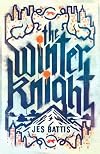
The dual viewpoints essentially make this two books in one. On one hand you have a magical murder mystery, on the other a coming-of-age YA romance. For a story dealing with myths, maybe it makes sense that both viewpoint characters are very much stuck in the past, thinking of various ancestors' expectations of them. Unfortunately, while the mystery plot was interesting, I felt like it was really bogged down by the characters' personal baggage. Additionally, the YA side of things during show more Wayne's POV didn't interest me at all. I thought the romance was unconvincing. The characters acted more familiar than would be reasonable, in my opinion (even given the common mythology). A different reader might have enjoyed it, but I felt it was a little boring. The Valkyries, despite being what amounts to a magical police force, don't really seem to have a lot of power, so the investigation progresses very slowly. The pacing gets broken up further by Wayne's chapters which for the most part have an entirely different tone and focus.
I read the ARC edition of the book so I'm not sure how much of this made it in to the final copy, and this is just my own preference, but I found the sheer amount of references to other things kind of grating. Additionally, some of the similes and metaphors used were just really weird. Another detail that bothered me is that while there's a lot of mentions of settlers and colonialism, the only focus is on the Arthurian magics and creatures without mention of the indigenous magic of the lands. I thought it was a curious choice.
While I have some knowledge of Arthurian myth through cultural osmosis, I think someone more familiar with the myths might have a better time with this book, since they'd understand the subtext between certain characters. show less
I read the ARC edition of the book so I'm not sure how much of this made it in to the final copy, and this is just my own preference, but I found the sheer amount of references to other things kind of grating. Additionally, some of the similes and metaphors used were just really weird. Another detail that bothered me is that while there's a lot of mentions of settlers and colonialism, the only focus is on the Arthurian magics and creatures without mention of the indigenous magic of the lands. I thought it was a curious choice.
While I have some knowledge of Arthurian myth through cultural osmosis, I think someone more familiar with the myths might have a better time with this book, since they'd understand the subtext between certain characters. show less
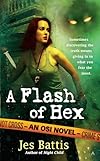
I love a spunky redhead. I love a spunky redhead who ties into the earth magically. I love a spunky redhead with a gay best friend who reads minds. I love a spunky redhead who falls for a man who elicits drool in a black tight t-shirt and just so happens to channel necromantic energy.
Battis contributes all the fun and readability of the urban fantasy genre, but isn't afraid to let a verbose vocabulary add to the writing. This academic bent shines forth in the diversity rainbow of characters show more that parade through the novel; Battis manages to cultivate this diversity just shy of the line of too much, celebrating within the variety the many differences that do not see written attention frequently. While occasionally slipping into a digressive queer theorist mode, it is never long enough to turn attention away from the character building.
As an added plus, the OSI (Occult Special Investigation) novels blend elements of forensic mystery solidly with urban fantasy - think Kathy Reichs researching magical crime, further helping elide the distinctions between genre novels.
A Flash of Hex manages that difficult step in being an even better novel than its predecessor, establishing continuity and developing its worldview. Our spunky redhead Tess has some growth to pursue, and I for one cannot wait to read more about her love interest fleshing out his tight black t-shirts. show less
Battis contributes all the fun and readability of the urban fantasy genre, but isn't afraid to let a verbose vocabulary add to the writing. This academic bent shines forth in the diversity rainbow of characters show more that parade through the novel; Battis manages to cultivate this diversity just shy of the line of too much, celebrating within the variety the many differences that do not see written attention frequently. While occasionally slipping into a digressive queer theorist mode, it is never long enough to turn attention away from the character building.
As an added plus, the OSI (Occult Special Investigation) novels blend elements of forensic mystery solidly with urban fantasy - think Kathy Reichs researching magical crime, further helping elide the distinctions between genre novels.
A Flash of Hex manages that difficult step in being an even better novel than its predecessor, establishing continuity and developing its worldview. Our spunky redhead Tess has some growth to pursue, and I for one cannot wait to read more about her love interest fleshing out his tight black t-shirts. show less
Lists
Read in 2014 (5)
Awards


You May Also Like


Statistics
- Works
- 16
- Members
- 1,058
- Popularity
- #24,345
- Rating
- 3.3
- Reviews
- 33
- ISBNs
- 36
- Favorited
- 1