
Tami Lehman-Wilzig
Author of Passover Around the World
About the Author
Image credit: via Amazon.com
Works by Tami Lehman-Wilzig
Tagged
Common Knowledge
- Gender
- female
Members
Reviews

Israeli children's author Tami Lehman-Wilzig highlights the challenges - and the joys - of having a special needs sibling during the holidays, in this new Hanukkah story, put out by Jewish children's publishing imprint, Kar-Ben. Written with Nicole Katzman, director of the Jewish Alliance of Greater Rhode Island's Shalom Family and PJ Library programs, and the mother of an autistic son, it follows the story of Jacob, whose older brother Nathan is autistic. Impatient with some of Nathan's show more behavior, and eager to befriend his new next-door neighbor, Jacob is intensely embarrassed by his brother's actions, in blowing out the Hanukkah candles, when those new neighbors are included in his family's holiday celebration. Can Jacob make his new friend understand about Nathan's autism? Can he himself accept Nathan, as he is...?
I expected to find Nathan Blows Out the Hanukkah Candles more compelling than I did, but somehow, despite appreciating the premise of the story (and the intention behind it), I wasn't as involved as I'd expected to be. I think that part of it is that, not being Jewish myself, or having any particularly strong feeling about the traditional religious observations associated with Hanukkah - the idea that the Hanukkah candles should not be blown out, for instance - Jacob's embarrassment at his brother's actions was less emotionally resonant for me. Of course I understood, intellectually, that this was a violation of a taboo - something which is made clear by the reactions of the other characters - but it didn't have much significance for me, and the narrative, which takes it very much for granted that its readers already understand the implications, didn't do much to build any kind of emotional reaction.
Leaving this - and the fact that I found the resolution just a little too pat - aside, I am still glad to have read this one, as there are relatively few titles (that I have encountered) explicitly about special needs children at the holidays. Also, in (casually) digging around on the internet, I see that autism is a big issue in religious communities of all kinds - children being asked not to attend synagogues and churches, denied Communion or Bat/Bar Mitzvahs - so a story emphasizing the importance of including autistic children in religious observances, and highlighting the joy that their sometimes unconventional behavior can bring, to those observances, is very welcome! show less
I expected to find Nathan Blows Out the Hanukkah Candles more compelling than I did, but somehow, despite appreciating the premise of the story (and the intention behind it), I wasn't as involved as I'd expected to be. I think that part of it is that, not being Jewish myself, or having any particularly strong feeling about the traditional religious observations associated with Hanukkah - the idea that the Hanukkah candles should not be blown out, for instance - Jacob's embarrassment at his brother's actions was less emotionally resonant for me. Of course I understood, intellectually, that this was a violation of a taboo - something which is made clear by the reactions of the other characters - but it didn't have much significance for me, and the narrative, which takes it very much for granted that its readers already understand the implications, didn't do much to build any kind of emotional reaction.
Leaving this - and the fact that I found the resolution just a little too pat - aside, I am still glad to have read this one, as there are relatively few titles (that I have encountered) explicitly about special needs children at the holidays. Also, in (casually) digging around on the internet, I see that autism is a big issue in religious communities of all kinds - children being asked not to attend synagogues and churches, denied Communion or Bat/Bar Mitzvahs - so a story emphasizing the importance of including autistic children in religious observances, and highlighting the joy that their sometimes unconventional behavior can bring, to those observances, is very welcome! show less
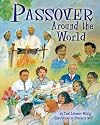
This chapter book describes the holiday Passover and how families around the world celebrate with the sedar Table. A Sedar Plate is the centerpiece of the table and holds symbolic foods of the story of Passover. For example, Maror, or bitter herb, stands for the hard life of the Israelite slaves. After the first chapter describing Passover and the sedar Table, each chapter is a different country telling the story of how their family celebrates Passover and serves the sedar plate. The overall show more message of this chapter book was that regardless of where your ancestors came from or how your family celebrate Passover, the sedar table will be present.
I thought this was a good book because it describes how Passover began, along with the different ways that people around the world can celebrate it. The short stories in each chapter describe how each family celebrates the holiday. The short stories are a good way to explain Passover to children because the stories are about young children asking questions about the holiday. For example, in the chapter about Turkey, the story is about two little twins on Passover. Their father dresses up and acts out a skit about the history of the holiday. This is a good way to explain to kids the history in a more interesting way than a textbook would.
I rated this a 4 because I thought the pictures needed to be more descriptive. As someone who knows very little about Passover, they used a lot of terms that I was unfamiliar with. I would often look at the pictures to help me figure out what the text meant, but the pictures were vague. An example of this would be in the chapter Gibraltar, where the text says "Meriam helps her father wrap up the lulav, as well as the cravat and hadasim (the willow and myrtle branches). For someone who doesn't know what these objects are, it was hard to follow the story because it contained a lot of new vocabulary with no pictures to help you understand.
I liked how at the end of a passage, if it were talking about food, the recipe to make the Passover meals were on the page. I thought this was a good aspect of the book because it allows students to experience the food of Passover.
Overall, I thought this was a good book for children to read because it shows that holidays can be celebrated various ways and there is no "right way" or "one way" to celebrate. show less
I thought this was a good book because it describes how Passover began, along with the different ways that people around the world can celebrate it. The short stories in each chapter describe how each family celebrates the holiday. The short stories are a good way to explain Passover to children because the stories are about young children asking questions about the holiday. For example, in the chapter about Turkey, the story is about two little twins on Passover. Their father dresses up and acts out a skit about the history of the holiday. This is a good way to explain to kids the history in a more interesting way than a textbook would.
I rated this a 4 because I thought the pictures needed to be more descriptive. As someone who knows very little about Passover, they used a lot of terms that I was unfamiliar with. I would often look at the pictures to help me figure out what the text meant, but the pictures were vague. An example of this would be in the chapter Gibraltar, where the text says "Meriam helps her father wrap up the lulav, as well as the cravat and hadasim (the willow and myrtle branches). For someone who doesn't know what these objects are, it was hard to follow the story because it contained a lot of new vocabulary with no pictures to help you understand.
I liked how at the end of a passage, if it were talking about food, the recipe to make the Passover meals were on the page. I thought this was a good aspect of the book because it allows students to experience the food of Passover.
Overall, I thought this was a good book for children to read because it shows that holidays can be celebrated various ways and there is no "right way" or "one way" to celebrate. show less
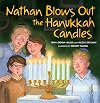
Summary: Nathan Blows Out the Hanukkah Candles is the story of Jacob and his brother Nathan, who is autistic. Jacob is annoyed by his brother different behavior, but his mom tries to help him to be more understanding. He and his family are starting their celebration of Hanukkah by lighting the menorah. Nathan blows out the candles and Jacob is very upset. The family gets new neighbors who join Jacobs’s family for the lighting of the menorah the next night. Nathan displays the behavior that show more irritates Jacob, blows out the candles again and Jacob is embarrassed. Later, the new neighbor boy makes fun of Nathan’s autism. Jacob gets upset and defends his brother. The neighbors com over again, and this time they light the menorah, and then serve jelly donuts, a traditional Hanukkah dessert, with candles so that Nathan can blow them out instead of the ones on the menorah.
Personal Reaction: I liked this book. It displayed the everyday struggles families with children with autism face that other people might not even think about. It wasn’t all that detailed, but it does give a little insight on the traditions and celebration of Hanukkah.
Extension Ideas: This book would be great to use when teaching about holidays and different religions or traditions. Student could great their own menorahs, and have a jelly donut for a snack! It would also be great when teaching about differences some students face. Other students may never have experienced what it is like to have a sibling or classmate with autism, and Jacob’s mother might help them to be understanding. Students could write about a challenge that their family had to overcome, and share with their classmates. show less
Personal Reaction: I liked this book. It displayed the everyday struggles families with children with autism face that other people might not even think about. It wasn’t all that detailed, but it does give a little insight on the traditions and celebration of Hanukkah.
Extension Ideas: This book would be great to use when teaching about holidays and different religions or traditions. Student could great their own menorahs, and have a jelly donut for a snack! It would also be great when teaching about differences some students face. Other students may never have experienced what it is like to have a sibling or classmate with autism, and Jacob’s mother might help them to be understanding. Students could write about a challenge that their family had to overcome, and share with their classmates. show less
A daughter and father rescue and build a nest for a wild stork that gets tangled in the nets of a fish pond on their kibbutz. Lovely illustrations.
Awards


You May Also Like


Associated Authors
Statistics
- Works
- 19
- Members
- 812
- Popularity
- #31,426
- Rating
- 4.1
- Reviews
- 11
- ISBNs
- 62
- Languages
- 1