
Jeanne Thornton
Author of A/S/L
About the Author
Works by Jeanne Thornton
Associated Works
Meanwhile, Elsewhere: Science Fiction and Fantasy from Transgender Writers (2017) — Contributor — 183 copies, 2 reviews
Transcendent 2: The Year's Best Transgender Speculative Fiction (2017) — Contributor — 52 copies, 1 review
Tumblr Porn (Remember the Internet, vol. 1) (Remember the Internet, 1) (2020) — Cover artist — 18 copies, 1 review
Tagged
Common Knowledge
- Birthdate
- 1983
- Gender
- female
- Occupations
- copublisher, Instar Books
- Awards and honors
- Judith A Markowitz Emerging Writers Award
Lambda Literary Fellow - Nationality
- USA
- Birthplace
- Muskegon, Michigan, USA
- Places of residence
- Austin, Texas, USA
- Associated Place (for map)
- USA
Members
Reviews
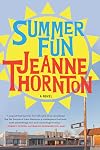
2021. Gala, a transgender woman, lives in a trailer in Truth or Consequences, New Mexico. She’s obsessed with a Beach Boys-like band called The Get Happies. She writes the Brian Wilson stand in character, B- a ton of letters in which she morphs into a sort of omniscient narrator who knows everything about his past, his family, his/her innermost feelings. This narrator tells us that he’s really a woman, whose name for herself is Diane. At the height of her career, Diane tries to come out show more as a woman, but it becomes too hard, so she detransitions. But she’s never able to write music after that. Audacious and as crazy as it sounds, this all really works in context. show less
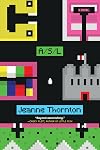
A/S/L has nothing to do with American Sign Language. The title is short for the names of the central characters Abraxa, Sash, and Lilith. As teens, the three are online friends working to create a computer game together. What they don't know about one another is that each of them while being "born male," is female. They haven't yet been able to make the transition they'll make as they grow up, but that self-knowledge is already present.
The settings for the novel vary a great deal. Some take show more place when the women are young and working on their game. Others take place in their separate, adult lives. Still occur during their rediscovery of one another and its consequences. Chapters alternate among the three women (hint: Sash's are written in second person).
Formatting is nearly as varied as the settings. The book opens with a chapter on coding from a teen's perspective. The second chapter takes place in an online chatroom for teens developing computer games. Most chapter offer more straightforward narrative, but the reader needs to be prepared for these "outlier chapters" when they occur. I know absolutely nothing about coding; I do remember my chatroom days and their simultaneously chaotic and affirming nature. At first, I wasn't sure I would be able to settle into a comfortable stride with this book, but I did—and I enjoyed and valued the reading experience despite (because of?) the demands it made on me as a reader.
I am not trans. I'm a lesbian deeply committed to trans rights. I haven't experienced what the central characters have, but in whatever way it's possible, I'm on their side. I'm rooting for them to be/become who they are. I trust their perceptions of the world as accurate given their life experiences. There's a great deal of pain in each of their lives, and I kept hoping that their lives would become easier over time, but part of the point is how difficult it is to live as who you are when much of the world doubts whether you even legitimately exist. The choice of "legitimate" is deliberate. Part of the point of A/S/L is how hard it is for these three women to find places that feel like a real home for their real selves. Things do get a bit easier for each of the women over the course of the novel, but there's never a moment when any of them arrive in a place of real comfort.
On the one hand, this is a must-read novel, but it's also not a novel I would had to someone trans who is just beginning to understand who they are. (I've tried ways of explaining this further, but I'm just not finding the right words.)
If you're up for a demanding, but rewarding reading experience, particularly one that consistently challenges notions of the gender binary, you'll find much of value in A/S/L.
I received a free electronic review copy of this title; the opinions are my own. show less
The settings for the novel vary a great deal. Some take show more place when the women are young and working on their game. Others take place in their separate, adult lives. Still occur during their rediscovery of one another and its consequences. Chapters alternate among the three women (hint: Sash's are written in second person).
Formatting is nearly as varied as the settings. The book opens with a chapter on coding from a teen's perspective. The second chapter takes place in an online chatroom for teens developing computer games. Most chapter offer more straightforward narrative, but the reader needs to be prepared for these "outlier chapters" when they occur. I know absolutely nothing about coding; I do remember my chatroom days and their simultaneously chaotic and affirming nature. At first, I wasn't sure I would be able to settle into a comfortable stride with this book, but I did—and I enjoyed and valued the reading experience despite (because of?) the demands it made on me as a reader.
I am not trans. I'm a lesbian deeply committed to trans rights. I haven't experienced what the central characters have, but in whatever way it's possible, I'm on their side. I'm rooting for them to be/become who they are. I trust their perceptions of the world as accurate given their life experiences. There's a great deal of pain in each of their lives, and I kept hoping that their lives would become easier over time, but part of the point is how difficult it is to live as who you are when much of the world doubts whether you even legitimately exist. The choice of "legitimate" is deliberate. Part of the point of A/S/L is how hard it is for these three women to find places that feel like a real home for their real selves. Things do get a bit easier for each of the women over the course of the novel, but there's never a moment when any of them arrive in a place of real comfort.
On the one hand, this is a must-read novel, but it's also not a novel I would had to someone trans who is just beginning to understand who they are. (I've tried ways of explaining this further, but I'm just not finding the right words.)
If you're up for a demanding, but rewarding reading experience, particularly one that consistently challenges notions of the gender binary, you'll find much of value in A/S/L.
I received a free electronic review copy of this title; the opinions are my own. show less
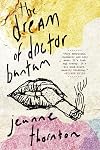
just a perfect lesbian love story. feels like it's the author's teenage romantic fantasies put to print, in the best possible way. well, it's definitely my romantic fantasies put to print. i relate so much to Julie's desperate to be useful, to matter to someone else and to be able to take care of her; and the resentment and dismissal those feelings easily transform into. the cult/no cult conflict in here is handled really well; if you love someone you can't ever write her worldview off as show more "you're completely wrong and hurting yourself with this belief" even if she is.
sometimes feels like a long, less surreal david lynch homage; laura palmer and dorothy vallens and sailor+lula all show up here at points. show less
sometimes feels like a long, less surreal david lynch homage; laura palmer and dorothy vallens and sailor+lula all show up here at points. show less
Summer Fun by Jeanne Thornton is a great book and very powerful. It’s finely crafted, expansive yet taut, and, well, the sheer amount of character, theme, and history that Thornton managed to hold in her head while writing and then convey on the page is incredible. A lesser author couldn’t have done it. And the emotions she makes the reader feel? The way she writes hope and pain and loneliness? The things she forces the reader to consider, and the ways she does that? Equally show more impressive!
It’s not a book for everyone, though, and if I’d known how affecting it would be, I’d have picked a different time to read it because there’s definitely a certain headspace required and I didn’t quite have it. Basically, Thornton does not sugarcoat the lives of trans women, either in the past or the present, and she presses those realities on her readers. There’s abuse and trans-misogyny and substance abuse, for instance, and several trans characters are working through (what I read as) internalized trans-misogyny as well. The prose is also dense and dark, and Thornton doesn’t hold readers’ hands through it or her messages. You have to pay attention to this book and you can’t expect easy answers.
The plot, you ask? An elevator pitch might be, “A trans woman in New Mexico writes letters to her favourite musician”, but that compresses so much. For one thing, the lines blur quickly. How much of the detail of the musician’s life is true, and how much is fannish re-creation? How much does the writer’s outlook colour everything? What is the goal of the letters? Really, Summer Fun is about hope and loss and longing, about finding yourself and learning to be comfortable in your skin, and about connection and the power of music and the many ways trans women live in the world.
It’s a great book, as I said. It stirs emotions and asks hard questions. Thornton’s won Lambdas and it’s easy to see why. It’s powerful and vivid and affecting, a worthy book for any queer-positive TBR. It is not the breezy summer read I expected (my bad there), but I’m very glad to have read it. show less
It’s not a book for everyone, though, and if I’d known how affecting it would be, I’d have picked a different time to read it because there’s definitely a certain headspace required and I didn’t quite have it. Basically, Thornton does not sugarcoat the lives of trans women, either in the past or the present, and she presses those realities on her readers. There’s abuse and trans-misogyny and substance abuse, for instance, and several trans characters are working through (what I read as) internalized trans-misogyny as well. The prose is also dense and dark, and Thornton doesn’t hold readers’ hands through it or her messages. You have to pay attention to this book and you can’t expect easy answers.
The plot, you ask? An elevator pitch might be, “A trans woman in New Mexico writes letters to her favourite musician”, but that compresses so much. For one thing, the lines blur quickly. How much of the detail of the musician’s life is true, and how much is fannish re-creation? How much does the writer’s outlook colour everything? What is the goal of the letters? Really, Summer Fun is about hope and loss and longing, about finding yourself and learning to be comfortable in your skin, and about connection and the power of music and the many ways trans women live in the world.
It’s a great book, as I said. It stirs emotions and asks hard questions. Thornton’s won Lambdas and it’s easy to see why. It’s powerful and vivid and affecting, a worthy book for any queer-positive TBR. It is not the breezy summer read I expected (my bad there), but I’m very glad to have read it. show less
Lists
Awards


You May Also Like
Associated Authors
Statistics
- Works
- 5
- Also by
- 3
- Members
- 343
- Popularity
- #69,542
- Rating
- 3.9
- Reviews
- 23
- ISBNs
- 12
- Favorited
- 2
