
Ned Bustard
Author of Reformation ABCs: The People, Places, and Things of the Reformation―from A to Z
About the Author
Works by Ned Bustard
Reformation ABCs: The People, Places, and Things of the Reformation―from A to Z (2017) 216 copies, 1 review
Saint Nicholas the Giftgiver: The History and Legends of the Real Santa Claus (2021) 63 copies, 2 reviews
Middle Ages, Renaissance, and Reformation : Teacher's Manual (Veritas Press History Series, 4th Grade) (1998) 40 copies
Saint Valentine the Kindhearted: The History and Legends of God's Brave and Loving Servant (2024) 36 copies, 4 reviews
Middle Ages, Renaissance and Reformation History Cards (Veritas Press History series, 4th Grade) (2004) 11 copies
Winnie- the-Pooh comprehension guide 2 copies
Phonics Museum: Bad Meg (2) 1 copy
Associated Works
Light at Ground Zero: St. Paul's Chapel After 9/11 (2003) — Editor, some editions — 19 copies, 1 review
Tagged
Common Knowledge
There is no Common Knowledge data for this author yet. You can help.
Members
Reviews
Saint Valentine the Kindhearted: The History and Legends of God's Brave and Loving Servant by Ned Bustard
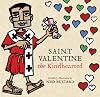
Summary: A retelling in verse and woodcut illustrations of the story of Saint Valentine, centered on not only his kindheartedness, but that there is more to love than romance.
Roses are red, violets are blue,
sugar is sweet, and so are you.
This is the poem many share
to show how much they love and care.
Flowers and candy sent our way
ev'ry year on Valentine's Day.
But why the cards that say, "Be mine"?
That's all from dear Saint Valentine!
--Ned Bustard
Ned Bustard opens this latest show more book in his series of children’s books with IVP Kids with this rhyme, familiar to all of us who went through Valentine’s Day card exchanges in primary grades and the giving of flowers and candy (and perhaps a romantic dinner!) with that special someone. With that day coming up in a couple weeks (also Ash Wednesday in 2024, an interesting juxtaposition!), this book for children and grownups explores the life of this saint. Bustard follows the format of the other two books in this series, Saint Nicholas, the Giftgiver and Saint Patrick, the Forgiver, alternating his hand-carved woodcuts on the lefthand page with verse on the righthand page.
Bustard reminds us in an afterword that relatively little is known of Saint Valentine apart from his ministry of preaching, healing, and caring for the poor when Christians resisted the pressure to worship the gods of the Roman empire. The story centers around one the legends about Valentine. Haled before a judge for marrying Roman soldiers, supposedly weakening their resolve to fight, he is challenged to show the judge that Christ is true by healing the judge’s blind daughter. Valentine prays for her and she is healed. In response, the judge destroys his household statues of his gods, and is baptized along with forty others of his household.
We also learn the story of “valentines.” Valentine was later summoned before the emperor where he boldly testified to Christ. Thrown into prison, he wrote short notes of encouragement and affection to all his friends, tying each with twine, signing them “from your Valentine.” Apparently one of these was written on the day of his martyrdom, February 14, to the girl whose sight he restored (his execution and martyrdom is only alluded to here as when “his time came to an end” with the girl receiving notes from him).
Each of the books focuses on one quality, in this case the kindheartedness of Valentine. The book also expands our notion of the love we celebrate beyond romantic love. Bustard depicts the natural love of family, parents for children, the love of friends, and pure, unconditional love. If you note closely on the cover and in the text, there are four different colors of hearts, representing these four loves.
There is so much within 32 pages, not only about kindness and love but the unflinching courage of this saint in testifying to the saving work of the risen Lord Jesus, refusing to bow the knee to the Roman gods, for which he died.
For those who regard Valentine’s Day as sappy or simply a celebration of romantic (and in our culture, highly sexualized) love, this story invites us to recapture the deeper story of the saint after whom it is named, the depth and breadth of love expressed in his story, and his courageous martyrdom, his death for the One he loved. In this year when February 14 is both Valentine’s Day and Ash Wednesday, reading this book enriches and makes sense of how we can give ourselves in love while always being ready to die for what we love. Read and share this book with those you love!
____________________
Disclosure of Material Connection: I received a complimentary copy of this book from the publisher for review. show less
Roses are red, violets are blue,
sugar is sweet, and so are you.
This is the poem many share
to show how much they love and care.
Flowers and candy sent our way
ev'ry year on Valentine's Day.
But why the cards that say, "Be mine"?
That's all from dear Saint Valentine!
--Ned Bustard
Ned Bustard opens this latest show more book in his series of children’s books with IVP Kids with this rhyme, familiar to all of us who went through Valentine’s Day card exchanges in primary grades and the giving of flowers and candy (and perhaps a romantic dinner!) with that special someone. With that day coming up in a couple weeks (also Ash Wednesday in 2024, an interesting juxtaposition!), this book for children and grownups explores the life of this saint. Bustard follows the format of the other two books in this series, Saint Nicholas, the Giftgiver and Saint Patrick, the Forgiver, alternating his hand-carved woodcuts on the lefthand page with verse on the righthand page.
Bustard reminds us in an afterword that relatively little is known of Saint Valentine apart from his ministry of preaching, healing, and caring for the poor when Christians resisted the pressure to worship the gods of the Roman empire. The story centers around one the legends about Valentine. Haled before a judge for marrying Roman soldiers, supposedly weakening their resolve to fight, he is challenged to show the judge that Christ is true by healing the judge’s blind daughter. Valentine prays for her and she is healed. In response, the judge destroys his household statues of his gods, and is baptized along with forty others of his household.
We also learn the story of “valentines.” Valentine was later summoned before the emperor where he boldly testified to Christ. Thrown into prison, he wrote short notes of encouragement and affection to all his friends, tying each with twine, signing them “from your Valentine.” Apparently one of these was written on the day of his martyrdom, February 14, to the girl whose sight he restored (his execution and martyrdom is only alluded to here as when “his time came to an end” with the girl receiving notes from him).
Each of the books focuses on one quality, in this case the kindheartedness of Valentine. The book also expands our notion of the love we celebrate beyond romantic love. Bustard depicts the natural love of family, parents for children, the love of friends, and pure, unconditional love. If you note closely on the cover and in the text, there are four different colors of hearts, representing these four loves.
There is so much within 32 pages, not only about kindness and love but the unflinching courage of this saint in testifying to the saving work of the risen Lord Jesus, refusing to bow the knee to the Roman gods, for which he died.
For those who regard Valentine’s Day as sappy or simply a celebration of romantic (and in our culture, highly sexualized) love, this story invites us to recapture the deeper story of the saint after whom it is named, the depth and breadth of love expressed in his story, and his courageous martyrdom, his death for the One he loved. In this year when February 14 is both Valentine’s Day and Ash Wednesday, reading this book enriches and makes sense of how we can give ourselves in love while always being ready to die for what we love. Read and share this book with those you love!
____________________
Disclosure of Material Connection: I received a complimentary copy of this book from the publisher for review. show less
This originally appeared in Grandpappy's Corner at The Irresponsible Reader.
---
WHAT'S SAINT PATRICK THE FORGIVER ABOUT?
Drawing on both legends about him and Patrick's Confessions, this book tells the life story of Patrick of Ireland for the youngest set.
It starts off with his childhood and touches briefly on his period of slavery before moving into his return home and the call to Ireland. It doesn't gloss over the hard parts of his life, but it doesn't dwell on them, either. The focus is on show more Patrick forgiving those who wronged him, spreading the gospel—and even teaching the Trinity via the shamrock.
The book even covers some of the myths that arose around Patrick—baptizing a giant, driving out the snakes, etc.—working that in seamlessly with the book and not distracting from the main point.
LET'S TALK ABOUT THE ART FOR A MINUTE
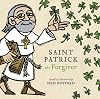
This art is great—it's friendly and cartoonish, with great colors and details. Bustard also weaves in traditional Celtic knots and Christian art (like elements seen in The Book of Kells, etc.). So we've got a pretty modern feel with a lot of Irish elements thrown in to ground it in Patrick's history.
Are kids going to get that? Nope. Will the adults reading it with/to the kids? Quite likely. And if not, I think they'll still appreciate it the art, even if they're not familiar with the influences Bustard is drawing from.
Click here for a two page sample (picture and text) on the Publisher's site. I'm not sure it's the image I'd have used, but it's representative.
HOW IS IT TO READ ALOUD?
It's pretty fun—the rhythm is easy and the rhymes are nice (and only one or two of them seemed like stretching things to make the rhyme).
The Grandcritter isn't around yet to listen to me read this, but I still read most of it aloud just to see how it went—I think it went pretty smoothly and I could have some fun with it.
SO, WHAT DID I THINK ABOUT SAINT PATRICK THE FORGIVER?
This was a great way to give an age-appropriate lesson in forgiveness while telling the story of one of the heroes of the faith. I was entertained, and even chuckled a couple of times.
It's a great combination of story, art, rhyme, and lesson. I can see this winning over little audiences as much as it did me. Hopefully, it'll lodge in their minds enough that they'll want to learn more about Patrick as they grow older and through him the Three-in-One that Patrick spent his life teaching about.
I strongly recommend this quick little read. show less
---
WHAT'S SAINT PATRICK THE FORGIVER ABOUT?
Drawing on both legends about him and Patrick's Confessions, this book tells the life story of Patrick of Ireland for the youngest set.
It starts off with his childhood and touches briefly on his period of slavery before moving into his return home and the call to Ireland. It doesn't gloss over the hard parts of his life, but it doesn't dwell on them, either. The focus is on show more Patrick forgiving those who wronged him, spreading the gospel—and even teaching the Trinity via the shamrock.
The book even covers some of the myths that arose around Patrick—baptizing a giant, driving out the snakes, etc.—working that in seamlessly with the book and not distracting from the main point.
LET'S TALK ABOUT THE ART FOR A MINUTE
This art is great—it's friendly and cartoonish, with great colors and details. Bustard also weaves in traditional Celtic knots and Christian art (like elements seen in The Book of Kells, etc.). So we've got a pretty modern feel with a lot of Irish elements thrown in to ground it in Patrick's history.
Are kids going to get that? Nope. Will the adults reading it with/to the kids? Quite likely. And if not, I think they'll still appreciate it the art, even if they're not familiar with the influences Bustard is drawing from.
Click here for a two page sample (picture and text) on the Publisher's site. I'm not sure it's the image I'd have used, but it's representative.
HOW IS IT TO READ ALOUD?
It's pretty fun—the rhythm is easy and the rhymes are nice (and only one or two of them seemed like stretching things to make the rhyme).
The Grandcritter isn't around yet to listen to me read this, but I still read most of it aloud just to see how it went—I think it went pretty smoothly and I could have some fun with it.
SO, WHAT DID I THINK ABOUT SAINT PATRICK THE FORGIVER?
This was a great way to give an age-appropriate lesson in forgiveness while telling the story of one of the heroes of the faith. I was entertained, and even chuckled a couple of times.
It's a great combination of story, art, rhyme, and lesson. I can see this winning over little audiences as much as it did me. Hopefully, it'll lodge in their minds enough that they'll want to learn more about Patrick as they grow older and through him the Three-in-One that Patrick spent his life teaching about.
I strongly recommend this quick little read. show less
Saint Valentine the Kindhearted: The History and Legends of God's Brave and Loving Servant by Ned Bustard
This originally appeared in Grandpappy's Corner at The Irresponsible Reader.
---
WHAT'S SAINT VALENTINE THE KINDHEARTED ABOUT?
Why do we call our celebration of love on February 14th (St.) Valentine's Day? Why do we use February 14th, for that matter?
Ned Bustard brings us another Picture-Book Biography to teach young readers about Valentine, who was martyred under Claudius on February 14.
Granted, we don't know a lot about Valentine and his work, but we have enough to fill this book (and, as I show more recall from wordier historical treatments, not much more). We get a touch of his early life, a look at his ministry (and the Roman culture), a notable miracle that's ascribed to him, and a bit about the events leading to his martyrdom. All told in a child-appropriate rhyme.
LET'S TALK ABOUT THE ART FOR A MINUTE
Bustard's cartoon-y art is as great here as it was in his Saint Patrick the Forgiver . The thing that stands out to me is his inking. (at least that's what we called it back when I was really into comics and talked about the art, hopefully it still counts). The way he uses bold lines around his character's faces/bodies (particularly Valentine's), really makes them pop off the page and almost look like wooden puppets. (that's the best I can do as far as describing the pictures)
He's also able to convey a certain amount of unpleasantness and threat with Roman soldiers without changing the overall feel of the story and its appropriateness for young readers.
Now, in the Patrick book, he worked in a lot of Celtic knots and whatnot to give it a more Irish feel. Here he goes for a lot of differently colored hearts all over the pages. It didn't even occur to me while reading the book to pay attention to that--it fit the overall Feb. 14th vibe. I should've known better--thankfully, he explained it in "A Note from the Author," so when I read this with the Grandcritter I can seem more knowledgeable. He works in these hearts in different colors to represent the four types of love (eros, storge, philia, and agape) from ancient Greek thought (and a pretty good book by C.S. Lewis), showing how Valentine displayed and interacted with these types of love in various episodes in the book.
You can check out the Publisher's site for a glimpse at the art and layout as a preview. Which will probably give you a better idea than anything I just tried to convey.
HOW IS TO READ ALOUD?
It's a nice little bit of rhyming text, and starting off with "Roses are red," as often as he does, you're going to get right into the rhythm reflexively. Which is a nice touch. Some of the rhymes feel like a stretch to me*, but when you've got a good head of steam going as you read you probably won't notice.
* ago and van Gogh, really? Also, that only works if you use they American pronunciation, sorry British readers.
SO, WHAT DID I THINK ABOUT SAINT VALENTINE THE KINDHEARTED?
I enjoyed this. I do wish we had more history to draw from for Bustard to use here (and, well, other historians writing for older audiences, too), just to fill out some of the details reliably. But this is a good introduction to the figure that's had such a cultural impact so that even younger readers can know there's basis to the celebration beyond chalky candies and silly drawings.
I don't have a lot to say about this beyond that. It's a fun read for the little folks, it has details and layers that older readers can appreciate and use to talk about bigger ideas with the little ones, too. Color me impressed yet again by Bustard and I'm eager to see what holiday/figure he picks next. Anyone trying to bring Early Church figures to the attention of the pre-K crowd deserves some applause and I'm happy to keep giving it, while gladly recommending you jump on board. show less
---
WHAT'S SAINT VALENTINE THE KINDHEARTED ABOUT?
Why do we call our celebration of love on February 14th (St.) Valentine's Day? Why do we use February 14th, for that matter?
Ned Bustard brings us another Picture-Book Biography to teach young readers about Valentine, who was martyred under Claudius on February 14.
Granted, we don't know a lot about Valentine and his work, but we have enough to fill this book (and, as I show more recall from wordier historical treatments, not much more). We get a touch of his early life, a look at his ministry (and the Roman culture), a notable miracle that's ascribed to him, and a bit about the events leading to his martyrdom. All told in a child-appropriate rhyme.
LET'S TALK ABOUT THE ART FOR A MINUTE
Bustard's cartoon-y art is as great here as it was in his Saint Patrick the Forgiver . The thing that stands out to me is his inking. (at least that's what we called it back when I was really into comics and talked about the art, hopefully it still counts). The way he uses bold lines around his character's faces/bodies (particularly Valentine's), really makes them pop off the page and almost look like wooden puppets. (that's the best I can do as far as describing the pictures)
He's also able to convey a certain amount of unpleasantness and threat with Roman soldiers without changing the overall feel of the story and its appropriateness for young readers.
Now, in the Patrick book, he worked in a lot of Celtic knots and whatnot to give it a more Irish feel. Here he goes for a lot of differently colored hearts all over the pages. It didn't even occur to me while reading the book to pay attention to that--it fit the overall Feb. 14th vibe. I should've known better--thankfully, he explained it in "A Note from the Author," so when I read this with the Grandcritter I can seem more knowledgeable. He works in these hearts in different colors to represent the four types of love (eros, storge, philia, and agape) from ancient Greek thought (and a pretty good book by C.S. Lewis), showing how Valentine displayed and interacted with these types of love in various episodes in the book.
You can check out the Publisher's site for a glimpse at the art and layout as a preview. Which will probably give you a better idea than anything I just tried to convey.
HOW IS TO READ ALOUD?
It's a nice little bit of rhyming text, and starting off with "Roses are red," as often as he does, you're going to get right into the rhythm reflexively. Which is a nice touch. Some of the rhymes feel like a stretch to me*, but when you've got a good head of steam going as you read you probably won't notice.
* ago and van Gogh, really? Also, that only works if you use they American pronunciation, sorry British readers.
SO, WHAT DID I THINK ABOUT SAINT VALENTINE THE KINDHEARTED?
I enjoyed this. I do wish we had more history to draw from for Bustard to use here (and, well, other historians writing for older audiences, too), just to fill out some of the details reliably. But this is a good introduction to the figure that's had such a cultural impact so that even younger readers can know there's basis to the celebration beyond chalky candies and silly drawings.
I don't have a lot to say about this beyond that. It's a fun read for the little folks, it has details and layers that older readers can appreciate and use to talk about bigger ideas with the little ones, too. Color me impressed yet again by Bustard and I'm eager to see what holiday/figure he picks next. Anyone trying to bring Early Church figures to the attention of the pre-K crowd deserves some applause and I'm happy to keep giving it, while gladly recommending you jump on board. show less
Summary: A re-telling of the story of Saint Patrick, who returned to the Irish who had enslaved him, having forgiven them and preaching forgiveness through the work of Christ.
For many, Saint Patrick’s Day is a day of wearing green, of shamrocks, and drinking green beer. Chicago even dies its river green. It’s a day of partying, and drunkenness. And in it, the story of Saint Patrick, missionary to Ireland is lost. Ned Bustard, author of Saint Nicholas the Giftgiver does for Patrick what show more he did earlier with Saint Nicholas. He retells the story of Patrick, with eight lines of verse on the right page accompanied by one of his woodcut illustrations on the left in a read aloud book that children and parents alike will enjoy.
We learn of a young boy in Britain, of wild heart though raised in the church, carried off to slavery in Ireland. Laboring as a shepherd, God’s Spirit gives grace and faith tp believe and eventually sends him a vision that a ship is ready to take him home, and after a two hundred mile walk, he finds it is so. He is joyfully reunited with his parents and would have remained so were it not for another vision of an Irish man carrying a letter saying, “Come walk again among us.” And so we come to the central crisis of Patrick’s life, his unforgiving heart for the people who had enslaved him. And then:
In grace God did remind me
that forgiveness is a gift.
The holy brothers taught me true
and my heart began to shift.
To the Irish I returned
with a Bible and a bell.
Because God had forgiven me
then I could forgive as well.
He recounts the favor he encountered as the High King’s son believes and gives him a barn to start a church. We learn how he used the shamrock to illustrate the Trinity. He also recounts the stories told of him driving snakes into the sea and baptizing the “naughty giant.” He summarizes his life as one of telling his Irish flock of Christ’s forgiveness, setting up schools and churches throughout the land, such that the old pagan ways have died out. The closing pages of the book, fittingly, are inspired by St. Patrick’s hymn, “Strength of Heaven.”
The simple rhyme scheme makes this an enjoyable read aloud book, enhanced by the richly detailed full color woodcuts. Printed on high quality paper and hardbound, I can see this becoming one of the books a family treasures sharing together. The story, centered around forgiveness, celebrates the real Saint Patrick, whose obedience from a transformed heart leads to a transformed country, and if How the Irish Saved Civilization is accurate, preserved learning and faith in Europe.
____________________
Disclosure of Material Connection: I received a complimentary review copy of this book from the publisher. show less
For many, Saint Patrick’s Day is a day of wearing green, of shamrocks, and drinking green beer. Chicago even dies its river green. It’s a day of partying, and drunkenness. And in it, the story of Saint Patrick, missionary to Ireland is lost. Ned Bustard, author of Saint Nicholas the Giftgiver does for Patrick what show more he did earlier with Saint Nicholas. He retells the story of Patrick, with eight lines of verse on the right page accompanied by one of his woodcut illustrations on the left in a read aloud book that children and parents alike will enjoy.
We learn of a young boy in Britain, of wild heart though raised in the church, carried off to slavery in Ireland. Laboring as a shepherd, God’s Spirit gives grace and faith tp believe and eventually sends him a vision that a ship is ready to take him home, and after a two hundred mile walk, he finds it is so. He is joyfully reunited with his parents and would have remained so were it not for another vision of an Irish man carrying a letter saying, “Come walk again among us.” And so we come to the central crisis of Patrick’s life, his unforgiving heart for the people who had enslaved him. And then:
In grace God did remind me
that forgiveness is a gift.
The holy brothers taught me true
and my heart began to shift.
To the Irish I returned
with a Bible and a bell.
Because God had forgiven me
then I could forgive as well.
He recounts the favor he encountered as the High King’s son believes and gives him a barn to start a church. We learn how he used the shamrock to illustrate the Trinity. He also recounts the stories told of him driving snakes into the sea and baptizing the “naughty giant.” He summarizes his life as one of telling his Irish flock of Christ’s forgiveness, setting up schools and churches throughout the land, such that the old pagan ways have died out. The closing pages of the book, fittingly, are inspired by St. Patrick’s hymn, “Strength of Heaven.”
The simple rhyme scheme makes this an enjoyable read aloud book, enhanced by the richly detailed full color woodcuts. Printed on high quality paper and hardbound, I can see this becoming one of the books a family treasures sharing together. The story, centered around forgiveness, celebrates the real Saint Patrick, whose obedience from a transformed heart leads to a transformed country, and if How the Irish Saved Civilization is accurate, preserved learning and faith in Europe.
____________________
Disclosure of Material Connection: I received a complimentary review copy of this book from the publisher. show less
Lists
Awards


You May Also Like


Associated Authors
Statistics
- Works
- 54
- Also by
- 3
- Members
- 1,701
- Popularity
- #15,087
- Rating
- 4.1
- Reviews
- 15
- ISBNs
- 54
- Languages
- 1