
Luis de León (1527–1591)
Author of Poesías
About the Author
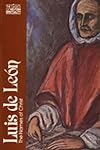
Image credit: Steel engraving by Barcelon after a painting by Josef Maea.
Works by Luis de León
Obras propias y traducciones latinas, griegas, y italianas con la paráfrasi de algunos psalmos, y capítulos de Job (1992) 3 copies
Selección poética 2 copies
DE LOS NOMBRES DE CRISTO (III) 2 copies
Poems 1 copy
Cantar de cantares 1 copy
Obras poéticas del maestro Fray Luis de León : poesías originales, traducciones del latín, griego y toscano, e imitaciones (2001) 1 copy
La perfecta casada: Cantar de los cantares, poesias originales. ("Sepan cuantos...", Núm. 145) (1999) 1 copy
Poesie 1 copy
Obtas propias y traducciones 1 copy
Poesías completas 1 copy
Poesías La Perfecta Casada 1 copy
GUIA DE PECADORES 1 copy
Obras completas 1 copy
Obra poética completa 1 copy
De los Nombres de Cristo 1 copy
Lyrics of Luis de Leon. 1 copy
Poemas esenciales 1 copy
Poesias Escogidas De Fray Luis De Leon, Francisco De La Torre, Bernardo De Balbuena, Y Otros Varios (Spanish Edition) (2023) 1 copy
Poesía mística española 1 copy
POESÍA COMPLETA 1 copy
Associated Works
Tagged
Common Knowledge
- Canonical name
- León, Luis de
- Legal name
- León, Luis de
- Other names
- León, Fray Luis de
- Birthdate
- 1527
- Date of death
- 1591-08-23
- Gender
- male
- Education
- University of Salamanca
University of Alcalá de Henares
University of Toledo - Occupations
- monk
poet
theologian
academic - Nationality
- Spain
- Birthplace
- Belmonte, Cuenca, Spain
- Places of residence
- Madrid, Spain
Valladolid, Spain - Place of death
- Madrigal de las Altax, Spain
- Associated Place (for map)
- Spain
Members
Reviews
[From Don Fernando, Heinemann, 1950, Chapter 10:]
To me there seems something extraordinarily modern about Luis de Leon. He was not all of a piece as so often appear the famous figures of the past. I do not suppose men then were any different than what they are now, but it looks as though to their contemporaries they seemed more homogenous. Otherwise they could hardly have so often described them in terms of ‘humours’. But Fray Luis was a contradictory creature in whom dwelt uneasily show more incongruous qualities and warring instincts. […] He was vain and humble, impetuous and patient, sombre, peevish, bitter, loyal and chivalrous. He loathed fools and hypocrites. He was very tender to little children. He loved nature and truth. He was fearless. No matter what enmities he aroused he was always prepared to denounce tyranny; he would incur any danger to combat injustice. He was an ascetic, of great abstemiousness, and he seldom allowed himself the luxury of going to bed, so that the servitor who entered his cell in the morning found it as he had left it the night before. But he loved the fair things of life, the lovely, lulling sound of the Tormes flowing by La Flecha, the heavenly music of blind Salinas and the colour and cadence of the Spanish language. He was quarrelsome, rude, violent, and he yearned above all else for peace. The cry for rest, rest from the turmoil of his thought, rest from the torment of the world, recurs in all his works. It gives his graceful lyrics a poignancy that pierces the artificiality of their Horatian manner. He sought for happiness and tranquillity of spirit, but his temperament made it impossible for him to achieve them. They count him among the mystics. He never experienced the supernatural blessings which solace those who pursue the mystic way. He never acquired that aloofness from the things of the world that characterises them. He had an anxious longing for a rapture his uneasy nature prevented him from ever enjoying. He was a mystic only in so far as he was a poet. He looked at those snowcapped mountains and yearned to explore their mysteries, but he was held back by the busy affairs of the city. show less
To me there seems something extraordinarily modern about Luis de Leon. He was not all of a piece as so often appear the famous figures of the past. I do not suppose men then were any different than what they are now, but it looks as though to their contemporaries they seemed more homogenous. Otherwise they could hardly have so often described them in terms of ‘humours’. But Fray Luis was a contradictory creature in whom dwelt uneasily show more incongruous qualities and warring instincts. […] He was vain and humble, impetuous and patient, sombre, peevish, bitter, loyal and chivalrous. He loathed fools and hypocrites. He was very tender to little children. He loved nature and truth. He was fearless. No matter what enmities he aroused he was always prepared to denounce tyranny; he would incur any danger to combat injustice. He was an ascetic, of great abstemiousness, and he seldom allowed himself the luxury of going to bed, so that the servitor who entered his cell in the morning found it as he had left it the night before. But he loved the fair things of life, the lovely, lulling sound of the Tormes flowing by La Flecha, the heavenly music of blind Salinas and the colour and cadence of the Spanish language. He was quarrelsome, rude, violent, and he yearned above all else for peace. The cry for rest, rest from the turmoil of his thought, rest from the torment of the world, recurs in all his works. It gives his graceful lyrics a poignancy that pierces the artificiality of their Horatian manner. He sought for happiness and tranquillity of spirit, but his temperament made it impossible for him to achieve them. They count him among the mystics. He never experienced the supernatural blessings which solace those who pursue the mystic way. He never acquired that aloofness from the things of the world that characterises them. He had an anxious longing for a rapture his uneasy nature prevented him from ever enjoying. He was a mystic only in so far as he was a poet. He looked at those snowcapped mountains and yearned to explore their mysteries, but he was held back by the busy affairs of the city. show less

Fray Luis de León fue un poeta, humanista y religioso agustino español del siglo XVI, cuya obra se inscribe dentro de la literatura ascética y mística. Sus poesías destacan por su profundidad filosófica, su armonía formal y su búsqueda de la verdad espiritual.
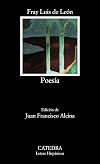
Poesías originales, Traducciones Clásicas, Traducciones sagradas. Edición, introducción y notas del Padre Ángel Custodio Vega, O.S.A., Colección dirigida por José Manuel Blecua, Martín de Riquer y José M.a Valverde, catedráticos de Universidad.
Editorial Planeta, S,S. 1970 Calvet,51 53, Barcelona España, Primera Edición de 1970. Talleres Gráficos Duplex,, S.A., Fontova, 6 Barcelona.
Editorial Planeta, S,S. 1970 Calvet,51 53, Barcelona España, Primera Edición de 1970. Talleres Gráficos Duplex,, S.A., Fontova, 6 Barcelona.

Libros de Matias y Carmen. Ed. Orbis - Historia de la Literatura española. Vol. 53
Lists
Awards

You May Also Like


Associated Authors
Statistics
- Works
- 75
- Also by
- 3
- Members
- 804
- Popularity
- #31,725
- Rating
- 4.0
- Reviews
- 29
- ISBNs
- 147
- Languages
- 6
- Favorited
- 1