
Lisa Ballantyne
Author of The Guilty One
About the Author
Lisa Ballantyne was born in Armadale, Scotland and studied English Literature at the University of St. Andrews. She started her writng career while living and working in China. She was short-listed for the Dundee International Book Prize. Her debut novel, The Guilty One, was long listed for the show more International IMPAC Dublin Literary Award and short-listed for an Edgar Allan Poe Award. Her other title's include: Redemption Road and Everything She Forgot. (Bowker Author Biography) show less
Image credit: Lisa Ballantyne
Works by Lisa Ballantyne
Ballantyne Lisa 1 copy
Au loup 1 copy
Tagged
Common Knowledge
- Canonical name
- Ballantyne, Lisa
- Gender
- female
- Education
- Armadale Academy
University of St. Andrews - Nationality
- UK
- Birthplace
- Armadale, West Lothian, Scotland, UK
- Places of residence
- Glasgow, Scotland, UK
- Associated Place (for map)
- Scotland, UK
Members
Reviews
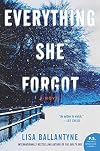
Lisa Ballantyne seems to like writing in two timelines, but this makes her books more of a challenge for readers. In her new book, the current day follows Margaret Holloway, a teacher and mother of two, who nearly dies in a horrible pile-up on a British motorway when her gas tank is ruptured, only to be saved by a disfigured mystery man. Eventually, she finds him in a medically-induced coma at a local hospital and feels compelled to thank him for his kindness as she herself begins to come show more unglued, remembering things from her childhood. The other story is about the youngest brother of a Glasgow crime family (Big George McLaughlin), who desperately wants out, is deeply in love with Kathleen, and is rejected as a father when she gets pregnant. When he finally happens upon some money (illegally, of course), George goes to see her and their 7-year old daughter, Moll. By an unfortunate set of circumstances, George kidnaps Moll and goes on the lam. The two stories are brought together cleverly. The novel starts slowly, especially the storyline about the angry, devout writer Angus Campbell, but gains substantial momentum as events unfold. show less
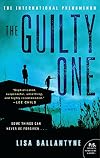
Danny is a successful solicitor, but he once faced a future of incarceration and hardship until the love of his foster mom pulled him away from the proverbial brink. When Danny is asked to defend Sebastian, a ten-year-old boy accused of murdering his eight-year-old friend, he feels compelled to comply not only because of the boy's age but because of the parallels between his and Sebastian's paths. Thus the stage is set for Lisa Ballantyne's The Guilty One, equal parts psychological thriller show more and social commentary that is bound to keep people talking this spring.
There are two parts to The Guilty One, simultaneously fascinating and damning towards social services and children in danger. Told in the present day, the first story follows as Danny fights to maintain Sebastian's innocence in light of the horrid charges of which he has been accused. Sebastian's youth as well as his not-so-innocent childhood reminds Danny of his own boyhood, setting the stage for the second part of the story. This second story, of Danny's childhood anger and tendency for violence, is told as memories, brought to the forefront of Danny's memory through his ongoing interactions with Sebastian. A reader understands how the two characters, as boys, were very similar even as they came from very different socio-economic backgrounds. In both cases, the fate of each boy hinges not on the government services which were created to protect and save such children, but rather on two separate individuals who have no cause to care.
Along the same lines, the differences between legal age of adulthood in Great Britain as opposed to other countries, as well as other differences in the legal systems themselves is at once fascinating and informative. Those readers with young children near Sebastian's age will wonder how any country could consider someone as young as the age of ten to be an adult in the eyes of the Court. It is this very disconcerting thought which allows readers to view Sebastian in a much more sympathetic light than he might otherwise cause. In actuality, Sebastian raises all sorts of red flags within a reader, but it is his young age that allows a reader to ignore the doubts created by those red flags and consider him an innocent child exposed to the cruelties of the world too young.
Danny is a complex character. It does not take long for a reader to recognize the demons which drive him to defend the accused and which keep him in a state of isolation and loneliness. There is an anger underneath his calm veneer that he never quite sheds, which is frightening in its intensity and intriguing due to its ambiguous roots. His conflicted and often violent emotions towards Minnie, a women he still revers as well as reviles, only fuels the mystery behind their separation. Because of Danny's self-imposed isolation, a reader is left with equally ambiguous feelings towards him. His anger distances readers even while it creates an undercurrent of sympathy with someone who had such a rough childhood and a never-ending desire for love and acceptance. This myriad of emotions Danny engenders in the reader adds significantly to the tension of Sebastian's trial.
One would be remiss without mentioning Minnie, the true heart and soul of the story and Danny's literal savior. She is a woman only a few people are lucky to meet, and her love for Danny is profound. Her own painful secrets are tragic, but it is her willingness to put Danny before her pain and suffering, as well as her courage in light of Danny's violent outbursts, that endears her to readers. One cannot help but condemn Danny ever so slightly for distancing himself from her so fully after everything she did for him, and his current suffering caused by his own regrets seem completely justified. Minnie's scenes will quickly become a reader's favorite, as she is the type of character which is larger than the two dimensions to which she is trapped.
The Guilty One is a taut mystery, not only about Sebastian's role in the crime, but also about the situation that would have driven Danny from the safety and love of Minnie's care. Danny has a depth of character to him that adds to the suspense of the story and helps bridge the gulf that Sebastian may create within the reader. The story itself drags only slightly, as readers may become impatient with the sheer number of flashbacks and interruptions from either story. Also, a reader may take issue with Danny's extreme reaction to Minnie's "crime" once it becomes known. Still, there are some fascinating points for discussion regarding innocence, western criminal systems and social services that will make this book a great read for book clubs and anyone interested in psychological dramas. The ending is particularly chilling, even if it is slightly predictable, and the entire story remains engaging in spite of its minor flaws. show less
There are two parts to The Guilty One, simultaneously fascinating and damning towards social services and children in danger. Told in the present day, the first story follows as Danny fights to maintain Sebastian's innocence in light of the horrid charges of which he has been accused. Sebastian's youth as well as his not-so-innocent childhood reminds Danny of his own boyhood, setting the stage for the second part of the story. This second story, of Danny's childhood anger and tendency for violence, is told as memories, brought to the forefront of Danny's memory through his ongoing interactions with Sebastian. A reader understands how the two characters, as boys, were very similar even as they came from very different socio-economic backgrounds. In both cases, the fate of each boy hinges not on the government services which were created to protect and save such children, but rather on two separate individuals who have no cause to care.
Along the same lines, the differences between legal age of adulthood in Great Britain as opposed to other countries, as well as other differences in the legal systems themselves is at once fascinating and informative. Those readers with young children near Sebastian's age will wonder how any country could consider someone as young as the age of ten to be an adult in the eyes of the Court. It is this very disconcerting thought which allows readers to view Sebastian in a much more sympathetic light than he might otherwise cause. In actuality, Sebastian raises all sorts of red flags within a reader, but it is his young age that allows a reader to ignore the doubts created by those red flags and consider him an innocent child exposed to the cruelties of the world too young.
Danny is a complex character. It does not take long for a reader to recognize the demons which drive him to defend the accused and which keep him in a state of isolation and loneliness. There is an anger underneath his calm veneer that he never quite sheds, which is frightening in its intensity and intriguing due to its ambiguous roots. His conflicted and often violent emotions towards Minnie, a women he still revers as well as reviles, only fuels the mystery behind their separation. Because of Danny's self-imposed isolation, a reader is left with equally ambiguous feelings towards him. His anger distances readers even while it creates an undercurrent of sympathy with someone who had such a rough childhood and a never-ending desire for love and acceptance. This myriad of emotions Danny engenders in the reader adds significantly to the tension of Sebastian's trial.
One would be remiss without mentioning Minnie, the true heart and soul of the story and Danny's literal savior. She is a woman only a few people are lucky to meet, and her love for Danny is profound. Her own painful secrets are tragic, but it is her willingness to put Danny before her pain and suffering, as well as her courage in light of Danny's violent outbursts, that endears her to readers. One cannot help but condemn Danny ever so slightly for distancing himself from her so fully after everything she did for him, and his current suffering caused by his own regrets seem completely justified. Minnie's scenes will quickly become a reader's favorite, as she is the type of character which is larger than the two dimensions to which she is trapped.
The Guilty One is a taut mystery, not only about Sebastian's role in the crime, but also about the situation that would have driven Danny from the safety and love of Minnie's care. Danny has a depth of character to him that adds to the suspense of the story and helps bridge the gulf that Sebastian may create within the reader. The story itself drags only slightly, as readers may become impatient with the sheer number of flashbacks and interruptions from either story. Also, a reader may take issue with Danny's extreme reaction to Minnie's "crime" once it becomes known. Still, there are some fascinating points for discussion regarding innocence, western criminal systems and social services that will make this book a great read for book clubs and anyone interested in psychological dramas. The ending is particularly chilling, even if it is slightly predictable, and the entire story remains engaging in spite of its minor flaws. show less
The Guilty One is an unconventional crime novel that takes its inspiration from the chilling modern phenomenon of violent crimes committed by children against other children. Daniel Hunter is a successful London lawyer in mid-career with a reputation for working with young offenders. When he is approached to take on the case of 11-year-old Sebastian Croll, he does not hesitate to accept. Sebastian is accused of the chaotic and bloody murder of 8-year-old Ben Stokes, whose body was discovered show more in a playground. Because he grew up in an unstable household—with an unreliable, drug-addicted mother whose boyfriends often beat him—and subsequently committed a variety of offences himself, Daniel is sensitive to Sebastian’s plight. Daniel knows he was lucky, even though he was removed from his home and placed in foster care. Daniel’s anger and often violent behaviour marked him as a hard case, and as a last resort he ended up with Minnie Flynn, an older woman living on a run-down farm in Brampton. Having grown up in the city of Newcastle, Daniel initially found Minnie’s hand to mouth existence and simple ways foolish and odd. Distrustful of all adults, he lashed out and repeatedly ran away, in search of his mother. However, Minnie was patient with him and refused to be intimidated. She let Daniel know that she understood his fear but that she also had expectations. Eventually, Daniel accepted his new situation and settled into life on the farm, even agreeing to let Minnie formally adopt him. Flash forward 25 or so years. Daniel knows what it is like to be small, helpless, and forced into a place where he doesn’t feel he belongs. He knows what it’s like to be so angry that hurting other people seems to make sense. His heart goes out to Sebastian Croll, but does empathy cloud his judgment? The case against Sebastian moves forward. The prosecution produces an eye-witness who saw the boys together on the afternoon of the murder, and others from Sebastian’s school and the neighbourhood where the crime took place who characterize Sebastian as a bully incapable of friendship. Though Daniel sometimes finds Sebastian unsettling and regards the boy’s interest in things related to death and blood unnatural, he tries not to let it distract him from his job. Moreover, Daniel can see that Sebastian has been affected by a less than ideal home life, with a self-medicating mother and a pushy, short-tempered father. Lisa Ballantyne’s novel proceeds along dual narrative lines: one thread following the case and Daniel’s defense strategy, the other showing us Daniel’s difficult childhood. The Guilty One is a smartly constructed novel that doles out clues in a deliberate manner, drawing the reader through its layered and complex plot toward a satisfying conclusion. In Daniel Hunter, Ballantyne has created an attractive and engaging protagonist, a young man riddled with self-doubt and regret, but also intelligent and self-aware. In this largely successful and highly entertaining debut novel, Lisa Ballantyne has written a dark and suspenseful legal procedural with a deeply affecting human dimension. show less
In The Guilty One, Lisa Ballantyne's debut novel, eleven-year-old Sebastian Croll is accused of killing an eight-year-old neighbor. Daniel Hunter is his assigned solicitor for the defense. While trying to defend Sebastian, Daniel reflects on his own very troubled childhood. The case coincides with the death of Minnie, the woman who was Daniel's foster parent and who later adopted him.
Daniel had cut off all contact with Minnie, but the trial and Minnie's death has made Daniel introspective - show more pondering his past actions while defending a present day troubled child. The chapters alternate between the uneasy and anxious present day defense and trial of Sebastian with the disturbed and resentful past of Daniel. As we slowly follow the progress of Sebastian's case we also learn more about Daniel's past until both storylines culminate in some uneasy revelations and insight. Minnie both betrayed and saved Daniel. Will the same be said about Sebastian, who is currently living in a very dysfunctional family.
Ballantyne expertly delves into this tense exploration of childhood violence and the root causes of its manifestation, and, ultimately, the potential power of forgiveness and redemption of love. We know the two mysteries right at the start: Sebastian may have killed a child and Daniel has been estranged for 15 years from his now deceased mother. What keeps you reading with breakneck anticipation is the slowly revealed facts about both mysteries. Daniel certainly had anger and rage inside him as a child and Minnie had the patience of a saint with him. Why was he estranged from her? Is Sebastian also filled with uncontrollable rage, or was it a stranger who killed 8 year old Benjamin?
I appreciated the alternating chapters and the unfolding of both stories. The writing is superb and the descriptions are atmospheric and very realistic. (Some descriptions are intense and could be disturbing for some readers.) All I can say is that I flew through this book and was very satisfied with the conclusion of both the story lines. Yes, I did cringe at times, and my heart broke at other points, but this was a thoroughly enjoyable murder mystery that I very highly recommend.
Disclosure: I received an advanced reading copy of this book from the publisher and TLC for review purposes. show less
Daniel had cut off all contact with Minnie, but the trial and Minnie's death has made Daniel introspective - show more pondering his past actions while defending a present day troubled child. The chapters alternate between the uneasy and anxious present day defense and trial of Sebastian with the disturbed and resentful past of Daniel. As we slowly follow the progress of Sebastian's case we also learn more about Daniel's past until both storylines culminate in some uneasy revelations and insight. Minnie both betrayed and saved Daniel. Will the same be said about Sebastian, who is currently living in a very dysfunctional family.
Ballantyne expertly delves into this tense exploration of childhood violence and the root causes of its manifestation, and, ultimately, the potential power of forgiveness and redemption of love. We know the two mysteries right at the start: Sebastian may have killed a child and Daniel has been estranged for 15 years from his now deceased mother. What keeps you reading with breakneck anticipation is the slowly revealed facts about both mysteries. Daniel certainly had anger and rage inside him as a child and Minnie had the patience of a saint with him. Why was he estranged from her? Is Sebastian also filled with uncontrollable rage, or was it a stranger who killed 8 year old Benjamin?
I appreciated the alternating chapters and the unfolding of both stories. The writing is superb and the descriptions are atmospheric and very realistic. (Some descriptions are intense and could be disturbing for some readers.) All I can say is that I flew through this book and was very satisfied with the conclusion of both the story lines. Yes, I did cringe at times, and my heart broke at other points, but this was a thoroughly enjoyable murder mystery that I very highly recommend.
Disclosure: I received an advanced reading copy of this book from the publisher and TLC for review purposes. show less
Lists
Awards


You May Also Like


Associated Authors
Statistics
- Works
- 8
- Members
- 750
- Popularity
- #33,912
- Rating
- 3.6
- Reviews
- 43
- ISBNs
- 70
- Languages
- 11
- Favorited
- 1
