
Magnus Flyte
Author of City of Dark Magic
About the Author
Disambiguation Notice:
The author is a pseudonym for the two authors Meg Howrey and Christina Lynch.
Series
Works by Magnus Flyte
Tagged
Common Knowledge
- Other names
- Howrey, Meg
Lynch, Christina - Gender
- n/a
- Short biography
- Magnus Flyte, author of the bestselling thriller The City of Dark Magic (2012) and its sequel City of Lost Dreams (2013), is a pseudonym for the writing duo of Christina Lynch and Meg Howrey. The two authors met at a writing retreat and conjured up their alias and his world. In an interview with Civilian Reader, Meg Howrey said the two initially adopted a male pseudonym to appeal to both genders, "but then our identities were made public from the beginning, so we didn’t get a chance to see if 'Magnus Flyte' would fool anyone." Meg Howrey, formerly a professional dancer, lives in Los Angeles, California and is the author of the novels The Cranes Dance and Blind Sight, and has published nonfiction articles in Vogue and The Los Angeles Review of Books. Christina Lynch also lives in California and works as a journalist and television writer, and teaches English at College of the Sequoias. Her writing also has been featured in various magazines and other publications.
- Disambiguation notice
- The author is a pseudonym for the two authors Meg Howrey and Christina Lynch.
Members
Reviews
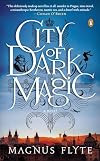
Thoughts: To force Magnus Flyte’s City of Dark Magic into one particular genre is near impossible. This crazy novel is part paranormal, part thriller, part romance, part comedy, part mystery, and part historical fiction. Each part though adds its own unique element to a fun ride through the city of Prague and through history.
As with any novel this eclectic, one must suspend some modicum of belief, sit back and enjoy the ride. In other words, it does not hold up well under close scrutiny. show more Time-warping toenails? 400-year-old dwarfs? Double agents not sharing state secrets but historical booty? A conspiracy regarding Czech history that goes all the way to the White House? Each is highly unlikable – or impossible – and yet, taken on the surface, these elements, which may cause raised eyebrows and consternation over their improbability, create a highly entertaining novel that is easily read and thoroughly enjoyable.
Sarah Watson is simply hilarious in her act-now, think-later philosophy. From the moment she lands at Prague Castle and has an unexpected rendezvous with an unknown lover in the employee bathroom, one knows Sarah is not quite like other female characters. Her obsession with sex, while healthy, is almost masculine in its intensity, yet she remains surprisingly feminine and vulnerable. She truly cares about her chosen profession and about her friends, which softens her crassness and extreme skill at having relations in highly inappropriate locations.
City of Dark Magic is every bit as quirky as it sounds and as enjoyable as one might imagine with such an diverse cast. Sarah Weston is a thoroughly modern woman, with a man’s libido and unwillingness to play the damsel in distress. Max, as American-born member of royalty, is suitably conflicted and mysterious in his new role as head of the family. The secrets that abound are deliciously cryptic, and the search for answers keeps a reader’s interest. While City of Dark Magic is a stand-alone novel, there are enough goodies and unanswered questions to pique a reader’s interest in the possibility of a sequel or series. Besides, with characters this fun, it is difficult to say good-bye!
Acknowledgments: Thank you to NetGalley and to Penguin Group for my review copy! show less
As with any novel this eclectic, one must suspend some modicum of belief, sit back and enjoy the ride. In other words, it does not hold up well under close scrutiny. show more Time-warping toenails? 400-year-old dwarfs? Double agents not sharing state secrets but historical booty? A conspiracy regarding Czech history that goes all the way to the White House? Each is highly unlikable – or impossible – and yet, taken on the surface, these elements, which may cause raised eyebrows and consternation over their improbability, create a highly entertaining novel that is easily read and thoroughly enjoyable.
Sarah Watson is simply hilarious in her act-now, think-later philosophy. From the moment she lands at Prague Castle and has an unexpected rendezvous with an unknown lover in the employee bathroom, one knows Sarah is not quite like other female characters. Her obsession with sex, while healthy, is almost masculine in its intensity, yet she remains surprisingly feminine and vulnerable. She truly cares about her chosen profession and about her friends, which softens her crassness and extreme skill at having relations in highly inappropriate locations.
City of Dark Magic is every bit as quirky as it sounds and as enjoyable as one might imagine with such an diverse cast. Sarah Weston is a thoroughly modern woman, with a man’s libido and unwillingness to play the damsel in distress. Max, as American-born member of royalty, is suitably conflicted and mysterious in his new role as head of the family. The secrets that abound are deliciously cryptic, and the search for answers keeps a reader’s interest. While City of Dark Magic is a stand-alone novel, there are enough goodies and unanswered questions to pique a reader’s interest in the possibility of a sequel or series. Besides, with characters this fun, it is difficult to say good-bye!
Acknowledgments: Thank you to NetGalley and to Penguin Group for my review copy! show less
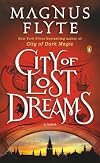
City of Lost Dreams, like its predecessor, City of Dark Magic, is great big entertaining fun. Although I find the conceit of the imaginary author a bit silly, it's hard to argue with time travel, immortal dwarves, alchemical hallucinogens, and Viennese pastries (yes, I do pay attention to the food in the books I read). Throw in a mystery and Vienna with all its musical history and splendor and this is a book to devour and enjoy.
Second books (like sophomore year) are hard to get right, show more especially when the first one is good, but I actually liked this one better than the first. For one thing, Sarah is a lot more capable in this book. I loved the fact that she didn't need a man to rescue her - the help is nice, but it's good to see her doing some serious ass-kicking. The world building that was established at a high pace in City of Dark Magic (at times it reminded me of a madcap thirties comedy) is well and truly in place allowing the authors to focus on characterization and plot and they've done well with this.
The mystery is high-stakes - can our heroes save Pollina before it's too late? Along the way we're treated to resurrected saints and the mysteries of alchemy as it dovetails with modern biological sciences. There's plenty of mystery and adventure with pitch perfect pacing and did I mention the pastries? If you're looking for something fun to read this is the book for you. show less
Second books (like sophomore year) are hard to get right, show more especially when the first one is good, but I actually liked this one better than the first. For one thing, Sarah is a lot more capable in this book. I loved the fact that she didn't need a man to rescue her - the help is nice, but it's good to see her doing some serious ass-kicking. The world building that was established at a high pace in City of Dark Magic (at times it reminded me of a madcap thirties comedy) is well and truly in place allowing the authors to focus on characterization and plot and they've done well with this.
The mystery is high-stakes - can our heroes save Pollina before it's too late? Along the way we're treated to resurrected saints and the mysteries of alchemy as it dovetails with modern biological sciences. There's plenty of mystery and adventure with pitch perfect pacing and did I mention the pastries? If you're looking for something fun to read this is the book for you. show less
Sarah, a Ph.D. student in music and teacher to a blind girl named Pollina, gets a mysterious note giving her the chance of a lifetime: come to Prague, and catalog a family's holdings related to Beethoven. Soon after she gets this note, she learns that her mentor died while in that same place, apparently suicide. Now she can't say no, and Sarah soon finds herself embroiled in intrigue and mystery.
First of all, if you think you want to read the book don't read the publisher summary that was in show more my library catalog - it gives waaaay too much away. Secondly, if you enjoy adventures and thrillers a la Dan Brown that add a twist of music and history and alchemy, this is a fast-paced over-the-top story with all of those elements. Personally, it didn't work for me. Part of the trouble, I admit, is that I'd just come from reading some books where the writing itself was paramount, poetic - and this is serviceable, a lot of dialog, moves the action along, which I turned out not to be in the mood for. I never really got to know the characters or care about their motivations, and Sarah's attitude towards sex (you know what, I'm horny, I'm just gonna screw the next guy who makes a pass at me in the bathroom...) really grated on me. The intricate plot is what kept me reading, to see how all the pieces fit together, and ultimately I was disappointed becausethe mystery that was introduced wasn't actually resolved, but hopefully will be in the sequel . show less
First of all, if you think you want to read the book don't read the publisher summary that was in show more my library catalog - it gives waaaay too much away. Secondly, if you enjoy adventures and thrillers a la Dan Brown that add a twist of music and history and alchemy, this is a fast-paced over-the-top story with all of those elements. Personally, it didn't work for me. Part of the trouble, I admit, is that I'd just come from reading some books where the writing itself was paramount, poetic - and this is serviceable, a lot of dialog, moves the action along, which I turned out not to be in the mood for. I never really got to know the characters or care about their motivations, and Sarah's attitude towards sex (you know what, I'm horny, I'm just gonna screw the next guy who makes a pass at me in the bathroom...) really grated on me. The intricate plot is what kept me reading, to see how all the pieces fit together, and ultimately I was disappointed because
City of Lost Dreams is not as sexy or crazy as its predecessor. However, given just how insane, almost hyperactive, the first book is, this is not necessarily a bad thing. While it may be a fun read, it takes a lot of patience for a reader to get through its zaniness. The characters are foreign and mysterious, the supernatural elements are bizarre and confusing, and the sex is a bit too random for most readers. City of Lost Dreams is like an athlete after the season – the bone structure is show more still there but the muscles are less clearly defined and there is a spring missing from the athlete’s step. This second novel of Magnus Flyte maintains many of the original features with makes the first story so enjoyable, the shock factor is not as high, and there is now greater mass appeal specifically because everything about the story is calmer and less extreme.
This does not mean that City of Lost Dreams is in any way tame. There are still immortal dwarves, time-bending drugs, and alchemy, as well as plenty of history and danger, and yes, Sarah’s libido is still unusually active, although she is improving her ability to control herself. Interestingly enough, the stakes feel higher this time around precisely because readers know and understand the characters. They understand Sarah’s natural skepticism, Nico’s desperation, Pol’s talents and yearnings, and Max’s self-doubts. Mr. Flyte uses the reader’s pre-existing sympathies to heighten the tension of Sarah’s and Nico’s increasingly desperate search for Pol’s cure.
While the first novel requires a large effort in suspension of disbelief from readers with its strange use of time-altering drugs made from some very unusual – and frankly disgusting – ingredients, Mr. Flyte grounds the more fantastic elements of City of Lost Dreams in the unknown powers of the human mind. In particular, the details of Mesmer’s research and medical practice shared with readers provide enough legitimacy to remove the crazy from the story and replace it with the possible. No one knows just what the brain is capable of accomplishing, and the story capitalizes on this unknown potential. The possible cure becomes less fanciful and more plausible especially when compared to Sarah’s drug-fueled abilities to move back and forth through time. This hint of believability enhances the story and renders the conclusion much more emotional.
Just as in the first novel, City of Lost Dreams is very much a hybrid of genres. The alchemical discussions are first-rate and give readers tremendous insight into just what alchemists were trying to accomplish. The history lessons about Vienna and Prague remain fascinating. The human interaction is no less poignant because it involves a person rendered immortal through an alchemical experiment. The action is fast-paced and intense. The entire story remains an adrenaline-filled historical and fantasy trip through some of the most beautiful cities in Europe. show less
This does not mean that City of Lost Dreams is in any way tame. There are still immortal dwarves, time-bending drugs, and alchemy, as well as plenty of history and danger, and yes, Sarah’s libido is still unusually active, although she is improving her ability to control herself. Interestingly enough, the stakes feel higher this time around precisely because readers know and understand the characters. They understand Sarah’s natural skepticism, Nico’s desperation, Pol’s talents and yearnings, and Max’s self-doubts. Mr. Flyte uses the reader’s pre-existing sympathies to heighten the tension of Sarah’s and Nico’s increasingly desperate search for Pol’s cure.
While the first novel requires a large effort in suspension of disbelief from readers with its strange use of time-altering drugs made from some very unusual – and frankly disgusting – ingredients, Mr. Flyte grounds the more fantastic elements of City of Lost Dreams in the unknown powers of the human mind. In particular, the details of Mesmer’s research and medical practice shared with readers provide enough legitimacy to remove the crazy from the story and replace it with the possible. No one knows just what the brain is capable of accomplishing, and the story capitalizes on this unknown potential. The possible cure becomes less fanciful and more plausible especially when compared to Sarah’s drug-fueled abilities to move back and forth through time. This hint of believability enhances the story and renders the conclusion much more emotional.
Just as in the first novel, City of Lost Dreams is very much a hybrid of genres. The alchemical discussions are first-rate and give readers tremendous insight into just what alchemists were trying to accomplish. The history lessons about Vienna and Prague remain fascinating. The human interaction is no less poignant because it involves a person rendered immortal through an alchemical experiment. The action is fast-paced and intense. The entire story remains an adrenaline-filled historical and fantasy trip through some of the most beautiful cities in Europe. show less
Lists
You May Also Like


Associated Authors
Statistics
- Works
- 3
- Members
- 1,327
- Popularity
- #19,380
- Rating
- 3.4
- Reviews
- 65
- ISBNs
- 16
- Languages
- 1
- Favorited
- 1