
Melinda Gebbie
Author of Lost Girls
About the Author
Image credit: Women in Comics panel, San Diego Comic-Con 1982, photo by Alan Light
Series
Works by Melinda Gebbie
Wimmen's Comix #7 2 copies
Wimmen's Comix #9 1 copy
Associated Works
Cultural correspondence : No. 9 Sex roles & humor — Contributor — 1 copy
Tagged
Common Knowledge
- Gender
- female
- Occupations
- comic artist
writer - Relationships
- Moore, Alan (husband)
- Nationality
- USA
- Birthplace
- San Francisco, California, USA
- Places of residence
- England, UK
- Associated Place (for map)
- USA
Members
Reviews
*Some Spoilers*
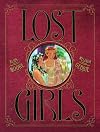
How do we approach this graphic, very graphic, novel? As a consistent continuation of the ouevre of Alan Moore? As an investigation of the pornographic? Or as a subliminal political tract?
Let us start with Moore because this text is recognisably within his style. Artists may come and go but Moore's themes are often those of the power of imagination to cast new light on the world.
Much of his earlier work involved alternate futures and histories - the dystopia of Thatcher's show more Britain in 'Skizz', a fascist Britain of 'V for Vendetta' and the world where Nixon won the election in 'Watchmen'.
Later work overlays this with a game of memes set around a grand theme - magic and the esoteric in the magnificent 'Promethea' series and popular literary figures in the finely tuned but sometimes disappointing 'League of Extraordinary Gentlemen' series.
'Lost Girls' takes the theme of pornographic literature and cross-fertilises it transgressively with three seminal (excuse these puns) children's stories about girls written by men - Alice in Wonderland, Peter Pan and The Wonderful Wizard of Oz.
Alice is older and a lesbian defensively avoiding men, Dorothy is an up-front American flirt and Wendy is the repressed wife of an equally repressed and shatteringly dull British businessman.
The whole is set at a point of maximum decadence - Austria-Hungary in the days before the First World War - and Moore's words are set to brilliant pastiches of the erotic art of the preceding decades: the cards of Becat, Von Bayros, Mucha, Schiele and more.
He has found a superb artistic collaborator in Melinda Gebbie who has not flinched from the subject matter - my initial irritation with the girlish soft-hued pastel shades collapsed before the skill of her interpretations and versatility.
But be in no doubt - the pictures and text are 'pornographic' in the most extreme way and there is no let up in it. As in all pornographic material, the story seems thin (three women tell stories of their past in a hotel on the eve of war) so that couplings and multiple copulations can be effected without too much distraction.
Of course, Moore is cleverer than this. The story is, in fact, sophisticated with its investigations of the difference between fantasy and reality even if it slips into cliche with the 1914 theme by the end.
The casual reader must understand in advance that this is not just the graphic presentation of sexuality but the sexuality of the histories of the young girls who became women, of fantasies of incest and exploitation and of the most callous Sadean activity.
Each of the children's stories is subverted into a tale of simultaneous pleasure, extremity and both willing and unwilling exploitation.
Alice is a victim of child abuse who becomes a sexual addict dragged into orgies, drugs and prostitution by a lesbian 'set' of singular obsessive cruelty.
Dorothy discovers masturbation and sex on the farm and effectively half-seduces and is half-victim of a seriously abusive father. On the way there, she happily masturbates a horse while being anally buggered.
Wendy is 'perverted' by street urchins who provide sexual services for middle class men when they are not engaged in sexual activity among themselves. This 'Tinkerbelle' is the sexual plaything of her brother, Peter, giving more cause to the jealousy in the story than Disney scriptwriters had managed.
Incest is a central theme of the book - fantasies of every form of coupling (though minimally male homosexual) express a vision of the family dynamic which nods to Freud but which, in fact, is simply a play on one central theme: how is it that we both have such desires and control or repress them so effectively.
Which is where we come to an implicit politic because Moore's position seems to be that civilisation depends on the maintenance of the separate realm of a free imagination which is uncontrolled.
It is the pornographic extremities of the imaginative realm that act as an outlet for the repressive miseries and potential for violence and exploitation seen in the girl's 'real' stories and in the onset of war.
This is not an easy argument for many people to understand. For them, the map of literature or art is the territory of real life and social relations. They cannot 'get' that the imaginal realm is 'other'.
It is the same flaw in thinking that makes God a real presence in people's lives or has the same imagined creature judging an act from within.
The inability to understand that these are two different realms is what results in the 'politics of disgust', the attempts to repress desire and the failure to deal with acts of exploitation when they appear.
Child abuse is a general theme within the book. It is expressed graphically and often. Moore intelligently avoids the black and white interpretation where some evil adult seduces the innocent in favour of something more ambiguous and true to life. What is going on is a trading of desires and power which are enabled by secrecy and denial.
Another theme is the fact that the girls are lost because no one talks about desire in their world of innocence, things are done in secret and the girls are left to fend for themselves and work out mysteries that are imposed on them by circumstance - whether stuck on a Kansas farm or in an English middle class household.
This sophisticated and multifaceted work raises the essence of the problem behind social control and repression of sexual desire, one which appears to have passed by the Christians and feminists who encircle our unimaginative Prime Minister.
Pornography as cause of sexual crime is simply special pleading by the criminal. The expression of erotic fantasy for most people most of the time is a liberation of desire and violence precisely so that it does not act in the world. It is a salve. It may even be a form of salvation.
Sexual pleasure and even transgression between adults 'works through' the system so that exploitation and abuse remain in the literature and the art and do not leach out into the real world.
Attempts to control the imagery of desire drives what cannot be obliterated not merely underground but into vicious corners where the imagined may become real - as in rural child abuse, predatory sexual abuse of urban minors and systems of economic sexual exploitation.
All the pornographic styles and stories in the book arise out of an age of repressed expression of desire but are part of the solution and not part of the problem.
The problem lies elsewhere - not in a fascination with the sexual, masturbation or curiosity but with social structures that make all these normal interests out to be 'deviant' or 'perverted'.
The 'lost girls', on the other hand, are all exploited and abused not because they are sexual beings but because they are sexual beings without power to express their sexuality on their own terms.
Alice is, in fact, not permitted just to be a lesbian but must enter a sub-culture that is vicious. Dorothy is a highly sexual creature who just wants to experiment on equal terms with men. Wendy has sexual desires but is forced by circumstance into danger or total denial and ends up with an apparently a-sexual bore who turns out to be a submissive gay.
But it is even more complicated than this. Alice is not in control of her history and is even a little predatory towards Dorothy and Wendy but Dorothy and Wendy, as adults, embrace the predation.
Dorothy avoids to the end the admission that her sexual affair was with her father but she is not traumatised by it, merely avoiding discussion of a social taboo where she was actually in more (though not complete) control than we might like.
Her complaint is not of abuse but of having to continue a very run-of-the-mill sexual relationship after the transgressional glamour of a trip to the big city. She feels sorry, in the end, for her step-mother in a very true-to-life female reaction.
Wendy's childish familial incest is pushed aside in horror when the games go wrong and she is threatened with rape in woodland by a paedophile as she turns from child to woman - but the horror results in decades of unhappiness until liberated by her new 'sisters'.
The event is also not one of a victim either. She turns on the bully and uses words to whip lash him into humiliated withdrawal - she has become empowered under extreme pressure.
In short, both Moore and Gebbie (and we are reminded that the graphic images are all produced by a woman) are reminding us that sex-positivity is more complicated than the 'victim' mentality imposed on us by our current culture.
These ambiguities do not belong to society but to the individuals who are free to react in multiple ways - relaxed acceptance and complicity, defensive resistance or denial and unhappiness after a moment of empowered epiphany - and that any responses that may result in a personal transformation equally belong to individuals and not society.
If Alice brings Wendy's sexuality back to life, there is no suggestion that her life between the rape attempt and her new friendships was a lie but rather that it had served its purpose for both Mr. and Mrs Potter and now it was time to move on.
The men in the story are mostly all sad, lonely and weak characters - furtive child abusers, repressed homosexuals, men coming to terms with their own sexuality through strategies of denial, men who are thrown aside at their moment of transformation, secretive men, dead militarist men.
In the end, there is no real conclusion to the book. You either share a general position of sex-positivity and triumph over abuse as the best 'normal' way of things or you will be, frankly, confused, 'disgusted' and even horrified.
If the latter, then you have done something that Moore is warning us against - confused imagination for reality and failed to see imagination not as an expression of actual intent in the world but as a tool for internal transformation of the person who exists within that world.
Perhaps our Prime Minister and his somewhat dim-witted advisers will finally get it. A free imagination does not cause criminality or abuse, criminals and abusers do crimes and abuse and such crimes and abuses arise not from pornography but from a lack of imagination in using pornography as a tool.
The sexual imagination, like the Japanese and American imaginative flirtations with violence, is an inoculation against excess in a world that is stupid, brutal and cruel. The good society requires it because we are human animals in this world, not castrated saints in the making for the next.
Our sexual desire is central to who we are even when we deny it or it is absent and because we, not an abstraction, are central to the social, sexuality is best accommodated in a positive way and not as a furtive business of misery and guilt. show less
How do we approach this graphic, very graphic, novel? As a consistent continuation of the ouevre of Alan Moore? As an investigation of the pornographic? Or as a subliminal political tract?
Let us start with Moore because this text is recognisably within his style. Artists may come and go but Moore's themes are often those of the power of imagination to cast new light on the world.
Much of his earlier work involved alternate futures and histories - the dystopia of Thatcher's show more Britain in 'Skizz', a fascist Britain of 'V for Vendetta' and the world where Nixon won the election in 'Watchmen'.
Later work overlays this with a game of memes set around a grand theme - magic and the esoteric in the magnificent 'Promethea' series and popular literary figures in the finely tuned but sometimes disappointing 'League of Extraordinary Gentlemen' series.
'Lost Girls' takes the theme of pornographic literature and cross-fertilises it transgressively with three seminal (excuse these puns) children's stories about girls written by men - Alice in Wonderland, Peter Pan and The Wonderful Wizard of Oz.
Alice is older and a lesbian defensively avoiding men, Dorothy is an up-front American flirt and Wendy is the repressed wife of an equally repressed and shatteringly dull British businessman.
The whole is set at a point of maximum decadence - Austria-Hungary in the days before the First World War - and Moore's words are set to brilliant pastiches of the erotic art of the preceding decades: the cards of Becat, Von Bayros, Mucha, Schiele and more.
He has found a superb artistic collaborator in Melinda Gebbie who has not flinched from the subject matter - my initial irritation with the girlish soft-hued pastel shades collapsed before the skill of her interpretations and versatility.
But be in no doubt - the pictures and text are 'pornographic' in the most extreme way and there is no let up in it. As in all pornographic material, the story seems thin (three women tell stories of their past in a hotel on the eve of war) so that couplings and multiple copulations can be effected without too much distraction.
Of course, Moore is cleverer than this. The story is, in fact, sophisticated with its investigations of the difference between fantasy and reality even if it slips into cliche with the 1914 theme by the end.
The casual reader must understand in advance that this is not just the graphic presentation of sexuality but the sexuality of the histories of the young girls who became women, of fantasies of incest and exploitation and of the most callous Sadean activity.
Each of the children's stories is subverted into a tale of simultaneous pleasure, extremity and both willing and unwilling exploitation.
Alice is a victim of child abuse who becomes a sexual addict dragged into orgies, drugs and prostitution by a lesbian 'set' of singular obsessive cruelty.
Dorothy discovers masturbation and sex on the farm and effectively half-seduces and is half-victim of a seriously abusive father. On the way there, she happily masturbates a horse while being anally buggered.
Wendy is 'perverted' by street urchins who provide sexual services for middle class men when they are not engaged in sexual activity among themselves. This 'Tinkerbelle' is the sexual plaything of her brother, Peter, giving more cause to the jealousy in the story than Disney scriptwriters had managed.
Incest is a central theme of the book - fantasies of every form of coupling (though minimally male homosexual) express a vision of the family dynamic which nods to Freud but which, in fact, is simply a play on one central theme: how is it that we both have such desires and control or repress them so effectively.
Which is where we come to an implicit politic because Moore's position seems to be that civilisation depends on the maintenance of the separate realm of a free imagination which is uncontrolled.
It is the pornographic extremities of the imaginative realm that act as an outlet for the repressive miseries and potential for violence and exploitation seen in the girl's 'real' stories and in the onset of war.
This is not an easy argument for many people to understand. For them, the map of literature or art is the territory of real life and social relations. They cannot 'get' that the imaginal realm is 'other'.
It is the same flaw in thinking that makes God a real presence in people's lives or has the same imagined creature judging an act from within.
The inability to understand that these are two different realms is what results in the 'politics of disgust', the attempts to repress desire and the failure to deal with acts of exploitation when they appear.
Child abuse is a general theme within the book. It is expressed graphically and often. Moore intelligently avoids the black and white interpretation where some evil adult seduces the innocent in favour of something more ambiguous and true to life. What is going on is a trading of desires and power which are enabled by secrecy and denial.
Another theme is the fact that the girls are lost because no one talks about desire in their world of innocence, things are done in secret and the girls are left to fend for themselves and work out mysteries that are imposed on them by circumstance - whether stuck on a Kansas farm or in an English middle class household.
This sophisticated and multifaceted work raises the essence of the problem behind social control and repression of sexual desire, one which appears to have passed by the Christians and feminists who encircle our unimaginative Prime Minister.
Pornography as cause of sexual crime is simply special pleading by the criminal. The expression of erotic fantasy for most people most of the time is a liberation of desire and violence precisely so that it does not act in the world. It is a salve. It may even be a form of salvation.
Sexual pleasure and even transgression between adults 'works through' the system so that exploitation and abuse remain in the literature and the art and do not leach out into the real world.
Attempts to control the imagery of desire drives what cannot be obliterated not merely underground but into vicious corners where the imagined may become real - as in rural child abuse, predatory sexual abuse of urban minors and systems of economic sexual exploitation.
All the pornographic styles and stories in the book arise out of an age of repressed expression of desire but are part of the solution and not part of the problem.
The problem lies elsewhere - not in a fascination with the sexual, masturbation or curiosity but with social structures that make all these normal interests out to be 'deviant' or 'perverted'.
The 'lost girls', on the other hand, are all exploited and abused not because they are sexual beings but because they are sexual beings without power to express their sexuality on their own terms.
Alice is, in fact, not permitted just to be a lesbian but must enter a sub-culture that is vicious. Dorothy is a highly sexual creature who just wants to experiment on equal terms with men. Wendy has sexual desires but is forced by circumstance into danger or total denial and ends up with an apparently a-sexual bore who turns out to be a submissive gay.
But it is even more complicated than this. Alice is not in control of her history and is even a little predatory towards Dorothy and Wendy but Dorothy and Wendy, as adults, embrace the predation.
Dorothy avoids to the end the admission that her sexual affair was with her father but she is not traumatised by it, merely avoiding discussion of a social taboo where she was actually in more (though not complete) control than we might like.
Her complaint is not of abuse but of having to continue a very run-of-the-mill sexual relationship after the transgressional glamour of a trip to the big city. She feels sorry, in the end, for her step-mother in a very true-to-life female reaction.
Wendy's childish familial incest is pushed aside in horror when the games go wrong and she is threatened with rape in woodland by a paedophile as she turns from child to woman - but the horror results in decades of unhappiness until liberated by her new 'sisters'.
The event is also not one of a victim either. She turns on the bully and uses words to whip lash him into humiliated withdrawal - she has become empowered under extreme pressure.
In short, both Moore and Gebbie (and we are reminded that the graphic images are all produced by a woman) are reminding us that sex-positivity is more complicated than the 'victim' mentality imposed on us by our current culture.
These ambiguities do not belong to society but to the individuals who are free to react in multiple ways - relaxed acceptance and complicity, defensive resistance or denial and unhappiness after a moment of empowered epiphany - and that any responses that may result in a personal transformation equally belong to individuals and not society.
If Alice brings Wendy's sexuality back to life, there is no suggestion that her life between the rape attempt and her new friendships was a lie but rather that it had served its purpose for both Mr. and Mrs Potter and now it was time to move on.
The men in the story are mostly all sad, lonely and weak characters - furtive child abusers, repressed homosexuals, men coming to terms with their own sexuality through strategies of denial, men who are thrown aside at their moment of transformation, secretive men, dead militarist men.
In the end, there is no real conclusion to the book. You either share a general position of sex-positivity and triumph over abuse as the best 'normal' way of things or you will be, frankly, confused, 'disgusted' and even horrified.
If the latter, then you have done something that Moore is warning us against - confused imagination for reality and failed to see imagination not as an expression of actual intent in the world but as a tool for internal transformation of the person who exists within that world.
Perhaps our Prime Minister and his somewhat dim-witted advisers will finally get it. A free imagination does not cause criminality or abuse, criminals and abusers do crimes and abuse and such crimes and abuses arise not from pornography but from a lack of imagination in using pornography as a tool.
The sexual imagination, like the Japanese and American imaginative flirtations with violence, is an inoculation against excess in a world that is stupid, brutal and cruel. The good society requires it because we are human animals in this world, not castrated saints in the making for the next.
Our sexual desire is central to who we are even when we deny it or it is absent and because we, not an abstraction, are central to the social, sexuality is best accommodated in a positive way and not as a furtive business of misery and guilt. show less
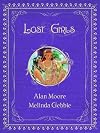
I hated this. I hated, hated, hated, hated this. I hated it with a pure hate I haven't felt toward a book in many, many years.
I think I'm angry because I've spent a fair amount of time defending Alan Moore and his obsessions over the past two decades. "He's a bit weird, but he's cool," I'd say. "Yeah, he likes to throw shocking curveballs but there is always some really interesting deconstruction going on." Well, there's no interesting deconstruction here. It's just a lot of sex: every kind show more of sex imaginable, basically, and on nearly every page. It's not erotica; it's pornography. And it's pretending that it's "saying" something about three of the most beloved children's stories within memory: Lewis Carroll's Alice books; J. M. Barrie's Peter and Wendy (aka Peter Pan); and L. Frank Baum's The Wonderful Wizard of Oz.
I'm also angry because I'm no stranger to grown-up examinations of these same works, and while I don't love them all, some of them are quite interesting and have meaningful observations to make. Some of them are just weird and fun: I'll defend A Barnstormer in Oz 'til my dying day, for instance, because it's clearly a thought experiment (What if Oz were a real place where magic was just advanced science? What if the story was dumbed down because no one would believe the real thing?) taken to a logical, if occasionally slightly ridiculous conclusion. There is nothing like that in Lost Girls. I can't even defend it as having a perspective if I wanted to; there's no perspective to give.
I had expected something rather more like Moore's The League of Extraordinary Gentlemen, which - aside from being a genre fiction easter egg lollapalooza - treats the classic characters involved as living, breathing, sometimes uncomfortably troubling people, all of whom have their own motivations. Mina Harker is forever changed by her experience with Dracula, and it makes her into a morally upright leader. Dr. Jekyll can never escape the bestial pull of his "other half," and it causes him to do truly inhuman things. James Bond can barely disguise his true nature as a nasty, misogynistic thug. And so on. Despite the entire three-volume book being centered around them, there are no such insights in Lost Girls on Alice, Dorothy, or Wendy.
In fact, all three have been rendered down to flat, two-dimensional characters: Alice the articulate, aristocratic widow, Wendy a quiet and submissive wife, and Dorothy an "Aw shucks!" farm girl stereotype. Yes, it's very clever-clever that Moore's found a way to reframe their stories as sexual experiences - Alice's first sexual experience is an assault by an older man named "Bunny," Dorothy has her first self-induced orgasm as the tornado hits the house, etc. - but that doesn't tell me anything about my favorite books from childhood. It just feels like a particularly raunchy party trick, one that is repeated again and again and is already boring by the end of Book One.
I have read elsewhere that Moore and his wife, Melinda Gebbie - who created the art in the book, which is certainly very colorful if loosely styled - worked on Lost Girls for almost twenty years, and their goal was not to inspire conversation about the stories they adapted but about the nature of pornography itself. And that's...fine, I guess? I just don't see the point of involving Alice, Dorothy, and Wendy, except that it makes a great elevator pitch: "...They're all in a hotel together and they're all getting it on!" Perhaps those interested in pornography as an art form will find meaning in it, but to me, this feels like little more than an over-expensive vanity project. It was a waste of my time and especially of my money. show less
I think I'm angry because I've spent a fair amount of time defending Alan Moore and his obsessions over the past two decades. "He's a bit weird, but he's cool," I'd say. "Yeah, he likes to throw shocking curveballs but there is always some really interesting deconstruction going on." Well, there's no interesting deconstruction here. It's just a lot of sex: every kind show more of sex imaginable, basically, and on nearly every page. It's not erotica; it's pornography. And it's pretending that it's "saying" something about three of the most beloved children's stories within memory: Lewis Carroll's Alice books; J. M. Barrie's Peter and Wendy (aka Peter Pan); and L. Frank Baum's The Wonderful Wizard of Oz.
I'm also angry because I'm no stranger to grown-up examinations of these same works, and while I don't love them all, some of them are quite interesting and have meaningful observations to make. Some of them are just weird and fun: I'll defend A Barnstormer in Oz 'til my dying day, for instance, because it's clearly a thought experiment (What if Oz were a real place where magic was just advanced science? What if the story was dumbed down because no one would believe the real thing?) taken to a logical, if occasionally slightly ridiculous conclusion. There is nothing like that in Lost Girls. I can't even defend it as having a perspective if I wanted to; there's no perspective to give.
I had expected something rather more like Moore's The League of Extraordinary Gentlemen, which - aside from being a genre fiction easter egg lollapalooza - treats the classic characters involved as living, breathing, sometimes uncomfortably troubling people, all of whom have their own motivations. Mina Harker is forever changed by her experience with Dracula, and it makes her into a morally upright leader. Dr. Jekyll can never escape the bestial pull of his "other half," and it causes him to do truly inhuman things. James Bond can barely disguise his true nature as a nasty, misogynistic thug. And so on. Despite the entire three-volume book being centered around them, there are no such insights in Lost Girls on Alice, Dorothy, or Wendy.
In fact, all three have been rendered down to flat, two-dimensional characters: Alice the articulate, aristocratic widow, Wendy a quiet and submissive wife, and Dorothy an "Aw shucks!" farm girl stereotype. Yes, it's very clever-clever that Moore's found a way to reframe their stories as sexual experiences - Alice's first sexual experience is an assault by an older man named "Bunny," Dorothy has her first self-induced orgasm as the tornado hits the house, etc. - but that doesn't tell me anything about my favorite books from childhood. It just feels like a particularly raunchy party trick, one that is repeated again and again and is already boring by the end of Book One.
I have read elsewhere that Moore and his wife, Melinda Gebbie - who created the art in the book, which is certainly very colorful if loosely styled - worked on Lost Girls for almost twenty years, and their goal was not to inspire conversation about the stories they adapted but about the nature of pornography itself. And that's...fine, I guess? I just don't see the point of involving Alice, Dorothy, and Wendy, except that it makes a great elevator pitch: "...They're all in a hotel together and they're all getting it on!" Perhaps those interested in pornography as an art form will find meaning in it, but to me, this feels like little more than an over-expensive vanity project. It was a waste of my time and especially of my money. show less
Porn and fun in equal measures here. Moore reinterprets the stories of Alice (from Wonderland), Dorothy (from Oz) and Wendy (from Neverland) as the fevered dreams of adolescent girls. But first he brings the three together in the last halcyon days before WWI, drops them in a hotel together, and has them fall in serious lust with one another. The re-imaginings of the original stories are very clever, very salacious, and seriously twisted. The add-on bits with no reference to the originals are show more not as interesting.
I think that if you prefer your girlish icons unsullied, you'd best stay as far away from this as possible. On the other hand, if Shel Silverstein's song "Polly in a porny with a pony" makes you giggle madly, you might want to pick this up.
Includes most every taboo sexual act you can think of, and some you can't.
My quibble is with the drawings- the women aren't consistently shaped, nor are their faces the same from panel to panel. Odd little lumps grow out of their sides and then disappear, proportions seem... off somehow. Perhaps it's intentional, to add to the dreamlike feeling. I don't read a lot of graphic-novel porn, so I don't know what the conventions are.
I thought it was fun, and the ending managed to be poignant and lovely, and that surprised me too. show less
I think that if you prefer your girlish icons unsullied, you'd best stay as far away from this as possible. On the other hand, if Shel Silverstein's song "Polly in a porny with a pony" makes you giggle madly, you might want to pick this up.
Includes most every taboo sexual act you can think of, and some you can't.
My quibble is with the drawings- the women aren't consistently shaped, nor are their faces the same from panel to panel. Odd little lumps grow out of their sides and then disappear, proportions seem... off somehow. Perhaps it's intentional, to add to the dreamlike feeling. I don't read a lot of graphic-novel porn, so I don't know what the conventions are.
I thought it was fun, and the ending managed to be poignant and lovely, and that surprised me too. show less
An interesting attempt to tell a story with pornography. Three women -- re-imaginings of Alice (of Wonderland), Dorothy (of Oz) and Wendy (of Never Land) meet in a licentious Austrian hotel on the eve of the First World War and share stories (and more) of their sexual secrets and awakenings in their various 'never lands'.
I found the constant frottage and sexual activity between the protaganists a bit annoying after a while. It seemed that every imaginable scenario described (and there were a show more lot) by one of the women was incredibly titillating to the others. This background of incessant sexual play seemed unlikely and detracted from the story for me.
Some of the episodes were just silly. There was a scene with Wendy and her boring husband, who have no sex life. Although they are merely conversing distantly, their shadows appear to be engaged in sexual activity -- but only through Austin Powers-like coincidences of lighting and movement. It just didn't work.
Gebbie and Moore have chosen to portray mostly consensual sexual acts (with Alice sometimes the exception) and generally ascribe little moral judgment to those acts. Rape, torture and bondage are mostly excluded. In fact it is through sex that the women are able to re-integrate their lost childhoods. Of the three, Alice is the most damaged, a child abuse victim who embraces a life of lascivious addiction and becomes (at times) an abuser herself.
What I did really enjoy was Melinda Gebbie's simulation of various artists of the time, especially in the 'White Book', the lurid and blatantly pornographic tome which was in every room of Monsieur Rogeur's hotel.
Overall, a very interesting experiment. Not really pornography even though it tried quite hard. Hard to classify quite what it was instead though. show less
I found the constant frottage and sexual activity between the protaganists a bit annoying after a while. It seemed that every imaginable scenario described (and there were a show more lot) by one of the women was incredibly titillating to the others. This background of incessant sexual play seemed unlikely and detracted from the story for me.
Some of the episodes were just silly. There was a scene with Wendy and her boring husband, who have no sex life. Although they are merely conversing distantly, their shadows appear to be engaged in sexual activity -- but only through Austin Powers-like coincidences of lighting and movement. It just didn't work.
Gebbie and Moore have chosen to portray mostly consensual sexual acts (with Alice sometimes the exception) and generally ascribe little moral judgment to those acts. Rape, torture and bondage are mostly excluded. In fact it is through sex that the women are able to re-integrate their lost childhoods. Of the three, Alice is the most damaged, a child abuse victim who embraces a life of lascivious addiction and becomes (at times) an abuser herself.
What I did really enjoy was Melinda Gebbie's simulation of various artists of the time, especially in the 'White Book', the lurid and blatantly pornographic tome which was in every room of Monsieur Rogeur's hotel.
Overall, a very interesting experiment. Not really pornography even though it tried quite hard. Hard to classify quite what it was instead though. show less
Lists
Awards


You May Also Like
Associated Authors
Statistics
- Works
- 7
- Also by
- 22
- Members
- 1,636
- Popularity
- #15,700
- Rating
- 3.6
- Reviews
- 48
- ISBNs
- 24
- Languages
- 7
- Favorited
- 1