
Kate Wilhelm (1928–2018)
Author of Where Late the Sweet Birds Sang
About the Author
Kate Wilhelm was born Katie Gertrude Meredith in Dayton, Ohio on June 8, 1928. Her first book, More Bitter Than Death, was published in 1963. She wrote over 75 books in many genres including science fiction, mystery, and fantasy. Her books included The Clone, the Barbara Holloway mystery series, show more and Welcome, Chaos. Her short stories and novellas won several Nebula Awards. Her novel Where Late the Sweet Birds Sang and her how-to book Storyteller: Writing Lessons and More From 27 Years of the Clarion Writers' Workshop won Hugo Awards. She and her husband, author and editor Damon Knight, trained numerous writers through their Clarion Science Fiction and Fantasy Writers' Workshop and the annual Milford Writers' Conference. She died from respiratory failure on March 8, 2018 at the age of 89. (Bowker Author Biography) show less
Series
Works by Kate Wilhelm
Storyteller: Writing Lessons and More from 27 Years of the Clarion Writers' Workshop (2005) 340 copies, 7 reviews
The Scream [novelette] 5 copies
Forget Luck {short story} 4 copies
Tränen der Unsterblichkeit. Leben in einer Welt ohne Tod. Enthält: Leben ohne Tod / Qualen der Unsterblichkeit. (1989) 3 copies
Whatever Happened To The Olmecs? 2 copies
On The Road To Honeyville 2 copies
Rules Of The Game 2 copies
The Man on the Persian Carpet 2 copies
The Late Night Train 2 copies
The Promise 2 copies
His Deadliest Enemy 1 copy
Why Is It So Hard? 1 copy
Dark Tower 1 copy
Naming The Flowers 1 copy
Short Fiction Collection 1 copy
On Point of View 1 copy
The Book of Ylin: A Trilogy 1 copy
The Happiest Day of Her Life 1 copy
The Look Alike 1 copy
Changing The World 1 copy
Bloodletting 1 copy
The Fountain Of Neptune 1 copy
An Ordinary Day With Jason 1 copy
DON'T GET CAUGHT 1 copy
Isosceles {short story} 1 copy
The Plastic Abyss 1 copy
The Loiterer 1 copy
Strangeness, Charm, and Spin 1 copy
Earth's Blood 1 copy
A Cold Dark Night With Snow 1 copy
Associated Works
The Year's Best Science Fiction: Tenth Annual Collection (1993) — Contributor — 475 copies, 5 reviews
The Best of Mystery: 63 Short Stories Chosen by the Master of Suspense (1982) — Contributor — 426 copies
The Year's Best Science Fiction: Eighth Annual Collection (1991) — Contributor — 414 copies, 6 reviews
Women of Wonder: Science Fiction Stories by Women about Women (1975) — Contributor — 369 copies, 5 reviews
The Norton Book of Science Fiction: North American Science Fiction, 1960-1990 (1993) — Contributor — 344 copies, 6 reviews
The Future Is Female! 25 Classic Science Fiction Stories by Women, from Pulp Pioneers to Ursula K. Le Guin: A Library of America Special Publication (2018) — Contributor — 278 copies, 5 reviews
The Science Fiction Hall of Fame, Volume Three: Nebula Winners 1965-1969 (1982) — Contributor — 267 copies, 1 review
More Women of Wonder: Science Fiction Novelettes by Women about Women (1976) — Contributor — 254 copies, 7 reviews
Women of Wonder, the Classic Years: Science Fiction by Women from the 1940s to the 1970s (1995) — Contributor — 189 copies, 1 review
Daughters of Earth: Feminist Science Fiction in the Twentieth Century (2006) — Contributor — 188 copies, 6 reviews
The Penguin Book of Modern Fantasy by Women (1995) — Contributor, some editions — 172 copies, 3 reviews
The Best From Fantasy and Science Fiction: The Fiftieth Anniversary Anthology (1999) — Contributor — 127 copies, 3 reviews
The Future Is Female! Volume Two, The 1970s: More Classic Science Fiction Storie s By Women: A Library of America Special Publication (2022) — Contributor — 108 copies, 3 reviews
Nebula Awards 30: SFWA's Choices For The Best Science Fiction And Fantasy Of The Year (Nebula Awards Showcase) (1996) — Contributor — 87 copies, 2 reviews
New Eves: Science Fiction About the Extraordinary Women of Today and Tomorrow (1994) — Contributor — 71 copies, 3 reviews
Nebula Awards 22: Sfwa's Choices for the Best Science Fiction and Fantasy 1986 (Nebula Awards Showcase) (1988) — Contributor — 53 copies, 1 review
The Cosmic Dancers: Exploring the Physics of Science Fiction (1983) — Foreword, some editions — 45 copies
The Best Science Fiction Stories and Novels: Ninth Series (2024) — Contributor — 40 copies, 1 review
Light Years and Dark: Science Fiction and Fantasy of and for Our Time (1984) — Contributor — 38 copies
The Magazine of Fantasy and Science Fiction October/November 2009, Vol. 117, Nos. 3 & 4 (60th Anniversary Issue) (2009) — Author, some editions — 19 copies, 3 reviews
The Magazine of Fantasy and Science Fiction July/August 2012, Vol. 123, Nos. 1 & 2 (2012) — Contributor — 17 copies
Isaac Asimov's Science Fiction Magazine: Vol. 10, No. 10 [October 1986] (1986) — Contributor — 15 copies
The Magazine of Fantasy and Science Fiction September 2001, Vol. 101, No. 3 (2001) — Contributor — 13 copies
Brave New Worlds {Second Edition ebook} — Contributor, some editions — 11 copies
Heyne Science Fiction Jahresband 1991. 8 Romane und Erzählungen prominenter SF- Autoren. (1993) — Contributor — 8 copies
Faseskift : science fiction noveller : et udvalg (1984) — Author, some editions — 5 copies, 1 review
Mondaugen — Contributor — 1 copy
Tagged
Common Knowledge
- Legal name
- Knight, Katie Gertrude Meredith Wilhelm
- Other names
- Curran, Kathleen
Meredith, Katie Gertrude - Birthdate
- 1928-06-08
- Date of death
- 2018-03-08
- Gender
- female
- Occupations
- science fiction writer
fantasy writer - Organizations
- Milford Science Fiction Writers' Conference
Clarion Science Fiction and Fantasy Writers' Workshop
Science Fiction and Fantasy Writers of America - Awards and honors
- SF Hall Of Fame (Living Inductee, 2003)
- Relationships
- Knight, Damon (spouse)
- Cause of death
- respiratory failure
- Nationality
- USA
- Birthplace
- Toledo, Ohio, USA
- Places of residence
- Louisville, Kentucky, USA
- Place of death
- Eugene, Oregon, USA
- Associated Place (for map)
- USA
Members
Reviews

I was browsing at a local used book store when this one caught my eye. On a desolate planet, an overmatched but spunky young space soldier battles a killer robot, with the future of humanity at stake…by Kate Wilhelm? Really?
This book initially offers the trappings of a militaristic golden age “man conquers the universe” story (complete with habitable Venus), but it doesn’t take long to see hints that all is not right in this universe. Our strong and loyal and determined protagonist show more is haunted by more than a machine run amok: dark dreams and flashbacks to events that would have been presented as heroic in an earlier era of science fiction, but here are initially ambiguous, and then gradually less and less ambiguously eviscerated through a penetrating ethical lens. Before long The Killer Thing has become quite obviously an indictment of "might makes right" and the Vietnam War and American Imperialism.
In the end The Killer Thing feels similar to, but subtler than Joanna Russ's We Who Are About To…., a searing feminist novel that mercilessly crushes science fiction trope after science fiction trope. The characterization here isn’t particularly deep, and some aspects of the setting seem not particularly well thought through, but for some readers the message will resonate as much today as it did in 1967. show less
This book initially offers the trappings of a militaristic golden age “man conquers the universe” story (complete with habitable Venus), but it doesn’t take long to see hints that all is not right in this universe. Our strong and loyal and determined protagonist show more is haunted by more than a machine run amok: dark dreams and flashbacks to events that would have been presented as heroic in an earlier era of science fiction, but here are initially ambiguous, and then gradually less and less ambiguously eviscerated through a penetrating ethical lens. Before long The Killer Thing has become quite obviously an indictment of "might makes right" and the Vietnam War and American Imperialism.
In the end The Killer Thing feels similar to, but subtler than Joanna Russ's We Who Are About To…., a searing feminist novel that mercilessly crushes science fiction trope after science fiction trope. The characterization here isn’t particularly deep, and some aspects of the setting seem not particularly well thought through, but for some readers the message will resonate as much today as it did in 1967. show less

Jean's father is a visionary, and he cajoles and convinces humanity to fund an international space station. But before the station is even finished, strange and tragic accidents start killing the astronauts and delaying the project. Jean's father is the last to die--after that, the station is mothballed.
Years later, Jean's old childhood friend Arthur Cluny manages to get politicians to restart the station. He and his friends head up to space--only to find a mysterious message encased in gold show more waiting for them. Unsure whether the message is from aliens or some terrestrial conspiracy, Cluny tracks down Jean, hoping she can translate it. Jean was once a promising PhD candidate linguist, but when the army took over her project she fled. After a terrifying time in welfare housing, she escapes into the desert, where she finds old friends willing to help her. Among the Indians learning to live on the desert, she begins to find peace and stability for the first time. But then Cluny arrives, and their isolation is shattered.
Using her linguist skills and the different kind of reality the Indians have learned to see, Jean translates the message. The thought of a coming alien visitation convinces the world to band together. However, Cluny and his friends suspect that the message was really terrestrial, and Jean eventually concedes that she thinks it is as well. Scared to let the rest of humanity in on the secret, knowing that it will undo all their work, the cabal tries to kill Jean, but instead she and Cluny escape into the desert.
Wilhelm crafts a world that is truly terrifying--and terrifyingly familiar. Her future isn't perfectly correct: the computers are gigantic and practically calculators, while the USSR is still a major threat. But other bits, like the widening class divide or the way supposedly objective research is often the result of guesswork and the desires of funders, ring true. And unlike a lot of 70s sf, women are not only main characters, but they have opinions and careers of their own. The Indians mostly avoid racist tropes, as well. I was wary of them teaching Jean their ~mystic ways~, but it's made clear in the text that there's been a lot of mixing with the rest of American culture and immigrants, and that they themselves are learning to live in the desert and see a more natural reality. They're not experts because of something in their blood.
All of this is a bit secondary to the really poweful part of [b:Juniper Time|91137|Juniper Time|Kate Wilhelm|http://www.goodreads.com/assets/nocover/60x80.png|953720], which is the way Wilhelm crafts the inner workings of her characters. She has an amazing ability to bring people's personalities to life.
(trigger warning: there are numerous off-hand mentions of sexual assault, a 2 page gang-rape scene, and detailed emotional aftermath of an assault) show less
Years later, Jean's old childhood friend Arthur Cluny manages to get politicians to restart the station. He and his friends head up to space--only to find a mysterious message encased in gold show more waiting for them. Unsure whether the message is from aliens or some terrestrial conspiracy, Cluny tracks down Jean, hoping she can translate it. Jean was once a promising PhD candidate linguist, but when the army took over her project she fled. After a terrifying time in welfare housing, she escapes into the desert, where she finds old friends willing to help her. Among the Indians learning to live on the desert, she begins to find peace and stability for the first time. But then Cluny arrives, and their isolation is shattered.
Wilhelm crafts a world that is truly terrifying--and terrifyingly familiar. Her future isn't perfectly correct: the computers are gigantic and practically calculators, while the USSR is still a major threat. But other bits, like the widening class divide or the way supposedly objective research is often the result of guesswork and the desires of funders, ring true. And unlike a lot of 70s sf, women are not only main characters, but they have opinions and careers of their own. The Indians mostly avoid racist tropes, as well. I was wary of them teaching Jean their ~mystic ways~, but it's made clear in the text that there's been a lot of mixing with the rest of American culture and immigrants, and that they themselves are learning to live in the desert and see a more natural reality. They're not experts because of something in their blood.
All of this is a bit secondary to the really poweful part of [b:Juniper Time|91137|Juniper Time|Kate Wilhelm|http://www.goodreads.com/assets/nocover/60x80.png|953720], which is the way Wilhelm crafts the inner workings of her characters. She has an amazing ability to bring people's personalities to life.
(trigger warning: there are numerous off-hand mentions of sexual assault, a 2 page gang-rape scene, and detailed emotional aftermath of an assault) show less
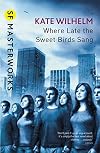
I loved this book so much, the last line actually had me giddy. There's three parts to this, and each was fully worth 5 stars in their own right. The characters were multi-layered and interesting, and Wilhelm did an amazing job in making you care about them, so that when something bad happened you actually felt it.
And the plot was simply amazing. Unique, and clever, and makes you ask questions about what it means to be human, and how important the individual is when the fate of the entire show more community is on the line.
I can't wait to trawl through the rest of this author's work. show less
And the plot was simply amazing. Unique, and clever, and makes you ask questions about what it means to be human, and how important the individual is when the fate of the entire show more community is on the line.
I can't wait to trawl through the rest of this author's work. show less

This was my first book by Wilhelm, but I will certainly read more by her.
This one I picked up because it was short and the blurb promised me a Terminator-style story: A spaceman on an abandoned planet hunted by a seriously over-powered killer robot. And about half of the book is indeed that: stranded on an empty desert planet, brave space marine Tracy must outwit an unstoppable robot, knowing that his supplies won't last him until the relief force shows up. So far so straightforward. Those show more parts of the book are interrupted by flashbacks and memories that, initially at least, serve as the world-building segments: they show us the events in the background by telling the story of how Tracy became Brave Space Marine Tracy, and how an autonomous mining robot that he found was turned into a super-soldier.
The background segments, though, feel less as interruptions as the story wears on, and inch onto the main stage. It becomes clear thatthe military force that Tracy is an unquestioning member of is the supreme Colonial force in the galaxy: an imperialistic, militaristic, fascist army that teaches its soldiers to treat all the conquered people as sub-humans, unworthy even of hatred (for emotions are reserved for one's equals). Several representatives of such conquered people get to have their say, especially Tracy's dark-skinned love interest Tal, and their opinions are frank and uncomfortable. This book was written in the sixties, and it's not hard to guess what contemporary conflicts this was a commentary on. . These segments, though, are a little awkwardly glued onto the Terminator segments: Wilhelm tried to tell two stories at once, in separate parts of the book, and so each feels a little like unnecessary padding for the other.
So yeah. A little bit of a bait-and-switch, there, but that was offset by an unexpected takedown of heroic space marine fiction. Would recommend. I have a feeling that this would make a great film. show less
This one I picked up because it was short and the blurb promised me a Terminator-style story: A spaceman on an abandoned planet hunted by a seriously over-powered killer robot. And about half of the book is indeed that: stranded on an empty desert planet, brave space marine Tracy must outwit an unstoppable robot, knowing that his supplies won't last him until the relief force shows up. So far so straightforward. Those show more parts of the book are interrupted by flashbacks and memories that, initially at least, serve as the world-building segments: they show us the events in the background by telling the story of how Tracy became Brave Space Marine Tracy, and how an autonomous mining robot that he found was turned into a super-soldier.
The background segments, though, feel less as interruptions as the story wears on, and inch onto the main stage. It becomes clear that
So yeah. A little bit of a bait-and-switch, there, but that was offset by an unexpected takedown of heroic space marine fiction. Would recommend. I have a feeling that this would make a great film. show less
Lists
Awards


You May Also Like


Associated Authors
Statistics
- Works
- 186
- Also by
- 125
- Members
- 10,656
- Popularity
- #2,229
- Rating
- 3.6
- Reviews
- 263
- ISBNs
- 534
- Languages
- 10
- Favorited
- 19
