

Richard Burton (1) (1821–1890)
Author of The Arabian Nights: Tales from a Thousand and One Nights [Modern Library]
For other authors named Richard Burton, see the disambiguation page.
Richard Burton (1) has been aliased into Richard Francis Burton.
Works by Richard Burton
Works have been aliased into Richard Francis Burton.
The Arabian Nights: Tales from a Thousand and One Nights [Modern Library] (2001) — Translator — 1,929 copies, 24 reviews
The Arabian Nights' Entertainments: Or the Book of a Thousand Nights and a Night (An Adult Selection) (1959) 16 copies
The Vice: Containing Sir Richard Burton's Sotadic Zone and Extracts from Dr. Jacobus' Untrodden Fields of Anthropology (SC) (1967) 3 copies
The Richard Burton Poetry Collection 2 copies
The Tales from the Arabian nights — Translator — 1 copy
Mystery of the Sacred Shroud 1 copy
Tusen og en natt 1 copy
Associated Works
Works have been aliased into Richard Francis Burton.
Major Problems in the History of the American West: Documents and Essays (1989) — Contributor — 67 copies
Tagged
Common Knowledge
- Birthdate
- 1821-03-19
- Date of death
- 1890-10-20
- Gender
- male
- Education
- University of Oxford (Trinity College)
- Occupations
- writer
author
translator - Organizations
- National Institute of Arts and Letters (Literature ∙ 1908)
Kama Shastra Society - Awards and honors
- Order of Saint Michael and Saint George (Knight Commander, 1886)
- Relationships
- Burton, Isabel (wife)
Stisted, Georgiana M. (niece) - Nationality
- England
UK - Birthplace
- Torquay, Devon, England, UK
- Places of residence
- Tours, France
Trieste, Italy - Burial location
- St Mary Magdalen Church, Morlake, London, England, UK
Members
Discussions
Richard Burton On Tito; Richard Burton AS "Tito"... in Pro and Con (October 2014)
Liz'n'Dick II: "My Friend The Witch Doctor/He Told Me What To Do --"... in Pro and Con (August 2014)
Liz'n'Dick (The Burtons...) in Pro and Con (August 2014)
Reviews
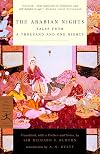
The Arabian Nights, also familiar in the West as One Thousand and One Nights is a collection of Middle Eastern folktales whose origins reach back more than a thousand years. The tales begin with a king, Shahryar, who discovers his wife's infidelity, and he vows to marry a new woman each night but have her killed the next morning to eliminate the possibility of being betrayed again. This goes on for some time (the carnage is certainly piling up) when Shahrazad, daughter of his right-hand man show more and who has a few tricks up her sleeve, offers herself as his next bride. Her cunning strategy is to tell a folktale each night with the suggestion of more to come, leaving Shahryar so curious about what happens next in the narrative that he will allow her to live another night in order to find out. What follows make up what has been a rich Middle Eastern oral and literary tradition that includes, among many others, such well-known tales as Sindbad the Seaman, Alaeddin, and Ali Baba and the Forty Thieves.
The translation I read was Burton's 1889 edition, which was written in archaic language such as "thee," "thou," "quoth" and "doest," and abounded with unfamiliar vocabulary like "wot," "haply," "gugglet," "rede" and "weet." Including notes, it is 872 very dense pages (virtually no paragraph breaks) and to digest more than 10-15 pages in a sitting was a challenge in focus. For that reason I used it to fulfill the Read Harder 2021 category 'a book you've been intimidated to read.' Modern readers may find the sheer amount of racism, misogyny, incest, slavery, murder and other disturbingly cruel violence, theft and backstabbing in these stories uncomfortable. There is also much tearing of clothes and heaving of dust onto one's head, which I surmise is how grief is depicted, as well as truly endless numbers of shipwrecks (Sindbad was a glutton for punishment in a most baffling way). It should be noted that a remarkable number of times it is women and their cooler heads who save the day! I feel something of an accomplishment to have finally, successfully made my way through this book, so I'm feeling pretty triumphant about that, as well as pleased to know a little more about this legendary icon of world literature. show less
The translation I read was Burton's 1889 edition, which was written in archaic language such as "thee," "thou," "quoth" and "doest," and abounded with unfamiliar vocabulary like "wot," "haply," "gugglet," "rede" and "weet." Including notes, it is 872 very dense pages (virtually no paragraph breaks) and to digest more than 10-15 pages in a sitting was a challenge in focus. For that reason I used it to fulfill the Read Harder 2021 category 'a book you've been intimidated to read.' Modern readers may find the sheer amount of racism, misogyny, incest, slavery, murder and other disturbingly cruel violence, theft and backstabbing in these stories uncomfortable. There is also much tearing of clothes and heaving of dust onto one's head, which I surmise is how grief is depicted, as well as truly endless numbers of shipwrecks (Sindbad was a glutton for punishment in a most baffling way). It should be noted that a remarkable number of times it is women and their cooler heads who save the day! I feel something of an accomplishment to have finally, successfully made my way through this book, so I'm feeling pretty triumphant about that, as well as pleased to know a little more about this legendary icon of world literature. show less
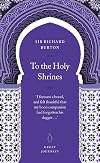
In 1853 English traveller and adventurer , Sir Richard Burton, adopted the alias 'Abdullah Darwaysh' and, having spent a fortnight "getting into the train of Oriental manners" sets off to penetrate the mysteries of Mecca and Medina - firmly closed to the 'infidel'.
This is a highly entertaining account of his time spent in Egypt...Ramadan, life in a caravanserai...and then sailing on a pilgrim ship (a surprisingly violent place, the poorer pilgrims trying to make a buck by thieving from their show more fellow believers), before arriving at Medina.
Entertaining work- the reader feels the author would be amazing company...and he sure can write! show less
This is a highly entertaining account of his time spent in Egypt...Ramadan, life in a caravanserai...and then sailing on a pilgrim ship (a surprisingly violent place, the poorer pilgrims trying to make a buck by thieving from their show more fellow believers), before arriving at Medina.
Entertaining work- the reader feels the author would be amazing company...and he sure can write! show less
The Arabian Nights: Tales from a Thousand and One Nights (Modern Library Classics) by Richard Burton
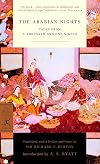
This is the selection of tales of The Arabian Nights as translated by Sir Richard F. Burton and published by The Modern Library. The story of Scheherazade's ingenuity is of Persian origin and its origin has been traced back to 944 AD. However the tales are more Arabian than Persian in flavor. Over the centuries the tales multiplied and eventually comprised an convoluted form that has been a source of admiration as a miracle of narrative architecture. While Boccaccio's Decameron and Chaucer's show more Canterbury Tales are similar to them in construction, in that they are collections of stories within stories, the Arabian tales is infinitely more complicated.
The frame of the work consists of a whimsical plot arrangement that depends upon the jealousy of Shahriyar, King of India, for his wife and her wanton ways; after executing her he vows to take his revenge on wall woman-ways. Night after night he marries some beautiful girl, only to order her beheaded the next morning. That is until he meets Scheherazade whose wile and intelligence is more than a match for the King. She manages to spin a bewildering number of yarns and, by suspending the ending of each, eludes the executioner. The tales she tells include such stories as "Aladdin's Lamp" and "Sinbad the Sailor" and many more that, while less famous, are equally entertaining.
"the most marvelous article in this Enchanted Treasure was a wonderful Lamp with its might of magical means." (p 712, "Alaeddin; or, The Wonderful Lamp")
The resulting compendium of stories has been popular ever since inspiring many translations and different forms. This translation by Richard F. Burton may be the most entertaining of all. show less
The frame of the work consists of a whimsical plot arrangement that depends upon the jealousy of Shahriyar, King of India, for his wife and her wanton ways; after executing her he vows to take his revenge on wall woman-ways. Night after night he marries some beautiful girl, only to order her beheaded the next morning. That is until he meets Scheherazade whose wile and intelligence is more than a match for the King. She manages to spin a bewildering number of yarns and, by suspending the ending of each, eludes the executioner. The tales she tells include such stories as "Aladdin's Lamp" and "Sinbad the Sailor" and many more that, while less famous, are equally entertaining.
"the most marvelous article in this Enchanted Treasure was a wonderful Lamp with its might of magical means." (p 712, "Alaeddin; or, The Wonderful Lamp")
The resulting compendium of stories has been popular ever since inspiring many translations and different forms. This translation by Richard F. Burton may be the most entertaining of all. show less

I wanted to like this one more than I did. The Victorian explorer Richard Burton was a man of multitudes, and To the Holy Shrines, an abridged account of his dangerous undercover expedition to Mecca (which was forbidden, on pain of death, to infidels), was a feat I'd always been interested in. Burton can write, even if it is in that verbose Victorian style which is difficult to parse for a modern reader, but the problem is that this selection – part of Penguin's 'Great Journeys' series – show more doesn't give us the whole story. It contains routine (though exotic) travelogue information and ends just as an undercover Burton first sights the holy city. We're denied the best part, and ultimately To the Holy Shrines is too short and the selection too scattergun for Burton's personality and writing approach to settle favourably in the reader's mind. show less
Lists
Art of Reading (1)
Awards


You May Also Like
Associated Authors
Statistics
- Works
- 40
- Also by
- 7
- Members
- 2,817
- Popularity
- #9,108
- Rating
- 3.9
- Reviews
- 35
- ISBNs
- 148
- Languages
- 4
- Favorited
- 8


