
Gabriele Mandel (1924–2010)
Author of Arabic Script: Styles, Variants, and Calligraphic Adaptations
About the Author
Gabriel Mandel Khan is an official of the Jerrahi-Halveti Sufi Brotherhood in Italy and is a founding member and director of the Averroes International Islamic University in Cordoba, Spain
Image credit: Photo
Series
Works by Gabriele Mandel
Arabic Script: Styles, Variants, and Calligraphic Adaptations (2000) — Afterword — 122 copies, 1 review
Gezeichnete Schöpfung: Eine Einführung in das hebräische Alphabet und die Mystik der Buchstaben (2003) 14 copies
Les manuscrits a peinture. 2 copies
Breviario di Seneca 1 copy
Hokusai 1 copy
La magia nell'islam 1 copy
Afghanistân: nel cuore della storia — Contributor — 1 copy
The Complete Paintings of Botticelli (Penguin Classics of World Art) by Mandel, Gabriele (1986) Paperback (1900) 1 copy
Das Tarockspiel der Visconti 1 copy
Mimmo Di Laora 1 copy
La vita e l’arte di Van Gogh 1 copy
Tagged
Common Knowledge
- Other names
- MANDEL, Gabriele
- Birthdate
- 1924
- Date of death
- 2010-07-01
- Gender
- male
- Education
- Conservatorium of Vicenza
- Occupations
- psychologist
artist
writer - Organizations
- University of Milan, Italy
- Nationality
- Italy
- Birthplace
- Bologna, Italy
- Places of residence
- Milan, Italy
- Place of death
- Milan, Italy
- Map Location
- Italy
Members
Reviews

This is a slim volume int the Penguin series about different genres of Art. They all suffer from the size of the volume. There is just not enough space there to really do justice to a subject as large as Islamic Art. If the aim is merely to learn how to recognise Islamic art then I suppose that criticism does not hold quite so strongly. But even with this, more restricted, aim it's difficult to say that one could recognise all examples of Islamic art from the limited selection on offer here. show more For example, they don't seem to cover (or have any example) for the geometric wood patterns ...Khatam.. (made from different coloured wood, glued together in combination), Nor is there any example of the steel work with swords.
The book follows the general contents of the others in this series: Architecture followed by a range of other arts.....though this books differs a bit from the others in it's coverage.
1. Architecture... a reasonable coverage here but the main feature of Islamic Architecture here seems to be the minaret.
2. Decoration ....typically carved stonework on capitals of buildings..but also includes the beautiful pierced stone and inlayed stonework ...in intricate geometric patterns.
3. Metal, glass, Ivory and Wood...rather limited. Some credit given to elaborate metal works such as the ornamental Griffin and Peacock but no mention of the Damascus Blade and Islamic sword art/technology
4. Ceramics ...(nothing about the splendid tiled patterns of the Alhambra but a bit about the adoption of Chinese themes and techniques after the Mongol conquest/Invasion).
6. Miniatures...seems to be the only sort of painting of figures and animals that they could get away with under Islam.....though they do mention Islamic Calligraphy in this section. (Probably needs a section to itself).
7. Rugs and carpets...a rather brief coverage of rugs ..which makes the point that they can be roughly divided into three; knotted, woven and chain stitched. Again the patterns are largely geometric.
I guess, my single main take-away from all this is of the stultifying effect the Islamic prohibition against images has had on the development of their art but also the astonishing creativity of the artists operating under these prohibitions. It's also pretty clear that art is too important to be entrusted to a bunch of clerics. They should stick to pure theological speculation. I give the book 3 stars. show less
The book follows the general contents of the others in this series: Architecture followed by a range of other arts.....though this books differs a bit from the others in it's coverage.
1. Architecture... a reasonable coverage here but the main feature of Islamic Architecture here seems to be the minaret.
2. Decoration ....typically carved stonework on capitals of buildings..but also includes the beautiful pierced stone and inlayed stonework ...in intricate geometric patterns.
3. Metal, glass, Ivory and Wood...rather limited. Some credit given to elaborate metal works such as the ornamental Griffin and Peacock but no mention of the Damascus Blade and Islamic sword art/technology
4. Ceramics ...(nothing about the splendid tiled patterns of the Alhambra but a bit about the adoption of Chinese themes and techniques after the Mongol conquest/Invasion).
6. Miniatures...seems to be the only sort of painting of figures and animals that they could get away with under Islam.....though they do mention Islamic Calligraphy in this section. (Probably needs a section to itself).
7. Rugs and carpets...a rather brief coverage of rugs ..which makes the point that they can be roughly divided into three; knotted, woven and chain stitched. Again the patterns are largely geometric.
I guess, my single main take-away from all this is of the stultifying effect the Islamic prohibition against images has had on the development of their art but also the astonishing creativity of the artists operating under these prohibitions. It's also pretty clear that art is too important to be entrusted to a bunch of clerics. They should stick to pure theological speculation. I give the book 3 stars. show less
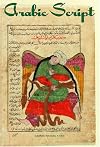
Arabic Script by Gabriel Mandel Khan is not about learning the fundamentals of writing in Arabic. It is a book focused on the art: the many different scripts, which is to say the history and mechanics of different calligraphy styles. It contains lots of examples (drawn reproductions of actual sources) displaying the decorative capacity of Arabic calligraphy. The introduction discusses the origins of written Arabic and some of the famous historical figures who influenced the development of show more various writing traditions. The book also describes how to make and use the calamus, the traditional reed pen. Like the other books, this one focuses on individual letters, showing how each one appears in more than 30 individual scripts or fonts, sharing some of the oldest extant examples of the letter, the ideal proportions for the letter and its artistic and metaphysical values. The end of each individual letter section is a spread of a wide range of decorative examples with the specific letter highlighted, to facilitate reading comprehension of the amazing array of calligraphic decorations on every conceivable surface and object. This is not a book that introduces Arabic as a language. There's no vocabulary building or tips on pronunciation or explanation of ligatures, etc. This is an introduction to the art of calligraphy that focuses on individual letters as the building blocks of that art. show less


You May Also Like


Associated Authors
Statistics
- Works
- 66
- Members
- 660
- Popularity
- #38,227
- Rating
- 3.3
- Reviews
- 9
- ISBNs
- 86
- Languages
- 8
- Favorited
- 1