
Kaite Welsh
Author of The Wages of Sin
Series
Works by Kaite Welsh
The Unquiet Heart: A Sarah Gilchrist Mystery (Sarah Gilchrist Mysteries) (2018) 43 copies, 5 reviews
Associated Works
Chicks Unravel Time: Women Journey Through Every Season of Doctor Who (2012) — Contributor — 103 copies, 3 reviews
Tagged
Common Knowledge
- Gender
- female
Members
Reviews
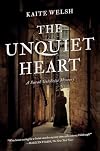
As with its predecessor, this second novel about Sarah Gilchrist, aspiring physician, has a fascinating and complex protagonist. Unfortunately the mystery plot this time is even less believable than before, with various loose ends and an obvious villain. The writing about plot points feels sloppy. This book series would be far better if it disposed of the mystery "hook" altogether and focused on the experiences of Gilchrist and other women medical students in 1890s Edinburgh. Their struggles show more and triumphs are interesting on their own. show less
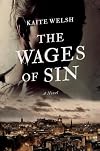
I don’t know whether it is a case of every novel being timed perfectly to have the most meaning in today’s political climate or a greater awareness of certain issues in general, but it does seem as if every novel I read lately is particularly important in illuminating the history behind current political viewpoints. The Wages of Sin certainly fits that bill. With its discussion of women, particularly poor women and their lack of choices when it comes to earning money, it covers women’s show more rights or lack thereof during the Victorian Era. Plus, Sarah’s foray as one of the first female medical students highlights the deep misogyny society still holds for women in traditionally male roles.
What I was expecting in this debut novel was not what I received. I expected an interesting story that provides a glimpse into life as a female medical student when women did not do that sort of thing. What I received was a compelling social commentary about so much more than just women in medical school. The mystery kept me intrigued, but it was Sarah’s past “sin” and her growing awareness of the dichotomy between her life of privilege versus most other women that made me sit up and take notice.
The Wages of Sin is not the story of a poor little rich girl becoming enlightened. This is a story meant to shine the spotlight on repressive societal norms and the need to rethink one’s position within that society. Sarah’s troubled past is pertinent to her time volunteering at the charitable hospital in one of the city’s worst slums and the patients she encounters there. Her eagerness to become a doctor is just another layer to the story during which she must reevaluate every rule she ever knew.
There is tremendous growth to Sarah which is wonderful to behold. To say much more would be to spoil a key plot point but one that is essential for understanding Sarah’s drive and commitment to helping the poor. She is not a perfect heroine however, and it is not a perfect story. In spite of her emancipation proclivities, Sarah is still someone who requires rescuing. Even worse, she has a tendency to let her emotions guide her rather than her intellect, which serves to prove the point of those who oppose the modernization of women. Prone to jumping to conclusions because of her active imagination without asking enough logical questions, her assumptions are not just annoying but also lead to a series of unnecessary confrontations that place her into the very same scenarios about which she was warned. She is a perfect candidate for the use of reverse psychology.
Still, Sarah’s weaknesses prove their own point in that they show how easily it is to accept societal norms at face value as well as how difficult it is to break free of them when it is the only thing you know. Then there is the issue of having others accept your breaking of those norms. Much of what Sarah observes and experiences as a women in the Victorian era will be familiar to modern female readers, and that is the most chilling aspect of the novel. That we continue to have the same discussions about reproductive rights and other feminist issues over 100 years later speaks volumes about societal norms and who establishes them. It also highlights the ongoing uphill battle we face for the next generation of girls.
The Wages of Sin is a pleasant surprise in that it has more gravitas and depth than I expected. It is much more than a murder mystery set in Victorian Edinburgh. It presents a somber portrait of women of all classes in that era and the stifling confines of what was deemed polite society. Sarah might be somewhat ruled by her emotional state, but she is a woman of action and that speaks volumes to her commitment to her beliefs. Kaite Welsh‘s debut novel makes her an author worth noticing. show less
What I was expecting in this debut novel was not what I received. I expected an interesting story that provides a glimpse into life as a female medical student when women did not do that sort of thing. What I received was a compelling social commentary about so much more than just women in medical school. The mystery kept me intrigued, but it was Sarah’s past “sin” and her growing awareness of the dichotomy between her life of privilege versus most other women that made me sit up and take notice.
The Wages of Sin is not the story of a poor little rich girl becoming enlightened. This is a story meant to shine the spotlight on repressive societal norms and the need to rethink one’s position within that society. Sarah’s troubled past is pertinent to her time volunteering at the charitable hospital in one of the city’s worst slums and the patients she encounters there. Her eagerness to become a doctor is just another layer to the story during which she must reevaluate every rule she ever knew.
There is tremendous growth to Sarah which is wonderful to behold. To say much more would be to spoil a key plot point but one that is essential for understanding Sarah’s drive and commitment to helping the poor. She is not a perfect heroine however, and it is not a perfect story. In spite of her emancipation proclivities, Sarah is still someone who requires rescuing. Even worse, she has a tendency to let her emotions guide her rather than her intellect, which serves to prove the point of those who oppose the modernization of women. Prone to jumping to conclusions because of her active imagination without asking enough logical questions, her assumptions are not just annoying but also lead to a series of unnecessary confrontations that place her into the very same scenarios about which she was warned. She is a perfect candidate for the use of reverse psychology.
Still, Sarah’s weaknesses prove their own point in that they show how easily it is to accept societal norms at face value as well as how difficult it is to break free of them when it is the only thing you know. Then there is the issue of having others accept your breaking of those norms. Much of what Sarah observes and experiences as a women in the Victorian era will be familiar to modern female readers, and that is the most chilling aspect of the novel. That we continue to have the same discussions about reproductive rights and other feminist issues over 100 years later speaks volumes about societal norms and who establishes them. It also highlights the ongoing uphill battle we face for the next generation of girls.
The Wages of Sin is a pleasant surprise in that it has more gravitas and depth than I expected. It is much more than a murder mystery set in Victorian Edinburgh. It presents a somber portrait of women of all classes in that era and the stifling confines of what was deemed polite society. Sarah might be somewhat ruled by her emotional state, but she is a woman of action and that speaks volumes to her commitment to her beliefs. Kaite Welsh‘s debut novel makes her an author worth noticing. show less
Wages of Sin follows the trials and tribulations of Sarah Gilchrist, an English medical student at the University of Edinburgh. Kaite Welsh sets her scene with verve and passion, establishing the Auld Reekie atmosphere of Victorian Edinburgh with its dark and dingy closes, Cowgate squalor and apparent moral turpitude, contrasting the whorehouses and tenements of the Old Town with the more refined life of the New Town. It’s a setting rich with possibility for a historical crime drama and show more she fills it with familiar characters, from the dour, hot-headed young professor seeking to salve a wounded heart in drink and bare-fist fighting to Sarah’s staid and disapproving family and a shady brothel madam. There is nothing particularly original here but it is both engaging and entertaining all the same.
What does add a fresh edge is Welsh’s strong and unabashed feminism. She doesn’t shrink at all from laying out all of the stigma, prejudice and restraint that Victorian women laboured under, whether forced into back-breaking char work or prostitution through poverty or struggling to make a mark in a world that refused power, education, profession and self-actualisation she reveals the struggles of all women from the gutter to the townhouse. She has populated her pages with strong female characters, beginning with Sarah who, banished from London for a public “disgrace” is determined to complete her studies among the first female medical students admitted to the University of Edinburgh. The obstacles faced by these women are considerable and enraging, from the condescension of the staff (male) to the abuse from their fellow students; vicious pranks, assaults and abuse. But Welsh also addresses the problems within the ranks of the women themselves. There is inevitable competition between the students working so hard to prove themselves worthy and they are not above achieving this through backbiting and rumour. The way these women have internalised the more overt sexism of Victorian society is clear in the way they treat each other, casting doubt on virtue and morality and condescending to the lives of women not as fortunate as themselves.
You may notice that I haven’t mentioned the mystery yet and there is a reason for that but some details first. As part of her medical training, and one of the few outside activities allowed by an aunt and uncle watching eagle-eyed over her besmirched virtue, Sarah volunteers at a Cowgate clinic for the poor under the aegis of one of Ediburgh’s few female doctors. Here is where the prostitutes and the destitute can find some help and here she meets Lucy, a young prostitute pregnant and desperate not to be. But abortion is illegal and the clinic has troubles enough. Later Lucy turns up at the University, on Sarah’s slab, a body donated for dissection. In the short time she spends with the body Sarah becomes suspicious about the cause of death and as Lucy’s fate preys on her mind she begins to investigate the circumstances of her death, only for her suspicions to fall upon one of her own lecturers, a man who knows her secret and has many of his own and to whom she finds herself reluctantly drawn…
The mystery does get a little lost in all of Sarah’s other preoccupations; her studies, her repressive home life, the threat of a former scandal, the hostility of her fellow students. There a few too many long pauses and rather too few developments to make the crime side of the story particularly strong and the final denouement is a little disappointing and a touch contrary to the strong feminist message throughout. Nevertheless, I enjoyed Welsh’s clever us of Edinburgh’s dank, seedy atmosphere, her pugnacious tackling of women’s place in Victorian society and her use of genre tropes while (almost always) staying true to her intent and her characters. There isn’t the nuance or subtlety of something like Sarah Moss’s Bodies of Light but there are well-rounded female characters, strong and progressive without losing their connection to their own time. An interesting and enjoyable debut and a character and author I would like to see again. show less
What does add a fresh edge is Welsh’s strong and unabashed feminism. She doesn’t shrink at all from laying out all of the stigma, prejudice and restraint that Victorian women laboured under, whether forced into back-breaking char work or prostitution through poverty or struggling to make a mark in a world that refused power, education, profession and self-actualisation she reveals the struggles of all women from the gutter to the townhouse. She has populated her pages with strong female characters, beginning with Sarah who, banished from London for a public “disgrace” is determined to complete her studies among the first female medical students admitted to the University of Edinburgh. The obstacles faced by these women are considerable and enraging, from the condescension of the staff (male) to the abuse from their fellow students; vicious pranks, assaults and abuse. But Welsh also addresses the problems within the ranks of the women themselves. There is inevitable competition between the students working so hard to prove themselves worthy and they are not above achieving this through backbiting and rumour. The way these women have internalised the more overt sexism of Victorian society is clear in the way they treat each other, casting doubt on virtue and morality and condescending to the lives of women not as fortunate as themselves.
You may notice that I haven’t mentioned the mystery yet and there is a reason for that but some details first. As part of her medical training, and one of the few outside activities allowed by an aunt and uncle watching eagle-eyed over her besmirched virtue, Sarah volunteers at a Cowgate clinic for the poor under the aegis of one of Ediburgh’s few female doctors. Here is where the prostitutes and the destitute can find some help and here she meets Lucy, a young prostitute pregnant and desperate not to be. But abortion is illegal and the clinic has troubles enough. Later Lucy turns up at the University, on Sarah’s slab, a body donated for dissection. In the short time she spends with the body Sarah becomes suspicious about the cause of death and as Lucy’s fate preys on her mind she begins to investigate the circumstances of her death, only for her suspicions to fall upon one of her own lecturers, a man who knows her secret and has many of his own and to whom she finds herself reluctantly drawn…
The mystery does get a little lost in all of Sarah’s other preoccupations; her studies, her repressive home life, the threat of a former scandal, the hostility of her fellow students. There a few too many long pauses and rather too few developments to make the crime side of the story particularly strong and the final denouement is a little disappointing and a touch contrary to the strong feminist message throughout. Nevertheless, I enjoyed Welsh’s clever us of Edinburgh’s dank, seedy atmosphere, her pugnacious tackling of women’s place in Victorian society and her use of genre tropes while (almost always) staying true to her intent and her characters. There isn’t the nuance or subtlety of something like Sarah Moss’s Bodies of Light but there are well-rounded female characters, strong and progressive without losing their connection to their own time. An interesting and enjoyable debut and a character and author I would like to see again. show less
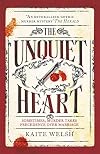
Sarah Gilchrist has found herself a fiancee. To be more precise she has been affianced to the younger son of a friend of her uncle. Miles is dull but acquiescent and he will lend a veneer of respectability to Sarah, however he will stop her medical studies. When one of the maids at his house is murdered Sarah finds herself thrust into another investigation and when her intended father-in-law is also killed Sarah has to act.
I really enjoyed the first of these novels and the second is no show more different. Welsh has managed to put together a book which shouldn't work but it does. At its heart is a simple detective tale set in late Victorian Edinburgh and at this level the story is sufficiently complex to be really satisfying with a real sense of time and place. What lifts these novels above the more mundane is the feminist slant, not so much to be abrasive but integral to the characters and the story. show less
I really enjoyed the first of these novels and the second is no show more different. Welsh has managed to put together a book which shouldn't work but it does. At its heart is a simple detective tale set in late Victorian Edinburgh and at this level the story is sufficiently complex to be really satisfying with a real sense of time and place. What lifts these novels above the more mundane is the feminist slant, not so much to be abrasive but integral to the characters and the story. show less
You May Also Like


Associated Authors
Statistics
- Works
- 2
- Also by
- 2
- Members
- 194
- Popularity
- #112,876
- Rating
- 3.7
- Reviews
- 16
- ISBNs
- 31