

Sam Sheridan
Author of A Fighter's Heart: One Man's Journey Through the World of Fighting
Works by Sam Sheridan
The Disaster Diaries: How I Learned to Stop Worrying and Love the Apocalypse (2013) 147 copies, 5 reviews
Tagged
Common Knowledge
- Gender
- male
Members
Reviews

Sam Sheridan’s "A Fighter’s Heart" isn’t just a book about fighting — it’s a meditation on why people fight. Trained at Harvard, Sheridan could have lived a comfortable, conventional life. Instead, he plunged headlong into the world’s fight culture — boxing in Thailand, wrestling in Iowa, training with Brazilian jiu-jitsu legends, and learning the spiritual discipline of capoeira. What emerges is not a simple travelogue, but a layered exploration of fear, courage, and the human show more drive to test limits.
Sheridan writes with both toughness and tenderness. His prose is stripped down and unsentimental, yet deeply observant. He captures the stench, exhaustion, and adrenaline of combat gyms as vividly as the quiet introspection that comes after a loss. The book’s strength lies in Sheridan’s willingness to be humbled — he never postures as a hero. Instead, he’s a student of the fight, absorbing lessons from those who live closer to the bone: the journeyman boxers, Muay Thai fighters, and MMA pioneers who’ve staked their lives on the mat.
Philosophically, the book circles around a haunting question: What does it mean to have heart? In fight culture, “heart” is more than toughness — it’s the fusion of courage, endurance, and a kind of spiritual clarity born in violence. Sheridan dissects this idea with honesty, tracing how combat becomes a mirror for one’s own fears and character.
For readers, "A Fighter’s Heart" is part memoir, part ethnography, and part existential inquiry. It will resonate not just with fighters or fans of mixed martial arts, but with anyone drawn to the edges of human experience — those fascinated by what happens when comfort is stripped away and instinct takes over.
In short: it’s not a book about winning fights. It’s a book about becoming whole through struggle. show less
Sheridan writes with both toughness and tenderness. His prose is stripped down and unsentimental, yet deeply observant. He captures the stench, exhaustion, and adrenaline of combat gyms as vividly as the quiet introspection that comes after a loss. The book’s strength lies in Sheridan’s willingness to be humbled — he never postures as a hero. Instead, he’s a student of the fight, absorbing lessons from those who live closer to the bone: the journeyman boxers, Muay Thai fighters, and MMA pioneers who’ve staked their lives on the mat.
Philosophically, the book circles around a haunting question: What does it mean to have heart? In fight culture, “heart” is more than toughness — it’s the fusion of courage, endurance, and a kind of spiritual clarity born in violence. Sheridan dissects this idea with honesty, tracing how combat becomes a mirror for one’s own fears and character.
For readers, "A Fighter’s Heart" is part memoir, part ethnography, and part existential inquiry. It will resonate not just with fighters or fans of mixed martial arts, but with anyone drawn to the edges of human experience — those fascinated by what happens when comfort is stripped away and instinct takes over.
In short: it’s not a book about winning fights. It’s a book about becoming whole through struggle. show less
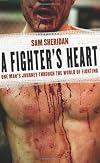
A Fighter's Heart is a memoir about fighting in competitive martial arts. It's about actually fighting in a ring or a cage, not just practicing katas or sets or working out in a school. That's part of the book too, but Sheridan is interested in exploring what makes a fighter a good fighter. Deep down, under all the fighting stuff, this is also a book about masculine psychology. It's a little bit of philosophy, a little bit of travel writing, fitness and diet, and some history regarding the show more recent evolution of organized fights. All these topics are integrated very well. Sheridan is an excellent writer and I found the book to be very engaging. It made me think quite a bit about violence and human evolution. I practiced a martial art for eight years during and after my college years but I never fought in a match. Part of me has always wanted to and for the same reasons Sheridan does and I was able to identify with his quest to test himself. Sheridan wants to know if he can hack it. If he can show gameness or not.
In the last twenty years or so, MMA has exploded as has the BJJ ground game and Sheridan gets into the specifics of how that came about. He spends a lot of time interviewing coaches and other fighters while he is fighting and training with them at their various gyms and venues. The book follows him through Muay Thai Camp, MMA wrestling in Iowa, BJJ training in Brazil, Pride in Japan, Boxing in Oakland, CA, Tai Chi Chaun in New York, dog fights in the US and the Philippines, meditation back in Thailand (and more Muay Thai) and then stunt fighting for Hollywood movies. The similarities between all the fighting arts is fascinating to compare. Sam is writing from a journalist point of view but he is actually training and fighting through out the whole book. If you are interested in exploring the topic of violence then this is a great read. If you practice martial arts, especially if you do cage or ring fighting, then this book might be an interesting read too. I look forward to reading his second book, A Fighter's Mind. show less
In the last twenty years or so, MMA has exploded as has the BJJ ground game and Sheridan gets into the specifics of how that came about. He spends a lot of time interviewing coaches and other fighters while he is fighting and training with them at their various gyms and venues. The book follows him through Muay Thai Camp, MMA wrestling in Iowa, BJJ training in Brazil, Pride in Japan, Boxing in Oakland, CA, Tai Chi Chaun in New York, dog fights in the US and the Philippines, meditation back in Thailand (and more Muay Thai) and then stunt fighting for Hollywood movies. The similarities between all the fighting arts is fascinating to compare. Sam is writing from a journalist point of view but he is actually training and fighting through out the whole book. If you are interested in exploring the topic of violence then this is a great read. If you practice martial arts, especially if you do cage or ring fighting, then this book might be an interesting read too. I look forward to reading his second book, A Fighter's Mind. show less
I will start with a confession - I got strange looks from people on the bus whilst reading this book, I suspect due to the cover photograph of a gruesomely bleeding fighter. I suspect the photo is of Sheridan himself, as he admits to being a bit of a bleeder in the book.
I now have another confession. I really enjoyed this book, and have already recommended it to friends. Sheridan writes well, and paints word pictures about the experience of fighting, which is a challenging concept to get show more across in print. He also makes me interested in the process of fighting and learning to fight - so much so that I regretted when the book ended.
Interestingly, one of the more moving chapters was the one on fighting dogs. Sheridan managed to throw light on the business of dog fighters and the experience of the dogs themselves, in a way that, even with the Michael Vick dog fighting scandal of 2007, I have never seen.
For anyone who is a fan of MMA, Thai kickboxing, or boxing, this is a fascinating peek under the tent at a world that most of us only experience on television. Highly recommended. show less
I now have another confession. I really enjoyed this book, and have already recommended it to friends. Sheridan writes well, and paints word pictures about the experience of fighting, which is a challenging concept to get show more across in print. He also makes me interested in the process of fighting and learning to fight - so much so that I regretted when the book ended.
Interestingly, one of the more moving chapters was the one on fighting dogs. Sheridan managed to throw light on the business of dog fighters and the experience of the dogs themselves, in a way that, even with the Michael Vick dog fighting scandal of 2007, I have never seen.
For anyone who is a fan of MMA, Thai kickboxing, or boxing, this is a fascinating peek under the tent at a world that most of us only experience on television. Highly recommended. show less
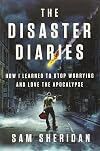
Disaster Diaries is focused on Sheridan traveling around North America learning survival skills that he feels would be useful in an apocalyptic setting. Each chapter explores a new skill set: Stunt Driving, Wilderness EMT, Mental Health, defensive pistol and rifle, building traps and hunting, knife fighting, winter survival, and the list goes on.
I enjoyed the format because for the most part Sheridan was approaching each new skill set as a beginner and he wrote from a beginner's point of show more view. It reminded me a bit of reading an A.J. Jacobs book (speaking of which, it would be rather fun to read about A.J. Jacobs learning how to build an igloo or how to machete an attacking cannibal). There wasn't really enough information in each chapter to be too useful for someone who is actually wanting to learn these things. This is not an authoritative guide to these skills but it was good summary. It also reminded me of other books that deal with this subject matter and helped reinforce some basic concepts. I thought the book was rather funny in places and it was cool to see someone put themselves through all these grueling classes that I could never afford to take.
Sheridan's writing style implies that he best operates within what some would call traditional gender norms. Sheridan's whole motivation for writing the book and exploring these skills is so that he can feel capable of protecting his wife and newborn son. Even though Sheridan does not come out and say that his wife is incapable of protecting herself, some members of our book club felt that he implied this by leaving out women as active characters in his exploration of various skills. I did not pick up on this personally but I have a lot in common with Sheridan's mind set and identity so it is fair to argue that a bias could be in play there.
Regardless, I found the book to be easy to read and interesting. If you are into prepper books or survival non-fiction texts this would entertain you perhaps but not really teach you much. The last chapter was really the most thoughtful and I wish it could have been the first chapter. Try to make it to the end if you pick up the book but can't quite bring yourself to finish it. Even though Disaster Diaries was not all-encompassing when it comes to survival subjects, it's a fun way to start learning about being prepared for disasters. It was very gratifying to come to a new chapter and get a snippet of some expert's wisdom and be able to say "Oh, I already do that, cool!" or "Huh, maybe I should consider that method or strategy." I look forward to reading Sheridan's new material. Perhaps he will write something about fatherhood soon. show less
I enjoyed the format because for the most part Sheridan was approaching each new skill set as a beginner and he wrote from a beginner's point of show more view. It reminded me a bit of reading an A.J. Jacobs book (speaking of which, it would be rather fun to read about A.J. Jacobs learning how to build an igloo or how to machete an attacking cannibal). There wasn't really enough information in each chapter to be too useful for someone who is actually wanting to learn these things. This is not an authoritative guide to these skills but it was good summary. It also reminded me of other books that deal with this subject matter and helped reinforce some basic concepts. I thought the book was rather funny in places and it was cool to see someone put themselves through all these grueling classes that I could never afford to take.
Sheridan's writing style implies that he best operates within what some would call traditional gender norms. Sheridan's whole motivation for writing the book and exploring these skills is so that he can feel capable of protecting his wife and newborn son. Even though Sheridan does not come out and say that his wife is incapable of protecting herself, some members of our book club felt that he implied this by leaving out women as active characters in his exploration of various skills. I did not pick up on this personally but I have a lot in common with Sheridan's mind set and identity so it is fair to argue that a bias could be in play there.
Regardless, I found the book to be easy to read and interesting. If you are into prepper books or survival non-fiction texts this would entertain you perhaps but not really teach you much. The last chapter was really the most thoughtful and I wish it could have been the first chapter. Try to make it to the end if you pick up the book but can't quite bring yourself to finish it. Even though Disaster Diaries was not all-encompassing when it comes to survival subjects, it's a fun way to start learning about being prepared for disasters. It was very gratifying to come to a new chapter and get a snippet of some expert's wisdom and be able to say "Oh, I already do that, cool!" or "Huh, maybe I should consider that method or strategy." I look forward to reading Sheridan's new material. Perhaps he will write something about fatherhood soon. show less
Lists
You May Also Like


Associated Authors
Statistics
- Works
- 4
- Members
- 494
- Popularity
- #50,037
- Rating
- 3.9
- Reviews
- 18
- ISBNs
- 25
- Languages
- 1