

Elin Kelsey
Author of Dual Volume Nature's Children: Beavers / Chipmunks
About the Author
Elin Kelsey, PhD, is a scholar, public speaker, educator, and award-winning author. She divides her time between Pacific Grove, California, and Victoria, B.C.
Works by Elin Kelsey
Tagged
Common Knowledge
- Gender
- female
- Education
- King's College, London (PhD, International Environmental Policy and Science Communication)
- Organizations
- University of Victoria
Western Washington University
Stanford University
Rachel Carson Center for the Environment and Society
Royal Roads University - Short biography
- [from Stanford University website]
Dr. Elin Kelsey is a leading spokesperson for hope and the environment. In 2014, she co-founded a social media campaign devoted to sharing ocean conservation successes. #OceanOptimism has reached more than 80 million users to date and has sparked a number of optimism-based conservation campaigns including #EarthOptimism, #ConservationOptimism, #ClimateOptimism and others.She has been awarded fellowships, including a Rockefeller fellowship and a Rachel Carson Center for Environment and Society fellowship, to explore the question of hope and the environment in interdisciplinary contexts. The IUCN, the largest international assemblage of government and non-governmental environmental organizations, featured Elin in their “Inspiring People” campaign. Elin is an associate faculty member in the School of Environment and Sustainability at Royal Roads University in Canada and the principal of Elin Kelsey and Company, an environmental communications consultancy. Her research interests include environmental education (EE) and environmental communications (EC), particularly as related to investigating and evaluating the role of emotions in engaging youth, environmental educators and conservationists in marine issues and solutions. - Nationality
- Canada
- Places of residence
- Pacific Grove, California, USA
- Associated Place (for map)
- Pacific Grove, California, USA
Members
Reviews
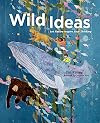
The author of this book has a PhD in environmental science education, and works magic in this overview of the ways in which animals employ problem-solving strategies to navigate through the world.
She explains in her note:
“Problems are a problem. It’s frustrating when things don’t work out the way we’d hoped. And problems often leave us feeling scared, angry, worried or alone. Yet they are a normal part of life. Not just for you and me, but for every living creature on the planet. I show more wrote this book because I marvel at the creative ways in which animals tackle problems in their everyday lives. I want to encourage you to let nature spark your imagination when you’re caught in a jam.”
So what do animals do? For surely, as the author explains, they have problems to solve too, with respect to finding food, shelter, staying out of danger, and so on:
“When . . . animals want to make something happen…they try.
They get frustrated.
They try again.
They invent tools.
Chimpanzees fold leaves to spoon cool drinks of water.
Sea otters balance rocks on their bellies, perfect for cracking crabs.”
Some ways in which other beings solve problems are startling:
“And when they’re seeking direction,
Dung beetles look to the heavens
And steer by the Milky Way.”
Of course, it’s not only ideas that help solve problems, but assistance from others:
“You turn to friends and family
For support, and so do other animals.
Ravens use gestures to offer ideas.
Hyenas cooperate to help the hunt.”
She concludes:
“Untame your imagination.
A world of wild ideas awaits.”
Three-dimensional dioramas in vivid hues by the artist Soyeon Kim add a sense of wonder to the brief but cogent, understandable, and lyrical text. Some of the collages include real photos alongside the drawings for added texture and interest.
Evaluation: This is an excellent presentation for kids of a complex subject in a way that will not lose their interest, but rather will amaze and delight them, and hopefully entice them to investigate further on their own. show less
She explains in her note:
“Problems are a problem. It’s frustrating when things don’t work out the way we’d hoped. And problems often leave us feeling scared, angry, worried or alone. Yet they are a normal part of life. Not just for you and me, but for every living creature on the planet. I show more wrote this book because I marvel at the creative ways in which animals tackle problems in their everyday lives. I want to encourage you to let nature spark your imagination when you’re caught in a jam.”
So what do animals do? For surely, as the author explains, they have problems to solve too, with respect to finding food, shelter, staying out of danger, and so on:
“When . . . animals want to make something happen…they try.
They get frustrated.
They try again.
They invent tools.
Chimpanzees fold leaves to spoon cool drinks of water.
Sea otters balance rocks on their bellies, perfect for cracking crabs.”
Some ways in which other beings solve problems are startling:
“And when they’re seeking direction,
Dung beetles look to the heavens
And steer by the Milky Way.”
Of course, it’s not only ideas that help solve problems, but assistance from others:
“You turn to friends and family
For support, and so do other animals.
Ravens use gestures to offer ideas.
Hyenas cooperate to help the hunt.”
She concludes:
“Untame your imagination.
A world of wild ideas awaits.”
Three-dimensional dioramas in vivid hues by the artist Soyeon Kim add a sense of wonder to the brief but cogent, understandable, and lyrical text. Some of the collages include real photos alongside the drawings for added texture and interest.
Evaluation: This is an excellent presentation for kids of a complex subject in a way that will not lose their interest, but rather will amaze and delight them, and hopefully entice them to investigate further on their own. show less
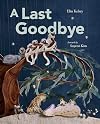
A delicate, spare, and very touching picture book that addresses the way that some social animals (and by extension, humans) care for their dying loved ones, Kelsey’s text grew out of an encounter with a school child whose dog had recently died. “You have to stay with them and comfort them if you can,” said the little girl to the author. “They are part of your family.”
Kelsey’s words and Soyeon Kim’s gentle art show elephants, chimpanzees, and orcas and other animals caring for show more family members whose lives are ending. Their bodies will return to the earth or the water, nourishing new life.
As well as alluding to the natural cycles of life and death, the book delicately acknowledges the pain of grief and loss, ending on a hopeful note about the joy of having known and shared time with another beloved being. show less
Kelsey’s words and Soyeon Kim’s gentle art show elephants, chimpanzees, and orcas and other animals caring for show more family members whose lives are ending. Their bodies will return to the earth or the water, nourishing new life.
As well as alluding to the natural cycles of life and death, the book delicately acknowledges the pain of grief and loss, ending on a hopeful note about the joy of having known and shared time with another beloved being. show less
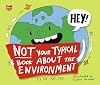
The author begins this book by saying, "Warning: This is not a typical book about the environment! It is not filled with doom-and-gloom messages about the state of the planet. It does not blame you, your baby sister, or your uncle Irving for climate change. It will not introduce huge, gnarly problems that are too big to deal with."
This is pretty true. This book is crammed with ideas and facts about the environment from eco-fabric to healthy and environmentally safe eating habits. There are show more practical suggestions and stories about what real people are doing to help the environment - and what kids can do to help.
The thing is....there's a bit too much information. Every one of the 64 pages is crammed tight with information, ideas, suggestions, facts, and stories. The type is small and dense, although the text is broken up into chunks with headers. While an older reader might not have a problem with the amount and size of the text, the illustrations are extremely cartoonish (and why do all the people have vampire teeth?) and the size of the book says "picture book". The book should either have been heavily edited and given larger, clearer type, or it should have been put into a typical middle grade book shape and given more mature pictures, or maybe photographs.
This is just my opinion, of course. I borrowed this from my neighboring librarian and she really likes it - thought it was upbeat and attractive. A couple of the journal reviews do say the design is somewhat cluttered, but nobody but me seems to find the illustrations irritating. Oh well, that's how it is sometimes.
Verdict: This book was a good idea and has a lot of excellent information, but the design makes it unattractive. I'll stick to buying recycled crafts books for the moment. I would recommend it for school libraries, especially if you're going to be doing projects or studies on the anything environment-related. show less
This is pretty true. This book is crammed with ideas and facts about the environment from eco-fabric to healthy and environmentally safe eating habits. There are show more practical suggestions and stories about what real people are doing to help the environment - and what kids can do to help.
The thing is....there's a bit too much information. Every one of the 64 pages is crammed tight with information, ideas, suggestions, facts, and stories. The type is small and dense, although the text is broken up into chunks with headers. While an older reader might not have a problem with the amount and size of the text, the illustrations are extremely cartoonish (and why do all the people have vampire teeth?) and the size of the book says "picture book". The book should either have been heavily edited and given larger, clearer type, or it should have been put into a typical middle grade book shape and given more mature pictures, or maybe photographs.
This is just my opinion, of course. I borrowed this from my neighboring librarian and she really likes it - thought it was upbeat and attractive. A couple of the journal reviews do say the design is somewhat cluttered, but nobody but me seems to find the illustrations irritating. Oh well, that's how it is sometimes.
Verdict: This book was a good idea and has a lot of excellent information, but the design makes it unattractive. I'll stick to buying recycled crafts books for the moment. I would recommend it for school libraries, especially if you're going to be doing projects or studies on the anything environment-related. show less
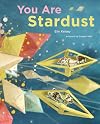
The author of this book has a PhD in environmental science education, and works magic in this overview of the ways in which people are an integral part of the natural world.
Three-dimensional dioramas by the artist Soyeon Kim add a sense of wonder to the amazingly brief but cogent, understandable, and yet lyrical text.
"Like fish deep in the ocean,
you called salt water home.
You swam inside the salty sea
Of your mother’s womb.
Salt still flows through your
veins, your sweat, and your show more tears.
The sea within you is as salty
as the ocean.”
Kids will be amazed to learn some of the fascinating facts about the ways we and nature are similar:
"Inside your brain, electricity
stronger than lightening
powers your every thought.
You sneeze with the force of a tornado.
Wind rockets from your nose quicker
than a cheetah sprints.”
Through these and other passages, children learn how connected we all are, but without didacticism or depressing statistics on the depredation of the earth. And of course, I’ve always loved the thought that we all came from stardust:
"Every tiny atom in your body came from a star that exploded long before you were born.”
The illustrations by Kim are so creative and whimsical; I really wish I could hang mobiles based on her art around my house! (And there’s an app for that! Check out this additional feature offered by Owlbooks, here.)
Evaluation: This is an excellent presentation for kids of a complex subject in a way that will not lose their interest, but rather will amaze and delight them, and hopefully entice them to investigate further on their own. show less
Three-dimensional dioramas by the artist Soyeon Kim add a sense of wonder to the amazingly brief but cogent, understandable, and yet lyrical text.
"Like fish deep in the ocean,
you called salt water home.
You swam inside the salty sea
Of your mother’s womb.
Salt still flows through your
veins, your sweat, and your show more tears.
The sea within you is as salty
as the ocean.”
Kids will be amazed to learn some of the fascinating facts about the ways we and nature are similar:
"Inside your brain, electricity
stronger than lightening
powers your every thought.
You sneeze with the force of a tornado.
Wind rockets from your nose quicker
than a cheetah sprints.”
Through these and other passages, children learn how connected we all are, but without didacticism or depressing statistics on the depredation of the earth. And of course, I’ve always loved the thought that we all came from stardust:
"Every tiny atom in your body came from a star that exploded long before you were born.”
The illustrations by Kim are so creative and whimsical; I really wish I could hang mobiles based on her art around my house! (And there’s an app for that! Check out this additional feature offered by Owlbooks, here.)
Evaluation: This is an excellent presentation for kids of a complex subject in a way that will not lose their interest, but rather will amaze and delight them, and hopefully entice them to investigate further on their own. show less
Lists
Awards


You May Also Like


Associated Authors
Statistics
- Works
- 22
- Members
- 2,328
- Popularity
- #11,017
- Rating
- 4.0
- Reviews
- 32
- ISBNs
- 74
- Languages
- 2


