
Ron MacLean (2)
Author of Why the Long Face?
For other authors named Ron MacLean, see the disambiguation page.
Works by Ron MacLean
Tagged
Common Knowledge
- Gender
- male
- Awards and honors
- Frederick Exley Award for Short Fiction
- Places of residence
- Boston, Massachusetts, USA
- Associated Place (for map)
- Massachusetts, USA
Members
Reviews
Ron MacLean works along the borders of experimental fiction in many of the stories in this collection. Reality comes and goes. That’s not bad – there’s a freshness in these stories, a sense of something a little different that perks up the ears.
Relationships, outlandish situations, and a few normal people are treated with subtle humor and even respect.
In Mile Marker 283, a long-haul trucker tends to sleep without warning and is afraid that she’ll “come unmoored.” Dr. Bliss and show more the Library of Toast is the strangely heartwarming story of a man starting over in a new place and his friend, the town’s “Mafioso Mayor.”
MacLean explores the mystery of love and everyday life, albeit from the edges. It’s not always easy to swallow, but as the narrator of Aerialist – a concerned father – says, “sometimes you have to give yourself over to mystery.” show less
Relationships, outlandish situations, and a few normal people are treated with subtle humor and even respect.
In Mile Marker 283, a long-haul trucker tends to sleep without warning and is afraid that she’ll “come unmoored.” Dr. Bliss and show more the Library of Toast is the strangely heartwarming story of a man starting over in a new place and his friend, the town’s “Mafioso Mayor.”
MacLean explores the mystery of love and everyday life, albeit from the edges. It’s not always easy to swallow, but as the narrator of Aerialist – a concerned father – says, “sometimes you have to give yourself over to mystery.” show less
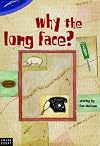
why the long face?
stories by Ron MacLean
Swank Books
210 pages
Review Copy
Something happened to me while I was reading this book of short stories and I’m certain it will happen to you too. About half-way through the book I realized that MacLean is one of those rare authors who truly understand the human condition. His stories, while well constructed and tightly plotted, were not really about the narrative but about the people. MacLean’s characters are incredibly drawn; full, flawed and show more absolutely as real as you or I. They fill each story with reality and define what it means to be human. Some of the characters you’ll meet include Gertrude Stein, Buffy the Vampire Slayer, an immoral Mayor, an unfaithful husband whose mistress is the Internet, a man with a spike driven through his head and the curator of the Museum of Toast. The list of characters alone should drive you to purchase this book immediately. For that reason alone I’ve given his book the rare 5 of 5 stars. show less
stories by Ron MacLean
Swank Books
210 pages
Review Copy
Something happened to me while I was reading this book of short stories and I’m certain it will happen to you too. About half-way through the book I realized that MacLean is one of those rare authors who truly understand the human condition. His stories, while well constructed and tightly plotted, were not really about the narrative but about the people. MacLean’s characters are incredibly drawn; full, flawed and show more absolutely as real as you or I. They fill each story with reality and define what it means to be human. Some of the characters you’ll meet include Gertrude Stein, Buffy the Vampire Slayer, an immoral Mayor, an unfaithful husband whose mistress is the Internet, a man with a spike driven through his head and the curator of the Museum of Toast. The list of characters alone should drive you to purchase this book immediately. For that reason alone I’ve given his book the rare 5 of 5 stars. show less
 This review was written for LibraryThing Early Reviewers.
Most short story collections are usually a grab-bag; some good, some bad, some obviously just included to fill out the page count.
Why the Long Face? is the exception to the rule. Maclean's collection of short stories vary in their style, subject matter, prose, and impact, yet every story shines as a perfect example of what a short story should be. MacLean's stories convey the emotions of the characters, the longing and suffering, confusion and contemplation, with elegance and skill. The show more world these stories take place in is eerie, bizarre, almost surrealistic, and yet all too familiar.
Short stories are an art form in themselves. MacLean's Why the Long Face? is truly a work of art. show less
Why the Long Face? is the exception to the rule. Maclean's collection of short stories vary in their style, subject matter, prose, and impact, yet every story shines as a perfect example of what a short story should be. MacLean's stories convey the emotions of the characters, the longing and suffering, confusion and contemplation, with elegance and skill. The show more world these stories take place in is eerie, bizarre, almost surrealistic, and yet all too familiar.
Short stories are an art form in themselves. MacLean's Why the Long Face? is truly a work of art. show less
This was my early reviewer book (from November, I think, though I received it in December), only the second ER book I've ever gotten from LT, and as with the previous, I have mixed feelings on it.
MacLean has written a collection of short stories that, while they are loosely linked by common themes of family, journey, missing pieces and missing people, are really dramatically different one from another. Some seem like MacLean's personal therapy sessions -- "Aerialist" and "Symbiosis", the show more first and last stories, are about a parent learning to let go of his child, and the emotion in each is so tangible that one must assume that MacLean has first-hand experience with this oft-painful process. The rendering of that emotion into prose is a remarkable skill, and in those stories, when the therapy becomes more universal than personal, MacLean shines.
Other shining moments here include the obvious regard for the comic and the bizarre, as in "Dr. Bliss and the Library of Toast", in which the reader is treated to a lighter yet still razor sharp MacLean. As a comic-book reader, I found the idea of and angle on 'Dr. Bliss' amusing and real, a rare combination, and appreciated the oddity not just of the random inclusions (which the second half of the title hints at) but also of the characters, none of whom is particularly likeable but all of whom seem at least halfway familiar.
Unfortunately, reading all the stories herein reveals an inconsistency that is typical of contemporary short fiction -- and one of the reasons that I often wait for authors to get old and die before I read their short work, thus giving editors an opportunity to create a 'best of' collection and sparing myself the tedium of those less-than-sparkling little gems. (Harsh and lazy, I know, but there you are.) Several of the stories here get caught up in the modern/post-modern stylistic trap, becoming so wrapped up in non-linearity and cleverly incomplete phrasing that one loses the thread, and often the point, of the story. Others, like "Figure With Meat", have tripped into surreality a little too much, crossing the line from whimsical to annoying within a few brief pages.
Still, all that being said, there is more good here than bad, and more odd here than anything, so I'm glad I read it and would recommend it to those who appreciate literary short fiction, those who enjoy a measuredly post-modern take on the world, or those who have a great fondness for toast. show less
MacLean has written a collection of short stories that, while they are loosely linked by common themes of family, journey, missing pieces and missing people, are really dramatically different one from another. Some seem like MacLean's personal therapy sessions -- "Aerialist" and "Symbiosis", the show more first and last stories, are about a parent learning to let go of his child, and the emotion in each is so tangible that one must assume that MacLean has first-hand experience with this oft-painful process. The rendering of that emotion into prose is a remarkable skill, and in those stories, when the therapy becomes more universal than personal, MacLean shines.
Other shining moments here include the obvious regard for the comic and the bizarre, as in "Dr. Bliss and the Library of Toast", in which the reader is treated to a lighter yet still razor sharp MacLean. As a comic-book reader, I found the idea of and angle on 'Dr. Bliss' amusing and real, a rare combination, and appreciated the oddity not just of the random inclusions (which the second half of the title hints at) but also of the characters, none of whom is particularly likeable but all of whom seem at least halfway familiar.
Unfortunately, reading all the stories herein reveals an inconsistency that is typical of contemporary short fiction -- and one of the reasons that I often wait for authors to get old and die before I read their short work, thus giving editors an opportunity to create a 'best of' collection and sparing myself the tedium of those less-than-sparkling little gems. (Harsh and lazy, I know, but there you are.) Several of the stories here get caught up in the modern/post-modern stylistic trap, becoming so wrapped up in non-linearity and cleverly incomplete phrasing that one loses the thread, and often the point, of the story. Others, like "Figure With Meat", have tripped into surreality a little too much, crossing the line from whimsical to annoying within a few brief pages.
Still, all that being said, there is more good here than bad, and more odd here than anything, so I'm glad I read it and would recommend it to those who appreciate literary short fiction, those who enjoy a measuredly post-modern take on the world, or those who have a great fondness for toast. show less
This review was written for LibraryThing Early Reviewers.Statistics
- Works
- 2
- Members
- 52
- Popularity
- #307,429
- Rating
- 3.2
- Reviews
- 24
- ISBNs
- 12

