
Ernst Mach (1838–1916)
Author of The Science of Mechanics: A Critical and Historical Account of Its Development
About the Author
Educated by his father, who stressed the importance of carpentry and farming, Ernst Mach received his Ph.D. from the University of Vienna in 1860. Mach made many contributions to science in a variety of fields, but he is best known for his powerful influence on several generations of scientists as show more a critic of science and as a philosopher. His initial research in experimental psychology revealed the function of the semicircular canals of the ear. Mach is best known in physics for his work on shock waves, which led to the mach number being introduced in 1929 as a measure of speed. The mach number is the ratio of the speed of an object in a fluid to the speed of sound in the fluid. Mach is also known to cosmologists for his controversial statement of the principle of inertia, called Mach's principle. The Mach principle rejected the Newtonian notion of absolute space and time. Mach's elimination of absolute space was part of his more general program in which he hoped to eliminate metaphysics (all those purely "thought-things" that cannot be pointed to in experience) from science. His views influenced the important philosophical movement of logical positivism and also had some impact on scientific practice, especially Einstein in formulating his theory of relativity. Despite his influence, Mach was a radical thinker who never accepted the existence of atoms or Einstein's theory of relativity. (Bowker Author Biography) show less
Image credit: Österreichische Nationalbibliothek (1900)
Works by Ernst Mach
The Science of Mechanics: A Critical and Historical Account of Its Development (1960) 130 copies, 2 reviews
The analysis of sensations, and the relation of the physical to the psychical (1991) 76 copies, 1 review
Space and Geometry; In the Light of Physiological, Psychological and Physical Inquiry (1906) 48 copies
The Principles of Physical Optics: An Historical and Philosophical Treatment (Dover Books on Physics) (1926) 26 copies
Abhandlungen 1 copy
Associated Works
Tagged
Common Knowledge
- Canonical name
- Mach, Ernst
- Legal name
- Mach, Ernst
- Birthdate
- 1838-02-18
- Date of death
- 1916-02-19
- Gender
- male
- Education
- University of Vienna, Vienna, Austria
homeschooled - Occupations
- physicist
philosopher - Nationality
- Austria
- Birthplace
- Brno, Austro-Hungarian Empire
- Place of death
- Munich, Germany
- Associated Place (for map)
- Brno, Austro-Hungarian Empire
Members
Reviews
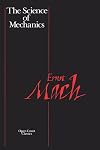
Earlier, I bought a paperback, at Amherst

Bought when I was in freshamn year at Amherst
Lists
You May Also Like


Associated Authors
Statistics
- Works
- 26
- Also by
- 3
- Members
- 402
- Popularity
- #60,415
- Rating
- 3.9
- Reviews
- 3
- ISBNs
- 92
- Languages
- 8