
Malcolm Godwin (1936–2024)
Author of Who Are You?: 101 Ways of Seeing Yourself (Compass)
About the Author
Works by Malcolm Godwin
Associated Works
Tagged
Common Knowledge
- Canonical name
- Godwin, Malcolm
- Other names
- Carder, Malcolm
SW. Anand Yatri
Yatri - Birthdate
- 1936
- Date of death
- 2024-02-20
- Gender
- male
- Occupations
- author
artist
architect - Nationality
- UK
- Birthplace
- London, England, UK
- Places of residence
- Bridport, Dorset, England, UK
- Associated Place (for map)
- England, UK
Members
Reviews

Perhaps my favorite book on the subject, "The Holy Grail" examines all the major branches of the medieval grail romances, their authors, and the historical settings that produced them. Godwin interprets the text through a spiritual lens which is thought-provoking and only rarely threatens to descend into the pit of the "finding your inner fairy guardian" new age literary quagmire. It's also an utterly gorgeous book, with color pictures and/or plates facing each page of text, and lovely show more borders and initials. "The Holy Grail "is sadly out of print, but I would definitely recommend tracking a copy down if you're at all interested in the subject. show less

An interesting tome published in the 1990s and a very heavy hardback given that it is printed on high quality photographic paper. The chief interest is in the illustrations which include a lot from medieval manuscripts and the like.
The first part of the book traces the development of the Grail legend from the original Celtic stories which came from Ireland and then Wales, to the stories documented by monks principally the Cistercians, and the final flowering in the troubadour culture. Once show more the stories became European artefacts they were blended with elements from Moorish Spain and the Holy Land via the Knights Templar among others. The summary of the stories are a bit repetitive and dry but there is also some interesting commentary on the subversive content derived from Gnostic ideas, probably via the Cathars and Albigensians who were eventually brutally suppressed by the Catholic church.
Part Two deals with the relevance of the legends in modern times especially their 'restoration of paradise' aspect, and also discusses the anti-women aspect of the Christian Church. It is very clear that the author has an axe to grind on this subject, as in his view Christianity is more women-hating/anti female than various other religions - personally, I don't think it has a monopoly on that. Anyway, there is an assumption that Europe was once a paradise of women-led agriculturalists and pastoralists who knew no weapons and were subsequently crushed by an invasion of male chauvinist warriors who imposed a culture that the world has been stuck with ever since for the last five millennia. This is put across as a matter of proven fact.
So given the lack of balance in places, but the more useful information in part one and the plentiful illustrations I would rate this at 3 stars overall. show less
The first part of the book traces the development of the Grail legend from the original Celtic stories which came from Ireland and then Wales, to the stories documented by monks principally the Cistercians, and the final flowering in the troubadour culture. Once show more the stories became European artefacts they were blended with elements from Moorish Spain and the Holy Land via the Knights Templar among others. The summary of the stories are a bit repetitive and dry but there is also some interesting commentary on the subversive content derived from Gnostic ideas, probably via the Cathars and Albigensians who were eventually brutally suppressed by the Catholic church.
Part Two deals with the relevance of the legends in modern times especially their 'restoration of paradise' aspect, and also discusses the anti-women aspect of the Christian Church. It is very clear that the author has an axe to grind on this subject, as in his view Christianity is more women-hating/anti female than various other religions - personally, I don't think it has a monopoly on that. Anyway, there is an assumption that Europe was once a paradise of women-led agriculturalists and pastoralists who knew no weapons and were subsequently crushed by an invasion of male chauvinist warriors who imposed a culture that the world has been stuck with ever since for the last five millennia. This is put across as a matter of proven fact.
So given the lack of balance in places, but the more useful information in part one and the plentiful illustrations I would rate this at 3 stars overall. show less
Twelfth century Europe was a time of unprecedented spiritual awakening. The Crusades had returned with new esoteric secrets from the East. The heretical Cathars were challenging the authority of a divided and corrupt Church of Rome, and women were accorded a new power and position, forming their own Courts of Love. Out of this age arose a legend surpassing all previous Western myths--that of a mystical object called the Holy Grail, and a knightly Quest in search of it. Between 1190 and 1220, show more there was an outpouring of stories about this sacred artifact. Deemed heretical by the Church and yet said to hold the blood of the crucified Christ, the Grail chalice was supposedly brought to Britain two thousand years ago. And although the legend is set in the Arthurian Britain of the sixth century, tradition traces the cup of the Last Supper to a Cathar stronghold in the Pyrenees, under the guardianship of the Knights of the Temple of Jerusalem. The legend of the Holy Grail is not one story, but many, and this hook explores the major, and very different, accounts which appeared within a thirty-year span. The legends of the Quest are taken from many sources including the earliest pagan tales of the Celtic Peredur, the unfinished courtly epic of Chrétien de Troyes, Le Conte del Graal, and a little-known poetic gem called the Diu Crône, or the Jeweled Crown. The great Cistercian epic of the Vulgate Cycle, which includes the Queste del San Graal, is probably the account known best to Western readers, yet many more are examined here. In addition we discover that Mary Magdalene is a central figure within the legends, and that the miraculous Black Virgin statues, still found throughout Europe today, have strange and intimate ties with the Grail. Even tarot cards contain the sacred Hallows along with a blueprint for the Grail Quest. --Adapted from book jacket. Source: Publisher
CONTENTS: Part 1; The First Branch, the Celtic, The Second Branch, the Christian, The Third Branch, the Chymical
Part 2: Chapter 1. A Myth for Our Time; Chapter 2. A Living Legend; Chapter 3. The Loss of the Female; Chapter 4. The Wasteland; Chapter 5. The Wounded King; Chapter 6. The Healing show less
CONTENTS: Part 1; The First Branch, the Celtic, The Second Branch, the Christian, The Third Branch, the Chymical
Part 2: Chapter 1. A Myth for Our Time; Chapter 2. A Living Legend; Chapter 3. The Loss of the Female; Chapter 4. The Wasteland; Chapter 5. The Wounded King; Chapter 6. The Healing show less
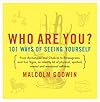
A fun book on various different personality-defining systems, summarized in a few pages with fun pictures. This is a book I would have really enjoyed in my teen years, a time when my friends and I were doing every quiz we could get our hands on both for entertainment and our continuing quest to learn about ourselves.
As an adult, and a graduate of psychology, I prefer more scientific tests (psychometrics) or at least something with a little more depth. At the very least, I had fun with it in show more the beginning but eventually had to give in to precious real estate space in my library and donate the book. Hopefully, someone else is really enjoying it. show less
As an adult, and a graduate of psychology, I prefer more scientific tests (psychometrics) or at least something with a little more depth. At the very least, I had fun with it in show more the beginning but eventually had to give in to precious real estate space in my library and donate the book. Hopefully, someone else is really enjoying it. show less
You May Also Like


Statistics
- Works
- 5
- Also by
- 1
- Members
- 1,486
- Popularity
- #17,278
- Rating
- 3.4
- Reviews
- 14
- ISBNs
- 48
- Languages
- 11