
Michael Hughes (12)
Author of Country
For other authors named Michael Hughes, see the disambiguation page.
Works by Michael Hughes
Tagged
Common Knowledge
- Legal name
- Hughes, Michael Edward
- Other names
- Colgan, Michael (stage name)
- Gender
- male
- Education
- University of Oxford
- Occupations
- actor
- Relationships
- Smith, Tiffany Watt
- Nationality
- Northern Ireland
- Birthplace
- Keady, County Armagh, Northern Ireland, UK
- Places of residence
- Keady, County Armagh, Northern Ireland, UK
London, England, UK - Map Location
- UK
Members
Reviews
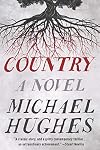
Fury. Pure fury. The blood was up. Lost the head completely.~from Country by Michael Hughes
Hughes begins his story in the middle of a conflict between two members of an rogue IRA terrorist cell group.
Achill and Pig, the 'trigger man' who killed eight Brits and the Officer Commander of a terrorist cell, clash over a girl whose father wants her back home. She had willingly come to Achill and he won't give her up. Pig insists the teenager will return to her da.
Achill capitulates but throws in show more the towel. He knows it is his reputation that keep the Brits scared. Let them see what happens without him. He was done. He was going home.
And that was the start of it. A terrible business altogether...Wait now till you hear the rest.~from Country by Michael Hughes
A tenuous truce has brought temporary peace, but the cell group won't give up the fight. This time, they are sure they have the upper hand with inside information about British plans. Independence is theirs, if they have the heart for it.
The tale is violent, gritty, filled with passion and tears. It is an engrossing read, a timeless and compelling story.
I was attracted to the novel as a retelling of The Iliad, Homer's story of the falling out between Achilles and King Agamemnon during the Trojan War. It's been a very long time since I last read Homer. The plotline and themes are there to be found, but readers will enjoy this novel if you don't know Homer.
Hughes novel has the feel of the epic in the narrative voice, the high passions, the rhythm of the language.
I won an ARC from LibraryThing a year ago. After it didn't arrive, I contacted the publisher in the fall and they sent me the published edition.
It was worth waiting for. show less
Hughes begins his story in the middle of a conflict between two members of an rogue IRA terrorist cell group.
Achill and Pig, the 'trigger man' who killed eight Brits and the Officer Commander of a terrorist cell, clash over a girl whose father wants her back home. She had willingly come to Achill and he won't give her up. Pig insists the teenager will return to her da.
Achill capitulates but throws in show more the towel. He knows it is his reputation that keep the Brits scared. Let them see what happens without him. He was done. He was going home.
And that was the start of it. A terrible business altogether...Wait now till you hear the rest.~from Country by Michael Hughes
A tenuous truce has brought temporary peace, but the cell group won't give up the fight. This time, they are sure they have the upper hand with inside information about British plans. Independence is theirs, if they have the heart for it.
The tale is violent, gritty, filled with passion and tears. It is an engrossing read, a timeless and compelling story.
I was attracted to the novel as a retelling of The Iliad, Homer's story of the falling out between Achilles and King Agamemnon during the Trojan War. It's been a very long time since I last read Homer. The plotline and themes are there to be found, but readers will enjoy this novel if you don't know Homer.
Hughes novel has the feel of the epic in the narrative voice, the high passions, the rhythm of the language.
I won an ARC from LibraryThing a year ago. After it didn't arrive, I contacted the publisher in the fall and they sent me the published edition.
It was worth waiting for. show less
 This review was written for LibraryThing Early Reviewers.
Where was this book when I was in school? Homer & I had a rocky relationship & by the time I graduated, we were barely on speaking terms. With this retelling of The Iliad, Michael Hughes takes the legendary poets’s themes & characters & plunks them down in 1996 Northern Ireland, just after the signing of the peace accord.
Like many great tales, it all begins with a woman. Nellie is a young Catholic who is part of a new generation. Tired of grinding poverty & endless violence, they yearn show more for a life beyond “the Troubles”. So when she’s offered money to inform on her IRA husband & his crew, she sees it as her ticket to a new life in London & grabs it with both hands.
Think of her as a modern Helen which means her husband Brian Campbell is this version’s Menelaus. Brian is part of a group led by his brother Shane (think Agamemnon) & follows him with unquestioning loyalty. So when they learn Nell is a tout, they vow to blow up a nearby English army post in retaliation. It’s not just what they do, it’s a matter of family pride. But they’ll need the help of sniper Liam “Achill” O’Brien to guarantee success (no points for recognizing him as our Achilles).
Liam is more than a competent marksman. He’s a legend in these parts & the mere whisper of his name is the stuff of nightmares for English soldiers. He’s been picking them off for years & truth be told, he’s getting a little tired of the whole damn mess. If the peace accord holds, he’ll be out of a job & lately he’s been thinking of returning home to the island of Achill. Now he’s being asked to continue the slaughter just to salvage a man’s pride.
In alternate chapters we’re introduced to Henry, an aging English combat veteran who has no time for the hopeful blather being spewed by politicians. He embodies Homer’s Hector, a soldier addicted to the glory of war at the expense of everyone else in his life. HIs days on active duty are numbered & taking out Liam would guarantee his legacy.
And so the stage is set. It’s inevitable there will be a mighty clash between these characters & many others. The contemporary setting makes this powerful story more relatable & N. Ireland in particular is the perfect location to explore Homer’s classic themes of honour, pride, fate, loyalty & mortality. Instead of dealing with the big picture, the author uses a small band of characters to represent the brutal effect of decades of war. This narrow focus personalizes the Troubles, helping us understand how they’ve inherited so much bitterness & hatred.
It’s clear from the start we’re in for a bloody ending but much of the book is more dialogue than action. It’s written in Irish vernacular & although I found this difficult to understand at times (my failing, not the author’s) it lends authenticity to the narrative.
It’s written as if someone is telling you a story while you share a pint, a story about people who can’t escape their circumstances or even imagine a different life. For them fighting is like breathing & as in the original tale, there are few winners here. It’s an engrossing read & I can’t help but think if I’d had this version while in school I’d have got a better grade. show less
Like many great tales, it all begins with a woman. Nellie is a young Catholic who is part of a new generation. Tired of grinding poverty & endless violence, they yearn show more for a life beyond “the Troubles”. So when she’s offered money to inform on her IRA husband & his crew, she sees it as her ticket to a new life in London & grabs it with both hands.
Think of her as a modern Helen which means her husband Brian Campbell is this version’s Menelaus. Brian is part of a group led by his brother Shane (think Agamemnon) & follows him with unquestioning loyalty. So when they learn Nell is a tout, they vow to blow up a nearby English army post in retaliation. It’s not just what they do, it’s a matter of family pride. But they’ll need the help of sniper Liam “Achill” O’Brien to guarantee success (no points for recognizing him as our Achilles).
Liam is more than a competent marksman. He’s a legend in these parts & the mere whisper of his name is the stuff of nightmares for English soldiers. He’s been picking them off for years & truth be told, he’s getting a little tired of the whole damn mess. If the peace accord holds, he’ll be out of a job & lately he’s been thinking of returning home to the island of Achill. Now he’s being asked to continue the slaughter just to salvage a man’s pride.
In alternate chapters we’re introduced to Henry, an aging English combat veteran who has no time for the hopeful blather being spewed by politicians. He embodies Homer’s Hector, a soldier addicted to the glory of war at the expense of everyone else in his life. HIs days on active duty are numbered & taking out Liam would guarantee his legacy.
And so the stage is set. It’s inevitable there will be a mighty clash between these characters & many others. The contemporary setting makes this powerful story more relatable & N. Ireland in particular is the perfect location to explore Homer’s classic themes of honour, pride, fate, loyalty & mortality. Instead of dealing with the big picture, the author uses a small band of characters to represent the brutal effect of decades of war. This narrow focus personalizes the Troubles, helping us understand how they’ve inherited so much bitterness & hatred.
It’s clear from the start we’re in for a bloody ending but much of the book is more dialogue than action. It’s written in Irish vernacular & although I found this difficult to understand at times (my failing, not the author’s) it lends authenticity to the narrative.
It’s written as if someone is telling you a story while you share a pint, a story about people who can’t escape their circumstances or even imagine a different life. For them fighting is like breathing & as in the original tale, there are few winners here. It’s an engrossing read & I can’t help but think if I’d had this version while in school I’d have got a better grade. show less
“What was the start of it? The whole wrecking match, that sent so many strong souls roaring down to hell, dogs chewing up the guts ground into the road, birds pecking at the splattered bits of their brains. The way London wanted it to go. The way it always is.”
“Someday, they knew, the string would be pulled to stop at all. Not yet. When all the pieces were in place. The higher-ups would settle it, find the middle course. Until then, we live and die here below. One nod of the head, one show more tip of the scales. The way it always was. The way it has to be.”
This book is based on Homer’s Iliad, but I read that book so long ago that I don’t remember the details. I made no attempt to “compare and contrast” the two books. This book is completely enjoyable even if you have never read the Iliad, based on a combination of the vivid (and profane) language and the compelling characters. Set in the 1990s, this book presents the conflict between the IRA and the British as a war, a gang fight and a Gunfight at the O. K. Coral. War is just a pointless mess, no matter the century. The motivations of the characters included pride, vengeance, patriotism and a desire to protect the defenseless, among other things. Women don’t play much of a role here. There is an informer, a whiny wife and a few who are passed around as war prizes.
I listened to the audiobook narrated by the author. That is usually a bad idea, but this author did an excellent job (although it took me a while to get used to the Irish accent). After I finished the book I discovered that the author is also an actor. That probably explains his skill as a narrator. I would be happy to read anything else he writes.
I received a free copy of this book from the publisher. show less
“Someday, they knew, the string would be pulled to stop at all. Not yet. When all the pieces were in place. The higher-ups would settle it, find the middle course. Until then, we live and die here below. One nod of the head, one show more tip of the scales. The way it always was. The way it has to be.”
This book is based on Homer’s Iliad, but I read that book so long ago that I don’t remember the details. I made no attempt to “compare and contrast” the two books. This book is completely enjoyable even if you have never read the Iliad, based on a combination of the vivid (and profane) language and the compelling characters. Set in the 1990s, this book presents the conflict between the IRA and the British as a war, a gang fight and a Gunfight at the O. K. Coral. War is just a pointless mess, no matter the century. The motivations of the characters included pride, vengeance, patriotism and a desire to protect the defenseless, among other things. Women don’t play much of a role here. There is an informer, a whiny wife and a few who are passed around as war prizes.
I listened to the audiobook narrated by the author. That is usually a bad idea, but this author did an excellent job (although it took me a while to get used to the Irish accent). After I finished the book I discovered that the author is also an actor. That probably explains his skill as a narrator. I would be happy to read anything else he writes.
I received a free copy of this book from the publisher. show less
This review was written for LibraryThing Early Reviewers.Country is a retelling of Homer's Illiad set on the border between Ireland and Northern Ireland during the 1990s. The IRA are the Greeks and the British army are the Trojans. It's a fairly close copy of the original despite the differences in time and setting.
I read The Silence of the Women a few months ago which tells the same story but from the POV of Briseis and the other women involved in the Trojan War. I enjoyed this book much more than that one; the Trojan War is ultimately a war show more between men, and Briseis was a minor character. Framing the story from the POV of the women didn't work for me, at least in that book.
However, Country is marvelous. It's gritty and crude and grim, everything you want to read about from Homer's war story but without the gods (which I didn't miss honestly). It's kind of sad how well a war story centuries old still fits in our current world. The uselessness of this fighting is a theme throughout the book. I also thought, apologies to Ms. Barker, that this book did a better job of explaining the role of women in war. Their helplessness, even Nellie's (Helen), was another theme that Mr. Hughes pursued successfully.
I heartily recommend this book. It's an excellent read regardless of the reader's interest in Greek epics. show less
I read The Silence of the Women a few months ago which tells the same story but from the POV of Briseis and the other women involved in the Trojan War. I enjoyed this book much more than that one; the Trojan War is ultimately a war show more between men, and Briseis was a minor character. Framing the story from the POV of the women didn't work for me, at least in that book.
However, Country is marvelous. It's gritty and crude and grim, everything you want to read about from Homer's war story but without the gods (which I didn't miss honestly). It's kind of sad how well a war story centuries old still fits in our current world. The uselessness of this fighting is a theme throughout the book. I also thought, apologies to Ms. Barker, that this book did a better job of explaining the role of women in war. Their helplessness, even Nellie's (Helen), was another theme that Mr. Hughes pursued successfully.
I heartily recommend this book. It's an excellent read regardless of the reader's interest in Greek epics. show less
Awards


Statistics
- Works
- 2
- Members
- 204
- Popularity
- #108,206
- Rating
- 3.7
- Reviews
- 13
- ISBNs
- 113
- Favorited
- 1
