

Steven Levenkron
Author of The Best Little Girl in the World
About the Author
Steven Levenkron is a psychotherapist in private practice & the best-selling author of "The Best Little Girl in the World". He lives in New York. (Bowker Author Biography)
Image credit: Steven Levenkron
Works by Steven Levenkron
The Luckiest Girl in the World : A Young Skater Battles Her Self-Destructive Impulses (1997) 211 copies, 3 reviews
Obsessive Compulsive Disorders: Treating and Understanding Crippling Habits (1991) 56 copies, 2 reviews
Stolen Tomorrows: Understanding and Treating Women's Childhood Sexual Abuse (2007) 28 copies, 1 review
Tagged
Common Knowledge
- Birthdate
- 1941
- Gender
- male
- Occupations
- psychologist
- Nationality
- USA
- Places of residence
- New York, New York, USA
- Associated Place (for map)
- New York, USA
Members
Reviews
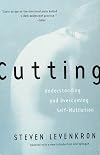
It's always a bit hard to objectively rate a book when you've gone to it looking for help and all you've found is information. Or at least, maybe just the wrong kind of information, and it's not as if the information here hasn't been helpful--it's helped me pretty solidly establish that I (who has been struggling with some dark thoughts and tendencies of late) really don't fit the classic profile of a "cutter" (how come we can't say 'retard' but we can say that? I prefer 'person who cuts show more themself'); that the reasons they cut don't match the reasons I've been having these urges*; that the relief they get from the practice doesn't match the pain I've been feeling about these urges; and that the programme of treatment laid out by Levenkron, of establishing the therapist as a "friendly, bossy" authority figure with whom the sufferer can identify and whom they will want to please enough to stop cutting, then gradually reconstituting their personality and ability to tend to their own emotional needs through talk and self-examination, doesn't match me either--if anything, my personality is TOO strong and integrated, and has difficulty with those parts of itself that can neither be expelled nor integrated. Not gonna just roll over and do what a therapist tells me, for good and ill. But Levenkron did leave me feeling like cutting or precutting isn't what's going oon with me, which was a service.
So, objectively, then? This book is a sensitive look at the classic profile of a person who cuts (abused by parents, totally untrusting of the world, thrown back on inadequate resources to deal with their pain); the reasons they cut (relief from emotional pain in physical pain); and a programme of treatment about which I have mixed feelings--the thing of telling them what they're going to be, and especially the way Levenkron represents it in his little heuristic dialogues in the text, strikes me as reprehensible from a, like, existential-freedom perspective--help me get better WITHOUT taking away my autonomy, healer, or you're just doing me new injury. And you can't expect some psychologist to have an ear for the rhythm of dialogue, but the toca-toca challenge-and-response dynamic Levenkron sets up in what are undoubtedly composed or at least heavily massaged "real life" exchanges also troubles--all he has to do is say one obvious thing, once, and they all cry and say "nobody's ever said that to me before", and then they are his. There's something eeever so slightly Svengali, or even BDSM, in his comfort with cajoling people into handing over their autonomy and then remaking them, that in the context of self-mutilation can't help but feel sick and sad. But he does stress that this programme isn't meant for everybody, just for cutters, who have already lost their autonomy to their habit; so maybe I'm not qualified to judge. After all, I'm not a cutter.
If you have someone in your life who has fallen prey to "this dark adolescent practice" (adolescent only?), this book, read with a critical spirit, could plausibly be valuable orientation.
*And if you find this coy, or worry, don't, in both cases; I'm not cutting and never have, I'm talking to a psychologist about this darkness, and I'd just rather not discuss it here and now beyond the necessary to write an honest review. show less
So, objectively, then? This book is a sensitive look at the classic profile of a person who cuts (abused by parents, totally untrusting of the world, thrown back on inadequate resources to deal with their pain); the reasons they cut (relief from emotional pain in physical pain); and a programme of treatment about which I have mixed feelings--the thing of telling them what they're going to be, and especially the way Levenkron represents it in his little heuristic dialogues in the text, strikes me as reprehensible from a, like, existential-freedom perspective--help me get better WITHOUT taking away my autonomy, healer, or you're just doing me new injury. And you can't expect some psychologist to have an ear for the rhythm of dialogue, but the toca-toca challenge-and-response dynamic Levenkron sets up in what are undoubtedly composed or at least heavily massaged "real life" exchanges also troubles--all he has to do is say one obvious thing, once, and they all cry and say "nobody's ever said that to me before", and then they are his. There's something eeever so slightly Svengali, or even BDSM, in his comfort with cajoling people into handing over their autonomy and then remaking them, that in the context of self-mutilation can't help but feel sick and sad. But he does stress that this programme isn't meant for everybody, just for cutters, who have already lost their autonomy to their habit; so maybe I'm not qualified to judge. After all, I'm not a cutter.
If you have someone in your life who has fallen prey to "this dark adolescent practice" (adolescent only?), this book, read with a critical spirit, could plausibly be valuable orientation.
*And if you find this coy, or worry, don't, in both cases; I'm not cutting and never have, I'm talking to a psychologist about this darkness, and I'd just rather not discuss it here and now beyond the necessary to write an honest review. show less
The Luckiest Girl in the World : A Young Skater Battles Her Self-Destructive Impulses by Steven Levenkron
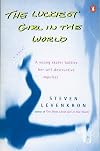
For the first third of this book, I was thinking to myself that it was written for concerned parents and teachers to give to girls who were cutting themselves. I didn't cut myself as a teenager (I did other stuff) but if I'd been given this book, I would have thought it was ultra-patronising and dumbed down so you wouldn't miss the point. I nearly put it down at this stage, but not having anything else light in the house to read over lunch I perservered, and I am so glad I did.
The author show more really knew his stuff, he knew about teenage girls, about the inner satisfaction of self-mutilation and just what group therapy is really all about, how it works. I would recommend it to anyone with a spare couple of hours and an interest in the subject, except for troubled adolescents, this would definitely make you look out-of-touch and uncool to give it to them. show less
The author show more really knew his stuff, he knew about teenage girls, about the inner satisfaction of self-mutilation and just what group therapy is really all about, how it works. I would recommend it to anyone with a spare couple of hours and an interest in the subject, except for troubled adolescents, this would definitely make you look out-of-touch and uncool to give it to them. show less
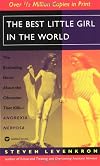
One of the worst novels I've ever read about eating disorders and yet it somehow has this hypnotic hold over the reader...a much, much better novel is _Winter Girls_ by Laurie Halse Anderson. It does not glamorize anorexia nor make it seem like something good...or something off of a "pro-ana" website. Levenkron's novel, unfortunately, is like a play-by-play manual...overrated and well-known for all the wrong reasons.
The Luckiest Girl in the World : A Young Skater Battles Her Self-Destructive Impulses by Steven Levenkron
I was expecting this book to be really cheesy, and it was in spots, but in general it was better than I expected. The descriptions of the mental process you go through were pretty spot-on for my experience (it might be different for other people, of course). I'm all for anything that increases awareness of self-injury, even if it's kind of cliched. I appreciated the fact that the ending admitted that it was something she would have to continue dealing with. A word of warning: there are a show more couple of scenes near the beginning that have the potential to be very triggering. show less
Lists
Awards

You May Also Like


Statistics
- Works
- 9
- Members
- 1,320
- Popularity
- #19,470
- Rating
- 3.5
- Reviews
- 16
- ISBNs
- 49
- Languages
- 3
- Favorited
- 1