
Ellen Bass
Author of The Courage to Heal: A Guide for Women Survivors of Child Sexual Abuse
About the Author
Image credit: Janet Bryer
Works by Ellen Bass
The Courage to Heal: A Guide for Women Survivors of Child Sexual Abuse (1988) — Author — 963 copies, 6 reviews
Free Your Mind: The Book for Gay, Lesbian, and Bisexual Youth and Their Allies (1996) — Author — 281 copies, 2 reviews
I Never Told Anyone: Writings by Women Survivors of Child Sexual Abuse (1983) — Editor — 181 copies, 1 review
Beginning to Heal (Revised Edition): A First Book for Men and Women Who Were Sexually Abused As Children (1993) — Author — 124 copies
Incest och andra sexuella övergrepp : handbok för överlevare. Arbetsbok för både kvinnliga och manliga överlevare (1996) 2 copies
Todos los platos del menú 1 copy
Associated Works
All We Can Save: Truth, Courage, and Solutions for the Climate Crisis (2020) — Contributor — 466 copies, 12 reviews
Cries of the Spirit: A Celebration of Women's Spirituality (2000) — Contributor — 403 copies, 2 reviews
Ink Knows No Borders: Poems of the Immigrant and Refugee Experience (2019) — Contributor — 87 copies, 1 review
Buzz Words: Poems About Insects (Everyman's Library Pocket Poets Series) (2021) — Contributor — 56 copies
Collective Brightness: LGBTIQ Poets on Faith, Religion & Spirituality (2011) — Contributor — 14 copies
Peace or perish : a crisis anthology — Contributor — 4 copies
Nimrod International Journal: Awards 22: Food for Thought: Volume 44 Number 1: Fall/Winter 2000 (2000) — Contributor — 1 copy
Tagged
Common Knowledge
- Canonical name
- Bass, Ellen
- Birthdate
- 1947-06-16
- Gender
- female
- Education
- Russell Sage College (1965-1966)
Goucher College (AB | 1968)
Boston University (AM | 1970)
Boston Psychodrama Institute (1972-1973) - Occupations
- poet
counselor
lecturer - Short biography
- Ellen Bass co-edited (with Florence Howe) the groundbreaking No More Masks! An Anthology of Poems by Women (Doubleday, 1973), has published several previous volumes of poetry, including Mules of Love (BOA, 2002) which won the Lambda Literary Award. Her poems have appeared in hundreds of journals and anthologies, including The Atlantic Monthly, Ms., The American Poetry Review, The Kenyon Review, Ploughshares, and Field. She was awarded the Elliston Book Award for Poetry from the University of Cincinnati, Nimrod/Hardman's Pablo Neruda Prize, The Missouri Review's Larry Levis Award, the Greensboro Poetry Prize, the New Letters Poetry Prize, the Chautauqua Poetry Prize, a Pushcart Prize, and a Fellowship from the California Arts Council. Her non-fiction books include Free Your Mind: The Book for Gay, Lesbian and Bisexual Youth (HarperCollins 1996), I Never Told Anyone: Writings by Women Survivors of Child Sexual Abuse (HarperCollins, 1983) and The Courage to Heal: A Guide for Women Survivors of Child Sexual Abuse (Harper Collins 1988), which has sold over a million copies and has been translated into ten languages. She currently is teaching in the low residency MFA program at Pacific University and has taught poetry and creative writing in Santa Cruz, CA and at other beautiful locations nationally and internationally--since 1974.
- Nationality
- USA
- Places of residence
- Santa Cruz, California, USA
- Associated Place (for map)
- California, USA
Members
Reviews
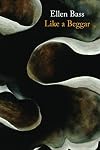
This is the book I bought after hearing Ellen Bass and Kevin Young read at the local Grand Valley State University Fall Arts Celebration event which took place on October 3. It was a good purchase and I am glad I own it as I will be going back and dipping into it again and again.
I love her poetry. For me it is very personal and warm and human. I realize that the persona in a poem is not necessarily the author but much of Bass's poetry seems like snippets from her own life or experiences. show more
Looking through the reviews a lot of people seem to concur with me and I also noticed quotes from a number of the same poems I like. But there were plenty of other poems in this collection that are, perhaps, less talked about but also resonated with me because of my own experiences.
The Last Week
I thought she would want to save me
from it, the stench and the shame,
but in the last week of dying,
my mother let me change her diaper,
let me wipe her with a warm, wet cloth
and slide the sheet under her hips,
the flesh softening, bones widening,
gravity pulling her back to earth like fallen fruit.
I need to say how precise she was.
She had a rage for order, my mother.
In the store she wrapped half-pints of cheap gin
with the same care she gave to Chivas Regal.
She smoothed the glossy holiday paper,
folding the torn edge under, sharpening
the crease with her thumbnail,
tucking the ends into a humble origami.
I thought she'd cling to her dignity
but she seemed to forgive her body,
all its chaos and collapse,
or maybe it was a final ripening of trust or love, abandon.
I'm not sure what to call it.
I like the lines,
."the flesh softening, bones widening,
gravity pulling her back to earth like fallen fruit."
and the later references to fruit again,
"she seemed to forgive her body,
all its chaos and collapse,
or maybe it was a final ripening of trust or love, abandon."
and the final poignant line,
I'm not sure what to call it.
What do you call it? I remember thinking similar thoughts during the months long deterioration of my mother's health in a nursing home and eventual passing away in the hospital. Dignity abandoned or maybe it just doesn't matter any more? It was hard to say. show less
I love her poetry. For me it is very personal and warm and human. I realize that the persona in a poem is not necessarily the author but much of Bass's poetry seems like snippets from her own life or experiences. show more
Looking through the reviews a lot of people seem to concur with me and I also noticed quotes from a number of the same poems I like. But there were plenty of other poems in this collection that are, perhaps, less talked about but also resonated with me because of my own experiences.
The Last Week
I thought she would want to save me
from it, the stench and the shame,
but in the last week of dying,
my mother let me change her diaper,
let me wipe her with a warm, wet cloth
and slide the sheet under her hips,
the flesh softening, bones widening,
gravity pulling her back to earth like fallen fruit.
I need to say how precise she was.
She had a rage for order, my mother.
In the store she wrapped half-pints of cheap gin
with the same care she gave to Chivas Regal.
She smoothed the glossy holiday paper,
folding the torn edge under, sharpening
the crease with her thumbnail,
tucking the ends into a humble origami.
I thought she'd cling to her dignity
but she seemed to forgive her body,
all its chaos and collapse,
or maybe it was a final ripening of trust or love, abandon.
I'm not sure what to call it.
I like the lines,
."the flesh softening, bones widening,
gravity pulling her back to earth like fallen fruit."
and the later references to fruit again,
"she seemed to forgive her body,
all its chaos and collapse,
or maybe it was a final ripening of trust or love, abandon."
and the final poignant line,
I'm not sure what to call it.
What do you call it? I remember thinking similar thoughts during the months long deterioration of my mother's health in a nursing home and eventual passing away in the hospital. Dignity abandoned or maybe it just doesn't matter any more? It was hard to say. show less
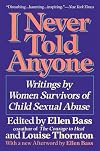
Trigger warning – this book is about the experiences of women survivors of sexual abuse; many of the writings are graphic and emotional.
I Never Told Anyone: Writings by Women Survivors of Child Sexual Abuse is a tough book to read by anyone’s standards. Its creation grew out of a writer’s workshop in Santa Cruz, California after a woman shared her story of abuse. Ellen Bass and Louise Thornton along with several other women decided that stories like this should be shared in order to show more give voice to the sexually abused child. It is a powerful anthology which left me feeling angry, revolted, and extremely sad that we live in a society which allows this crime to continue at an alarming rate.
It is important to understand that the phenomenon of violence against women and children and the condoning of this violence is not simply a contemporary perversion but part of an ancient and pervasive worldwide tradition. – from Introduction by Ellen Bass, page 33 -
Why would anyone sit down and read these horrible, gut-wrenching stories? Most of us would prefer to avoid reading the details of a sexual assault on a child. We would prefer to look the other way while saying it is a terrible crime and should be eradicated. Many, myself included, want to lock these monsters up who would commit such a crime and never again have them see the light of day. But read about the crimes themselves? No, most of us do not want to do that. And yet, putting stories like this in writing allows the victims of such crimes a power over their tormentors and in turn, the stories make us face the reality of these crimes in order to put an end to them.
In this volume, we say no to that desecration. We look clearly at what sexual abuse and rape have meant to these women’s lives. We do not avert our eyes to avoid the pain. Statistics, for all the horror they imply, can be so vast that we shield ourselves from the individual lives they represent. We wanted to make the statistics real, to present the pain of the individual. At times the enormity overwhelmed us. It is not easy to open oneself to the knowledge that millions of children are raped. Our defenses rush to protect us from experiencing that pain. But we cannot close ourselves off and hope for the best. We are in danger. Our daughters are in danger. Even our sons are in danger. Behind each statistic, there is a child. She may be you. She may be your daughter. She may be your sister. She may be your friend. You cannot protect her until we can protect all children. - from the Introduction by Ellen Bass, pages 37-38 -
I can tell you that I struggled to read this book. I had to intersperse my reading of it with reading a light, funny novel. The pain between these pages is immense. It is horrifying. It is nearly incomprehensible. The women who share their stories in this book describe abuse which began when they were less than a year old and continued into their teen years. In many cases, the abuse was known by other adults who looked the other way. In all cases, the damage done was vast and life long. But despite all of this, something else came through in these stories – the courage and strength of these children who were now adults themselves; their refusal to accept their role as victim; their decision to share the details of their experiences in order to remove the power from their abusers; their belief that sharing their stories could help other women.
I struggled to rate this book. It is not an enjoyable read. It is dark and sad. But it is also a book which is necessary. Until we meet the individuals behind the statistics, until we really hear their stories, how can we find the rage and energy to fight to end this pervasive crime? How can we protect our children and grandchildren, our nieces, the children in our neighborhoods? This book enraged me. I think that is the point.
I think it is also important to point out that the writings contained in this book were also part of the healing of the women who wrote them. Writing their stories, giving voice to the unthinkable, gave their experiences validation and by revealing the crimes they could empower themselves to walk away from being a victim.
Because I could never talk about what had happened to me, it dominated my life. Then, through my writing, I discovered that I have an intellect that is not stupid but unstretched, a heart which can feel more than pain, a body that once again belongs to me.– by Maggie Hoyal, page 69 -
Anyone working in social services, as well as teachers or other professionals working with children, should read this book. But I will go further. Anyone who cares about children, who is horrified by violence against women and children, who want to strengthen our laws protecting women and children against violent crime, especially rape and sexual abuse…should read this book. We need to get angry. We need to pester our law makers incessantly. We need to speak out when child abusers are released back into our neighborhoods. We need to lobby for stronger laws and harsher punishments. We need to stop accepting the violence or believing that we cannot stop it. This book will help us to do those things. show less
I Never Told Anyone: Writings by Women Survivors of Child Sexual Abuse is a tough book to read by anyone’s standards. Its creation grew out of a writer’s workshop in Santa Cruz, California after a woman shared her story of abuse. Ellen Bass and Louise Thornton along with several other women decided that stories like this should be shared in order to show more give voice to the sexually abused child. It is a powerful anthology which left me feeling angry, revolted, and extremely sad that we live in a society which allows this crime to continue at an alarming rate.
It is important to understand that the phenomenon of violence against women and children and the condoning of this violence is not simply a contemporary perversion but part of an ancient and pervasive worldwide tradition. – from Introduction by Ellen Bass, page 33 -
Why would anyone sit down and read these horrible, gut-wrenching stories? Most of us would prefer to avoid reading the details of a sexual assault on a child. We would prefer to look the other way while saying it is a terrible crime and should be eradicated. Many, myself included, want to lock these monsters up who would commit such a crime and never again have them see the light of day. But read about the crimes themselves? No, most of us do not want to do that. And yet, putting stories like this in writing allows the victims of such crimes a power over their tormentors and in turn, the stories make us face the reality of these crimes in order to put an end to them.
In this volume, we say no to that desecration. We look clearly at what sexual abuse and rape have meant to these women’s lives. We do not avert our eyes to avoid the pain. Statistics, for all the horror they imply, can be so vast that we shield ourselves from the individual lives they represent. We wanted to make the statistics real, to present the pain of the individual. At times the enormity overwhelmed us. It is not easy to open oneself to the knowledge that millions of children are raped. Our defenses rush to protect us from experiencing that pain. But we cannot close ourselves off and hope for the best. We are in danger. Our daughters are in danger. Even our sons are in danger. Behind each statistic, there is a child. She may be you. She may be your daughter. She may be your sister. She may be your friend. You cannot protect her until we can protect all children. - from the Introduction by Ellen Bass, pages 37-38 -
I can tell you that I struggled to read this book. I had to intersperse my reading of it with reading a light, funny novel. The pain between these pages is immense. It is horrifying. It is nearly incomprehensible. The women who share their stories in this book describe abuse which began when they were less than a year old and continued into their teen years. In many cases, the abuse was known by other adults who looked the other way. In all cases, the damage done was vast and life long. But despite all of this, something else came through in these stories – the courage and strength of these children who were now adults themselves; their refusal to accept their role as victim; their decision to share the details of their experiences in order to remove the power from their abusers; their belief that sharing their stories could help other women.
I struggled to rate this book. It is not an enjoyable read. It is dark and sad. But it is also a book which is necessary. Until we meet the individuals behind the statistics, until we really hear their stories, how can we find the rage and energy to fight to end this pervasive crime? How can we protect our children and grandchildren, our nieces, the children in our neighborhoods? This book enraged me. I think that is the point.
I think it is also important to point out that the writings contained in this book were also part of the healing of the women who wrote them. Writing their stories, giving voice to the unthinkable, gave their experiences validation and by revealing the crimes they could empower themselves to walk away from being a victim.
Because I could never talk about what had happened to me, it dominated my life. Then, through my writing, I discovered that I have an intellect that is not stupid but unstretched, a heart which can feel more than pain, a body that once again belongs to me.– by Maggie Hoyal, page 69 -
Anyone working in social services, as well as teachers or other professionals working with children, should read this book. But I will go further. Anyone who cares about children, who is horrified by violence against women and children, who want to strengthen our laws protecting women and children against violent crime, especially rape and sexual abuse…should read this book. We need to get angry. We need to pester our law makers incessantly. We need to speak out when child abusers are released back into our neighborhoods. We need to lobby for stronger laws and harsher punishments. We need to stop accepting the violence or believing that we cannot stop it. This book will help us to do those things. show less

This was a landmark book when it first came out. Nothing like this had ever been so accessible to average women. However, with the passage of time, we know much more about childhood sexual abuse, and some of the things in this book are not only incorrect, they are downright destructive. While this book did a great service in bringing to light the issue of childhood sexual abuse when, until then, it had been swept under the rug, I cannot recommend it anymore. I see that further editions have show more come out since the original. I don't know what may have been changed in these subsequent editions, but the first edition I cannot recommend. show less
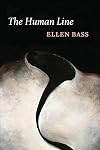
This is a fine book of poetry, one that does not have a weak poem in it. Topic range from caring for a sick mother to love and family to death--the commonplaces of poems, yet so beautifully and skillfully crafted that it makes real those universal human experiences for the individual reader. This is poetry at its best, and I highly recommend this book.
Lists
Awards


You May Also Like


Associated Authors
Statistics
- Works
- 22
- Also by
- 19
- Members
- 1,999
- Popularity
- #12,880
- Rating
- 4.0
- Reviews
- 12
- ISBNs
- 56
- Languages
- 4
- Favorited
- 1