
Susan Forward
Author of Toxic Parents: Overcoming Their Hurtful Legacy and Reclaiming Your Life
About the Author
Susan Forward, PhD, is an internationally renowned therapist, lecturer, and author. Her books include the number-one New York Times bestsellers Men Who Hate Women and the Women Who Love Them and Toxic Parents. In addition to her private practice, she has served as a therapist, instructor, and show more consultant in numerous Southern California psychiatric and medical facilities. show less
Works by Susan Forward
Toxic Parents: Overcoming Their Hurtful Legacy and Reclaiming Your Life (1989) 1,046 copies, 12 reviews
Emotional Blackmail: When the People in Your Life Use Fear, Obligation, and Guilt to Manipulate You (1997) 561 copies, 8 reviews
Men Who Hate Women and the Women Who Love Them: When Loving Hurts and You Don't Know Why (1986) 320 copies, 1 review
Zor Bir Ailede Büyümek 1 copy
Tagged
Common Knowledge
- Birthdate
- 20th Century
- Gender
- female
- Education
- University of Southern California
- Occupations
- therapist
- Nationality
- USA
- Associated Place (for map)
- USA
Members
Reviews
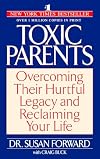
As the child of a narcissist, this was the very first book I read on this subject, and it proved to be an excellent choice. The chapters are clear and concise, and the author covers a wide range of abuse. I immediately recognized my parent in two of the half dozen types mentioned by the author.
The author also discusses coping strategies, like what is now often called 'gray rock' (giving minimal, controlled responses, showing no emotion, giving limited information, etc) and various ways to show more confront the abusive parent. She offers no illusion in warning the reader that not all confrontations are successful, but also offers hope to the reader that their lives will be better, regardless of whether their parent acknowledges their wrongdoing or not.
Whether or not you were abused as a child, or are not quite sure, this is an excellent book, and if you were not abused, this will hopefully give you insight and more understanding towards others who were abused, and recognize behaviors/patterns of abuse. show less
The author also discusses coping strategies, like what is now often called 'gray rock' (giving minimal, controlled responses, showing no emotion, giving limited information, etc) and various ways to show more confront the abusive parent. She offers no illusion in warning the reader that not all confrontations are successful, but also offers hope to the reader that their lives will be better, regardless of whether their parent acknowledges their wrongdoing or not.
Whether or not you were abused as a child, or are not quite sure, this is an excellent book, and if you were not abused, this will hopefully give you insight and more understanding towards others who were abused, and recognize behaviors/patterns of abuse. show less
Men Who Hate Women and the Women Who Love Them : When Loving Hurts and You Don't Know Why by Susan Forward
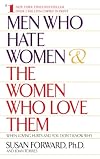
I've spoken to a lot of people, both men and women, stuck in abusive relationships. If you've ever wondered how a man or woman in an abusive relationship can't "just leave", this book explains why and how it happens. I've been in a long-term relationship with someone I suspected was a misogynist, but never confirmed until I read this. He wasn't verbally or physically abusive, but he was very emotionally abusive and believed women owed him everything. And I'd never felt freer than when we show more finally broke up years later.
To anyone who thinks abuse is just physical, think again. Verbal and emotional abuse can inflict just as much damage, especially in the long-term.
I'm on a path to self-healing, and this book has helped me examine some of the relationships I've had in the past, and why I found it so hard to "just leave". Well-written with real-life examples, I found it to be a riveting read. A must-read if you suspect you're in an abusive relationship, have been in the past, or know somebody who is and want to help or understand them. show less
To anyone who thinks abuse is just physical, think again. Verbal and emotional abuse can inflict just as much damage, especially in the long-term.
I'm on a path to self-healing, and this book has helped me examine some of the relationships I've had in the past, and why I found it so hard to "just leave". Well-written with real-life examples, I found it to be a riveting read. A must-read if you suspect you're in an abusive relationship, have been in the past, or know somebody who is and want to help or understand them. show less
I read this book many years ago when it was recommended by a psychologist who met me in a work training session and recognised I had all the symptoms of being raised by toxic parents. He also asked me if I'd like to talk more in a pro bono session. I did. He and this book changed my life - it really did. I can't recommend it highly enough. The words that really set me free were, "You must let go of the responsibility for the painful events of your childhood and put it where it belongs."
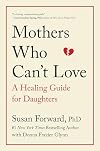
I don't often read books in the "self help" genre, but the title on this one caught my attention. Let's just say my mother and I have not had a good relationship, and it has deteriorated considerably over time. I was just curious whether this book would give me new insights that might be useful.
The book basically describes 5 archetypes of "mothers who can't love". I could relate to several of them, but they are more extreme than anything I encountered. She then provides case studies and show more discusses how various daughters have struggled in life as a result of these relationships. The book then ends on a prescriptive note.
I actually thought the advice in the book was dead on. I had already followed all of it pretty much from a much younger age and as a result I did not suffer the way some of these daughters have suffered. So kudos to Forward for delivering great advice in a clear and very sympathetic way. Also, there's no easy answer for daughters . . .because the mothers really don't or can't change, and the daughters have to realize that they are still lovable people. Not easy after feeling rejected by a parent.
For some, this could be a four or five star read, but I personally didn't relate strongly to any of the five "types". That made it harder for me to appreciate the book. I think the types were overemphasized a bit when the reality is that basically the mother's either couldn't love or didn't love their daughters, but oftentimes did like controlling them. I was hoping to learn more about why some mothers don't love their children or don't act in a loving way. The true tales were illustrative, but not quite fleshed out of enough to make for gripping reading.
It probably would be a higher rated book within the genre of self help, but as an overall read, I felt three stars was appropriate. show less
The book basically describes 5 archetypes of "mothers who can't love". I could relate to several of them, but they are more extreme than anything I encountered. She then provides case studies and show more discusses how various daughters have struggled in life as a result of these relationships. The book then ends on a prescriptive note.
I actually thought the advice in the book was dead on. I had already followed all of it pretty much from a much younger age and as a result I did not suffer the way some of these daughters have suffered. So kudos to Forward for delivering great advice in a clear and very sympathetic way. Also, there's no easy answer for daughters . . .because the mothers really don't or can't change, and the daughters have to realize that they are still lovable people. Not easy after feeling rejected by a parent.
For some, this could be a four or five star read, but I personally didn't relate strongly to any of the five "types". That made it harder for me to appreciate the book. I think the types were overemphasized a bit when the reality is that basically the mother's either couldn't love or didn't love their daughters, but oftentimes did like controlling them. I was hoping to learn more about why some mothers don't love their children or don't act in a loving way. The true tales were illustrative, but not quite fleshed out of enough to make for gripping reading.
It probably would be a higher rated book within the genre of self help, but as an overall read, I felt three stars was appropriate. show less
Lists
Awards

You May Also Like


Associated Authors
Statistics
- Works
- 13
- Members
- 2,519
- Popularity
- #10,188
- Rating
- 4.0
- Reviews
- 30
- ISBNs
- 150
- Languages
- 18
- Favorited
- 1
