
Marya Hornbacher
Author of Wasted
About the Author
Marya Hornbacher is the author of two best-selling nonfiction titles, Madness: A Bipolar Life and Wasted: A Memoir of Anorexia and Bulimia. She has also authored a recovery handbook, Sane: Mental Illness, Addiction, and the 12 Steps, and a critically acclaimed novel, The Center of Winter.
Image credit: maryahornbacher.com
Works by Marya Hornbacher
Tagged
Common Knowledge
- Birthdate
- 1974-04-04
- Gender
- female
- Education
- American University
New College of California
Interlochen Arts Academy, Interlochen, Michigan, USA - Occupations
- author
journalist - Nationality
- USA
- Birthplace
- Walnut Creek, California, USA
- Places of residence
- Walnut Creek, California, USA
Edina, Minnesota, USA
Minneapolis, Minnesota, USA - Associated Place (for map)
- Minnesota, USA
Members
Reviews
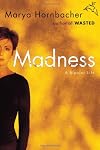
Brilliant and honest (often uncomfortably so), and for me a book that changed the way I look at bipolar disorder. One of my best friends had bipolar illness, and his self-medication led to cirrhosis and congestive heart failure in his early 40's and to his death in his early 50's. I thought I understood some of what was happening, but as I read this I had flashbacks to events 20 and 30 years ago that I could now see from a very different, and much more frightening, perspective. I realized I show more was still a little angry with this friend for what he did to himself, and for leaving us. This book made me work though that. I get what he was dealing with now, I understand his actions, and my heart breaks. I have two important people in my life now with bipolar diagnoses, neither with a case as serious as Hornbacher's or my late friend's, and I hope what I learned here makes me a better friend to them.
I can't recommend this enough. Just a great book. show less
I can't recommend this enough. Just a great book. show less
Wow. What a ride. What a life.
I first encountered Marya Hornbacher's work in her memoir of her eating disorder, WASTED. At that time, she didn't know she suffered from bipolar disorder (manic depression).
Recently my life was indirectly affected by bipolar disorder, and I decided to do my homework to find out exactly what this thing is, how it works, and what it does. This book was my 3rd read on the disorder (AN UNQUIET MIND and MANIC being the other 2). MADNESS is definitely the most show more harrowing, most intense, most YOU ARE THERE of the 3 books.
Marya has the worst type of BP--rapid cycling with mixed episodes. Rapid as in daily, 24-hour major highs and major lows...and she's so tiny! She's only 5'1" and I can't help but feel for this small person who has been so unbelievably sat upon my what seems like a 10,000 pound monster. Thank God she finally stopped drinking. It's shocking that she never died from alcohol poisoning.
If you, someone you love, someone you know, or someone you simply don't understand in the least struggles with this illness, you owe it to yourself to read this book. It will illuminate confounding behaviors, engender deep compassion, and instill gratitude because no matter who hard you have it, this woman probably has it worse.
For the caretakers of BP sufferers, check out the extensive list of resources at the end of the book. There's something there for everyone who's touched by this illness. Bipolar disorder is a tremendous strain on the public health system, and yet it doesn't receive the funding that many other illnesses receive. How ironic that those who are often the least able to help themselves are the same ones who will need to do most of the work to manage their illness.
The end of the book lists Bipolar Facts, websites, contacts, research resources, bibliography, and information on meds. The information is for sufferers, caretakers, and the rest of us.
Hang in there, Marya. Your voice needs to be heard. May your illness go into a long remission and you experience so much peace in your life that you become just as bored as the rest of us some days. show less
I first encountered Marya Hornbacher's work in her memoir of her eating disorder, WASTED. At that time, she didn't know she suffered from bipolar disorder (manic depression).
Recently my life was indirectly affected by bipolar disorder, and I decided to do my homework to find out exactly what this thing is, how it works, and what it does. This book was my 3rd read on the disorder (AN UNQUIET MIND and MANIC being the other 2). MADNESS is definitely the most show more harrowing, most intense, most YOU ARE THERE of the 3 books.
Marya has the worst type of BP--rapid cycling with mixed episodes. Rapid as in daily, 24-hour major highs and major lows...and she's so tiny! She's only 5'1" and I can't help but feel for this small person who has been so unbelievably sat upon my what seems like a 10,000 pound monster. Thank God she finally stopped drinking. It's shocking that she never died from alcohol poisoning.
If you, someone you love, someone you know, or someone you simply don't understand in the least struggles with this illness, you owe it to yourself to read this book. It will illuminate confounding behaviors, engender deep compassion, and instill gratitude because no matter who hard you have it, this woman probably has it worse.
For the caretakers of BP sufferers, check out the extensive list of resources at the end of the book. There's something there for everyone who's touched by this illness. Bipolar disorder is a tremendous strain on the public health system, and yet it doesn't receive the funding that many other illnesses receive. How ironic that those who are often the least able to help themselves are the same ones who will need to do most of the work to manage their illness.
The end of the book lists Bipolar Facts, websites, contacts, research resources, bibliography, and information on meds. The information is for sufferers, caretakers, and the rest of us.
Hang in there, Marya. Your voice needs to be heard. May your illness go into a long remission and you experience so much peace in your life that you become just as bored as the rest of us some days. show less
This book should be read by every grade school girl and every woman in Western civilization, if not the world. Along with being very well written, it is a haunting critique on the ramifications of our culture's idea of beauty. It's the memoir of a woman (the author) who dealt with bulimia and anorexia for 15 years of her life. And yet this book reflects the majority of women, regardless of whether they have eating disorders or not. Hornbacher constantly refers to the fact that most women in show more our culture are obsessed with their weight, that the paragon of cultural beauty is found in a body that is prepubescent at best, and that society expects women to be something that is unrealistic if not distinctly unhealthy. It will scare you, how much of yourself you see in this novel. An absolutely amazing, striking, and tragic memoir. show less
This was recommended in the goodreads review section of a fiction book that mocked people with eating disorders and was praised by Roxane Gay. Many people recovering from eating disorders understandably were deeply offended, and one of them recommended this memoir instead. Memoirs aren't my thing, and me giving three stars is common. Five stars for this actual content. Three stars for the way it was edited. The book could have been a hundred pages shorter, or even more, and lost nothing. The show more style took some getting used to. It switched back and forth between past and present without warning. It switched between first and -second- person -within the same paragraph- so often that I came to expect it. At first, I had a hard time interpreting whether she used "you" royally to confer a sense of immediacy or intimacy, or if it was herself in second person trying to distance herself from her body and choices around it in a way that's consistent with her state. Often, it was both. This is both a memoir and a social commentary, and the two are weaved together so tightly that it can be...a lot at times.
Hornbacher is bipolar. Someone asked if I'd read her memoir about it, and I said no. I have the same thing. I don't need to read about it. I've been stable on medication for awhile, but am fully aware of what I'm like off of it. This is a book about eating disorders and has a few pages dedicated to treatment. It's also inseparable from her experiences with bipolar disorder, such to the point that sometimes I felt like I -was- reading a memoir about bipolar disorder before she was medicated. But eating disorders; I don't have one that I know of. So I read this. I learned a lot. I'm glad Hornbacher was so willing to share so much of her life, especially with all the gritty details. I've never seen a fiction book handle this topic with such respect nor gravity, and I wish those authors would read this memoir first. Highly, highly recommended. show less
Hornbacher is bipolar. Someone asked if I'd read her memoir about it, and I said no. I have the same thing. I don't need to read about it. I've been stable on medication for awhile, but am fully aware of what I'm like off of it. This is a book about eating disorders and has a few pages dedicated to treatment. It's also inseparable from her experiences with bipolar disorder, such to the point that sometimes I felt like I -was- reading a memoir about bipolar disorder before she was medicated. But eating disorders; I don't have one that I know of. So I read this. I learned a lot. I'm glad Hornbacher was so willing to share so much of her life, especially with all the gritty details. I've never seen a fiction book handle this topic with such respect nor gravity, and I wish those authors would read this memoir first. Highly, highly recommended. show less
Lists
Awards


You May Also Like


Statistics
- Works
- 5
- Members
- 3,113
- Popularity
- #8,210
- Rating
- 4.0
- Reviews
- 71
- ISBNs
- 66
- Languages
- 7
- Favorited
- 16