Susanna Kaysen
Author of Girl, Interrupted
About the Author
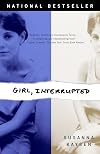
Susanna Kaysen was born in Cambridge, Massachusetts on November 11, 1948. Her memoir Girl, Interrupted is the harrowing account of her two year confinement in the McLean Psychiatric Hospital and was been adapted into a motion picture starring Winona Ryder and Angelina Jolie. She has also written show more several novels including Asa, As I Knew Him, Far Afield, and Camera My Mother Gave Me. (Bowker Author Biography) show less
Works by Susanna Kaysen
Associated Works
For the Love of Books: 115 Celebrated Writers on the Books They Love Most (1999) — Contributor — 479 copies, 4 reviews
Tagged
Common Knowledge
- Canonical name
- Kaysen, Susanna
- Birthdate
- 1948-11-11
- Gender
- female
- Occupations
- author
- Relationships
- Kaysen, Carl (father)
Wylie, Jonathan (husband | divorced) - Nationality
- USA
- Birthplace
- Cambridge, Massachusetts, USA
- Associated Place (for map)
- Massachusetts, USA
Members
Reviews
I'm usually pretty reserved with my 5 star ratings so designating this one a 5 kind of puzzled me in a pleasant way.
Though the book is a short one (not even reaching 200 pages), I found Kaysen's prose to be smooth as butter. I wished the book was longer, actually, as I felt a weird, almost-displaced comfort in reading her depiction of a 1960's psychiatric hospital. As a nursing student, I was very drawn to the persistent familiarity of the psych ward, as Kaysen described it; even after 60 show more years, it seems not much has changed regarding the relationships between mental health patients and mental health nurses.
Having first seen the movie I thought the experience of reading the novel would be tainted with pre-formatted imagery and plot points, but it seems the producers of the movie did not reference Kaysen's eponymous autobiography when they set out to translate it to the big screen. All the better for me as I was able to meet all of the women Kaysen encountered and shared experiences with during her near two-year stay at McLean Hospital and truly appreciate the plight of questioning their own sanity.
I loved and was thankful for the pseudo-philosophical questions Kaysen poses both to her younger self and to the reader about mental health, what defines it, what constitutes it, is it a brain or mind issue, etc? Along with the seemingly-never-changing goings-on of the psych ward, the question of what constitutes a mental health abnormality and how we go about treating it has also persisted and that makes for great conversation. When the story one has to tell can successfully knock against the waves of time and push ever onward, remaining relevant and powerful in its message...that is a 5 star novel to me. show less
Though the book is a short one (not even reaching 200 pages), I found Kaysen's prose to be smooth as butter. I wished the book was longer, actually, as I felt a weird, almost-displaced comfort in reading her depiction of a 1960's psychiatric hospital. As a nursing student, I was very drawn to the persistent familiarity of the psych ward, as Kaysen described it; even after 60 show more years, it seems not much has changed regarding the relationships between mental health patients and mental health nurses.
Having first seen the movie I thought the experience of reading the novel would be tainted with pre-formatted imagery and plot points, but it seems the producers of the movie did not reference Kaysen's eponymous autobiography when they set out to translate it to the big screen. All the better for me as I was able to meet all of the women Kaysen encountered and shared experiences with during her near two-year stay at McLean Hospital and truly appreciate the plight of questioning their own sanity.
I loved and was thankful for the pseudo-philosophical questions Kaysen poses both to her younger self and to the reader about mental health, what defines it, what constitutes it, is it a brain or mind issue, etc? Along with the seemingly-never-changing goings-on of the psych ward, the question of what constitutes a mental health abnormality and how we go about treating it has also persisted and that makes for great conversation. When the story one has to tell can successfully knock against the waves of time and push ever onward, remaining relevant and powerful in its message...that is a 5 star novel to me. show less
Author Susanna Kaysen was having a bad day when a psychiatrist she'd never seen before referred her for hospitalization at McLean, the top-tier mental institution of the 1960s. In her memoir Girl, Interrupted, she remembers the almost two years she spent at McLean, along with the colorful characters she met there. This slight book delves into questions of sanity vs. insanity, free expression vs. control, and Thorazine vs. everything else. Was Kaysen mentally ill, or just a sensitive, show more nonconformist teenager growing up during a tumultuous time? The book leaves the question open. Recommended. show less
I wonder if I dislike “collection of vignettes” books because they are actually inferior to books with plots or because I’m just jealous that an author can be successful despite their book being a string of unconnected scenes lacking in depth and detail. Whatever the case, my main gripe with this book—that it follows that very unconnected structure and is told out of chronological order—can be justified by the simple fact that its intent is to disorient, and it achieves this end show more admirably.
I don’t think the intent was also to emotionally alienate the reader, although that’s certainly how I felt. For this being a memoir, Susanna seems incredibly distanced from—and even bored by—the events she describes. The best chapters are the philosophical ones, where she ruminates on the nature of madness and the many ways it can manifest. These, ultimately, are what redeemed the book and why it gets three stars from me. Susanna can be incredibly insightful and descriptive when she wants to be, but she mostly seems content skidding by on the surface of things without making any effort at character development, description, or tone-setting. It is told plainly and with a flat affect, as disinterested as a tranquilised psychiatric patient, content to loll in a ratty easy chair and stare mindlessly at the TV.
There is no colour to this book. If I had to assign it a colour, it would be the colour of dryer lint, or bathroom walls in that specific tone of beige that must have been manufactured in purgatory to desiccate your very soul.
Perhaps this is all meant to give the reader the most realistic possible feeling of being confined in a mental institution in the 1960s: the boredom, the listlessness, the lack of a unifying theme or plot. I can’t say whether or not it succeeds—but I certainly feel sedated after reading it. show less
I don’t think the intent was also to emotionally alienate the reader, although that’s certainly how I felt. For this being a memoir, Susanna seems incredibly distanced from—and even bored by—the events she describes. The best chapters are the philosophical ones, where she ruminates on the nature of madness and the many ways it can manifest. These, ultimately, are what redeemed the book and why it gets three stars from me. Susanna can be incredibly insightful and descriptive when she wants to be, but she mostly seems content skidding by on the surface of things without making any effort at character development, description, or tone-setting. It is told plainly and with a flat affect, as disinterested as a tranquilised psychiatric patient, content to loll in a ratty easy chair and stare mindlessly at the TV.
There is no colour to this book. If I had to assign it a colour, it would be the colour of dryer lint, or bathroom walls in that specific tone of beige that must have been manufactured in purgatory to desiccate your very soul.
Perhaps this is all meant to give the reader the most realistic possible feeling of being confined in a mental institution in the 1960s: the boredom, the listlessness, the lack of a unifying theme or plot. I can’t say whether or not it succeeds—but I certainly feel sedated after reading it. show less
I’ve been meaning to re-read this book for an age, so thank you to the Reading Rush for getting me kickstarted on that.
I particularly appreciate Girl, Interrupted because it’s a book that speaks to me. I remember reading it years ago and my initial impressions were 1.) this is nothing like the movie; and 2.) it was one of the first books I’d ever read where I felt like the author heard my experience. And honestly, that’s a bit snobbish because I haven’t gone through anything like show more Susanna Kaysen went through. I was definitely never institutionalized. But I discovered Girl, Interrupted when I was living with my parents still and struggling with anxiety and depression and getting no help and being made to feel crazy. And this book? This was a well-needed reminder that it’s okay to not be okay, and that is a version of normal.
Girl, Interrupted is a story included in a series of essays. There are characters and scenes and moments that are all striking in their own right, but there are also copies of Susanna’s files within the pages. I’m not sure if they’re in all the editions of this book, but I assume so? At any rate, I found them powerful. There’s a letter from Susanna’s therapist to the RMV seven years-is after her release that gives her permission to drive – in little ways like that, you can see how her stay affected the rest of her life, putting a label on her.
Some of the scenes in Girl, Interrupted are funny anecdotes. Some are soul-hollowing truths. Others are just informational – there’s a whole chapter defining Borderline Personality Disorder. McLean Hospital, where Susanna stayed – still exists today. While the institution opened as an asylum in 1818, the modern iteration of McLean hospital looks to be a safe and supportive place to be. Even in the late ’60s, Susanna never criticizes the mental care she received (or, when she does, it’s not a criticism of the care, but her general not wanting to deal with it). Kaysen’s writing in general is enjoyable, quick and descriptive. You get a feel for the place and the people there.
Mental health memoirs aren’t for everyone. Everyone’s experiences are different. I thought Susanna’s story was powerful, but not too heavy. She speak sort of… sarcastically, I guess? I don’t want to say flippant, but the way she writes it’s clear that she’s rolling her eyes at a lot of things and taking them in stride, and I know that’s a weird way of explaining a writing voice, but I really liked it and it’s not as negative as I”m making it sound. I think her voice is what made the essays feel both relatable and impactful for the reader, despite personal experience.
It’s hard for me to peg exactly why I love Girl, Interrupted, and that’s why this review is a little rambling. Susanna Kaysen makes the story her own, weaving the facts together with a great voice. Also there’s this essay in the middle called “Velocity vs. Viscosity” which talks about the different ways the brain goes when things are not perfect, and it makes me feel so heard, because I have a hard time explaining what I’m thinking about? I really appreciate that essay.
And just… in general. I like this book, and I think anyone interested in mental health needs to read it.
Original Review: Four Stars (12/20/2015)
If you pick up this book expecting Winona Ryder and Angelina Jolie, don't. Susanna Kaysen's short essays offer a glimpse into her time just before, during, and right after her stay at McLean Hospital. There are, in parts, images of life inside of the hospital, but more, she offers a philosophical glance at the state and view of mental illness. It certainly gave me something to think about - I devoured it in an hour. I can't believe it took me so long to get to reading this. show less
I particularly appreciate Girl, Interrupted because it’s a book that speaks to me. I remember reading it years ago and my initial impressions were 1.) this is nothing like the movie; and 2.) it was one of the first books I’d ever read where I felt like the author heard my experience. And honestly, that’s a bit snobbish because I haven’t gone through anything like show more Susanna Kaysen went through. I was definitely never institutionalized. But I discovered Girl, Interrupted when I was living with my parents still and struggling with anxiety and depression and getting no help and being made to feel crazy. And this book? This was a well-needed reminder that it’s okay to not be okay, and that is a version of normal.
Girl, Interrupted is a story included in a series of essays. There are characters and scenes and moments that are all striking in their own right, but there are also copies of Susanna’s files within the pages. I’m not sure if they’re in all the editions of this book, but I assume so? At any rate, I found them powerful. There’s a letter from Susanna’s therapist to the RMV seven years-is after her release that gives her permission to drive – in little ways like that, you can see how her stay affected the rest of her life, putting a label on her.
Some of the scenes in Girl, Interrupted are funny anecdotes. Some are soul-hollowing truths. Others are just informational – there’s a whole chapter defining Borderline Personality Disorder. McLean Hospital, where Susanna stayed – still exists today. While the institution opened as an asylum in 1818, the modern iteration of McLean hospital looks to be a safe and supportive place to be. Even in the late ’60s, Susanna never criticizes the mental care she received (or, when she does, it’s not a criticism of the care, but her general not wanting to deal with it). Kaysen’s writing in general is enjoyable, quick and descriptive. You get a feel for the place and the people there.
Mental health memoirs aren’t for everyone. Everyone’s experiences are different. I thought Susanna’s story was powerful, but not too heavy. She speak sort of… sarcastically, I guess? I don’t want to say flippant, but the way she writes it’s clear that she’s rolling her eyes at a lot of things and taking them in stride, and I know that’s a weird way of explaining a writing voice, but I really liked it and it’s not as negative as I”m making it sound. I think her voice is what made the essays feel both relatable and impactful for the reader, despite personal experience.
It’s hard for me to peg exactly why I love Girl, Interrupted, and that’s why this review is a little rambling. Susanna Kaysen makes the story her own, weaving the facts together with a great voice. Also there’s this essay in the middle called “Velocity vs. Viscosity” which talks about the different ways the brain goes when things are not perfect, and it makes me feel so heard, because I have a hard time explaining what I’m thinking about? I really appreciate that essay.
And just… in general. I like this book, and I think anyone interested in mental health needs to read it.
Original Review: Four Stars (12/20/2015)
If you pick up this book expecting Winona Ryder and Angelina Jolie, don't. Susanna Kaysen's short essays offer a glimpse into her time just before, during, and right after her stay at McLean Hospital. There are, in parts, images of life inside of the hospital, but more, she offers a philosophical glance at the state and view of mental illness. It certainly gave me something to think about - I devoured it in an hour. I can't believe it took me so long to get to reading this. show less
Lists
Awards
You May Also Like
Associated Authors
Statistics
- Works
- 6
- Also by
- 3
- Members
- 9,314
- Popularity
- #2,586
- Rating
- 3.6
- Reviews
- 153
- ISBNs
- 65
- Languages
- 8
- Favorited
- 10


