
Ken Kesey (1935–2001)
Author of One Flew Over the Cuckoo's Nest
About the Author
Ken Kesey, September 17, 1935 - November 10, 2001 Kenneth Elton "Ken" Kesey was born in Colorado on September 17, 1935. He graduated from the University of Oregon, and published two full-length novels that helped to give him a cult following. "One Flew over the Cuckoo's Nest" (1962) owes much to show more Kesey's own experience as a ward attendant at the Menlo Park Veterans' Hospital. This exciting first novel was told from the point of view of a half-Indian man who thinks of himself as the Big Chief pictured on the writing tablets of everybody's school days looking out at the other inmates in a Disneylike world. Its portrayal of the doomed but heroic rebel McMurphy stood for a particular kind of American individualism. The book was adapted into a successful stage play by Dale Wasserman, and in 1975, Milos Forman directed a screen adaptation, which won the "Big Five" Academy Awards: Best Picture, Best Actor (Jack Nicholson), Best Actress (Louise Fletcher), Best Director (Forman) and Best Adapted Screenplay (Lawrence Hauben, Bo Goldman). Kesey's Sometimes a Great Notion (1964) is a long, complex novel that troubled many of his earlier readers. Kesey's most recent novel was Demon Box (1987); although it was somewhat well received, it was still compared unfavorably to his earlier works. His last major work was an essay for Rolling Stone magazine calling for peace in the aftermath of the September 11 attacks. On October 25, 2001, Kesey had surgery on his liver to remove a tumor. He died of complications from the surgery on November 10, 2001. He was 66. (Bowker Author Biography) show less
Works by Ken Kesey
Associated Works
The Rolling Stone Book of the Beats: The Beat Generation and American Culture (1999) — Contributor — 180 copies, 2 reviews
The Graphic Canon, Vol. 3: From Heart of Darkness to Hemingway to Infinite Jest (2013) — Contributor — 162 copies, 1 review
The Dylan Companion: A Collection of Essential Writing About Bob Dylan (1990) — Contributor, some editions — 103 copies
Take My Advice: Letters to the Next Generation from People Who Know a Thing or Two (2002) — Contributor — 50 copies
West Coast Fiction: Modern Writing from California, Oregon, and Washington (1979) — Contributor — 8 copies, 1 review
Northwest Review: Fall, 1957 — Contributor — 2 copies
Tagged
Common Knowledge
- Legal name
- Kesey, Kenneth Elton
- Birthdate
- 1935-09-17
- Date of death
- 2001-11-10
- Gender
- male
- Education
- University of Oregon
Stanford University - Occupations
- novelist
hospital orderly - Organizations
- U.S. Veterans Administration
- Awards and honors
- Robert Kirsch Award (1991)
Western Literature Association's Distinguished Achievement Award (1988) - Short biography
- Kenneth Elton Kesey (September 17, 1935 – November 10, 2001) was an American novelist, essayist, and countercultural figure. He considered himself a link between the Beat Generation of the 1950s and the hippies of the 1960s.
Kesey was born in La Junta, Colorado, and grew up in Springfield, Oregon, graduating from the University of Oregon in 1957. He began writing One Flew Over the Cuckoo's Nest in 1960 following the completion of a graduate fellowship in creative writing at Stanford University; the novel was an immediate commercial and critical success when published two years later. During this period, Kesey participated in government studies involving hallucinogenic drugs (including mescaline and LSD) to supplement his income.
Following the publication of One Flew Over the Cuckoo's Nest, he moved to nearby La Honda, California, and began hosting happenings with former colleagues from Stanford, miscellaneous bohemian and literary figures (most notably Neal Cassady), and other friends collectively known as the Merry Pranksters; these parties, known as Acid Tests, integrated the consumption of LSD with multimedia performances. He mentored the Grateful Dead (the de facto "house band" of the Acid Tests) throughout their incipience and continued to exert a profound influence upon the group throughout their long career. - Nationality
- USA
- Birthplace
- La Junta, Colorado, USA
- Places of residence
- Springfield, Oregon, USA
Pleasant Hill, Oregon, USA - Place of death
- Pleasant Hill, Oregon, USA
- Burial location
- Kesey family farm, Eugene, Oregon, USA
- Map Location
- USA
Members
Discussions
Group Read, March 2020: Sometimes a Great Notion in 1001 Books to read before you die (March 2020)
Reviews
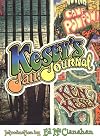
It was a treat to find this unique work, the (partial) journals of Ken Kesey while he was in jail for about half a year, beginning June 23, 1967. The story of how he came to be jailed is told brilliantly in the introduction from friend, author, and fellow Merry Prankster Ed McClanahan, and it’s quite a tale. Convicted in 1965 for possession of marijuana, Kesey faked suicide and hid out in Mexico for eight months in 1966, first in Puerto Vallarta and then, aware that the FBI knew he was show more alive, the more remote Manzanillo. In the fall of 1966 he returned to America, crossing the border on a borrowed horse, and made his way back to the Bay Area. After hiding out for a couple of weeks in the homes of friends, federal agents spotted him in stop and go traffic on 101 near the old Candlestick Park, and caught him after he attempted to flee on foot.
The fact that so much FBI time and energy was spent on a marijuana case, and that Kesey had to serve time, boggles the mind. Kesey spent some of his time in the San Mateo County Jail in downtown Redwood City before being transferred to the Sheriff’s Honor Camp near La Honda, a work facility in redwood country that closed in 2003, and is now part of Pescadero Creek County Park.
Part of the enjoyment of reading what he wrote while imprisoned was in looking up all these local Bay Area places he referenced – Perry Lane (now Perry Avenue in West Menlo Park) where had led a bohemian life and frequently run afoul of Wallace Stegner while at Stanford beginning in 1958, the VA hospital in Menlo Park where he had voluntarily taken psychedelic drugs in 1961 as a part of CIA-financed research (which of course led to One Flew Over the Cuckoo’s Nest), and the houses he frequented at 710 Ashbury in San Francisco (inhabited by the Grateful Dead) and the one across the street at 715 Ashbury (inhabited by the Hell’s Angels), where one time he was driving and his brakes gave out, causing him to crash into the latter.
Kesey describes his experiences with his guards and fellow inmates with honesty, and his artwork on the original pages (and also transcribed) is beautiful and livens the work up. Always with an eye for playfulness and satire, he also shows an honest sense of humanity towards those he meets, like Joe Meeks, the “sex fiend” who had done something so heinous that he was on death row (though in looking him up, it appears he ultimately was not executed, instead getting sentenced to four consecutive life terms). Kesey is not judgmental, and includes some of the poetry Meeks wrote.
We also get a glimpse into the sometimes uneasy race relations and the evolution of Kesey’s own views, as he recounts Jerry Garcy telling him “Hey, Keez…the appellation ‘spade’ is permissible only if you’re a jazz musician.” It was nice that these things that were less flattering to Kesey weren’t edited out. One seriously cringe-worthy bit was when Kesey writes of talking to another prisoner in for a rape charge, and saying “I sympathize, telling him about various Hell’s Angels sex raps that are like this – ‘Some chick thinks she can do the whole Angel thing and about half-way through a chapter she gets scared or sore and freaks and hollers rape…’” Ugh.
These moments are mercifully few in number. Most of what Kesey describes are things like life around the camp, the work, listening to music, playing a game of pickup football, and visitations from his wife and friends that sometimes resulted in drugs being smuggled in. The journal entries and letters have a stream of consciousness, informal style, and yet the quality of the writing is high, and Kesey was able to paint a picture of his experience. As to one inmate’s baritone, he says it’s “a voice so heavy it’s beyond sardonic or bitter or cynical. It groans under a burden of sorrow so immense it sounds Biblical.” Of a time he expounds in a group therapy type session, he says he held forth on entropy thusly: “Entropy is the anarchy of sunshine off a chrome bumper. Entropy is Owsley’s story of the runaway train, highballing down a steep grade, overloaded with passengers without any knowledge of the tight turn coming up at the bottom of a hill…” Of the group being implored by a guard to watch the film Shane, he writes that a black inmate quips “Them westerns ain’t so great to this cat; the redskins never win.”
There is also an afterwards of sorts written by Kesey decades later, a poem references his son’s tragic death in 1984, and his explanation of how some (but not all) of his journals survived, given county officials wariness over the author creating a book out of them. All in all, this is a window into the life of a fascinating author, a guy who wrote two monumental books in the early 1960’s, and then chose to take the road less travelled. Certainly recommended if you’re a fan of his. show less
The fact that so much FBI time and energy was spent on a marijuana case, and that Kesey had to serve time, boggles the mind. Kesey spent some of his time in the San Mateo County Jail in downtown Redwood City before being transferred to the Sheriff’s Honor Camp near La Honda, a work facility in redwood country that closed in 2003, and is now part of Pescadero Creek County Park.
Part of the enjoyment of reading what he wrote while imprisoned was in looking up all these local Bay Area places he referenced – Perry Lane (now Perry Avenue in West Menlo Park) where had led a bohemian life and frequently run afoul of Wallace Stegner while at Stanford beginning in 1958, the VA hospital in Menlo Park where he had voluntarily taken psychedelic drugs in 1961 as a part of CIA-financed research (which of course led to One Flew Over the Cuckoo’s Nest), and the houses he frequented at 710 Ashbury in San Francisco (inhabited by the Grateful Dead) and the one across the street at 715 Ashbury (inhabited by the Hell’s Angels), where one time he was driving and his brakes gave out, causing him to crash into the latter.
Kesey describes his experiences with his guards and fellow inmates with honesty, and his artwork on the original pages (and also transcribed) is beautiful and livens the work up. Always with an eye for playfulness and satire, he also shows an honest sense of humanity towards those he meets, like Joe Meeks, the “sex fiend” who had done something so heinous that he was on death row (though in looking him up, it appears he ultimately was not executed, instead getting sentenced to four consecutive life terms). Kesey is not judgmental, and includes some of the poetry Meeks wrote.
We also get a glimpse into the sometimes uneasy race relations and the evolution of Kesey’s own views, as he recounts Jerry Garcy telling him “Hey, Keez…the appellation ‘spade’ is permissible only if you’re a jazz musician.” It was nice that these things that were less flattering to Kesey weren’t edited out. One seriously cringe-worthy bit was when Kesey writes of talking to another prisoner in for a rape charge, and saying “I sympathize, telling him about various Hell’s Angels sex raps that are like this – ‘Some chick thinks she can do the whole Angel thing and about half-way through a chapter she gets scared or sore and freaks and hollers rape…’” Ugh.
These moments are mercifully few in number. Most of what Kesey describes are things like life around the camp, the work, listening to music, playing a game of pickup football, and visitations from his wife and friends that sometimes resulted in drugs being smuggled in. The journal entries and letters have a stream of consciousness, informal style, and yet the quality of the writing is high, and Kesey was able to paint a picture of his experience. As to one inmate’s baritone, he says it’s “a voice so heavy it’s beyond sardonic or bitter or cynical. It groans under a burden of sorrow so immense it sounds Biblical.” Of a time he expounds in a group therapy type session, he says he held forth on entropy thusly: “Entropy is the anarchy of sunshine off a chrome bumper. Entropy is Owsley’s story of the runaway train, highballing down a steep grade, overloaded with passengers without any knowledge of the tight turn coming up at the bottom of a hill…” Of the group being implored by a guard to watch the film Shane, he writes that a black inmate quips “Them westerns ain’t so great to this cat; the redskins never win.”
There is also an afterwards of sorts written by Kesey decades later, a poem references his son’s tragic death in 1984, and his explanation of how some (but not all) of his journals survived, given county officials wariness over the author creating a book out of them. All in all, this is a window into the life of a fascinating author, a guy who wrote two monumental books in the early 1960’s, and then chose to take the road less travelled. Certainly recommended if you’re a fan of his. show less
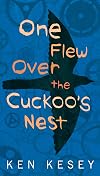
So they're running a radio play version of this on BBC, and when I saw it, I thought, why not, maybe I'll listen to it. Then my emotions caught up with my brain and I decided to write a cathartically scathing review instead. Because when I read this in high school, and it left me feeling furious--not particularly with the "correct" villain of the piece, Nurse Rached, but with McMurphy and Kesey himself. (No, this was not a popular viewpoint with my highschool teacher.) It must be said, show more however, that the sheer memorability of the plot, aided by my clarifying heat of anger (and possibly the class's egregiously slow pace) indicates the quality of the book's writing and the author's success at engaging the reader's interest.
Isn't the massive issue with Nurse Rached the fact that she is a woman who has power and has therefore effectively emasculated the men in her control? Look at all of the descriptions of her power. Her actions are explicitly depicted as castrating her patients and making them effectively impotent. In fact, all of the men are in the institution because of the pernicious influence of the females in their lives, from the doctor's big-breasted wife to Billy's overbearing mother. Because obviously emasculation of men is the secret aim of all women unless you slap them bitches down. Yeah, so Rached does have a massive amount of control and yes, she does have an obsession with discipline, but she's being pushed by an asshole and reacting poorly. McMurphy fights back by belittling her as a woman, demonstrating masculine brute strength, using sexual slurs, smuggling in prostitutes, etc, etc. Do I have sympathy for McMurphy's battle against Rached? Heh. Cry me a river.
The real issue is that I'm a woman reading about the oh-so-noble struggle of a psychopathic rapist to wrest power from the control of a woman who has done the unforgivable: sexually dominate and humiliate the men under her control. It is a book about the Ultimate Noble Goal: a man's quest to retain his masculinity--via the domination and humiliation of all the women around him. hover for spoiler Yes, there is a way to read it as the struggle of individuality against the totalitarian inhuman machine, but I have to wonder: if a man had been the nurse, do you think this would have been a classic? show less
Isn't the massive issue with Nurse Rached the fact that she is a woman who has power and has therefore effectively emasculated the men in her control? Look at all of the descriptions of her power. Her actions are explicitly depicted as castrating her patients and making them effectively impotent. In fact, all of the men are in the institution because of the pernicious influence of the females in their lives, from the doctor's big-breasted wife to Billy's overbearing mother. Because obviously emasculation of men is the secret aim of all women unless you slap them bitches down. Yeah, so Rached does have a massive amount of control and yes, she does have an obsession with discipline, but she's being pushed by an asshole and reacting poorly. McMurphy fights back by belittling her as a woman, demonstrating masculine brute strength, using sexual slurs, smuggling in prostitutes, etc, etc. Do I have sympathy for McMurphy's battle against Rached? Heh. Cry me a river.
The real issue is that I'm a woman reading about the oh-so-noble struggle of a psychopathic rapist to wrest power from the control of a woman who has done the unforgivable: sexually dominate and humiliate the men under her control. It is a book about the Ultimate Noble Goal: a man's quest to retain his masculinity--via the domination and humiliation of all the women around him. hover for spoiler Yes, there is a way to read it as the struggle of individuality against the totalitarian inhuman machine, but I have to wonder: if a man had been the nurse, do you think this would have been a classic? show less

First published in 1964, this book follows the Stamper family, who own a mill and logging outfit in coastal Oregon. Primarily, it tells the story of two half brothers; Leland Stamper who has returned to the family house out of a desire to take revenge on his older half brother, Hank, who runs the one logging concern still at work during a brutal strike because the business only employs family members. As the two men work together, they reluctantly form a bond, but Leland is intent on his show more revenge and finds Hank's wife a convenient target.
This is a novel just seething with testosterone. Kesey chooses to portray striking lumberjacks as lazy and Hank as the stalwart individualist who will do it all himself if he needs to. But the job he has set himself is to cut and transport down the river to a large corporate mill a quantity of lumber that requires that he cooperate with other men to succeed. He has one solid friend, the unreliable help of his half brother and assorted family members who begin to peel off as the tension with the striking lumberjacks makes things unpleasant. In the end, he is running short of willing workers, which will make the project harder to complete and a lot more dangerous.
The writing in this book is truly lovely. Kesey can write. It's a long book, with a lot of descriptive passages, but they are the best parts of the book. The story itself is pure soap opera and full of men having big feelings. The thing that renders this book difficult to read is the endless casual racism, especially a particularly egregious portrayal of a Native American woman, as well as how the women in this book exist solely as possessions of men and don't have agency of their own. Hank's wife, Viv, who gets some space in this novel, nonetheless is portrayed as not having choices of her own when it comes to being used in Leland's war against his brother. This is an immersive book, but one that asks the reader to put up with a world in which the only people who matter or who count are white men. show less
This is a novel just seething with testosterone. Kesey chooses to portray striking lumberjacks as lazy and Hank as the stalwart individualist who will do it all himself if he needs to. But the job he has set himself is to cut and transport down the river to a large corporate mill a quantity of lumber that requires that he cooperate with other men to succeed. He has one solid friend, the unreliable help of his half brother and assorted family members who begin to peel off as the tension with the striking lumberjacks makes things unpleasant. In the end, he is running short of willing workers, which will make the project harder to complete and a lot more dangerous.
The writing in this book is truly lovely. Kesey can write. It's a long book, with a lot of descriptive passages, but they are the best parts of the book. The story itself is pure soap opera and full of men having big feelings. The thing that renders this book difficult to read is the endless casual racism, especially a particularly egregious portrayal of a Native American woman, as well as how the women in this book exist solely as possessions of men and don't have agency of their own. Hank's wife, Viv, who gets some space in this novel, nonetheless is portrayed as not having choices of her own when it comes to being used in Leland's war against his brother. This is an immersive book, but one that asks the reader to put up with a world in which the only people who matter or who count are white men. show less

High, high quality read. I describe books often as 'genius' or 'masterpiece', but I never use the word 'clever.' This book is clever.
It is so fun on a sentence by sentence level. So many small, genius quips and remarks that you would miss if you weren't paying decent attention to each word. It's legitimately every page. It was so much fun to read. In the world of the "classics," it's so easy to get bogged down in these monster thousand page works or confusing stream-of-consciousness reads. show more This was so, so refreshing. And I needed it badly.
I loved each and every character in the psych ward. All of them were very likeable, very opinionated and entertaining to see, or at least they were all cleverly written in what they were dealing with. Characters drive the plot through their conflicts with themselves and each other, and all of the conflicts are character specific and mean something to the overall story.
And the ending, what a genius way to end it. You get your big final conflict between the two main oppositions, and then it seems that one character wins, but then it turns upside down and its tragic, but the tragedy gets turned into a freeing of nearly all our characters.
I can't say enough good about this book. show less
It is so fun on a sentence by sentence level. So many small, genius quips and remarks that you would miss if you weren't paying decent attention to each word. It's legitimately every page. It was so much fun to read. In the world of the "classics," it's so easy to get bogged down in these monster thousand page works or confusing stream-of-consciousness reads. show more This was so, so refreshing. And I needed it badly.
I loved each and every character in the psych ward. All of them were very likeable, very opinionated and entertaining to see, or at least they were all cleverly written in what they were dealing with. Characters drive the plot through their conflicts with themselves and each other, and all of the conflicts are character specific and mean something to the overall story.
And the ending, what a genius way to end it. You get your big final conflict between the two main oppositions, and then it seems that one character wins, but then it turns upside down and its tragic, but the tragedy gets turned into a freeing of nearly all our characters.
I can't say enough good about this book. show less
Lists
Read (1)
Put a Bird On It (1)
Best Satire (1)
USA Road Trip (1)
Five star books (1)
1980s (1)
A Novel Cure (1)
1960s (1)
Forced Exposure (1)
. (1)
Allie's Wishlist (1)
BitLife (1)
Overdue Podcast (1)
Pageturners (1)
Unread books (1)
Books (1)
Gen X Library (1)
Fave Books (1)
Fiction For Men (1)
Catalog (2)
1970s (1)
Books I've Read (1)
Favourite Books (2)
Daria (1)
Read These Too (1)
hopes (1)
First Novels (1)
BBC Big Read (1)
. (1)
AP Lit (1)
Classics (1)
Awards


You May Also Like


Associated Authors
Statistics
- Works
- 38
- Also by
- 16
- Members
- 33,446
- Popularity
- #577
- Rating
- 4.1
- Reviews
- 403
- ISBNs
- 314
- Languages
- 24
- Favorited
- 87

