
Elizabeth Wurtzel (1967–2020)
Author of Prozac Nation
About the Author
Elizabeth Wurtzel is the bestselling author of Prozac Nation and Bitch. After graduating from Harvard College, she was the popular music critic for The New Yorker and New York magazine. Her articles have also appeared in Glamour, Mademoiselle, Mirabella, Seventeen, and the Oxford American. She show more lives in New York City. (Bowker Author Biography) Elizabeth Wurtzel was the bestselling author of Prozac Nation and Bitch. After graduating from Harvard College, she was the popular music critic for The New Yorker and New York magazine. Her articles have also appeared in Glamour, Mademoiselle, Mirabella, Seventeen, and the Oxford American. She chronicled her struggle with depression and drug addiction in best-selling memoirs that helped spur a boom in confessional writing, turning her into a Gen X celebrity at 26. She struggled with breast cancer in 2015 and underwent a double mastectomy, but the breast cancer had metastasized to her brain. Elizabeth Wurtzel passed away on January 7, 2020 at the age of 52. (Bowker Author Biography) show less
Works by Elizabeth Wurtzel
Associated Works
Autobiography of a Recovering Skinhead: The Frank Meeink Story as Told to Jody M. Roy, Ph.D. (2010) — Introduction, some editions — 117 copies, 8 reviews
Tagged
Common Knowledge
- Legal name
- Wurtzel, Elizabeth Lee
- Other names
- WURTZEL, Elizabeth
WURTZEL, Elizabeth Lee - Birthdate
- 1967-07-31
- Date of death
- 2020-01-07
- Gender
- female
- Education
- Harvard College (B.A.|1989)
Yale Law School (J.D.|2008) - Occupations
- novelist
journalist
lawyer - Awards and honors
- Rolling Stone Magazine College Journalism Award (1986)
- Short biography
- Grew up with divorced Jewish parents in New York City. Has written two memoirs; Prozac Nation (1994) about growing up and battling depression, and More, Now, Again (2001) about her drug-addiction following.
- Nationality
- USA
- Birthplace
- New York, New York, USA
- Place of death
- Manhattan, New York, New York, USA
- Associated Place (for map)
- New York, USA
Members
Reviews

Outwardly, young adult Elizabeth Wurtzel has all the advantages: she attends upscale private schools and later Harvard, she has devoted family on her mother's side, she is pretty, slender, and a talented writer. So why does she always feel like a big black cloud is chasing her? Wurtzel suffers from a years-long, badly-managed case of clinical depression, and the many therapists she seeks out attribute her problems to her parents' acrimonious divorce rather than her biochemical makeup. show more Finally she gets on the title medication and feels better, but how can she now adjust to living (relatively) depression-free? This all took place back in the late 1980s, when Prozac and other SSRIs were looked at with great suspicion; did these drugs make people "better than well"? Now, as Wurtzel writes in her epilogue and afterword, they're just another part of our cultural landscape.
Prozac Nation is a well-written book that nonetheless goes on too long for its own good. I'm glad I read it, but I also am glad that I'm done with it. show less
Prozac Nation is a well-written book that nonetheless goes on too long for its own good. I'm glad I read it, but I also am glad that I'm done with it. show less

This well-written memoir chronicles the teenage and college years of Wurtzel’s life, which she spends primarily in a funk of deep, unshakeable depression. If you have not felt this kind of depression (and I haven’t), it is easy to become impatient with the author midway through the book. She seems to have everything that a lot of us want: a burgeoning career as a feature writer for newspapers and major magazines like Rolling Stone (and this is while she is still in college); a show more scholarship-funded education at Harvard; an endless supply of endlessly patient friends. Even her tragedies are minor: a distant father, a failed short-term relationship. So why is she constantly whining and self-obsessed and so full of pain? Wurtzel herself even comes out of her funk from time to time to wonder, “Why am I so depressed? What do I have to feel bad about?”
It is this impatience with the narrator that is the real brilliance of this book, and as we find out in the last chapter, Wurtzel has deliberately portrayed herself exactly as she felt, both to depict how it feels to be severely depressed and to let us readers know how it feels to know the severely depressed. And we do, believe me.
By the end of the book, we have been through the wringer with Wurtzel, and we are glad to see her find salvation in drugs (although she is careful to explain that while anti-depressants have saved lives, they are in danger of becoming over-prescribed for the most minor cases of the blues). So yes, this book is uncomfortable to read, and we may occasionally want to yell at Wurtzel to snap out of it already, but when it is done, we know just what hell she went through – because we went through it with her. show less
It is this impatience with the narrator that is the real brilliance of this book, and as we find out in the last chapter, Wurtzel has deliberately portrayed herself exactly as she felt, both to depict how it feels to be severely depressed and to let us readers know how it feels to know the severely depressed. And we do, believe me.
By the end of the book, we have been through the wringer with Wurtzel, and we are glad to see her find salvation in drugs (although she is careful to explain that while anti-depressants have saved lives, they are in danger of becoming over-prescribed for the most minor cases of the blues). So yes, this book is uncomfortable to read, and we may occasionally want to yell at Wurtzel to snap out of it already, but when it is done, we know just what hell she went through – because we went through it with her. show less

"And the scariest part is that if you ask anyone in the throes of depression how he got there, to pin down the turning point, he'll never know. There is a classic moment in The Sun Also Rises when someone asks Mike Campbell how he went bankrupt, and all he can say in response is, 'Gradually, and then suddenly.' When someone asks how I lost my mind, that is all I can say too."
Prozac Nation vividly illustrates Wurtzel's lifelong battle with depression as well as the strained relationships show more between her and her overbearing mother, estranged father, and countless lovers. Between substance abuse and suicidal thoughts, Wurtzel's memoir gives readers a look inside the mind of a depressed individual; a mind one can only describe as a torture chamber. After a failed suicide attempt, she becomes one of the first candidates to qualify for a revolutionary new antidepressant called fluoxetine. Fluoxetine, an SSRI, is better known by its brand name: Prozac.
While the majority of readers give this book praise, I've stumbled upon a few negative reviews. In order to fully appreciate and relate to this book, it's best if you are someone who has personally dealt with mental illness. Anyone who is neurotypical and reads this book will more than likely think, "What does she have to be so depressed about? She goes to Harvard, she's pretty, she works for well-known magazines, she's well-traveled...she's so whiny and sad for no reason. I can't stand her." And that, ladies and gentlemen, is the point this book illustrates best; you can have the world at your feet, but when you suffer from depression you can no longer find happiness in anything. You become someone no one wants to "deal" with, and the guilt of not being happy and appreciating the people in your life hangs over you like a dark cloud. Just the stigma itself can fuel the depressed individual's self-depreciating thoughts and tendencies. Wurtzel's memoir perfectly captures this aspect; the self-loathing and guilt torments her, body and soul, making recovery nearly impossible without proper treatment. This book is revolutionary in the sense that it breaks up the stigma that depression is a choice rather than a diagnosis. It told readers who were suffering in silence, "You're not alone," which is revolutionary in itself. To top it all off, the lyrics of Bob Dylan and Bruce Springsteen are sprinkled throughout. These artists, as well as several others, provided music and lyrics that spoke to Wurtzel throughout her adolescence. The music allowed her to cope with, yet completely wallow in, her own sadness. The music reminded her, as her book did for her readers, "You're not alone." show less
Prozac Nation vividly illustrates Wurtzel's lifelong battle with depression as well as the strained relationships show more between her and her overbearing mother, estranged father, and countless lovers. Between substance abuse and suicidal thoughts, Wurtzel's memoir gives readers a look inside the mind of a depressed individual; a mind one can only describe as a torture chamber. After a failed suicide attempt, she becomes one of the first candidates to qualify for a revolutionary new antidepressant called fluoxetine. Fluoxetine, an SSRI, is better known by its brand name: Prozac.
While the majority of readers give this book praise, I've stumbled upon a few negative reviews. In order to fully appreciate and relate to this book, it's best if you are someone who has personally dealt with mental illness. Anyone who is neurotypical and reads this book will more than likely think, "What does she have to be so depressed about? She goes to Harvard, she's pretty, she works for well-known magazines, she's well-traveled...she's so whiny and sad for no reason. I can't stand her." And that, ladies and gentlemen, is the point this book illustrates best; you can have the world at your feet, but when you suffer from depression you can no longer find happiness in anything. You become someone no one wants to "deal" with, and the guilt of not being happy and appreciating the people in your life hangs over you like a dark cloud. Just the stigma itself can fuel the depressed individual's self-depreciating thoughts and tendencies. Wurtzel's memoir perfectly captures this aspect; the self-loathing and guilt torments her, body and soul, making recovery nearly impossible without proper treatment. This book is revolutionary in the sense that it breaks up the stigma that depression is a choice rather than a diagnosis. It told readers who were suffering in silence, "You're not alone," which is revolutionary in itself. To top it all off, the lyrics of Bob Dylan and Bruce Springsteen are sprinkled throughout. These artists, as well as several others, provided music and lyrics that spoke to Wurtzel throughout her adolescence. The music allowed her to cope with, yet completely wallow in, her own sadness. The music reminded her, as her book did for her readers, "You're not alone." show less
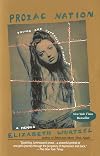
As a person with depression, reading Prozac Nation was like being forced to take a guided tour of my younger years. Elizabeth Wurtzel holds no punches in describing her agonizing battle with her mental illness. However, her insightful, well educated mind is the second commentator in the book, constantly analyzing, pushing for answers and screaming rhetorical questions that have gone unanswered for millennia. The ensuing dialogue speeds to the end, revealing much about the title of the book.
Lists
Awards


You May Also Like


Associated Authors
Statistics
- Works
- 7
- Also by
- 3
- Members
- 6,627
- Popularity
- #3,695
- Rating
- 3.4
- Reviews
- 87
- ISBNs
- 76
- Languages
- 16
- Favorited
- 26
