
About the Author
Works by William Patrick Patterson
Eating the I: A Direct Account of the Fourth Way- The Way of Using Ordinary Life to Come to Real Life (In Search of the Self), Revised & Expanded Edition (1992) 48 copies
Taking With the Left Hand: Enneagram Craze, People of the Bookmark, & The Mouravieff "Phenomenon" (1998) 32 copies, 1 review
Struggle of the Magicians: Why Uspenskii Left Gurdjieff : Exploring the Teacher-Student Relationship (1996) 26 copies
Voices in the Dark: Esoteric, Occult & Secular Voices in Nazi-Occupied Paris, 1940-44 (2001) 24 copies
The Life & Significance of George Ivanovitch Gurdjieff, Part I - Gurdjieff in Egypt: The Origin of E (1997) 4 copies
Η Πάλη των Μάγων 1 copy
Tagged
Common Knowledge
There is no Common Knowledge data for this author yet. You can help.
Members
Reviews
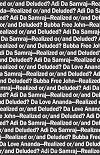
William Patrick Patterson's newest book, Adi Da Samraj: Realized or/and Deluded, is the first evenhanded and detailed exploration of one of the most enigmatic, self-styled spiritual gurus of the last half of the 20th century. America's first young, hip guru, Adi Da Samraj, ne Franklin Jones (1939 2008), self-proclaimed Avatar of Avatars, not only of this age but all ages to come, had a meteoric rise and subsequent fall after devotees went public with his crazy wisdom teaching of sex, drugs show more and alcohol. Totally committed to spiritual realization, Jones took only six years to realize Sahaj Samadhi, the pointless point of view. Preceding this was a copious use of drugs, and then contentious relations with his two teachers, Albert Rudolph ("Rudi," later Swami Rudranada), a former student of Gurdjieff's Fourth Way, and Swami Muktananda. Intuiting that everyone unconsciously lived the Narcissus myth of separation and denial as he had, Jones founded what he believed was a radical new teaching combining elements of Kundalini Yoga, Fourth Way, Buddhism and Advaita Vedanta along with the acceptance of himself as God incarnate. To break through the narcissism that blocked devotees spiritual realization, he persuaded them to enter into sexually shocking situations with himself and each other. Though experience proved this method hurt far more than helped, Adi Da insisted on what he called "sexual theatre," later renamed "sexual communion," until his last days on the remote Fijian island hermitage to which he had withdrawn. After tracing Adi Da's life from beginning to end, Patterson gives a penetrating analysis of the key concepts of the teaching before coming to the heart of the question - How can someone be realized at the highest level and act this way with his devotees? Adi Da always maintained that realization does not destroy the "person", so just who was his "person"? From a careful reading of Adi Da's books, Patterson gleans an assemblage of facts pointing to a hidden wound that usurped Adi Da's realization for its own ends, giving an archetypal example of wrong crystallization. The esoteric and spiritual questions Adi Da Samraj Realized or/and Deluded raises are acutely seminal and ones every seeker and adept needs to long ponder. --The Gurdjieff Journal show less
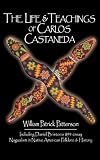
If you´re a fan of Castaneda, want to know more about him, but don´t mind being disillusioned about the level of his character and spiritual development, this is the book for you!
I was sorry to learn about these negative aspects of Castaneda´s personality, but then it saves me from having to read further books about or by him, though I may do, nonetheless.
The author tells us about the sources of Castaneda´s teachings, including the similarity of his teachings with those of Gurdjieff, show more recounts the events of his life and provides information about his “witches”. We are given definitions of the basic terms used in his books, and a summary of his intrinsic ideas/beliefs.
The universe is composed not only of energy but will, intent. “The ´human mould´ is the conditional matrix of self-belief in which all humanity is born, lives and dies, except for the few who have the power to break the mould.” To do so one must be able to “stop the world”, that is, to stop the internal dialogue “so that the ´world´ one is always telling oneself about stops”. “One strives to be impeccable, that is, to give full attention to whatever and whomever we are engaged with.”
To stop the world, there must be intent, and the “purposeful guiding of will”. In stopping the world “one comes to the totality of oneself and experiences inner silence”. Inner silence is the stand from which everything stems in sorcery.
As regards Don Juan, we are not really enlightened as to whether he actually existed. Margaret Runyon, one of C´s wives, claimed that there was a real Don Juan, but that the Don Juan of his books “became a different creature --- made up of equal parts real Indian, pure Castaneda imagination, library research”, etc. etc.
Castaneda was a short, dark man with black curly hair who could “charm your soul”. He was a “curandero, a shaman, a magician”. One person said that he was a “big liar and a real friend”.
He was a tyrant in his relationships with the “witches”. He had an obsession with body odour, so the “witches” had to be “well-bathed” and to use identical bath products. All body hair had to be removed and pubic hair shaved in prescribed ways. He hated body fat so the women did hours of daily exercise. All their jewelry was to be given to him, and their best clothing were to be shredded – to destroy their self-importance. Words like “love”, “friendship”, “family” and “need” were forbidden.
Though C proclaimed his celibacy at seminars, he was a sexaholic. He “was intent on bedding every woman he met”. However, his female students were not allowed to have sex with anyone but him. The men were to live entirely celibate lives. When he grew tired of having sex with any of the women, he insisted that they be celibate but also pimp for him.
He constantly demanded attention and drove Florinda, one of the witches, “crazy with his neediness” (though neediness was forbidden in his teachings).
His lover, Amy Wallace, said:
“Carlos had begun as a genuine seeker – but ended as a tyrant watching over a cult of terrified followers”. Spirits were crushed, people were humiliated publicly. There were malevolence, breakdowns, illness and anguish,
I was disappointed that C was thus in no way spiritually developed, and neither were the “witches” and other students, otherwise they would not have accepted C´s tyranny.
C developed glaucoma, diabetes and liver cancer. He did not use his knowledge to heal himself, but underwent conventional medical treatments.
According to C., the death of the average human being is a termination of their awareness, while with sorcerers awareness remains.
His so-called “path of heart” had nothing to do with compassion, but only courage, fearlessness and resoluteness.
When C died, two of the “witches” disappeared, as did two others from his company; they had planned to commit suicide when he died, and it looked as though they did. The Nagual woman, Carol Tiggs, remained alive, but then again, she was the “Death defier”.
To sum up, I found the book to be well-written, informative, detailed about C´s sources, beliefs, relationships and life as a whole. It just didn´t provide information I wanted to hear, ha, ha! But it is a useful contribution to the understanding of the mythical and near-archetypal person, Carlos Castaneda. Read it, if you don´t mind being disillusioned. show less
I was sorry to learn about these negative aspects of Castaneda´s personality, but then it saves me from having to read further books about or by him, though I may do, nonetheless.
The author tells us about the sources of Castaneda´s teachings, including the similarity of his teachings with those of Gurdjieff, show more recounts the events of his life and provides information about his “witches”. We are given definitions of the basic terms used in his books, and a summary of his intrinsic ideas/beliefs.
The universe is composed not only of energy but will, intent. “The ´human mould´ is the conditional matrix of self-belief in which all humanity is born, lives and dies, except for the few who have the power to break the mould.” To do so one must be able to “stop the world”, that is, to stop the internal dialogue “so that the ´world´ one is always telling oneself about stops”. “One strives to be impeccable, that is, to give full attention to whatever and whomever we are engaged with.”
To stop the world, there must be intent, and the “purposeful guiding of will”. In stopping the world “one comes to the totality of oneself and experiences inner silence”. Inner silence is the stand from which everything stems in sorcery.
As regards Don Juan, we are not really enlightened as to whether he actually existed. Margaret Runyon, one of C´s wives, claimed that there was a real Don Juan, but that the Don Juan of his books “became a different creature --- made up of equal parts real Indian, pure Castaneda imagination, library research”, etc. etc.
Castaneda was a short, dark man with black curly hair who could “charm your soul”. He was a “curandero, a shaman, a magician”. One person said that he was a “big liar and a real friend”.
He was a tyrant in his relationships with the “witches”. He had an obsession with body odour, so the “witches” had to be “well-bathed” and to use identical bath products. All body hair had to be removed and pubic hair shaved in prescribed ways. He hated body fat so the women did hours of daily exercise. All their jewelry was to be given to him, and their best clothing were to be shredded – to destroy their self-importance. Words like “love”, “friendship”, “family” and “need” were forbidden.
Though C proclaimed his celibacy at seminars, he was a sexaholic. He “was intent on bedding every woman he met”. However, his female students were not allowed to have sex with anyone but him. The men were to live entirely celibate lives. When he grew tired of having sex with any of the women, he insisted that they be celibate but also pimp for him.
He constantly demanded attention and drove Florinda, one of the witches, “crazy with his neediness” (though neediness was forbidden in his teachings).
His lover, Amy Wallace, said:
“Carlos had begun as a genuine seeker – but ended as a tyrant watching over a cult of terrified followers”. Spirits were crushed, people were humiliated publicly. There were malevolence, breakdowns, illness and anguish,
I was disappointed that C was thus in no way spiritually developed, and neither were the “witches” and other students, otherwise they would not have accepted C´s tyranny.
C developed glaucoma, diabetes and liver cancer. He did not use his knowledge to heal himself, but underwent conventional medical treatments.
According to C., the death of the average human being is a termination of their awareness, while with sorcerers awareness remains.
His so-called “path of heart” had nothing to do with compassion, but only courage, fearlessness and resoluteness.
When C died, two of the “witches” disappeared, as did two others from his company; they had planned to commit suicide when he died, and it looked as though they did. The Nagual woman, Carol Tiggs, remained alive, but then again, she was the “Death defier”.
To sum up, I found the book to be well-written, informative, detailed about C´s sources, beliefs, relationships and life as a whole. It just didn´t provide information I wanted to hear, ha, ha! But it is a useful contribution to the understanding of the mythical and near-archetypal person, Carlos Castaneda. Read it, if you don´t mind being disillusioned. show less
Taking With the Left Hand: Enneagram Craze, People of the Bookmark, & The Mouravieff "Phenomenon" by William Patrick Patterson
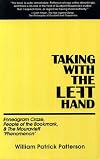
A fairly esoteric book on a fairly esoteric subject. There are entertaining but also historically orientated books on Gurdjieff and the movements he left in his wake (Madame Blatavsky's Baboon Comes to Mind [book: Madame Blatavsky's Baboon]) -- but this is not one of those. It's probably only of interest to scholars working with weird American religious movements, and those who have run into, around, or afoul of some of the knockoff faux Gurdjieff groups (or know those who have). If none of show more those descriptions fits you, don't bother. If one does, though, dive in; the information in this book is extremely rare and hard to find. show less
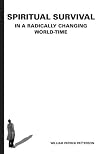
> SPIRITUAL SURVIVAL, in a Radically Changing World-Time, de William Patrick Patterson. — La survie spirituelle dans un monde en changement radical.... car, note l’auteur, nous vivons dans un monde sous haute tension, et il pointe la technologie comme la menace la plus immédiate. Celle-ci envahit do plus en plus le quotidien d’une part par l’utilisation que chacun en fait (internet, mp3 et autres consoles de jeux), mais aussi par le rôle de ladite technologie dans tous les show more domaines, de la science à la finance. La mécanisation et l’informatisation ont un effet pervers : elles font penser et travailler l’être humain à leur manière. On objectera à cette remarque que les machines ont été créées par la pensée humaine, et qu’au final leur manière de nous faire penser et travailler est un reflet de la pensée humaine. Mais la question est là : de quelle pensée s’agit-il ? Sur quel niveau fonctionne-t-elle ? Or, la machine est programmée, et nous programme, à "fonctionner en mode binaire : oui ou non, blanc ou noir. Notre pensée se mécanise. Notre vie se mécanise. Où mène alors cette robotisation de l’âme humaine ? Il suffit d’ouvrir le journal télévisé et de voir l’état du monde ! Être une mécanique, c’est être coupé de ses sentiments, vivre dans la tête en mode binaire. La technologie met à notre disposition des instruments souvent étonnants, fascinants par leurs possibilités, pouvant être très utiles, mais qui tous ne s’adressent qu’à la tête, et donc attirent notre énergie dans la partie supérieure du corps. Notre attention est captée, identifiée à un monde artificiel, nous coupant de nos sens. L’ouvrage est axé sur cela : découvrir notre mécanicité. Voir à quel niveau elle se situe, comment elle fonctionne et nous agit. L’auteur, qui dirige des groupes Gurdjieff, présente de larges extraits de dialogues qui ont lieu au sein desdits groupes. Ces dialogues reposent essentiellement sur des constatations vécues de personnes sur leur propre fonctionnement. Le matériel ainsi mis à la disposition du lecteur, les réponses qui y sont apportées, apportent un éclairage sur notre état de sommeil diurne : « vous ne vivez pas votre vie ; c’est elle qui vous vit. Représentez-vous sur un bateau en train de dormir à la barre. Au lieu d’être piloté, le bateau est pris par le vent et les courants ». Mais une démarche vivante de connaissance de soi peut permettre à l’être humain d’expérimenter d’autres états d’être, de conscience. C’est de cela dont il est question dans l’ouvrage. À la suite des dialogues se trouvent plusieurs essais sur la connaissance de soi, dont certains publiés par l’auteur dans la Revue 3e millénaire (voir les n°81, 82 & 83): « le but est sans but... Il est, et ne peut être, que dans le moment présent. Les impressions que nous recevons nous captent, si nous leur disons « je ». Et alors, bien sûr, nous avons une foule de « buts ». Le mental doit être calme pour que l’attention vienne dans le corps. Cela va changer la qualité de notre énergie, nous amener à la présence. Nous écoutons, nous nous dilatons, à partir de là. Tout le reste est dormir, sans but. Est-ce que vous suivez ? » Ed. Arête Communication, 2009 - 378 p.
—3e millénaire, (91), Printemps 2009 show less
—3e millénaire, (91), Printemps 2009 show less
Mar 27, 2019 (Edited)French
You May Also Like


Statistics
- Works
- 19
- Members
- 212
- Popularity
- #104,833
- Rating
- 4.4
- Reviews
- 5
- ISBNs
- 19
- Languages
- 2