
Franck Prévot
Author of Wangari Maathai: The Woman Who Planted Millions of Trees
About the Author
Image credit: Franck Prévot
Works by Franck Prévot
Tagged
Common Knowledge
- Birthdate
- 1968
- Gender
- male
- Occupations
- writer
primary school teacher - Nationality
- France
- Birthplace
- Bourg-en-Bresse, France
- Associated Place (for map)
- Bourg-en-Bresse, France
Members
Reviews

Author Franck Prévot and illustrator Aurélia Fronty join forces in this lovely picture-book biography of Kenyan environmental activist and Nobel Peace Prize-winner Wangari Maathai, originally published in France. Following Maathai from her childhood during Kenya's colonial days, when she received an education - very atypical for young girls in this period - the narrative explores her experiences as one of six hundred students invited to study in the United States in 1960, and her show more activities once she returned to her own land, and discovered the state of environmental degradation there, as a result of widespread deforestation. Maathai's activism, her founding of the Green Belt Movement to replant trees, her opposition to the tyrannical government of President Daniel arap Moi - these are all covered. The book concludes with an extensive afterword that gives a timeline of Maathai's life, a discussion of Kenya today, and of the importance of forests, worldwide...
Originally published in French as Wangari Maathai, La femme qui plante des millions d'arbres, this is the fifth picture-book biography of Wangari Maathai that I have read, following upon Donna Jo Napoli and Kadir Nelson's Mama Miti: Wangari Maathai and the Trees of Kenya, Jeanette Winter's Wangari's Trees of Peace: A True Story from Africa, Claire A. Nivola's Planting the Trees of Kenya: The Story of Wangari Maathai and Jen Cullerton Johnson and Sonia Lynne Sadler's Seeds of Change: Wangari's Gift to the World. I am glad that I bothered to track it down, despite having read all of the foregoing titles, as it is, without a doubt, the best of the lot. The illustrations from Aurélia Fronty are absolutely gorgeous - beautiful color palette, fascinating stylized trees, an interesting overall visual composition on each page - but then, the artwork in many of these other titles is also lovely. No, what sets Wangari Maathai: The Woman Who Planted Millions of Trees apart from its counterparts is that it gives a much fuller account of its subject's life, touching upon the realities of colonialism when Maathai was young, the fact that she was imprisoned multiple times for her activism, and the fact that her behavior was considered atypical for women, in her culture. The portrait created here for young readers is a much richer one, I think, than that available in the four American picture-books mentioned above, and I am glad therefore, that it was translated. Recommended to picture-book readers who enjoy biography, or who are interested in environmental activism and/or stories of inspirational people. show less
Originally published in French as Wangari Maathai, La femme qui plante des millions d'arbres, this is the fifth picture-book biography of Wangari Maathai that I have read, following upon Donna Jo Napoli and Kadir Nelson's Mama Miti: Wangari Maathai and the Trees of Kenya, Jeanette Winter's Wangari's Trees of Peace: A True Story from Africa, Claire A. Nivola's Planting the Trees of Kenya: The Story of Wangari Maathai and Jen Cullerton Johnson and Sonia Lynne Sadler's Seeds of Change: Wangari's Gift to the World. I am glad that I bothered to track it down, despite having read all of the foregoing titles, as it is, without a doubt, the best of the lot. The illustrations from Aurélia Fronty are absolutely gorgeous - beautiful color palette, fascinating stylized trees, an interesting overall visual composition on each page - but then, the artwork in many of these other titles is also lovely. No, what sets Wangari Maathai: The Woman Who Planted Millions of Trees apart from its counterparts is that it gives a much fuller account of its subject's life, touching upon the realities of colonialism when Maathai was young, the fact that she was imprisoned multiple times for her activism, and the fact that her behavior was considered atypical for women, in her culture. The portrait created here for young readers is a much richer one, I think, than that available in the four American picture-books mentioned above, and I am glad therefore, that it was translated. Recommended to picture-book readers who enjoy biography, or who are interested in environmental activism and/or stories of inspirational people. show less
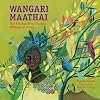
Wangari Maathai: The Woman Who Planted Millions of Trees by Franck Prevot tells the story of Nobel Peace prize recipient Wangari Mathai, who spearheaded an environmental movement in Kenya to combat and counterbalance deforestation from a feminist, opposition party standpoint. Despite being jailed and beaten repeatedly, Maathai never stands down and eventually succeeds in establishing the Green Belt Movement to plant trees across Kenya and wins a seat in parliament. The book is lavishly show more illustrated with colorful paintings resplendent with bright Kenyan fabric prints and vivid backgrounds. The afterwords provide excellent supplementary material about her life and the environmental and political histories of Kenya.
The story is a straightforward biographical narrative. It does not raise Maathai to a superhuman status as some children’s biographies are wont to do with international heroes, but rather lays out the major events of her life in a matter of fact way. The reality of these facts provides all the poignancy needed to keep the reader engaged. This book would be an excellent read-aloud for studies on cultures outside the United States, on environmental movements, on environmental science, and during Black History Month. The simple language combined with a wealth of information not just in the main text, but in the afterwords, makes this book appropriate for age levels ranging from Kindergarten up through fifth or sixth grade. show less
The story is a straightforward biographical narrative. It does not raise Maathai to a superhuman status as some children’s biographies are wont to do with international heroes, but rather lays out the major events of her life in a matter of fact way. The reality of these facts provides all the poignancy needed to keep the reader engaged. This book would be an excellent read-aloud for studies on cultures outside the United States, on environmental movements, on environmental science, and during Black History Month. The simple language combined with a wealth of information not just in the main text, but in the afterwords, makes this book appropriate for age levels ranging from Kindergarten up through fifth or sixth grade. show less
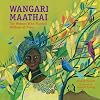
Adding to a growing collection of picture book biographies about the Kenyan activist and winner of the 2004 Nobel Peace Prize, this richly colorful and beautifully told biography is a worthy addition to every library. Prevot firmly roots Maathai’s environmental consciousness in her mother’s giving her a garden as well as her brother’s innocent question: “Why doesn’t Wangari go to school?” Against the norm, Wangari’s mother sends her daughter to school, and this opportunity show more changes first her world and then the larger world. After receiving degrees in the United States and understanding the devastating effects that poverty and corrupt government in Kenya, Maathai returns to found the Green Belt Movement and to fight for Women’s rights. Fronty’s folk art style with deep hues is singularly striking, enhancing and echoing the environmental message. show less
This book is so beautiful! Fronty is a beautiful painter and illustrator. Every page is covered in so much color and a range of hyper detail to smudged innuendos. In addition to the art, Wangari's story is so inspiring. We hear about experience from her birth in 1940 all the way through 2002 when she is elected to parliament. The text in the novel is factual and full of explanation but does not have the drowning tone that many non fictions books can have. It can get a little preachy when show more talking about off her accomplishments and how much she must over come etc etc but really her story is worth the hype. What is also very nice about this book is that there is a whole informational section in the back with a timeline and real photos, along with where Kenya is currently. Maps, quotes, and further information on forests in general. show less
Lists
Awards


You May Also Like


Associated Authors
Statistics
- Works
- 19
- Members
- 485
- Popularity
- #50,912
- Rating
- 4.4
- Reviews
- 15
- ISBNs
- 28
- Languages
- 3