
Allan Drummond
Author of Energy Island: How one community harnessed the wind and changed their world
About the Author
Image credit: via Macmillan
Works by Allan Drummond
Energy Island: How one community harnessed the wind and changed their world (2011) 387 copies, 39 reviews
Green City: How One Community Survived a Tornado and Rebuilt for a Sustainable Future (2016) 110 copies, 15 reviews
Solar Story: How One Community Lives Alongside the World's Biggest Solar Plant (2020) 40 copies, 4 reviews
Zero Waste: How One Community Is Leading a World Recycling Revolution (Green Power) (2023) 19 copies, 1 review
Ten Tales For Republicans 1 copy
J.C. 1 copy
Associated Works
The Journey That Saved Curious George: The True Wartime Escape of Margret and H.A. Rey (2005) — Illustrator — 820 copies, 18 reviews
Tagged
Common Knowledge
- Gender
- male
Members
Reviews
Zero Waste: How One Community Is Leading a World Recycling Revolution (Green Power) by Allan Drummond
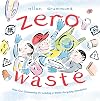
Kamikatsu is a small town in Japan that used to have a terrible pollution problem. Scientists came and discovered poisonous dioxins in the soil, air, and water because of how residents were disposing of waste (incinerators and trash pits). "People had to start looking seriously at reducing, reusing, and recycling the waste. Either that, or the town would die." People spoke up - including the narrators' grandma - and began to make big changes. In 2003 the town made a Zero Waste declaration, show more that Kamikatsu would be the world's first Zero Waste town by 2020. Today, the community recycles more than 80 percent of its waste: "We know that's not everything. But if the whole world did this..." Indeed.
Sidebars throughout and an author's note and photos at the end provide extra information about "reduce, reuse, recycle," the problems waste causes, and the idea of Zero Waste.
"Kachou fuugetsu...means, 'Experience the beauty of nature. Learn about yourself.'" show less
Sidebars throughout and an author's note and photos at the end provide extra information about "reduce, reuse, recycle," the problems waste causes, and the idea of Zero Waste.
"Kachou fuugetsu...means, 'Experience the beauty of nature. Learn about yourself.'" show less
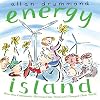
Summary: This children's informational text was about a community of people who lived on an island off of Denmark and their energy story. This community took it into their own hands to become energy independent in which they used natural resources to create their own energy instead of getting it from Denmark. The community worked together and achieved their goal. The island is now completely energy efficient and the book teaches about the types of energy and the resources.
Argument: There show more were many reasons I enjoyed this informational text. First, this book was not an average informational text. It wasn't covered page by page with information but instead it was told like a story. It talked about the community in a fun and exciting way with such emotion. The second reason I enjoyed this book was its differentiation between story and information. The story about the community is in the middle of the page and on some pages to the far right or left side there is a bar with information about types of energy or resources. I like how it gave facts with the story. The last reason I enjoyed this book was for its pictures and text formatting. The text was broken up in two to three sentences on different parts of each page. Each segment of text had its own small illustration so there could be up to eight separate illustrations on each page. It was very fun and engaging to read.
The main theme of this to teach about the different types of energy resources and how to become energy independent. It is a persuasion text that convinces others to go energy independent just like the community in the book. show less
Argument: There show more were many reasons I enjoyed this informational text. First, this book was not an average informational text. It wasn't covered page by page with information but instead it was told like a story. It talked about the community in a fun and exciting way with such emotion. The second reason I enjoyed this book was its differentiation between story and information. The story about the community is in the middle of the page and on some pages to the far right or left side there is a bar with information about types of energy or resources. I like how it gave facts with the story. The last reason I enjoyed this book was for its pictures and text formatting. The text was broken up in two to three sentences on different parts of each page. Each segment of text had its own small illustration so there could be up to eight separate illustrations on each page. It was very fun and engaging to read.
The main theme of this to teach about the different types of energy resources and how to become energy independent. It is a persuasion text that convinces others to go energy independent just like the community in the book. show less
Solar Story: How One Community Lives Alongside the World's Biggest Solar Plant (Green Power) by Allan Drummond
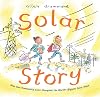
Educational, teaches kids about the solar system while in a setting outside of the US to offer different perspective. I also really liked this because it set in Morocco and I never see Morocco in books.
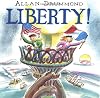
"Liberty!" tells the story of a boy who played a special roll on the day the Statue of Liberty was unveiled. Allen Drummond does an extraordinary job of setting the scene in this book. He used a very descriptive technique which made the reader feel as if they were in the setting with the main character.
I enjoyed this book, and the underlying message which comes out at the end. It talks about us all being the same and equal. That no one group of people are better than any other. I believe show more this is an important message for children especially in todays cultural climate. I thought the last line was extremely powerful
"Freedom is like a flame we must all hold high and give to others and keep burning bright all around the world." show less
I enjoyed this book, and the underlying message which comes out at the end. It talks about us all being the same and equal. That no one group of people are better than any other. I believe show more this is an important message for children especially in todays cultural climate. I thought the last line was extremely powerful
"Freedom is like a flame we must all hold high and give to others and keep burning bright all around the world." show less
Lists
Awards


You May Also Like


Associated Authors
Statistics
- Works
- 44
- Also by
- 3
- Members
- 1,144
- Popularity
- #22,444
- Rating
- 4.1
- Reviews
- 82
- ISBNs
- 95
- Languages
- 2