
Jen Green
Author of Why Should I Recycle?
About the Author
Dr. Jen Green worked in publishing for 15 years and is now a full-time writer who has written over 200 books for children, on geography, the environment, history, natural history, and other subjects.
Disambiguation Notice:
Jen Green had been split with the feminist sci-fi anthology separated from the rest of the works. The LoC Name Authority File attributes it to the same author. If you think the LoC is wrong, can you cite some identifying evidence for another Jen Green?
Series
Works by Jen Green
Despatches from the Frontiers of the Female Mind: An Anthology of Original Stories (1985) — Editor — 132 copies, 2 reviews
You Wouldn't Want to Be a Polar Explorer!: An Expedition You'd Rather Not Go on (2001) 98 copies, 1 review
National Geographic Investigates Ancient Celts: Archaeology Unlocks the Secrets of the Celts' Past (2008) 61 copies, 2 reviews
Everyday Life in the Ancient World: Illustrated History Encyclopedia (2001) — Contributor — 47 copies
Oceans In 30 Seconds: 30 Cool Topics for Junior Marine Explorers Explained in Half a Minute (Children's 30 Seconds) (2015) 30 copies
Barron's Amazing Fact-Packed, Fold-Out Atlas of the World: With Awesome Pop-Up Map! (2014) 22 copies
Sustaining Our Natural Resources (Raintree Freestyle: The Environment Challenge) (2011) 22 copies, 1 review
Weather in 30 Seconds: 30 amazing topics for weather wiz kids explained in half a minute (Kids 30 Second) (2015) 20 copies, 1 review
Hands-On History! Eskimo, Inuit, Saami & Arctic Peoples: Learn all about the inhabitants of the frozen north, with 15 step-by-step projects and over 350 exciting pictures (2014) 6 copies, 1 review
Audacious Aviators: True Stories of Adventurers' Thrilling Flights (Ultimate Adventurers) (2014) 6 copies
The Big Bug Book by Green, Jen, Taylor, Barbara, Farndon, John published by Lorenz Books (2006) 5 copies
Big Cats and Wild Dogs: Explore the Incredible World and Lions, Tigers, Cheetahs, Leopards, Wolves, Hyenas, Dingos and Other Hunting Dogs (2005) 5 copies
Rainforests in 30 Seconds: 30 fascinating topics for rainforest fanatics explained in half a minute (Kids 30 Second) (2018) 3 copies
Rainforests in 30 Seconds: 30 fascinating topics for rainforest fanatics explained in half a minute (Kids 30 Second) (2017) 3 copies
40 Bird Boxes, Feeders & Birdbaths: Practical Projects to Turn Your Garden Into a Haven for Birds (2020) 2 copies
Green: The Planets And Solar System [Ruth Sillers] [Naxos AudioBooks: NA0156] (Naxos Junior Classics) (2014) 2 copies
Extreme Animal Battles 2 copies
How to Make 40 Beautiful Bird Boxes, Feeders and Birdbaths: Attract Birds to Your Garden by Creating Nesting Sites and Feeding Stations (2010) 2 copies
Practical Projects to Make 40 Bird Boxes, Feeders and Birdbaths: Easy-to-follow Step-by-step Instructions and 380 Photographs (2014) 1 copy
Koku noslēpumi 1 copy
AKU ISTIMEWA 1 copy
Nature's Children, Termites 1 copy
Nature's Children, Gophers 1 copy
Nature's Children - Crabs 1 copy
Dinosaurama 1 copy
Ik heb een handicap 1 copy
How To Keep My Body Healthy and Safe (Body Safety Book for Children (Gender and Ethnicity inclusive)) (2021) 1 copy
Changing Scenes: Celebrating 150 Years of the Tenbury Agricultural Society. 1858 - 2008 (2008) 1 copy
Mexico 1 copy
Associated Works
Tagged
Common Knowledge
- Birthdate
- 1955
- Gender
- female
- Education
- University of Sussex (PhD)
- Nationality
- UK
- Disambiguation notice
- Jen Green had been split with the feminist sci-fi anthology separated from the rest of the works. The LoC Name Authority File attributes it to the same author. If you think the LoC is wrong, can you cite some identifying evidence for another Jen Green?
- Associated Place (for map)
- UK
Members
Reviews

[Despatches from the Frontiers of the Female Mind] was published by the Women's Press in 1984. Edited and with an introduction by Jen Green and Sarah Lefanu, this collection of 17 short stories written by women is most definitely feminist, exploring themes of gender roles, reproductive choices, societal trends, science fiction gender tropes, and more. Indeed, this anthology is clearly the child of second-wave feminism. The introduction does a great job discussing representation of women in show more science fiction by male authors, why women want to write speculative fiction, and name checking all the big names (of women authors) from the 1950s to the 1980s. It references and builds upon the groundbreaking [Women of Wonder] anthology from 1978 (also part of my personal library).
The only authors presented here whose names I recognized were Joanna Russ, Tanith Lee, Mary Gentle, and Raccoona Sheldon. Not surprising, since the majority of the authors are British, and I'm just not familiar with British speculative fiction. Each story is prefaced by an author bio and in many cases her comments about the story and its inspiration.
ALL of the stories are interesting. "Big Operation on Altair Three" opens the collection with a satirical take on advertising, consumerism, and mature female stars, which is just as relevant today. Some are not at all subtle, such as "The Cliches from Outer Space" and "Morality Meat." Some I found kinda bizarre and will probably have to sit with for awhile ("Apples in Winter" and "Instructions for Exiting This Building in Case of Fire" and "Words" and "Relics"). I particularly enjoyed "Spinning the Green," a retelling of Beauty and the Beast, my favorite fairy tale as a child. "Atlantis 2045: no love between planets" and "The Awakening" were quite chilling dystopias. "The Intersection," "Love Alters," and "A Sun in the Attic" were very memorable visions of distant-future alternative societies. "Cyclops" connects ancient Greece with the distant future among the stars. "Mab" imagines human parthenogenesis. I found "Long Shift" charming and bittersweet in its portrayal of women using telekinesis in an industrial capacity and dedication to the public welfare.
I enjoyed the range of styles, topics, and points of view. I certainly recommend others try to find this book too. show less
The only authors presented here whose names I recognized were Joanna Russ, Tanith Lee, Mary Gentle, and Raccoona Sheldon. Not surprising, since the majority of the authors are British, and I'm just not familiar with British speculative fiction. Each story is prefaced by an author bio and in many cases her comments about the story and its inspiration.
ALL of the stories are interesting. "Big Operation on Altair Three" opens the collection with a satirical take on advertising, consumerism, and mature female stars, which is just as relevant today. Some are not at all subtle, such as "The Cliches from Outer Space" and "Morality Meat." Some I found kinda bizarre and will probably have to sit with for awhile ("Apples in Winter" and "Instructions for Exiting This Building in Case of Fire" and "Words" and "Relics"). I particularly enjoyed "Spinning the Green," a retelling of Beauty and the Beast, my favorite fairy tale as a child. "Atlantis 2045: no love between planets" and "The Awakening" were quite chilling dystopias. "The Intersection," "Love Alters," and "A Sun in the Attic" were very memorable visions of distant-future alternative societies. "Cyclops" connects ancient Greece with the distant future among the stars. "Mab" imagines human parthenogenesis. I found "Long Shift" charming and bittersweet in its portrayal of women using telekinesis in an industrial capacity and dedication to the public welfare.
I enjoyed the range of styles, topics, and points of view. I certainly recommend others try to find this book too. show less

This is a good explanation of basic weather systems, and includes things I'd forgotten like layers of the atmosphere and what the different cloud types are/mean, so that's great. I appreciate that the book even explains rains of frogs. I like the inclusion of the at-home experiments as well. Hands-on learning is so awesome.
I would really love to see a book use a more accurate map than the incorrect Mercator projection. (You can google "Mercator projection distortion" for more info.) Kids show more books especially have an obligation to get this correct from the very start.
I appreciate the inclusion of climate change and the fact that it will have a drastic impact on weather and that will in turn decrease our ability to live in the world. As always the solutions given are individual, not systemic-level. I'd love to see more "petition governments to hold large businesses accountable" but I guess perhaps that's advanced for a kids' book.
I received a free eARC of this book from the publisher via Netgalley in exchange for my honest review. show less
I would really love to see a book use a more accurate map than the incorrect Mercator projection. (You can google "Mercator projection distortion" for more info.) Kids show more books especially have an obligation to get this correct from the very start.
I appreciate the inclusion of climate change and the fact that it will have a drastic impact on weather and that will in turn decrease our ability to live in the world. As always the solutions given are individual, not systemic-level. I'd love to see more "petition governments to hold large businesses accountable" but I guess perhaps that's advanced for a kids' book.
I received a free eARC of this book from the publisher via Netgalley in exchange for my honest review. show less
Hands-On History! Eskimo, Inuit, Saami & Arctic Peoples: Learn all about the inhabitants of the frozen north, with 15 step-by-step projects and over 350 exciting pictures by Jen Green
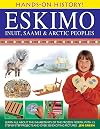
This was an absolutely spectacular read about the history, society, customs, and culture of Native People who live closer to our Arctic circle. The language is simple, soft, to the point, and beautifully sized font. The lavishly designed pages, illustrations, photos, and min-craft projects gave a real sense of respect and love for the people being discussed. The pacing of how each culture and their customs was broken down made proper if not optimal use of the third-person narration point of show more view. There were no characters in particular, but if we can describe the culture as a character to be experienced, then the character of this story was extremely well developed with the writing making sense as it flowed from topic to topic. I would recommend this book to any child or adult, and will be searching for ones like it about different cultures and people. show less

A fun look at oceans, with good explanations of how the ocean works. The pictures explain things clearly and I love the inclusion of at-home experiments that people can try to see how things work for themselves.
I was gratified to see the discussion about climate change included. I am confused about why the person in the 10,000 years ago dugout boat is so pasty looking instead of brown-skinned. And then we get into sea exploration and "famous" Christopher Columbus, which would probably be show more better avoided if one isn't able to discuss the issues with the explorers. I think that it would be better to put the plastic pollution box larger, especially if you're going to say that we make plastic from oil from the ocean. That could get confusing very quickly. And I think the "waste harms coral reefs" is not a strong enough sentence - "waste kills coral reefs" would be more clear and honest. Kids are the ones who are going to be making decisions about how to act environmentally in the future, so they need to know the truth now.
One quibble that did not take away from my enjoyment of the story, but which I do want to bring up: "Fish, seals, and whales have smooth, streamlined bodies shaped like torpedoes." Shouldn't it be "Fish, seals, and whales have smooth, streamlined bodies and we shaped torpedoes like them"? Because really, which came first. Also, I don't really expose my kid to war and violence anyway - she's three and I'd read a book about oceans with her but she doesn't need to know what a torpedo is. It's something we're so accustomed to using as an analogy that we don't really think about it, but I think we should.
I received a free eARC of this book from the publisher via Netgalley in exchange for my honest review. show less
I was gratified to see the discussion about climate change included. I am confused about why the person in the 10,000 years ago dugout boat is so pasty looking instead of brown-skinned. And then we get into sea exploration and "famous" Christopher Columbus, which would probably be show more better avoided if one isn't able to discuss the issues with the explorers. I think that it would be better to put the plastic pollution box larger, especially if you're going to say that we make plastic from oil from the ocean. That could get confusing very quickly. And I think the "waste harms coral reefs" is not a strong enough sentence - "waste kills coral reefs" would be more clear and honest. Kids are the ones who are going to be making decisions about how to act environmentally in the future, so they need to know the truth now.
One quibble that did not take away from my enjoyment of the story, but which I do want to bring up: "Fish, seals, and whales have smooth, streamlined bodies shaped like torpedoes." Shouldn't it be "Fish, seals, and whales have smooth, streamlined bodies and we shaped torpedoes like them"? Because really, which came first. Also, I don't really expose my kid to war and violence anyway - she's three and I'd read a book about oceans with her but she doesn't need to know what a torpedo is. It's something we're so accustomed to using as an analogy that we don't really think about it, but I think we should.
I received a free eARC of this book from the publisher via Netgalley in exchange for my honest review. show less
Lists
Awards


You May Also Like


Associated Authors
Statistics
- Works
- 341
- Also by
- 6
- Members
- 6,935
- Popularity
- #3,525
- Rating
- 3.9
- Reviews
- 79
- ISBNs
- 1,050
- Languages
- 20