

Carl Carmer (1893–1976)
Author of The Hudson
About the Author
Carl Carmer (1893-1976) was Vice President of the Board of Trustees for the New York State Historical Association and was Honorary Trustee of the New York State Folklore Society.
Image credit: via Biblioguides
Works by Carl Carmer
The Tavern Lamps Are Burning: Literary Journeys through Six Regions and Four Centuries of New York State (1964) 25 copies
The Jesse James of the Java Sea 2 copies
To the Ice-bound Seas 2 copies
A Tower of Strength 1 copy
The Lordly Hudson 1 copy
A Pair of Gloves 1 copy
Some University of Alabama Poets: First Series — Editor — 1 copy
The Lone Grave 1 copy
The Phantom Merry-Go-Round 1 copy
Bond of Reunion 1 copy
A Girl Named Lavender 1 copy
Taps Is Not Enough 1 copy
American Folklore and Its Old-World Backgrounds | Following the Folk Tales Around the World (1964) 1 copy
The Hudson by Carl Carmer 1 copy
Associated Works
The Ethnic Image in Modern American Literature, 1900-1950, Volumes 1-2 (1984) — Contributor — 1 copy
Tagged
Common Knowledge
- Legal name
- Carmer, Carl Lamson
- Birthdate
- 1893-10-16
- Date of death
- 1976-09-11
- Gender
- male
- Education
- Hamilton College (BA|1914)
Harvard University (MA|1915) - Nationality
- USA
- Birthplace
- Cortland, New York, USA
- Places of residence
- Tuscaloosa, Alabama, USA
New York, USA
Cortland, New York, USA (birth)
Albion, New York, USA - Place of death
- Bronxville, New York, USA
- Map Location
- USA
Members
Discussions
Boy Looks For Seashell for money in Name that Book (December 2013)
Reviews
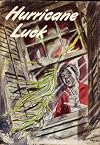
How do you make hurricanes boring? This snoozefest has a hurricane hitting Florida in the late 1940s, and yet the 11-year-old main character is more concerned about searching for sea shells. He's obsessed with earning money to help save his father's failing fishing career, pinning his hopes on a valuable shell or maybe that fishing contest with the big prize.
The only remarkable thing about this book is that comic book legend Jerry Robinson churned out the illustrations for it. Not a show more high-point in his career, for sure. show less
The only remarkable thing about this book is that comic book legend Jerry Robinson churned out the illustrations for it. Not a show more high-point in his career, for sure. show less

Nearly a decade before the outbreak of the American Revolution, tenant farmers in the Hudson River Valley revolted against the unjust practices of the rich tyrannical manor lords. The "Levelers," as these rebellious people were called, were bitterly disappointed in "the land of opportunity." Cursed with sparse crops, high rents and small profits, they fought their oppressors in a flare-up that has become a notable incident in American history.
When teen-ager Andy Wing decided to find out why show more the older men of the settlement frequently disappeared, he became involved in a secret plot to overthrow the despotic landholders. He joined with some five hundred famers led by his cousin William Prendergast, in the attempt to wrest control of the land from the proprietors. Andy pleaded with the Governor for the farmers' rights; he fought against His Majesty's Grenadiers and, at last, stood in the tense courtroom as his cousin was tried for treason. A story of a brave teen-ager and a valiant woman, Mehitabel Wing Prendergast, who rode desperately through the night to save her husband's life, 'Rebellion at Quaker Hill' will help young people relive one of history's most stirring incidents. show less
When teen-ager Andy Wing decided to find out why show more the older men of the settlement frequently disappeared, he became involved in a secret plot to overthrow the despotic landholders. He joined with some five hundred famers led by his cousin William Prendergast, in the attempt to wrest control of the land from the proprietors. Andy pleaded with the Governor for the farmers' rights; he fought against His Majesty's Grenadiers and, at last, stood in the tense courtroom as his cousin was tried for treason. A story of a brave teen-ager and a valiant woman, Mehitabel Wing Prendergast, who rode desperately through the night to save her husband's life, 'Rebellion at Quaker Hill' will help young people relive one of history's most stirring incidents. show less

Carmer was a Northerner who taught at the University of Alabama in the 1920s. This book is a hodgepodge of personal memories and collected stories. The stories are versions of folk tales or ghost stories that may be based on fact, but have fictionalized elements added in the telling. Carmer chooses the best version for his book. His personal memories are also a bit fictionalized to avoid offending some of the subjects. This is a raw, honest portrayal of the endemic racism of 1920s show more Alabama--but probably 1920s America as well, although Carmer certainly doesn't share in that belief. Still, his stories are full of white and black people using the N-word and using other racial stereotypes that will be very jarring for a modern reader. The racism of many of the Whites is purely endemic - it is so much an accepted part of their lives that they take it for granted. But the black characters, while not using the word in the same sense, also subscribe to many of the same outmoded beliefs. Carmer does a good job of going into black households and churches, and his portrait is probably quite accurate, but it speaks of times and attitudes that are thankfully alien to most of us in 2019. If you're an Alabama native, as I am, I recommend reading this book, as so much of it will awaken old memories and places. I don't think it will mean quite as much to a non-Alabama or non-Southern reader who doesn't pick up on the accents and ways of speaking that Carmer portrays with pretty much unfailing accuracy.
Wayne Flynt's introduction is excellent, by the way. No surprise there, of course. Definitely read it before diving into this book. show less
Wayne Flynt's introduction is excellent, by the way. No surprise there, of course. Definitely read it before diving into this book. show less
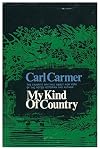
Carl Carmer was one of the most popular writers from the 1930s through the 1950s, that popularity based largely on the success of his 1934 folk memoir Stars Fell On Alabama, which chronicled his encounters with the people and cultural landscape of the state during the years that he taught at the University of Alabama. But Carmer was born and bred in the state of New York, a “Yorker” through and through. And as such, he wrote extensively on the state’s folklore, landscape, historical show more figures, and local customs. My Kind Of Country: Favorite Writings About New York is a collection of fifty-odd writings - poems, stories, and essays - from those decades. Carmer’s writing today seems quaint; and apart from the handful of tall tales, folklore, and ghost story, none of remainder is truly compelling, and sadly most of it is forgettable. show less
Lists
Awards


You May Also Like


Associated Authors
Statistics
- Works
- 63
- Also by
- 30
- Members
- 944
- Popularity
- #27,222
- Rating
- 3.6
- Reviews
- 14
- ISBNs
- 41