
Soman Chainani
Author of The School for Good and Evil
About the Author
Soman Chainani is a graduate of the MFA Film Program at Columbia University, and the recipient of the school's top prize, the FMI Fellowship for Writing and Directing. His short films, DAVY & STU and KALI MA, have played over 150 international film festivals, won over 30 jury and audience awards, show more and racked up over 1,000,000 YouTube hits. His writing awards include honors from Big Bear Lake, the Sun Valley Writer's Fellowship, and the coveted Shasha Grant, awarded by a jury of international film executives. He was also nominated for a NewNowNext Award, sponsored by MTV. Chainani graduated Harvard University summa cum laude, with a degree in English & American Literature. While at Harvard, he focused on fairy tales and wrote his thesis on why evil women make such irresistible fairy-tale villains, winning the Thomas Hoopes Prize and Briggs Prize for his work. Chainani's first novel, The School For Good And Evil, also the title of his trilogy, debuted on the New York Times Bestseller List, has been on ABA's National Indie Bestseller List, has been translated into languages across six continents, and will soon be a major motion picture from Universal Studios. His second novel in the trilogy A World Without Princes, appeared on the New York Times Bestseller List in April of 2014. He also made the list in 2015 with his title The Last Ever After. (Bowker Author Biography) show less
Image credit: Chainani at the 2018 Texas Book Festival By Larry D. Moore - Own work, CC BY-SA 4.0, https://commons.wikimedia.org/w/index.php?curid=74048211
Series
Works by Soman Chainani
Associated Works
Tagged
Common Knowledge
- Canonical name
- Chainani, Soman
- Birthdate
- 1979
- Gender
- male
- Education
- Harvard University
Columbia University - Occupations
- writer
teacher
film director - Nationality
- USA
- Birthplace
- Miami, Florida, USA
- Places of residence
- New York, New York, USA
- Associated Place (for map)
- USA
Members
Reviews

Great reimagining of what fairy tales are all about, with some pointed commentary on the nature of princesses and heroes in our modern culture.
Excellent story of two best friends who are whisked off to the terrifying and fabled School for Good and Evil, where one will become the wickedest of witches, and the other's compassionate nature will reveal her to be the most lovely spirited of princesses. At least, that's how it's supposed to work. But Agatha (witch) and Sophie (princess) show more accidentally get dropped into the wrong schools, and end up re-writing all the tales. A fresh and sometimes humorous take on the subject, with plot twist after plot twist to keep the action moving along.
I particularly like how incidental the prince is to the story. This is a story about a friendship between girls. Girls have complicated friendships, and this one is a doozy. show less
Excellent story of two best friends who are whisked off to the terrifying and fabled School for Good and Evil, where one will become the wickedest of witches, and the other's compassionate nature will reveal her to be the most lovely spirited of princesses. At least, that's how it's supposed to work. But Agatha (witch) and Sophie (princess) show more accidentally get dropped into the wrong schools, and end up re-writing all the tales. A fresh and sometimes humorous take on the subject, with plot twist after plot twist to keep the action moving along.
I particularly like how incidental the prince is to the story. This is a story about a friendship between girls. Girls have complicated friendships, and this one is a doozy. show less
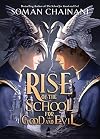
We all have two sides. Even the best of us. I confess that I do the good thing on occasion. So why is Good so afraid to admit they can be evil?
This was a really interesting book. I feel like I can think about this for ages.
I really liked the main series for playing with assumptions about good and evil and what they mean.
This one goes just a bit further in expanding that. True love in the main series was very focused on romance even though the characters were 13. Here, true love also applies show more to friends, family and community. (Side note, romantic true love is not defined as between boys and girls either)
One of the characters sees a future for himself with a guy he is not in love with because if they are close friends their love is still true. It especially applies to the two school masters. Evil can never have true love, yet the evil schoolmaster clearly loves his brother. If the Good school masters does questionable things for a good cause, is he still Good?
In the main books, I didn’t like how blond hair was likened to goodness while darker features were connected to evil. This book makes a point to emphasize that good and evil are not inherent, like I thought in the main series, but decided by a persons actions.
The main downside was that the story of the school masters is told through various other characters, like Aladdin, Marialena and Vulcan. It made the pacing feel kinda off. Sometimes the book felt like multiple stories connected into one book rather than one story about two brothers.
The result is a mosaic of characters and stories dancing around the morality of ‘Good’ and ‘Evil’. Neither of the brothers is truly good or evil, and the characters aren’t either.
(I really want to know what made the evil school master go from a bitter and sometimes spiteful young man who loves his brother to the creepy figure lurking in shadows and kissing twelve year old girls from book 1)
(I also wonder what age these two are supposed to be? They're immortals stuck into teenage bodies, both extremely powerful and old and simultaneously having crushes on their teenage/twenty-something colleagues?) show less
This was a really interesting book. I feel like I can think about this for ages.
I really liked the main series for playing with assumptions about good and evil and what they mean.
This one goes just a bit further in expanding that. True love in the main series was very focused on romance even though the characters were 13. Here, true love also applies show more to friends, family and community. (Side note, romantic true love is not defined as between boys and girls either)
One of the characters sees a future for himself with a guy he is not in love with because if they are close friends their love is still true. It especially applies to the two school masters. Evil can never have true love, yet the evil schoolmaster clearly loves his brother. If the Good school masters does questionable things for a good cause, is he still Good?
In the main books, I didn’t like how blond hair was likened to goodness while darker features were connected to evil. This book makes a point to emphasize that good and evil are not inherent, like I thought in the main series, but decided by a persons actions.
The main downside was that the story of the school masters is told through various other characters, like Aladdin, Marialena and Vulcan. It made the pacing feel kinda off. Sometimes the book felt like multiple stories connected into one book rather than one story about two brothers.
The result is a mosaic of characters and stories dancing around the morality of ‘Good’ and ‘Evil’. Neither of the brothers is truly good or evil, and the characters aren’t either.
(I really want to know what made the evil school master go from a bitter and sometimes spiteful young man who loves his brother to the creepy figure lurking in shadows and kissing twelve year old girls from book 1)
(I also wonder what age these two are supposed to be? They're immortals stuck into teenage bodies, both extremely powerful and old and simultaneously having crushes on their teenage/twenty-something colleagues?) show less
The School for Good and Evil: Now a Netflix Originals Movie (School for Good and Evil, 1) by Soman Chainani
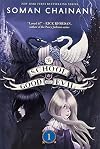
No one knows a girls’ friendship like a guy, amIrite? Just kidding, totally sexist of me, just like this entire hetronormative mess of a Hogwarts derivative with more contradictory messaging than a Miss Universe pagent. It can’t decide if it wants to deconstruct fairy tales or affirm them (think Shrek, with less humor); similarly, the definitions of ‘beauty’ and ‘ugly’ (I hearby challenge Chainani to read [b:The Beauty Myth|39926|The Beauty Myth|Naomi show more Wolf|https://i.gr-assets.com/images/S/compressed.photo.goodreads.com/books/1388197585l/39926._SY75_.jpg|836516] by Naomi Wolf), as well as definitions of ‘good’ and ‘bad.’ I will tell you the truth: what it ultimately does is affirm all of those things in the most conventional fashion. (In some cases, literally through fashion.) Add the final scene, which will feel like a semi-cliff-hanger to some, and you have a hot mess of a book.
Chainani clearly did his Rowling research and thought “how can I capitalize on this magical school goldmine?” But instead of wasting time in the mundane world and spreading development over seven books, he accelerates full speed into the magical school with classes, contests, secret night adventures, and survival in the woods. There’s a remote castle in the woods where ‘Good’ and ‘Evil’ are taught. There are teachers who are present but have virtually no authority and a mysterious School Master. Magical creatures abound to enforce the rules. There is even a culminating trial where only one house/side can win (and it’s been Good for two hundred years), followed by a fancy dress ball. If all of this sounds Potter-iffic, I think that’s because it’s meant to, and I believe that’s why it appeals to many readers despite it’s inherent and profuse problems.
The lead characters are Sophie, a beauty-obsessed twelve year-old looking for a Prince, and Agatha, the introverted and ‘ugly’ daughter of a village ‘witch,’ and her only friend. Every four years, two children disappear from this isolated village, perhaps to become lead characters in a future fairy tale. One person becomes the ‘good’ character and one person the ‘bad' lead. Sophie’s been primping for the ‘Good’ role for years (because according to their definitions, ‘good’ means ‘lovely,’ along with a token good deed or two). However, when Sophie is kidnapped, Agatha follows, trying to save her friend. Pink and primped Sophie is dropped at the dark, scary School for Evil, staffed by wolves and goblins, and homely, sloppy Agatha is left at the School for Good, staffed by fairies and princesses. Although she's certain she's in the wrong school, Sophie still sees it as the chance to find her Prince while Agatha focuses on returning home.
Worth seeing what happens, maybe? At first, Chainani seems to be doing something interesting with making both schools equally horrible, just using a different kind of metric. Also like Hogwarts, we get a variety of hands-on learning, but what’s unique is that it is about being ‘ugly’ or ‘beautiful’ as much as magic. Classes on the ‘good’ side include 'how to be beautiful,' and classes on the ‘evil’ side include ‘uglification.' (It's worth noting that classes follow conventional definitions of these words).
Eventually some classes are combined between Team Good and Team Evil so that we get to see the two interact. These situations particularly suck because the lessons in ‘identifying good’ and ‘identifying your prince/princess,’ set up Sophie and Agatha in opposition to each other over a particularly heroic Prince. Sophie becomes obsessed with the idea that she is both in the wrong school and deserves the Prince while Agatha spends her time helping Sophie achieve her goal, because a kiss from a Prince will solve a riddle.
So, let’s see: a three-way love triangle. Attractiveness is about your image, not your behaviors. Friendship is a tool to accomplish a goal. Being the subservient ‘helper-friend’ is okay, as long as your friend does some personal growth in the end. Girls operating under the philosophy of “If your true love kisses you, then you can’t be a villain,” with the corollary, “For every Ever, there is only one true love,” followed by “So if a girl doesn’t get asked to the Ball, then she fails and suffers a punishment worse than death. But if a boy doesn’t go to the Ball, he gets half ranks.” Categories of good and evil both suck, except when they don’t. Friendship means being a doormat to your friend’s needs, and not expecting reciprocation in respect or understanding.
Do I have that about right? Man (again, I mean this literally), this is some stellar messaging.
I had stayed with it because–major spoiler here–I had read Agatha and Sophie kiss at the end, so I thought the path getting there was going to be normative-deconstructive.
Spoiler: It wasn’t. It was super hetro-normative. And total nonsense, by the way. If you read enough of your fairy tales, you know that evil comes in very beautiful disguises (all the better to fool you with), and that the quality of most young heroes and heroines isn’t that they are beautiful, but that they are kind (to animals, to mysterious old ladies, etc) and that trying to ‘win’ anything without humility only gets you bloody feet, thrown in prison, turned into a goose, or other terrible things.
I would never, ever, ever, recommend this book to anyone, and certainly never give it to a young woman as a present (it's so girl-beauty centric, it's clearly not meant for hetro-norm boys). [b:Castle Hangnail|22504710|Castle Hangnail|Ursula Vernon|https://i.gr-assets.com/images/S/compressed.photo.goodreads.com/books/1408312316l/22504710._SX50_.jpg|41951499] takes a much better look at an essentially ‘good’ girl trying on an ‘evil’ role for young people. My ultimate standard of how you can really start deconstructing ‘good’ and ‘bad’ is The Good Place–which would have been expecting a lot, I grant you, but I was at least hoping for some elementary work on what ‘good’ really means. Since Chainani never separated out the idea of ‘ugly’ from ‘bad,’ and ‘good’ from ‘beautiful,’ I guarantee that both this book and any tie-ins aren’t going to win any Good Awards in my world.
One-and-a-half-stars, rounding down because I read the next book is even worse with it's messaging.
Update: so this is a movie/series now? Gross. More people looking at a cash cow and not for the next generation of queens. show less
Chainani clearly did his Rowling research and thought “how can I capitalize on this magical school goldmine?” But instead of wasting time in the mundane world and spreading development over seven books, he accelerates full speed into the magical school with classes, contests, secret night adventures, and survival in the woods. There’s a remote castle in the woods where ‘Good’ and ‘Evil’ are taught. There are teachers who are present but have virtually no authority and a mysterious School Master. Magical creatures abound to enforce the rules. There is even a culminating trial where only one house/side can win (and it’s been Good for two hundred years), followed by a fancy dress ball. If all of this sounds Potter-iffic, I think that’s because it’s meant to, and I believe that’s why it appeals to many readers despite it’s inherent and profuse problems.
The lead characters are Sophie, a beauty-obsessed twelve year-old looking for a Prince, and Agatha, the introverted and ‘ugly’ daughter of a village ‘witch,’ and her only friend. Every four years, two children disappear from this isolated village, perhaps to become lead characters in a future fairy tale. One person becomes the ‘good’ character and one person the ‘bad' lead. Sophie’s been primping for the ‘Good’ role for years (because according to their definitions, ‘good’ means ‘lovely,’ along with a token good deed or two). However, when Sophie is kidnapped, Agatha follows, trying to save her friend. Pink and primped Sophie is dropped at the dark, scary School for Evil, staffed by wolves and goblins, and homely, sloppy Agatha is left at the School for Good, staffed by fairies and princesses. Although she's certain she's in the wrong school, Sophie still sees it as the chance to find her Prince while Agatha focuses on returning home.
Worth seeing what happens, maybe? At first, Chainani seems to be doing something interesting with making both schools equally horrible, just using a different kind of metric. Also like Hogwarts, we get a variety of hands-on learning, but what’s unique is that it is about being ‘ugly’ or ‘beautiful’ as much as magic. Classes on the ‘good’ side include 'how to be beautiful,' and classes on the ‘evil’ side include ‘uglification.' (It's worth noting that classes follow conventional definitions of these words).
Eventually some classes are combined between Team Good and Team Evil so that we get to see the two interact. These situations particularly suck because the lessons in ‘identifying good’ and ‘identifying your prince/princess,’ set up Sophie and Agatha in opposition to each other over a particularly heroic Prince. Sophie becomes obsessed with the idea that she is both in the wrong school and deserves the Prince while Agatha spends her time helping Sophie achieve her goal, because a kiss from a Prince will solve a riddle.
So, let’s see: a three-way love triangle. Attractiveness is about your image, not your behaviors. Friendship is a tool to accomplish a goal. Being the subservient ‘helper-friend’ is okay, as long as your friend does some personal growth in the end. Girls operating under the philosophy of “If your true love kisses you, then you can’t be a villain,” with the corollary, “For every Ever, there is only one true love,” followed by “So if a girl doesn’t get asked to the Ball, then she fails and suffers a punishment worse than death. But if a boy doesn’t go to the Ball, he gets half ranks.” Categories of good and evil both suck, except when they don’t. Friendship means being a doormat to your friend’s needs, and not expecting reciprocation in respect or understanding.
Do I have that about right? Man (again, I mean this literally), this is some stellar messaging.
I had stayed with it because–major spoiler here–
Spoiler: It wasn’t. It was super hetro-normative. And total nonsense, by the way. If you read enough of your fairy tales, you know that evil comes in very beautiful disguises (all the better to fool you with), and that the quality of most young heroes and heroines isn’t that they are beautiful, but that they are kind (to animals, to mysterious old ladies, etc) and that trying to ‘win’ anything without humility only gets you bloody feet, thrown in prison, turned into a goose, or other terrible things.
I would never, ever, ever, recommend this book to anyone, and certainly never give it to a young woman as a present (it's so girl-beauty centric, it's clearly not meant for hetro-norm boys). [b:Castle Hangnail|22504710|Castle Hangnail|Ursula Vernon|https://i.gr-assets.com/images/S/compressed.photo.goodreads.com/books/1408312316l/22504710._SX50_.jpg|41951499] takes a much better look at an essentially ‘good’ girl trying on an ‘evil’ role for young people. My ultimate standard of how you can really start deconstructing ‘good’ and ‘bad’ is The Good Place–which would have been expecting a lot, I grant you, but I was at least hoping for some elementary work on what ‘good’ really means. Since Chainani never separated out the idea of ‘ugly’ from ‘bad,’ and ‘good’ from ‘beautiful,’ I guarantee that both this book and any tie-ins aren’t going to win any Good Awards in my world.
One-and-a-half-stars, rounding down because I read the next book is even worse with it's messaging.
Update: so this is a movie/series now? Gross. More people looking at a cash cow and not for the next generation of queens. show less
Sophie hesitated. “Well, it’s just that in fairy tales, different usually turns out, um . . . evil.”
“You’re saying I’m going to turn out a Grand Witch,” said Agatha, hurt.
“I’m saying whatever happens, you’ll have a choice,” Sophie said gently. “Both of us will choose how our fairy tale ends.”
3.5 stars?
I really loved the clever way this book played with fairytale tropes of good and evil and spun them around.
Good only defends and talks to animals, evil must destroy show more their nemesis or they will not be happy.
Yet Sophie uses ‘good’ animals for ‘evil’ by making bees sting and Agatha wishes for something truly Good instead of true love because she thinks true love is not for the likes of her.
I also liked the grim tone, reminiscent of old fairytales. The school makes their top students villains, their average students henchmen and dooming those who fail to life as a creature.
The whole fairytale world has its cracks. Evil is not truly evil, if they have friends and Good is not truly good if they fail their students like that.
The concept that Sophie was never truly ‘Good’ and her good deeds were only to get into the school of Good made for a truly interesting corruption arc, while Agatha’s insistence on being bitter and average looking questions whether ‘Good’ in this world focuses too much on appearances.
However, some fairytale tropes felt annoyingly basic. For a book that is meant to subvert and play around with stock elements, some were used in a very standard way.
The true love’s kiss from a prince Sophie barely knows is used as a serious plot point. She doesn’t know him? And they’re 13? This would have been a great opportunity to twist the idea of fairytale true love but the book doesn’t.
Secondly, the fact that ‘good’ is filled with pretty blonde princesses and sword fighting knights while ‘evil’ has ugly dark haired witches with terrible curses feels off. What about all the kids who are just born with dark hair? Are they all Agatha, doomed to question whether their appearance makes them evil?
I know Agatha’s story is about learning that she is still good despite her appearance, but why is it necessary for every not blonde person to go through ChARActer DEVELopmENT go gain the confidence blond people are gifted naturally show less
“You’re saying I’m going to turn out a Grand Witch,” said Agatha, hurt.
“I’m saying whatever happens, you’ll have a choice,” Sophie said gently. “Both of us will choose how our fairy tale ends.”
3.5 stars?
I really loved the clever way this book played with fairytale tropes of good and evil and spun them around.
Good only defends and talks to animals, evil must destroy show more their nemesis or they will not be happy.
Yet Sophie uses ‘good’ animals for ‘evil’ by making bees sting and Agatha wishes for something truly Good instead of true love because she thinks true love is not for the likes of her.
I also liked the grim tone, reminiscent of old fairytales. The school makes their top students villains, their average students henchmen and dooming those who fail to life as a creature.
The whole fairytale world has its cracks. Evil is not truly evil, if they have friends and Good is not truly good if they fail their students like that.
The concept that Sophie was never truly ‘Good’ and her good deeds were only to get into the school of Good made for a truly interesting corruption arc, while Agatha’s insistence on being bitter and average looking questions whether ‘Good’ in this world focuses too much on appearances.
However, some fairytale tropes felt annoyingly basic. For a book that is meant to subvert and play around with stock elements, some were used in a very standard way.
The true love’s kiss from a prince Sophie barely knows is used as a serious plot point. She doesn’t know him? And they’re 13? This would have been a great opportunity to twist the idea of fairytale true love but the book doesn’t.
Secondly, the fact that ‘good’ is filled with pretty blonde princesses and sword fighting knights while ‘evil’ has ugly dark haired witches with terrible curses feels off. What about all the kids who are just born with dark hair? Are they all Agatha, doomed to question whether their appearance makes them evil?
I know Agatha’s story is about learning that she is still good despite her appearance, but why is it necessary for every not blonde person to go through ChARActer DEVELopmENT go gain the confidence blond people are gifted naturally show less
Lists
Princess Tales (1)
First Novels (1)
Awards


You May Also Like


Associated Authors
Statistics
- Works
- 28
- Also by
- 4
- Members
- 11,743
- Popularity
- #2,001
- Rating
- 3.8
- Reviews
- 240
- ISBNs
- 313
- Languages
- 13
- Favorited
- 6