
Steve Fallon
Author of Lonely Planet : Paris
About the Author
Image credit: Steve Fallon
Works by Steve Fallon
Associated Works
Tagged
Common Knowledge
- Birthdate
- 20th Century
- Gender
- male
- Nationality
- USA
- Associated Place (for map)
- USA
Members
Reviews
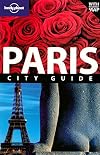
When you’re in a strange place you need a trusted guide. Virgil, for instance. Or if you happen to exist between the pages of a Victorian melodrama, some shady chap who will, at some point, turn on you, leaving you to fight for freedom and treasure and glory and to bring justice, democracy and good old British rule to some far off place.
Most of us though, don’t want drama on holidays (unless you’re on a theatre break), we want peace, contentment and enough handy phrases to be able to show more order something for supper that does not turned out to be deep-fried gibbon. So we purchase a guide book.
The best way to choose a guide book is to pick a place you have been to, look up somewhere you liked in the index and see what various brands have to say about it. You then purchase that brand for your next trip.
That’s why I chose Lonely Planet as my guide book provider of choice for Paris. This was, possibly, a mistake. The choice was made on the basis outlined above, especially their guide to Australia, which was very much coveted by other travelers who did not have that edition. This was either because it had lots of up-to-date information, or because at the thickness of a house brick, it could be used to batter dunny spiders to death.
The Lonely Planet guide to Paris was less of a success. The map at the back, for instance, could have been a lot clearer. It was printed in muted pastel shades – great for the impressionists wing at an art gallery, but a bit crap when you are standing in the rain and trying to find out where the hell you are in relation to where the hell you are supposed to be. It also seemed crammed and cramped and lacked clarity – why not have a bigger map, it’s a city, not a hamlet! Credit where credit is due though, the metro map was good.
Possibly the Lonely Planet people where thinking that travelers would use the maps in the book itself. These were okay (though, shamefully, not in colour) but who wants to flick back and forth through a book when navigating, especially as so much of the city, or at least the parts I visited, seemed to be located on the borders between districts, making a lot of tedious page flipping necessary.
That said, it does recognize that the best way to see the city is walking, and there are routes mapped out.
More information needs to be up front though. Climate is hidden under a little bar chart showing – and this is important – rainfall. You’d think that June in Paris would be a safe bet for flip-flops and tee shirts but because Paris is in a basin you’d be better off with a snorkel. Nowhere in the index does it list one of the most important features of Paris – the Algerian bloke who sold me an umbrella for five Euros outside the Musee D’Orsey.
To be honest, the index could have done with some looking at too. Notre Dame, for instance, is listed under ‘C’, not ‘N’. It’s a cathedral, see? No, me neither. I suspect that the bloke who compiled the index should be listed under ‘C’ too.
Not only that but it’s pages were neither soft, nor absorbent and, when traveling in foreign parts, that’s the very least I expect from a good book.
I think that they simply omitted too much. It needs to be twice the size, or at least contain a health warning that lots is omitted and suggested further reading. There’s simply so much going on in Paris, and so much of it amusing, that it should be a joy to communicate it all, not a chore and certainly not a rush job. A good guide book should lead you to enjoy yourself and give tips enough to ensure you do not cause offence.
So, for the next edition: bigger, bolder, build in some quotes and colour from travelers, put in a better map and put the index on softer paper. That way, it might be good for something. show less
Most of us though, don’t want drama on holidays (unless you’re on a theatre break), we want peace, contentment and enough handy phrases to be able to show more order something for supper that does not turned out to be deep-fried gibbon. So we purchase a guide book.
The best way to choose a guide book is to pick a place you have been to, look up somewhere you liked in the index and see what various brands have to say about it. You then purchase that brand for your next trip.
That’s why I chose Lonely Planet as my guide book provider of choice for Paris. This was, possibly, a mistake. The choice was made on the basis outlined above, especially their guide to Australia, which was very much coveted by other travelers who did not have that edition. This was either because it had lots of up-to-date information, or because at the thickness of a house brick, it could be used to batter dunny spiders to death.
The Lonely Planet guide to Paris was less of a success. The map at the back, for instance, could have been a lot clearer. It was printed in muted pastel shades – great for the impressionists wing at an art gallery, but a bit crap when you are standing in the rain and trying to find out where the hell you are in relation to where the hell you are supposed to be. It also seemed crammed and cramped and lacked clarity – why not have a bigger map, it’s a city, not a hamlet! Credit where credit is due though, the metro map was good.
Possibly the Lonely Planet people where thinking that travelers would use the maps in the book itself. These were okay (though, shamefully, not in colour) but who wants to flick back and forth through a book when navigating, especially as so much of the city, or at least the parts I visited, seemed to be located on the borders between districts, making a lot of tedious page flipping necessary.
That said, it does recognize that the best way to see the city is walking, and there are routes mapped out.
More information needs to be up front though. Climate is hidden under a little bar chart showing – and this is important – rainfall. You’d think that June in Paris would be a safe bet for flip-flops and tee shirts but because Paris is in a basin you’d be better off with a snorkel. Nowhere in the index does it list one of the most important features of Paris – the Algerian bloke who sold me an umbrella for five Euros outside the Musee D’Orsey.
To be honest, the index could have done with some looking at too. Notre Dame, for instance, is listed under ‘C’, not ‘N’. It’s a cathedral, see? No, me neither. I suspect that the bloke who compiled the index should be listed under ‘C’ too.
Not only that but it’s pages were neither soft, nor absorbent and, when traveling in foreign parts, that’s the very least I expect from a good book.
I think that they simply omitted too much. It needs to be twice the size, or at least contain a health warning that lots is omitted and suggested further reading. There’s simply so much going on in Paris, and so much of it amusing, that it should be a joy to communicate it all, not a chore and certainly not a rush job. A good guide book should lead you to enjoy yourself and give tips enough to ensure you do not cause offence.
So, for the next edition: bigger, bolder, build in some quotes and colour from travelers, put in a better map and put the index on softer paper. That way, it might be good for something. show less

I’ve been reading a lot of tour books covering London and also covering England, Scotland and Wales.
This is by far the best of all the guidebooks I’ve read about London. The Lonely Planet books are great. Their London one seems particularly helpful.
One thing I learned from this book is that more planning than I’d anticipated is advisable. It’s not a book I’d want to carry around on a daily basis (they do have a pocket guide I’ll look for at the library) but I would bring the show more paperback on a UK trip. This would be one worth buying if I am ever able to go to London. It would be a worthwhile investment, making a trip there more satisfying. There is a Kindle edition but I think I’d rather have the paperback because a phone screen is too small for me to see all the details, especially the maps. I would use a phone to access various websites and online maps & directions while out and about.
I understand why there is a long queue at the library. I will be borrowing it again and buying a copy if I have a firm intention to visit.
Highly recommended for first time travelers to London and all London visitors and some residents.
Does anybody know how often Lonely Planet publishes their London guides/guides? I’ll have to check if a new edition might be available before I make any plans to travel there. show less
This is by far the best of all the guidebooks I’ve read about London. The Lonely Planet books are great. Their London one seems particularly helpful.
One thing I learned from this book is that more planning than I’d anticipated is advisable. It’s not a book I’d want to carry around on a daily basis (they do have a pocket guide I’ll look for at the library) but I would bring the show more paperback on a UK trip. This would be one worth buying if I am ever able to go to London. It would be a worthwhile investment, making a trip there more satisfying. There is a Kindle edition but I think I’d rather have the paperback because a phone screen is too small for me to see all the details, especially the maps. I would use a phone to access various websites and online maps & directions while out and about.
I understand why there is a long queue at the library. I will be borrowing it again and buying a copy if I have a firm intention to visit.
Highly recommended for first time travelers to London and all London visitors and some residents.
Does anybody know how often Lonely Planet publishes their London guides/guides? I’ll have to check if a new edition might be available before I make any plans to travel there. show less

Fantastic travel guide. Quite handy and portable with loads of information on history, restaurants, hotels, things to do and see, and more. Ended up using the pull-out map quite a bit and wrote lots of notes. Would definitely recommend using this to help plan a trip to London.
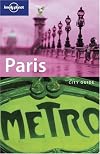
Excellent guidebook to Paris. Lonely Planet travel guidebooks are the best out there. Very detailed information on the basics such as immigration, getting around, costs, and currency are followed by sharp and current information on hotels, dining, cultural and commercial attractions, recreation, and shopping.
You May Also Like


Associated Authors
Statistics
- Works
- 48
- Also by
- 3
- Members
- 2,322
- Popularity
- #11,052
- Rating
- 3.7
- Reviews
- 12
- ISBNs
- 187
- Languages
- 8