
Dianne Snyder
Author of The Boy of the Three-Year Nap
About the Author
Works by Dianne Snyder
Tagged
Common Knowledge
- Gender
- female
- Places of residence
- Virginia, USA
- Associated Place (for map)
- Virginia, USA
Members
Reviews
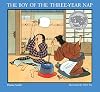
I thought that this was a sweet story. It is definitely formatted like a folk tale, in the sense of having a specific moral and a little twist at the end. It is about a boy who is so lazy, people say if nobody ever woke him, he would nap for 3 years. He never wants to do any work, because he says he's always too tired. So, when a wealthy rice merchant moves into a mansion next door, the boy creates a plan to marry his daughter, and live a life of luxury without working, because of the show more father's wealth. However, his plan goes awry in the end, teaching that you can't just be lazy and trick people in order to get ahead. show less
While I like that the widow was able to better her life because of her son's sneaky plan, I do not like that it was at the expense of others. In this version the merchant and his family did nothing wrong so the trickery of a lazy Taro was unkind and selfish. Frightening the crap out of someone for your own benefit is not something that should be touted. The story might end where everyone gets what they want and everything turns out alright, but it reminds me of the saying 'Better to ask show more forgiveness than permission'. I hate that saying. I wouldn't want children to learn the lesson this book teaches. At least the art is definitely in the Japanese style, and I do like that. show less
The central message of this story is for “you to be prepared to face the repercussions of your actions.” This story was interesting to say the least. I thought the plot was slightly unusual. For example, Taro was extremely lazy, and never helped his mother. It was not until the wealthy merchants move next door, that Taro thought of a great idea. Taro made himself look like an ancestor whom the merchant respected. Taro, looking like the ancestor, scared the merchant, and told him to allow show more his daughter to marry the boy next door. Scared, the merchant discussed the marriage with Taro’s mother. Piecing together what Taro did, the widow has the merchant remodel her house, and allow her son to work for him. Taro’s plan comes true, but he also ends up getting a job! I thought this was just a strange plot, but I thought Taro was slick. Another reason I enjoyed this story is because of the illustrations. For example, when Taro made himself look like the ancestor, the illustration really created a vivid image of Taro dressed all in black. The last reason I liked this story is because of the use of descriptive language! For example, the author describes the widow’s head bobbling up and down, like a fish in the sea. The use of descriptive language allows the reader to imagine how much Taro’s head bobbles, and the reader can get a better understanding of the story. show less
I had mixed feelings about this book after reading it. I thought it was a fun little story, but the ending was not a satisfying as I would have liked. The reason I thought the story was a fun read was because the plot was very engaging. There was also a good amount of suspense to the plot. The story started by explaining the background story of the main character. He was a lazy boy who everyone assumed just slept his life away. But when his rich neighbors move in, he devises a plan to marry show more their daughter so that he can live the rich lifestyle too. Suspense is added to the story as his plan is developing. For example, when he was disguising himself I was wondering why he would possibly need makeup. Then when he pretending to be a god and fooling his neighbor I wondered if he would get caught, or if his neighbor would actually believe him. This kind of suspense allowed the story to be a quick read, because I was always wondering what was going to happen next. I wanted to turn each page to see if my predictions would come true. This kind of writing also allowed the story to flow well. Because the story was always leading to the big event at the end of the story. The story had suspenseful rising actions that were leading to the conflict, and this helped the story flow well. Another reason I liked the story was because the character was believable. There are many people who would rather sleep their life away than work. And when the boy is trying to devise a plan to get what he wants instead of actually working for it, this could also be relatable. Many people try to take shortcuts in life, instead of just putting in all their own effort. Having a believable character allowed me to be pulled into the story because I could picture him as a real person. I was interested in how this character was going to develop throughout the story and this made me want to continue reading. Another reason I liked the story was because I thought the illustrations fit the story quite well. The illustrations were able to enhance the story and bring it to a deeper level. The illustrations were able to show the emotions of the characters better, and allow the reader to see deeper into the story. For example, through the illustrations the reader is able to see the frustration of the mother when he son is acting so lazy. The drawings describe more than the written text on the own. The only reason I felt a little uneasy about the end of the book was that the boy never told his neighbor that he had lied to him. So the boy was able to marry the girl and get a new house without having to tell the neighbor the truth. The boy did decided to start working, so I thought that was encouraging, but I would have preferred him to admit his lie. Overall I think the big message of the story is that to get what you want you have to work. Things will not just be handed to you. In the end, I do believe the boy learned that he had to work for the life he wanted and he could not just sleep his life away. show less
Lists
Awards


You May Also Like


Associated Authors
Statistics
- Works
- 4
- Members
- 1,059
- Popularity
- #24,317
- Rating
- 3.6
- Reviews
- 34
- ISBNs
- 19
- Languages
- 2