
Eric Stanton (1926–1999)
Author of The Dominant Wives and Other Stories
About the Author
Works by Eric Stanton
Eric Stanton: The Return of Gwendoline & Other Bizarre Art (Vintage Fetish Classics) (2019) 10 copies
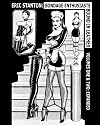
Eric Stanton: Bondage Enthusiasts Bound in Leather [*Expanded Edition*] (Vintage Fetish Classics) (2022) 9 copies, 1 review
Moira 2 copies
Het Kasteel X 1 copy
De boeienkoningin 1 copy
Gewelddadige begeerte 1 copy
De Laarzen club 1 copy
Pleasure Parade No. 4 1 copy
The Best of Stanton Volume 5 1 copy
Family affair 1 copy
De school van mevrouw Tyrant 1 copy
Associated Works
Tagged
Common Knowledge
- Canonical name
- Stanton, Eric
- Other names
- Stanzoni, Ernest (birth name)
- Birthdate
- 1926-09-30
- Date of death
- 1999-03-17
- Gender
- male
- Nationality
- USA
- Associated Place (for map)
- USA
Members
Reviews
Eric Stanton: Bondage Enthusiasts Bound in Leather [*Expanded Edition*] (Vintage Fetish Classics) by Eric Stanton
Eric Stanton’s Bondage Enthusiasts Bound in Leather – Volumes One & Two: Expanded reprints material original published by Irving Klaw, illustrated by Stanton, and written by Joe Cross under the pseudonym B&G in pamphlet form in 1952-53. Stanton, a skilled cartoonist and pioneer in the twentieth century field of underground fetish art, studied comic art from 1954-1956 at the Cartoonist and Illustrators’ School under Jerry Robinson, the co-creator of The Joker and Robin from Batman. show more According to his April 1999 obituary, Stanton gravitated toward Wonder Woman and Sheena, Queen of the Jungle, both of whom later influenced his Amazon-themed stories. Stanton later shared a studio at 43rd Street and 8th Avenue with his classmate Steve Ditko, the co-creator of Spider-Man and Doctor Strange. The influence of Stanton on Ditko’s work is debatable based on sources – Ditko biographer Blake Bell suggests Stanton and Ditko spot-inked each other’s work; Stanton told Greg Theakston that they worked on storyboards together, but that his contribution to Spider-Man was “almost nil”; and Richard Pérez Seves, who edited and reprinted this material, suggests that Stanton may have deliberately underplayed his input in order to maintain his friendship with Ditko given Ditko’s later public confrontations with Marvel over creator credit.
Cross wrote the original text, but struggled with the illustrations at which point Klaw brought in Stanton to illustrate the text for this first-person bondage fantasy. The story begins with a man named Ving “Ted” Walk meeting a well-dressed woman, Vicki Roberts, at a stage play. He discovers that she’s wearing a tight corset and high, laced boots. The show begins before they can continue their flirtation, but the play involves plenty of light bondage to set the mood. Leaving the play at intermission, the two travel to a bar where Ted learns that Vicki is married, though she intimates that her husband insists she dress in even more extreme fashion at home. Further, she tempts Ted with the promise that her grown daughter, Nicki, is given to more fantastic styles. They adjourn to her home where the maid Fifi greets them in six-inch heels and dainty chains. The story then proceeds through a number of bondage scenarios with extensive descriptions of the items of clothing and nature of restraints, with each of the women characters placed in various poses. Eventually, Ted takes the women to his country house where he's joined by Vicki’s husband, Dick, and the two share their mutual appreciation for bondage before arranging to meet up again the next day. Stanton’s art compliments Cross’s narrative, depicting the elaborate fashions and restraints Cross described in his text. Despite the various apparatuses and outfits in the story, it features no nudity or sex.
Richard Pérez Seves and Vintage Fetish Classics have meticulously restored this work for scholars and afficionados of BDSM and its history. Stanton’s artwork reflects a unique period in the underground scene, which included everything from fetish material to underground comix. In the case of Stanton, his training from Golden Age comic artists and collaboration with Silver Age comic book artists shows in the realistic poses and facial expressions as well as his careful inking, which varies from gentle shading on backgrounds to the meticulously-depicted shine on leather and synthetic materials. The book concludes with a 1978 interview with Stanton, excerpts from other materials his publisher released around the same era, and a gallery showing how Vintage Fetish Classics restored the art and enlarged the text from the nearly microscopic print of the original pamphlet. show less
Cross wrote the original text, but struggled with the illustrations at which point Klaw brought in Stanton to illustrate the text for this first-person bondage fantasy. The story begins with a man named Ving “Ted” Walk meeting a well-dressed woman, Vicki Roberts, at a stage play. He discovers that she’s wearing a tight corset and high, laced boots. The show begins before they can continue their flirtation, but the play involves plenty of light bondage to set the mood. Leaving the play at intermission, the two travel to a bar where Ted learns that Vicki is married, though she intimates that her husband insists she dress in even more extreme fashion at home. Further, she tempts Ted with the promise that her grown daughter, Nicki, is given to more fantastic styles. They adjourn to her home where the maid Fifi greets them in six-inch heels and dainty chains. The story then proceeds through a number of bondage scenarios with extensive descriptions of the items of clothing and nature of restraints, with each of the women characters placed in various poses. Eventually, Ted takes the women to his country house where he's joined by Vicki’s husband, Dick, and the two share their mutual appreciation for bondage before arranging to meet up again the next day. Stanton’s art compliments Cross’s narrative, depicting the elaborate fashions and restraints Cross described in his text. Despite the various apparatuses and outfits in the story, it features no nudity or sex.
Richard Pérez Seves and Vintage Fetish Classics have meticulously restored this work for scholars and afficionados of BDSM and its history. Stanton’s artwork reflects a unique period in the underground scene, which included everything from fetish material to underground comix. In the case of Stanton, his training from Golden Age comic artists and collaboration with Silver Age comic book artists shows in the realistic poses and facial expressions as well as his careful inking, which varies from gentle shading on backgrounds to the meticulously-depicted shine on leather and synthetic materials. The book concludes with a 1978 interview with Stanton, excerpts from other materials his publisher released around the same era, and a gallery showing how Vintage Fetish Classics restored the art and enlarged the text from the nearly microscopic print of the original pamphlet. show less
 This review was written for LibraryThing Early Reviewers.
D'origine russe, Eric Stanton naquit en 1926 à New- York où il vécut jusqu’à sa mort en 1999.
Il commença à dessiner des filles en détresse en 1947 pour le compte de l'éditeur Irving Klaw, fondateur et directeur de Nutrix Corporation. Jusqu'à la fin des années 1950, il illustra ainsi une trentaine d'histoires dont environ un tiers sous forme de bandes dessinées.
La froideur pulpeuse de ses personnages, la richesse des modelés, son souci du détail piquant rendirent Eric Stanton show more plus célèbre que ses prédécesseurs (en particulier John Willie et Jim) et même que ses collègues pourtant talentueux (Gene Bilbrew, Ruiz...). Sa réputation franchit alors les frontières, associée au renom de Nutrix Corporation.
Vers 1960, à la suite d'un différent avec Irving, Klaw, Stanton cesse de travailler pour Nutrix et décide d'exploiter lui-même sa célébrité… mais son œuvre postérieure à 1960, si elle contient encore quelques joyaux, n'atteindra jamais plus la perfection constante de son travail pour Nutrix.
La bande dessinée présentée ici Phyllis en péril, parue en 1950, pastiche les histoires d'espionnage en vogue à l'époque et permet à l'auteur de donner libre cours à ses fantaisies. show less
Il commença à dessiner des filles en détresse en 1947 pour le compte de l'éditeur Irving Klaw, fondateur et directeur de Nutrix Corporation. Jusqu'à la fin des années 1950, il illustra ainsi une trentaine d'histoires dont environ un tiers sous forme de bandes dessinées.
La froideur pulpeuse de ses personnages, la richesse des modelés, son souci du détail piquant rendirent Eric Stanton show more plus célèbre que ses prédécesseurs (en particulier John Willie et Jim) et même que ses collègues pourtant talentueux (Gene Bilbrew, Ruiz...). Sa réputation franchit alors les frontières, associée au renom de Nutrix Corporation.
Vers 1960, à la suite d'un différent avec Irving, Klaw, Stanton cesse de travailler pour Nutrix et décide d'exploiter lui-même sa célébrité… mais son œuvre postérieure à 1960, si elle contient encore quelques joyaux, n'atteindra jamais plus la perfection constante de son travail pour Nutrix.
La bande dessinée présentée ici Phyllis en péril, parue en 1950, pastiche les histoires d'espionnage en vogue à l'époque et permet à l'auteur de donner libre cours à ses fantaisies. show less
Dec 29, 2011French
You May Also Like


Associated Authors
Statistics
- Works
- 32
- Also by
- 2
- Members
- 232
- Popularity
- #97,291
- Rating
- 3.9
- Reviews
- 2
- ISBNs
- 17
- Languages
- 4
- Favorited
- 1
