
Orin Starn
Author of The Peru Reader: History, Culture, Politics
About the Author
Orin Starn is Professor of Cultural Anthropology at Duke University. He is the author of The Passion of Tiger Woods: An Anthropologist Reports on Golf, Race, and Celebrity Scandal, also published by Duke University Press.
Works by Orin Starn
Associated Works
Tagged
Common Knowledge
- Gender
- male
Members
Reviews
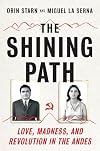
The Shining Path is a fascinating account of Peru's bloody Maoist insurgency and the figures at its head, Comrade Gonzalo, the nom-de-guerre of former professor Abimael Guzman and his first and second wives, Augusta La Torre and Irena Iparraguirre. In the early 1970s, Guzman quit his job as a professor in Ayacucho and went underground, inaugurating a unique brand of People's War that would drench Peru in blood until his arrest in Lima. The narrative also ducks through secondary figures, show more Peru's great novelist Mario Vargas Llosa, rondero milita fighting against the Shining Path, police officers, reporters, and martyred activist Maria Elena Moyano.
Guzman's Marxist revolutionary leanings were fairly common in the 20th century, with successful insurgencies in an arc across Asia, Africa, and Latin America. While Peru was not strictly post-colonial, having won independence from Spain in 1821, the Criollo Limenos who had all the money and power were very much a case of 'new-boss-same-as-the-old-boss', especially in the harsh altiplano highlands and remote deserts and jungles. There was plenty of injustice left to fight, even if the worst excesses of the hacienda system had been reformed in the 1960s.
Shining Path rapidly liberated areas around Ayacucho from lackadaisical military control, but the actual indios who lived in the highlands proved more conservative and less revolutionary than the idealized People of Marxist-Leninist-Maoist-Gonzalo Thought. Sendero guerillas embarked on a brutal campaign of murder until the people who lived in the liberated zones matched their idealized People.
Meanwhile, Abimael, Augusta, and Irena directed the war from safehouses in luxurious Lima neighborhoods, enduring little more than isolation and security while their supporters froze and died. As the tide of retaliatory warcrimes bore against the guerillas, who disdained external support (Sendero bombed the Soviet and Chinese embassies, denouncing both major Communist powers as revisionist), the focus of the war shifted to Lima, with carbombings and assassinations in the tony Mira Flores neighborhood. The government of Alberto Fujimori countered with increasingly extreme tactics, including death squads and mass sterilizations campaigns, though the leadership was finally brought down by good policework, rather than Fujimori's reign of black sites, torture, and extra-judicial killing.
Starn and La Serna as both distinguished academic experts on Peru. They've deliberately written a popular book, focusing on people rather than theory. And indeed, so much of what made Sendero successful was a matter of it's leadership rather than ideology. But I'm despite the biographical details, I'm still left with major questions about what inspired thousands of Peruvians to join Sendero, to slaughter their countrymen, to die at hands of government death squads. The Shining Path is probably the first book an American interested in this war should read, but I hope it's not the last. show less
Guzman's Marxist revolutionary leanings were fairly common in the 20th century, with successful insurgencies in an arc across Asia, Africa, and Latin America. While Peru was not strictly post-colonial, having won independence from Spain in 1821, the Criollo Limenos who had all the money and power were very much a case of 'new-boss-same-as-the-old-boss', especially in the harsh altiplano highlands and remote deserts and jungles. There was plenty of injustice left to fight, even if the worst excesses of the hacienda system had been reformed in the 1960s.
Shining Path rapidly liberated areas around Ayacucho from lackadaisical military control, but the actual indios who lived in the highlands proved more conservative and less revolutionary than the idealized People of Marxist-Leninist-Maoist-Gonzalo Thought. Sendero guerillas embarked on a brutal campaign of murder until the people who lived in the liberated zones matched their idealized People.
Meanwhile, Abimael, Augusta, and Irena directed the war from safehouses in luxurious Lima neighborhoods, enduring little more than isolation and security while their supporters froze and died. As the tide of retaliatory warcrimes bore against the guerillas, who disdained external support (Sendero bombed the Soviet and Chinese embassies, denouncing both major Communist powers as revisionist), the focus of the war shifted to Lima, with carbombings and assassinations in the tony Mira Flores neighborhood. The government of Alberto Fujimori countered with increasingly extreme tactics, including death squads and mass sterilizations campaigns, though the leadership was finally brought down by good policework, rather than Fujimori's reign of black sites, torture, and extra-judicial killing.
Starn and La Serna as both distinguished academic experts on Peru. They've deliberately written a popular book, focusing on people rather than theory. And indeed, so much of what made Sendero successful was a matter of it's leadership rather than ideology. But I'm despite the biographical details, I'm still left with major questions about what inspired thousands of Peruvians to join Sendero, to slaughter their countrymen, to die at hands of government death squads. The Shining Path is probably the first book an American interested in this war should read, but I hope it's not the last. show less
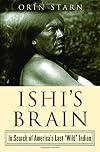
Starn’s book, written in 2004, is a great companion piece to Kroeber’s 1960 book on Ishi. Starn’s writing is clear and descriptive, while Kroeber’s is ornate and, as it turns out, somewhat dishonest. The original Ishi story, as it appeared in 1960, can be seen as a romanticized product of its times. In it, Ishi is portrayed as the noble savage. His story is the precursor to all things Kevin Costner, an oversimplified attempt to expiate white guilt. Starn’s book attempts to set the show more record straight, and even chronicles the betrayal of Ishi by his white friends, who, contrary to Ishi’s wishes, allowed an autopsy of Ishi when he died, and even surreptitiously removed his brain to be pickled and sent to the Smithsonian! It’s part detective story, part social history, part anthropological corrective, and entirely readable. I strongly recommend it.
From Ishi, et al, at downstreamer show less
From Ishi, et al, at downstreamer show less
“I am in blood/Stepped in so far that, should I wade no more,/Returning were as tedious as go o'er.”
Hobsbawm once described the communist project as a gamble on “a new world . . . being born amid the blood and tears and horror.” Our tragedy is that men like Abimael Gúzman gave us just the blood, tears and horror.
Hobsbawm once described the communist project as a gamble on “a new world . . . being born amid the blood and tears and horror.” Our tragedy is that men like Abimael Gúzman gave us just the blood, tears and horror.
Very readable, but too focused on personalities and minutiae to convey how these morally and intellectually bankrupt murderers managed to gain any followers at all, let enough to be responsible for tens of thousands of deaths in Peru. A sad tale about a conflict I wanted to understand better. Overall I guess I do, but this wasn’t really the sort of study for which I was looking.
Lists
Awards

You May Also Like


Associated Authors
Statistics
- Works
- 9
- Also by
- 1
- Members
- 357
- Popularity
- #67,135
- Rating
- 3.7
- Reviews
- 7
- ISBNs
- 34
- Languages
- 1