
Cory McCarthy
Author of Once & Future
About the Author
Series
Works by Cory McCarthy
Associated Works
That Way Madness Lies: 15 of Shakespeare's Most Notable Works Reimagined (2021) — Contributor — 157 copies, 5 reviews
Tagged
Common Knowledge
- Other names
- McCarthy, Cori (former name)
- Gender
- non-binary
- Relationships
- Capetta, Amy Rose (partner)
- Nationality
- USA
- Associated Place (for map)
- USA
Members
Reviews
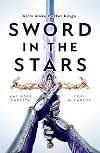
Spoiler warning. Sword in the Stars by Amy Rose Capetta and Cori McCarthy concludes the duology, following Merlin and Ari, the reincarnation of King Arthur, as they travel back to Camelot in search of a weapon powerful enough to defeat the Mercer Corporation in their own future.
This is a book that wants to say a great deal. It holds mirrors up to both past and present, and if you read, as I do, with an eye toward fiction as a learning device, there is much here to engage with. The authors show more are clearly interested in the ways societies construct exclusion at a systemic level, and in how capitalism can entrench harmful behaviour. Some of my reservations about tokenism in the first book are directly addressed here through increased page time and interiority for side characters, particularly Jordan and Lam. Their presence feels more grounded and less symbolic in this volume.
Where I felt a slight wobble was in a handful of moments of overt commentary. Merlin’s reflections on his amassed library near the end gesture quite pointedly toward the queerbaiting discourse around the Merlin television series. I understand the impulse, and I share the frustration that sits behind it, but for me it thinned the fictional veil slightly. What might have read as an Easter egg instead felt like a reminder of the authors speaking through the character. Other readers may experience that intertextual nod as energising. For me, alongside a few similarly direct passages, it occasionally tipped the balance from character expression into commentary vehicle, even while I agreed wholeheartedly with the sentiment.
What works especially well is the queernormative framework established in book one and expanded here. The central cast arrives from a far future in which gender and sexual diversity are normalised. Jordan as an asexual Black knight, Lam as non binary, Val as a demiboy, Ari and Gwen as two bi women deeply committed to one another, Merlin as gay, all create a thriving, textured community. Their plunge into the medieval period places them in tension with more restrictive norms, but prejudice is often conveyed through cultural assumptions rather than relentless violence or overt hostility.
For example, Arthur’s response to Ari’s sex and to the bond between Gwen and Ari comes from a place of acceptance. Lam’s relationship with Morgause becomes a tender aside, and Lam’s choice to remain in the past allows the book to explore the constraints of gender roles without reducing the storyline to suffering. There is damage acknowledged, but there is also hope. Jordan's revelation as a female knight, and Sir Kay’s response, is one of the clearer instances of overt prejudice. In contrast to the nuance elsewhere, Sir Kay leans heavily on stereotype and feels comparatively thinly drawn.
One thread that resonated strongly was the explicit acknowledgement of ethnic diversity in early Britain and the way later histories would erase it. The point is underlined more than once, perhaps longer than strictly necessary, yet its insistence carries its own quiet urgency. A similar effect appears in two brief but striking moments: the reference to Anglo Saxon women’s historical ability to divorce, later stripped away, and the framing of Gwen’s baby’s sex as assigned, with gender identity something to be discovered in time. Both moments are thought provoking, drawing a line between past and present. With the example of Nimue's mother, the context of the comment also felt like something of a nudge around ability to use rights when they are gained, or else run the risk of losing that freedom - a notion that feels particularly compelling in our current political context where many countries have right wing groups fighting to repeal freedoms afforded by liberal predecessors.
Given the medieval setting, the relative restraint around violence stands out. Conflict exists, and there are battles, but the narrative leans toward alliance building, such as Arthur with Avalon's enchantresses, and Gwen’s strategic guidance. The focus rests less on conquest and more on reshaping systems from within. Ari and Gwen modelling self determination in the face of constricting roles offers readers something constructive rather than purely reactive. The humour, often but not exclusively channelled through Merlin, helps balance the thematic weight.
From a craft perspective, the structural ambition is notable. Multiple timelines are woven together with clear magical rules, and the resolution honours those boundaries. Merlin’s experience of time toward the end is paced with care, and the reunion scenes acknowledge how disorienting such revelations would be. The ending feels seeded from early on, with twists that land cleanly rather than abruptly.
If I were to name an area where I felt occasional looseness, it would be in the dialogue. The banter is part of the group dynamic, and often charming, yet at times certain exchanges felt as though the lines could have been reassigned without changing the emotional texture. That may be less about humour itself and more about moments where individual voice blurs slightly within the character cast.
Overall, this remains a relatively light read that engages with significant ideas. For readers drawn to queernorm Arthurian retellings, playful banter, and time travel braided with paradox, it will deliver on all counts. show less
This is a book that wants to say a great deal. It holds mirrors up to both past and present, and if you read, as I do, with an eye toward fiction as a learning device, there is much here to engage with. The authors show more are clearly interested in the ways societies construct exclusion at a systemic level, and in how capitalism can entrench harmful behaviour. Some of my reservations about tokenism in the first book are directly addressed here through increased page time and interiority for side characters, particularly Jordan and Lam. Their presence feels more grounded and less symbolic in this volume.
Where I felt a slight wobble was in a handful of moments of overt commentary. Merlin’s reflections on his amassed library near the end gesture quite pointedly toward the queerbaiting discourse around the Merlin television series. I understand the impulse, and I share the frustration that sits behind it, but for me it thinned the fictional veil slightly. What might have read as an Easter egg instead felt like a reminder of the authors speaking through the character. Other readers may experience that intertextual nod as energising. For me, alongside a few similarly direct passages, it occasionally tipped the balance from character expression into commentary vehicle, even while I agreed wholeheartedly with the sentiment.
What works especially well is the queernormative framework established in book one and expanded here. The central cast arrives from a far future in which gender and sexual diversity are normalised. Jordan as an asexual Black knight, Lam as non binary, Val as a demiboy, Ari and Gwen as two bi women deeply committed to one another, Merlin as gay, all create a thriving, textured community. Their plunge into the medieval period places them in tension with more restrictive norms, but prejudice is often conveyed through cultural assumptions rather than relentless violence or overt hostility.
For example, Arthur’s response to Ari’s sex and to the bond between Gwen and Ari comes from a place of acceptance. Lam’s relationship with Morgause becomes a tender aside, and Lam’s choice to remain in the past allows the book to explore the constraints of gender roles without reducing the storyline to suffering. There is damage acknowledged, but there is also hope. Jordan's revelation as a female knight, and Sir Kay’s response, is one of the clearer instances of overt prejudice. In contrast to the nuance elsewhere, Sir Kay leans heavily on stereotype and feels comparatively thinly drawn.
One thread that resonated strongly was the explicit acknowledgement of ethnic diversity in early Britain and the way later histories would erase it. The point is underlined more than once, perhaps longer than strictly necessary, yet its insistence carries its own quiet urgency. A similar effect appears in two brief but striking moments: the reference to Anglo Saxon women’s historical ability to divorce, later stripped away, and the framing of Gwen’s baby’s sex as assigned, with gender identity something to be discovered in time. Both moments are thought provoking, drawing a line between past and present. With the example of Nimue's mother, the context of the comment also felt like something of a nudge around ability to use rights when they are gained, or else run the risk of losing that freedom - a notion that feels particularly compelling in our current political context where many countries have right wing groups fighting to repeal freedoms afforded by liberal predecessors.
Given the medieval setting, the relative restraint around violence stands out. Conflict exists, and there are battles, but the narrative leans toward alliance building, such as Arthur with Avalon's enchantresses, and Gwen’s strategic guidance. The focus rests less on conquest and more on reshaping systems from within. Ari and Gwen modelling self determination in the face of constricting roles offers readers something constructive rather than purely reactive. The humour, often but not exclusively channelled through Merlin, helps balance the thematic weight.
From a craft perspective, the structural ambition is notable. Multiple timelines are woven together with clear magical rules, and the resolution honours those boundaries. Merlin’s experience of time toward the end is paced with care, and the reunion scenes acknowledge how disorienting such revelations would be. The ending feels seeded from early on, with twists that land cleanly rather than abruptly.
If I were to name an area where I felt occasional looseness, it would be in the dialogue. The banter is part of the group dynamic, and often charming, yet at times certain exchanges felt as though the lines could have been reassigned without changing the emotional texture. That may be less about humour itself and more about moments where individual voice blurs slightly within the character cast.
Overall, this remains a relatively light read that engages with significant ideas. For readers drawn to queernorm Arthurian retellings, playful banter, and time travel braided with paradox, it will deliver on all counts. show less
disparate group of surviving sapiens creates a found family after society collapses.
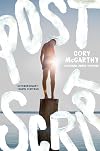
West was 12 when “the grids went down,” and the world as he knew it ended; he’s pretty sure he’s 18 now. For the past few years he’s been sailing around the archipelago of what was once Cape Cod with a man he calls Captain. When a handsome young man on a sailboat full of guns appears, Captain makes a trade: West and some Benadryl for a gun and a single bullet. The sailor, Emil, takes West to the show more only thing resembling a community that he knows of: Karen, a conservative Christian, has a well-kept mansion and lighthouse, and Ani, a queer woman, lives in a circle of RVs and spends much of her time lying on top of a mass grave, talking to her dead husband. Simultaneously tragic, existentially terrifying, heartwarming, and sensual, the narrative blends these contradictions into a compact, beautiful, and well-wrought whole. The prose is poetic and considered while not shying away from explorations of death and the human condition. During the fall of humanity, West remains largely upbeat—a “postapocalyptic Pollyanna” who reminds us to appreciate living while we can. West is cued Arab American, while Emil and Karen read white, and Ani is racially ambiguous. McCarthy’s striking black-and-white linocut print illustrations adorn the text and offer more content for readers to ponder.
A deep story to read on an overcast afternoon while contemplating existence. (content warning) (Fiction. 14-18)
-Kirkus Review show less
West was 12 when “the grids went down,” and the world as he knew it ended; he’s pretty sure he’s 18 now. For the past few years he’s been sailing around the archipelago of what was once Cape Cod with a man he calls Captain. When a handsome young man on a sailboat full of guns appears, Captain makes a trade: West and some Benadryl for a gun and a single bullet. The sailor, Emil, takes West to the show more only thing resembling a community that he knows of: Karen, a conservative Christian, has a well-kept mansion and lighthouse, and Ani, a queer woman, lives in a circle of RVs and spends much of her time lying on top of a mass grave, talking to her dead husband. Simultaneously tragic, existentially terrifying, heartwarming, and sensual, the narrative blends these contradictions into a compact, beautiful, and well-wrought whole. The prose is poetic and considered while not shying away from explorations of death and the human condition. During the fall of humanity, West remains largely upbeat—a “postapocalyptic Pollyanna” who reminds us to appreciate living while we can. West is cued Arab American, while Emil and Karen read white, and Ani is racially ambiguous. McCarthy’s striking black-and-white linocut print illustrations adorn the text and offer more content for readers to ponder.
A deep story to read on an overcast afternoon while contemplating existence. (content warning) (Fiction. 14-18)
-Kirkus Review show less
"We are all his collateral damage."
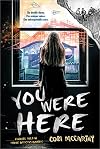
What an amazing story. About sudden, violent loss and the struggle to move on. This is the story of a band of mismatched friends. Bishop, Zach, Natalie and Jaycee. And this side guy Mik that seems to stumble in and out of their lives randomly. Very few have talked to Jaycee since her brother died trying to execute another one of his dares. All of them have fallen into their own struggle to come to terms with love, loss and the realization that it's senior show more year and it's time for them to all grow up.
So when they all run into each other unexpectedly and take a trip down memory lane - but also glimpse at how broken they've all become, they decide to have one last bit of summer fun and retrace (and bring to life) Jake's last few dares. It's rough because they are all there for different reasons and the secrets and truths that bind them are also what has kept them apart.
When I first tried to crack this story, it was shortly after losing my own brother, very suddenly. And I just couldn't open this one - I could barely get through the synopsis. It's taken me months to get to this point. But now I'm so glad I did. This story was so full of hope and love but also tragedy and the grief, guilt and anger that comes with loss. It's such a true book, one that resonated so deep within me. I loved every chapter and I absolutely loved the underlying love story. It was sweet, and slow and burned so red hot. I loved the journey and am so glad I took a chance and read this. show less
What an amazing story. About sudden, violent loss and the struggle to move on. This is the story of a band of mismatched friends. Bishop, Zach, Natalie and Jaycee. And this side guy Mik that seems to stumble in and out of their lives randomly. Very few have talked to Jaycee since her brother died trying to execute another one of his dares. All of them have fallen into their own struggle to come to terms with love, loss and the realization that it's senior show more year and it's time for them to all grow up.
So when they all run into each other unexpectedly and take a trip down memory lane - but also glimpse at how broken they've all become, they decide to have one last bit of summer fun and retrace (and bring to life) Jake's last few dares. It's rough because they are all there for different reasons and the secrets and truths that bind them are also what has kept them apart.
When I first tried to crack this story, it was shortly after losing my own brother, very suddenly. And I just couldn't open this one - I could barely get through the synopsis. It's taken me months to get to this point. But now I'm so glad I did. This story was so full of hope and love but also tragedy and the grief, guilt and anger that comes with loss. It's such a true book, one that resonated so deep within me. I loved every chapter and I absolutely loved the underlying love story. It was sweet, and slow and burned so red hot. I loved the journey and am so glad I took a chance and read this. show less
In order to deal with the psychological grief of her brother dying, Jaycee is on a quest to rediscover him by reliving his dangerous stunts. When a group of erstwhile friends gets sucked into her antics, Jaycee learns love and forgiveness.
Let me start out by saying this is the best fiction work on grief that I have ever experienced. McCarthy is clearly someone who understands the power of grief. It seems like everyone in the story is experiencing grief, yet they are all coping in different show more ways. What's more most of the characters are incredibly wise (perhaps a little too wise to be real). At one point, Jaycee demands of her new old friend whether she should change her grieving process to not weird people out - how many adults understand that their grief is a personal process, and that it is not wrong to cope the way they do, even if it emotionally or physically healthy for them at that moment (i.e. it is not wrong to experience grief, though sometimes they must be protected from themselves).
This book is gritty, and at times brutally honest. I would recommend this book to any teenager who wants to understand others' pain, though I would suggest caution to people who are depressed or going through grief at the moment. There were times while reading this book that I reexperienced difficult moments for myself; however, that is what made the book so powerful to me. This book deserves 6 stars, but my rating system doesn't go that far up. show less
Let me start out by saying this is the best fiction work on grief that I have ever experienced. McCarthy is clearly someone who understands the power of grief. It seems like everyone in the story is experiencing grief, yet they are all coping in different show more ways. What's more most of the characters are incredibly wise (perhaps a little too wise to be real). At one point, Jaycee demands of her new old friend whether she should change her grieving process to not weird people out - how many adults understand that their grief is a personal process, and that it is not wrong to cope the way they do, even if it emotionally or physically healthy for them at that moment (i.e. it is not wrong to experience grief, though sometimes they must be protected from themselves).
This book is gritty, and at times brutally honest. I would recommend this book to any teenager who wants to understand others' pain, though I would suggest caution to people who are depressed or going through grief at the moment. There were times while reading this book that I reexperienced difficult moments for myself; however, that is what made the book so powerful to me. This book deserves 6 stars, but my rating system doesn't go that far up. show less
Lists
Awards


You May Also Like


Associated Authors
Statistics
- Works
- 13
- Also by
- 4
- Members
- 1,950
- Popularity
- #13,197
- Rating
- 3.6
- Reviews
- 62
- ISBNs
- 89
- Languages
- 1